

Enhancing terminals and the airport experience requires passenger centric planning, writes Joe Barden, executive vice president for terminal planning at Landrum & Brown, a Sidara company.
As airports continue to evolve, so too must the experiences they offer throughout their facilities. Indeed, enhancing the passenger experience has become one of the most important aspects of improving airport performance overall.
But airports can no longer rely on a one-size-fits-all approach. To truly elevate the journey, operators, designers, and tenants must better understand passenger expectations and recognise that not all travellers behave the same way.
Airport terminals are unique environments because they bring together the full spectrum of human emotion every day. They are intense hubs of activity that require highly specialised and complex design, yet they must also respond to people under stress, time pressure, excitement, confusion, and uncertainty.
For many people, one of the strongest emotions associated with air travel is stress. The path from ticketing to the boarding gate can be chaotic and overwhelming. Transportation to the airport, uncertain security wait times, poor way finding, unclear signage, and last-minute gate changes all add to the burden.
While many travellers think of the experience as only the time spent in the air, the true journey, of course, begins when they leave home and continues until they reach their destination.
That is why airports are increasingly becoming a combination of digital infrastructure and adaptable physical design, both of which can reduce friction and better align with how today’s passengers move, behave, and make decisions.
Airports are no longer just buildings people pass through on the way to somewhere else. They are emotional environments where excitement may begin a vacation and stress may rise quickly because of delays, confusion, or time pressure.
Understanding what passengers want and need from that experience is now essential. While every traveller is unique, many can be understood through four behavioural groupings: the Camper, the Roamer, the Explorer, and the Sprinter.
The Camper is an efficiency-driven traveller who heads directly to the gate or lounge and limits unnecessary interaction with the terminal environment. This passenger values reassurance, comfort, and convenience.
Providing a variety of seating arrangements, access to power, semi-private work areas, and even food and retail delivery to the gate through digital tools can help meet the Camper’s needs.
The Roamer is the mainstream, commercially engaged traveller. Roamers expect intuitive way finding, good food options, comfortable places to sit, and a mix of both familiar and interesting retail opportunities along the path to the gate. They are open to engaging with the terminal, but only if the environment is clear, convenient, and easy to navigate.
The Explorer is among the most valuable passenger segments in today’s market. Often arriving well before departure, Explorers are looking for premium experiences and unique offerings, and they are willing to pay for them.
These may include paid lounge access, premium dining, fast-track security, and memorable airport experiences ranging from public art to live music.
The Sprinter, by contrast, presents a different challenge. These travellers do not want to spend time in the terminal at all. They want frictionless movement, grab-and-go retail, takeaway meals, and quiet spaces near the gate. They value speed, simplicity, and clarity above all else.
Understanding these passenger types matters because airports can no longer be planned around one generic traveller. Different passengers seek different levels of engagement, different amenities, and different kinds of reassurance.
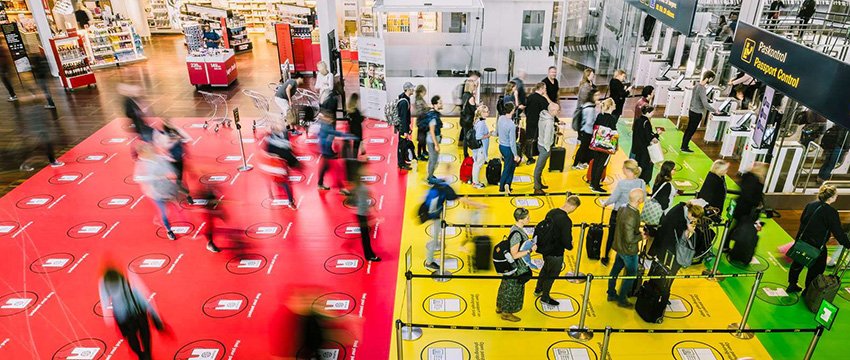
As passenger volumes continue to grow, operators must find ways to improve their facilities not only for the traveller, but also for airport performance.
Full terminal reconstruction is not feasible for many airports, but much can still be accomplished through better planning and thoughtful adoption of technology.
Too often, design still starts with infrastructure rather than the traveller. Check-in remains stressful as passengers manage bag drops, confirm baggage policies, and prepare for security.
Once through screening, they are often left to gather their belongings, get reoriented, and search for directions or gate information in spaces that offer little clarity.
The added burden of switching between airline apps and airport platforms to find gates, amenities, or updates only increases frustration and can also reduce dwell time and commercial engagement.
This is precisely why airport operators should step back during planning and design and think carefully about what each passenger type needs along the path to the gate.
A more seamless experience does not come from adding more features. It comes from delivering the right experience for the right passenger at the right moment.
A combination of thoughtful physical pathway design and digital guidance is a strong step forward. Passengers increasingly expect digital tools to function as a reliable travel companion throughout the journey.
They want timely information, intuitive navigation, and a greater sense of control. If airports fall short in delivering clarity, confidence, and control through both facility design and digital tools, they risk losing not just passenger satisfaction, but also loyalty and revenue.
The future of airport planning will depend on how well digital systems and physical environments work together. Biometric screening, more seamless processing, real-time updates,personalised way finding, and adaptive accessibility all point in the right direction.
But technology alone is not the answer. It must be implemented in a way that is reliable, intuitive, and aligned with how passengers move through the airport.
Digital infrastructure should increasingly become part of airport design. It should inform terminal planning, circulation, and the sizing and placement of key spaces. Physical spaces must support this shift through flexible layouts that can respond to changing passenger demand, including additional seating, modular counters, dynamic signage, and sensory-friendly zones.
Terminal architecture and engineering systems should be designed to allow check-in, security, dwell, and boarding spaces to expand, contract, or shift functions over time in response to real-time demand.
Concession programmes should also move toward more flexible formats that respond to passenger flow and changing needs, helping airports improve both traveller experience and commercial performance.
The use of self-bag tagging is also increasing and is likely to continue growing. Remote baggage drop at parking or rental car hubs, paired with real-time tracking, has the potential to reduce stress, improve circulation, and free terminal space for higher-quality passenger environments and revenue-generating amenities.
Air travel is no longer just about moving people. It is about creating journeys that feel intuitive, predictable, and enjoyable.
Airport leaders can begin by embedding digital-first thinking into terminal planning and engineering and committing to accessibility through both technology and space.
As operators continue to rethink the terminal, flexible layouts and passenger-centred planning must be part of that future.