



Work in progress

Alina Viehweber, ICF’s manager for sustainable aviation, provides an update on the industry’s adoption of sustainable aviation fuel (SAF).
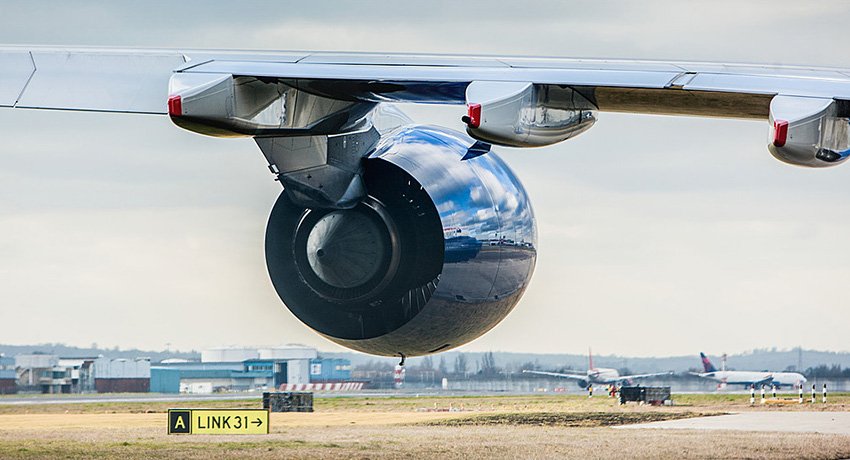
Sustainable aviation fuel (SAF) is widely recognised as the most important near to mid-term pathway for decarbonising aviation. Unlike longer-term technologies such as hydrogen or electrified flight, SAF can be used in existing aircraft and airport infrastructure without major system redesign.
This makes it the only scalable decarbonisation lever that can deliver meaningful emissions reductions within the constraints of today’s aviation system, where fleet renewal cycles are long and infrastructure lifetimes extend over decades.
SAF MARKET DEVELOPMENTS
Governments have increasingly recognised the importance of SAF as a key decarbonisation lever and have implemented concrete policy mechanisms to drive uptake.
This includes SAF mandates such as the EU’s ReFuelEU Aviation framework and the UK mandate, alongside new instruments like Singapore’s SAF levy and emerging policy discussions in Australia and New Zealand.
These developments mark a more structured, compliance-driven market where SAF demand is increasingly defined by regulation rather than voluntary action.
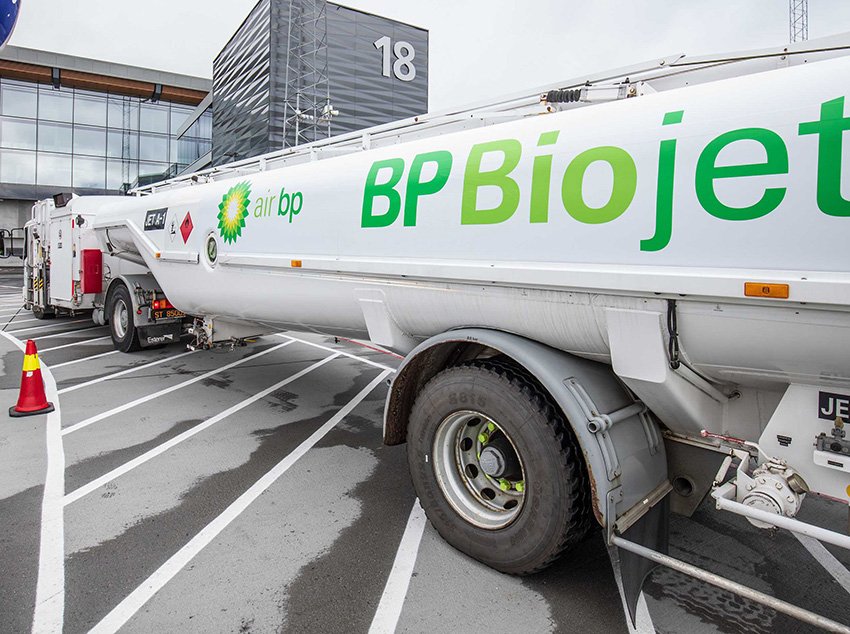
In response, supply has begun to scale, reaching an estimated 1.9 million tonnes in 2025 and projected to grow to around 2.4 million tonnes in 2026, according to IATA.
However, momentum is beginning to slow. Policy uncertainty, such as delays in implementing the UK’s Revenue Certainty Mechanism, combined with the high cost of SAF, are constraining growth.
IATA estimated SAF added around $3.6 billion in fuel costs in 2025. At the same time, production remains heavily reliant on HEFA pathways, while newer technologies like Alcohol-to-Jet, Fischer-Tropsch, and Power-to-Liquid are not yet scaling at pace, despite early successes such as LanzaJet’s Freedom Pines facility.
Looking ahead, ICF estimates SAF supply to increase to 22 to 26 million tonnes by 2030, but this remains far below the approximately 500 million tonnes IATA estimates will be needed by 2050.
This gap highlights the scale of the challenge and the need for faster progress across policy, cost reduction, and technology deployment.
For airports, this is highly material. While most decarbonisation efforts focus on Scope 1 and 2 emissions, over 90% of an airport’s footprint typically comes from Scope 3, primarily aircraft fuel use.
As a result, SAF is becoming central to airport net zero strategies, positioning airports as active enablers of SAF deployment through infrastructure, partnerships, and market facilitation.
THE EXPANDING ROLE OF AIRPORTS
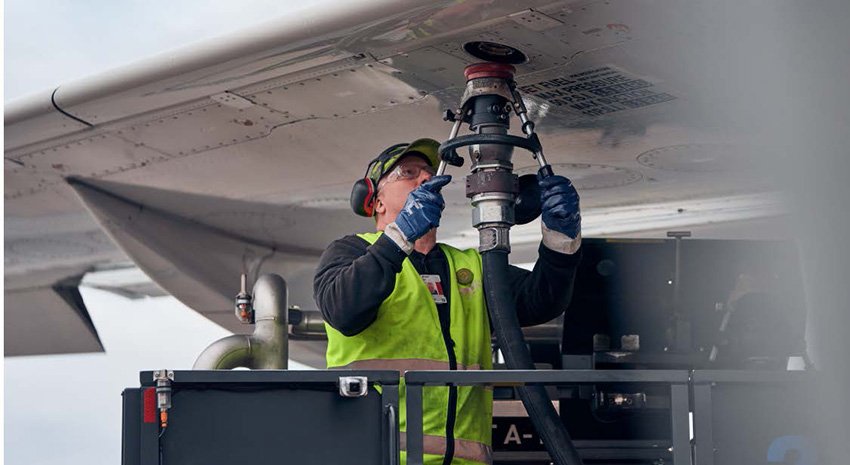
Airports are increasingly acting as enablers of the SAF market, moving beyond their traditional role as passive providers of fuel infrastructure.
Historically, their involvement in fuel supply chains has been largely operational, focused on storage and delivery within the airport boundary.
As aviation decarbonisation accelerates, this role is expanding, with airports emerging as active system participants that can influence how SAF markets develop, connect, and scale.
This shift is being driven by the growing recognition of emissions beyond direct airport operations. Through frameworks such as ACI’s long-term carbon goal, net zero commitments are now widely adopted across the airport sector.
The introduction of Airport Carbon Accreditation Level 5 marks a step change in ambition, requiring airports to achieve net zero for Scope 1 and 2 emissions while also addressing selected Scope 3 emissions, including those associated with aircraft operations.
This effectively formalises the airport’s role in value chain decarbonisation and embeds SAF within airport-led climate strategies rather than treating it solely as an airline responsibility.
As a result, SAF is becoming an increasingly important lever within airport decarbonisation approaches. However, this role is shaped by a fundamental constraint: physical SAF supply remains limited and unevenly distributed across markets.
Airports and airlines therefore cannot rely on consistent local availability in the near term. This has elevated the importance of mechanisms such as book-and-claim systems, which allow the environmental attributes of SAF to be allocated independently of physical fuel delivery.
For airports, these mechanisms provide a practical pathway to support Scope 3 emissions reductions even where direct SAF supply is not yet accessible.
Early reflections of implementation of the ReFuelEU Aviation framework illustrates this dynamic. While SAF deployment is increasing under the mandate, supply remains concentrated in a limited number of Member States, highlighting how the first phase of policy implementation is shaping real-world distribution patterns.
This uneven rollout reinforces the need for co-ordinated infrastructure development, policy alignment, and market design to enable broader access.
Within this context, airports are evolving into three distinct roles across the SAF ecosystem – Observer, Facilitator and Leader.
Airports in the Observer category are monitoring SAF market developments and assessing implications for future operations. This includes tracking policy evolution, evaluating potential demand from airline partners, and identifying long-term infrastructure requirements without making immediate investments.
Examples include Sydney Airport, which is facilitating domestic SAF industry development and handling Australia’s largest‑ever SAF imports, and Munich Airport, which is studying technical and operational readiness such as storage, pipeline, and quality‑specification upgrades without committing to large‑scale blending yet.
Facilitator airports are supporting early-stage SAF deployment through enabling actions such as planning for fuel infrastructure upgrades, co-ordinating with airlines and fuel suppliers, and preparing for mechanisms like book-and-claim.
This role often includes stakeholder engagement and ensuring operational readiness as supply becomes available. For example, Brussels Airport is participating in Green Deal Stargate‑related book‑and‑claim‑oriented SAF initiatives, while Dallas Fort Worth Airport is supporting circular‑economy SAF pilots by supplying used cooking oil (UCO) feedstock and hosting SAF‑delivery pilots with Avfuel and Neste.
Airports in the Leader category are among a small but growing group of gateways taking a proactive role in shaping SAF markets.
This includes co-investing in SAF production, forming strategic partnerships across the value chain, aggregating demand, and actively attracting supply to their region to accelerate market formation.
Examples include SAF incentive schemes implemented at Heathrow Airport, Vancouver International Airport, Milan Malpensa Airport, and Swedavia to name a few, as well as Pittsburgh International Airport, which is developing the first on-site SAF production facility in the United States on airport-owned land.
Lack of engagement with the SAF market, could risk competitiveness and misalignment with the direction of the aviation sector’s decarbonisation pathway.
As mandates tighten and airlines face increasing compliance obligations, carriers are likely to prioritise routes and hubs where SAF access is more readily available or where supportive mechanisms are in place.
This could impact airport competitiveness, particularly for transfer traffic and airline partnerships. In parallel, airports may struggle to meet evolving net zero commitments, especially under frameworks that require Scope 3 emissions reductions.
Over time, this may also affect access to sustainable finance, stakeholder perception, and alignment with broader industry decarbonisation pathways.
However, airports operate within a complex set of operational, financial, and regulatory constraints, and must balance SAF engagement with a wide range of competing priorities.
While only a small group of airports have the resources to take on a leading role, any level of engagement across the SAF ecosystem represents meaningful progress and contributes to broader market development.
CONCLUSION
SAF is recognised as a central pillar of aviation decarbonisation, with policy, supply dynamics, and market structures evolving in parallel.
For airports, this creates both a clear imperative and a practical challenge: to engage in a way that aligns with their role, resources, and operational priorities while still contributing to sector-wide progress.
A first step for airports is to assess their position within the SAF ecosystem and identify targeted, achievable steps to support market development, whether through strategy, infrastructure planning, partnerships, or enabling mechanisms.
Even incremental progress will be critical in accelerating SAF deployment and ensuring that airports remain aligned with the wider industry.