
The bottom line

Share
By reframing the restroom as a key component of passenger experience, airports can differentiate themselves and enhance the entire customer journey, writes Tork’s Katrin Ferge.
Airport operators know there’s no one-size-fits-all recipe for success. Though, the financial incentive to continually improve the terminal is clear, with ACI World research showing that a 1% increase in passenger satisfaction can lead to a 1.5% growth in non-aeronautical revenue.
As airport operators work to optimise the passenger experience, they focus on everything from frictionless check-in to diverse retail and experiential options. Yet, a surprising barrier to this goal is hiding in plain sight – the restroom.
More than a matter of personal preference, restroom cleanliness represents a significant opportunity to protect and grow business performance.
Recent data from Tork shows that after a poor restroom experience, 23% of people deliberately limit what they eat and drink to avoid using it again, and 28% spend less time in a place altogether.
And while nearly half of airport travellers have high expectations for hygiene, only 28% feel those standards are met, revealing a massive experience gap that can translate directly into lost terminal sales and lower passenger satisfaction.
These findings, while striking, also point to a clear opportunity.
By reframing the restroom as a key component of passenger experience, airports can differentiate themselves and enhance the entire customer journey.
Implementing a hygiene strategy built on three pillars – data-driven operations, high-capacity systems, and accessible design can close this experience gap, recover lost revenue, and solidify reputation.
PILLAR #1: SHIFT FROM A REACTIVE TO A DATA-DRIVEN CLEANING MODEL
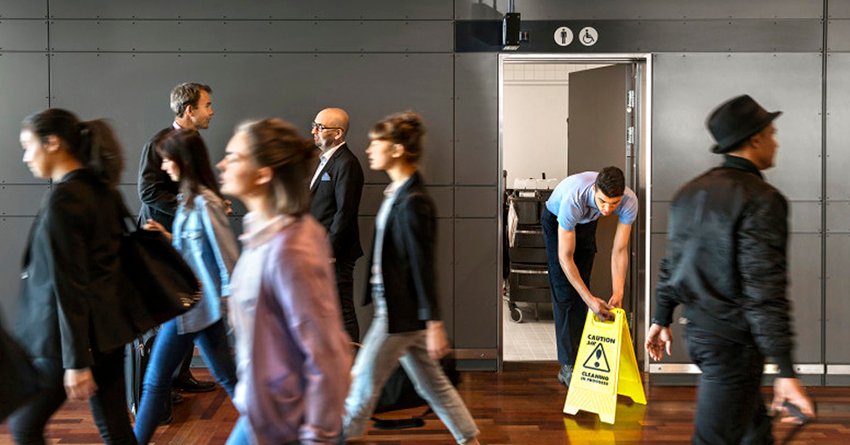
The traditional method of cleaning restrooms on a fixed schedule is no longer sufficient in a world of increasingly high standards. It guarantees that some restrooms are cleaned when they don’t need it, while high-traffic areas get overlooked.
In addition to creating a poor passenger experience, this reactive approach wastes valuable staff time and resources.
The solution is to let real-time data guide maintenance operations. Data-driven cleaning – powered by connected dispensers and people counters – tells staff exactly which areas and restrooms need service and when.
Instead of guessing, maintenance staff can focus their efforts where they are needed most. This proactive model eliminates product runouts, a frequent complaint for travellers, and ensures a consistently high standard of cleanliness.
Just as importantly, it empowers cleaning staff, reducing their stress and allowing them to focus on detailed cleaning work that makes a visible difference to passengers.
PILLAR #2: UPGRADE TO PEAK-READY DISPENSER SYSTEMS
An airport’s operational resilience is tested daily during intense waves of traffic. In the restroom, dispensers are often the weakest link, either running out of supply, jamming, or not working entirely.
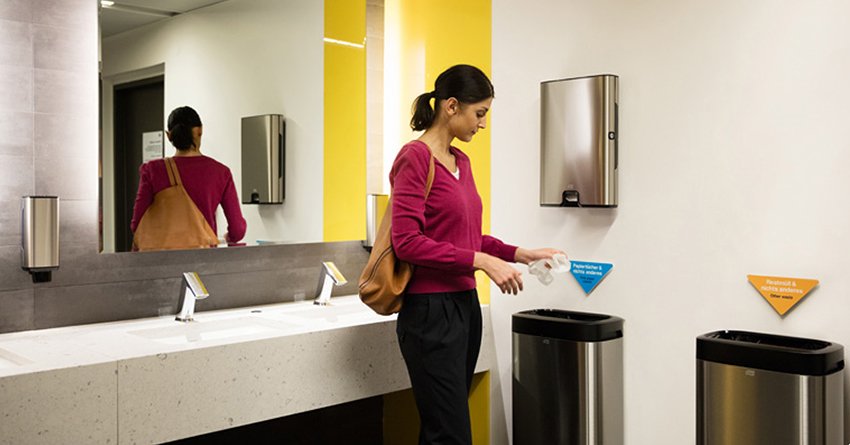
This negative experience – from the passenger who finds an empty dispenser to the cleaning staff who become overwhelmed by complaints – can be avoided by utilising hygiene systems specifically designed to perform under pressure and manage high-volume surges.
High-capacity, easy-to-refill dispensers are essential. They hold more product, drastically reducing the need for refills during busy periods. But the benefits go beyond capacity. Investing in modern, easy-to-use systems is also a direct investment in staff efficiency and retention.
Research shows 51% of cleaners report that if dispensers were quicker and easier to refill, they would have more time for other essential cleaning tasks.
By upgrading dispensers across the terminal and making sure they are well-placed and regularly stocked, teams can build resilience and empower cleaning staff to keep up during the busiest travel surges.
Plus, this modern approach to hygiene also strongly supports an airport’s sustainability goals. A data-driven service model reduces the unnecessary use of water and cleaning chemicals, while high-capacity systems prevent paper waste.
PILLAR #3: DESIGN RESTROOMS WITH EVERY TRAVELLER IN MIND
A clean restroom is the baseline, but to create an exceptional experience that drives positive passenger experience, teams must consider how to make restrooms that work for everyone.
For the 54% of people that contend with some form of physical or cognitive challenge, many of them invisible, a standard restroom can quickly turn into a stressful environment.
Barriers to hygiene are everywhere in the restroom but often are not well-known to those operating and maintaining restrooms.
For example, loud hand dryers can be overwhelming for travellers with sensory sensitivities.
Similarly, poorly designed dispensers can be a barrier for those with arthritis or limited mobility. While certain soaps or hand sanitisers can be especially tough on skin for those with eczema or skin sensitives.
By offering the option of paper hand towels playing calming music to mask unwanted noises, ensuring dispensers are easy to use for everyone, and providing clear signage signalling the changes made to promote inclusive hygiene, airports can send a powerful message of care.
These small changes reduce stress and show travellers that their needs are considered, fostering a sense of trust that improves satisfaction, drives revenue, and ensures a world-class passenger experience.
CLEANER RESTROOMS IMPROVE THE AIRPORT EXPERIENCE AND BUSINESS PERFORMANCE
Ultimately, these strategic upgrades create an environment where visitors feel comfortable arriving early, lingering longer, and fully patronising terminal shops and restaurants.
In a competitive market, this enhanced experience can become a powerful differentiator, even potentially leading to travellers choosing one airport over another to start their journey.
By refining workflows and ensuring access to easy-to-use hygiene products, airports can transform a costly liability into a strategic asset, creating a better journey for every passenger while driving the non-aeronautical revenue that is critical to their success.
About the author
Katrin Ferge is Tork’s regional manager for commercial.