

Change is coming

Share
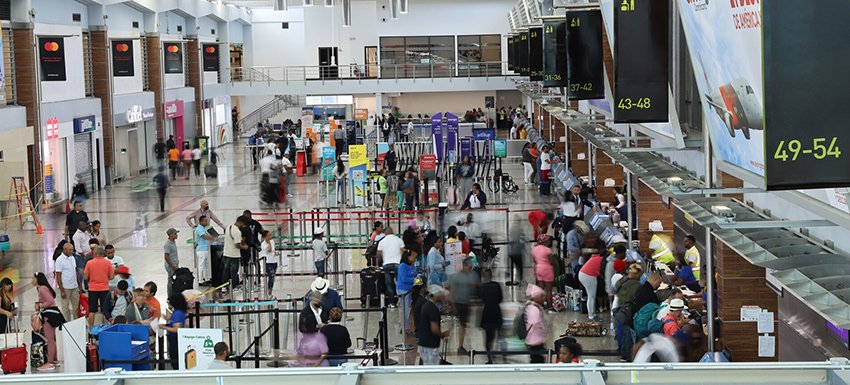
Airline digitalisation will transform the airport departure hall and how other processing facilities are used in the future, writes Stephan Hirmer, head of passenger servicing for airport operations at Amadeus.
The evolution of airline systems is beginning to have a transformative impact on airport operations.
Departure Control Systems (DCS) are gradually being replaced by more flexible Delivery Management Systems (DMS). This shift is reshaping not only airport environments, both physically and operationally, but most importantly, the passenger experience as a whole.
These changes extend beyond back-end technology. They influence the design of terminal spaces, the deployment of staff, and promise to completely transform the passenger experience at the airport.
Delivery systems enable a more connected and responsive model of airport operations, based on real-time context and continuous optimisation.
For airports, this presents both a challenge and an opportunity: to support airlines in their digital and operational transformation, while simultaneously adapting their own infrastructure, processes and partnerships.
This must happen in parallel with day-to-day operations, requiring incremental co-ordinated changes that improve the passenger experience and enable more commercially agile, future-ready airport spaces in the process.
RETHINKING TERMINAL DESIGN
One of the most visible impacts of airlines adopting Delivery Management Systems will be how airport space is used.
The shift away from legacy processes means that terminals can be reconfigured with different priorities in mind.
Fixed check-in desks, once central to terminal design, are becoming increasingly redundant. Several leading airlines are retiring them in favour of more flexible models.
This involves agents using tablets to serve passengers on the move, with real-time access to each traveller’s ‘order’ – a unified record of all the products and services the airline has committed to deliver, from seat selection to baggage allowance and onboard meals.
Alternatively, some airlines have opted for expanded self-service zones or a combination of both. This flexibility enables the passenger experience to be designed around convenience and efficiency, rather than processing.
As more documentation is handled digitally and identity verification shifts towards rapid biometric scans, the size of the traditional airport ‘processing’ areas can be reduced.
This creates space for alternative uses, such as quiet zones, retail areas, workspaces and lounges, which support a more relaxed and productive experience for travellers, as well as offering greater commercial opportunities for operators.
The bag drop process is also evolving. With the introduction of door-to-door baggage services, some passengers may be able to bypass the check-in hall entirely, entering the airport flow at security.
By removing or automating traditional passenger processes like check-in, delivery management enables airports to reconsider how space is used, as part of a customer-centric commercial strategy that unlocks new opportunities to drive non-aeronautical revenue.
STREAMLINING THE PASSENGER EXPERIENCE
As operational decisions become more data-driven and predictive, the need for passengers to wait unnecessarily at gates or in queues for unclear updates will decrease.
Traditionally, passengers have spent much of their time at the airport in a reactive state, checking screens, listening for announcements and moving through staged processes. However, with delivery systems, airlines and airports can take a more proactive approach.
A single operational view showing the live status of all flights, delays, regulatory checks and transfer requirements allows agents and station managers to co-ordinate more precisely and make faster, more informed decisions.
These capabilities open up new opportunities. For instance, if a connecting flight is delayed, the system can suggest allocating the arriving aircraft to a gate that minimises transfer time.
Similarly, if boarding is likely to be delayed, this information can be used to notify passengers early, allowing them to spend time elsewhere in the terminal rather than queuing unnecessarily.
By combining passenger information with live flight data, airports can align their services more closely with individual needs.
INCREASING NON-AERONAUTICAL REVENUE
Delivery Management Systems create new opportunities for airports to increase their non-aeronautical revenue by facilitating more time and space-efficient, context-aware retail interactions.
Passengers are more likely to engage with food and beverage outlets, retail stores, and experiential services when they spend less time queuing and more time freely navigating the terminal.
Airports can benefit directly by collaborating with airlines to deliver timely, personalised offers, such as fast-track security, premium dining, and third-party services like spa access and co-working lounges.
SEAMLESS COLLABORATION
Delivery systems combined with collaborative platform technology will make it possible for airlines and airports to choose to share information more easily.
It is increasingly clear that such sharing of information can unlock benefits for both parties and ultimately, travellers. For the next phase of transformation, greater operational and data collaboration will be essential.
For the most part, airports don’t interact with passengers directly. Their ability to improve the traveller experience and operational efficiency relies on their visibility of airline systems, particularly with regard to order, delivery and fulfilment data.
Delivery management systems provide a natural opportunity to achieve this alignment. When a passenger’s journey status is updated in real time, that information triggers follow-on actions. These could include reassigning stand gates, offering lounge access or updating digital signage and staffing levels.
Airports benefit directly from this. For instance, when document checks or visa validations are handled in advance via digital processes initiated at the time of booking, bottlenecks at the terminal are reduced.
This requires integrated systems and a willingness among stakeholders to share data in a way that supports mutually beneficial outcomes, such as aligning resource planning with passenger flow forecasts or triggering tailored services at the right time.
Achieving this depends on using common standards, open platform technology, and clearly defined data governance models that enable secure, real-time exchange without compromising operational control.
Emerging platform technologies and open APIs are facilitating the establishment of common ground.
Real-time data exchange is now becoming a possibility. When both parties choose to share information, airlines gain better situational awareness and responsiveness, while airports gain earlier insight into passenger volumes, flow patterns and service requirements.
Looking ahead, the airports best positioned for success will be those that proactively engage with this shift by supporting open, intelligent systems that can integrate with airline infrastructure while advancing their own operational goals.
This will not only improve passenger experience but also create smarter, leaner airport environments where technology and data inform every decision.