

WSP UK’s Dr Catherine Wilson, reflects on a defining year for sustainable aviation and a handful of sustainability experts give their views on what may be on aviation’s agenda in 2026.
The UK’s first Sustainable Aviation Fuel (SAF) mandate, EU hydrogen hub plans, electric planes in commercial trials, and airports embracing AI-driven energy efficiency ensure that 2025 was a defining year for sustainable aviation.
This feature will explore 2025’s key developments and seek expert views on 2026 trends as the focus shifts from ‘if’ to ‘how fast’ aviation can decarbonise.
SECTOR POLICY AND TOOLS TO SCALE IMPACT
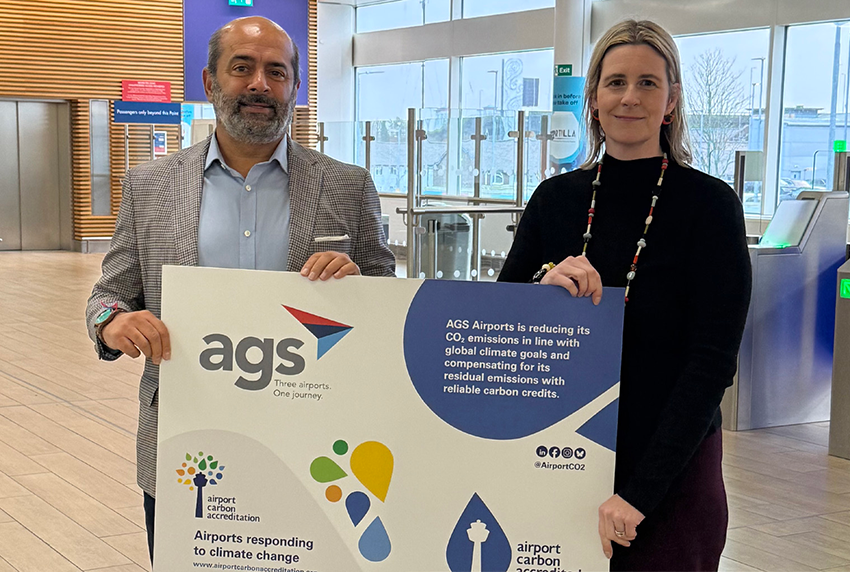
Last year saw new milestones with ACI’s Airport Carbon Accreditation programme, the only global, independently verified carbon management scheme for airports.
Salvador Bahia (Brazil) became the first airport in the Americas to achieve Level 5 (operational net zero with a validated Scope 3 plan), while Adelaide and Parafield were Australia’s first.
Thirty airports now hold Level 5 certification. ACI also tightened the programme’s rules, requiring airports to move beyond Level 1 (basic measurement) within three years – driving emissions reduction.
In August 2025, ACI launched its ESG Global Reporting Framework, a standardised tool aligned with global disclosure standards (GRI, ISSB) to improve transparency and access to sustainable finance.
ICAO’s 13th CAEP meeting in February delivered 31 technical and policy outcomes, including stricter CO2 and noise standards, accelerated SAF certification, enhanced operational efficiency, and a new global CO2 monitoring framework – all set to shape fleet choices, fuel procurement, and infrastructure investments before 2030.
While at COP30, ICAO reaffirmed its net zero roadmap, urging faster SAF scale-up and global CO2 monitoring.
IATA pushed for full CORSIA and Article 6 markets, while the Sustainable Aviation Buyers Alliance, backed by Airbus, launched a SAF certificate platform.
LEGISLATION MILESTONES: FROM PLEDGE TO COMMITMENT
Last year moved sustainable aviation from policy intent to binding obligations – setting minimum SAF shares, codifying next-gen propulsion airworthiness, and testing funding mechanisms that make decarbonisation investable.
EU and UK SAF mandates, effective in 2025, created the first co-ordinated, binding SAF market – aligning supply, reporting, and penalties, with ETS and SAF certificates cushioning early costs.
The EU’s ReFuelEU Regulation requires 2% SAF in 2025, risingto 70% by 2050; the UK mandate starts at 2%, rising to 22% by 2040.
Early adoption highlighted the need for certificates, book-and-claim systems, and strong policy support for power-to-liquid fuels.
In January 2025, the EU Commission adopted Regulation 2025/111/EU, updating its airworthiness and maintenance rules to cover electric, hybrid, and future hydrogen-electric aircraft.
In November, Singapore announced the world’s first national SAF levy for 2026, piloting a cost-sharing model to underwrite SAF purchases.
The mandatory levy (S$1 to S$41.60 per passenger) applies to tickets sold from April 1, 2026, for flights departing on/after October 1, 2026, with proceeds ringfenced in a SAF Fund.
On 5 November, the EU launched its Sustainable Transport Investment Plan (STIP), committing €2.9 billion through 2027 to accelerate renewable and low-carbon fuel production for aviation.
FUEL SUPPLY AND INDUSTRIAL MOMENTUM: SAF SCALES UP
For airlines and airports, new EU and UK SAF mandates mean sustainable fuel is no longer niche – it’s part of everyday planning.
This shift drives long-term supply agreements, fuel infrastructure upgrades, and closer supplier collaboration.
Global SAF output increased in 2025 as new plants opened. North American production nearly doubled, with growth in California and Texas, while Europe and Asia-Pacific expanded supply.
However, volumes remain small, but investment is rising and early risks easing.
In addition IATA’s 2025 analysis showed the main bottleneck is slow SAF technology rollout, not feedstock.
LanzaJet’s Georgia plant proved commercial-scale ethanol-to-jet SAF is viable, while Düsseldorf Airport signed an MoU for the first DAC-to-SAF facility, targeting 250 t/year synthetic jet fuel.
INNOVATION DEVELOPMENTS: ELECTRIC AVIATION
Arguably, 2025 marked the year electric flight moved from concept to early adoption, with passenger demonstration flights and cargo trials proving that zero-emission aviation is no longer just an idea.
Advances in battery technology, lightweight materials, and hybrid propulsion are enabling cleaner, quieter, and more efficient flight.
However, challenges remain – limited range, charging infrastructure, certification hurdles, and high development costs.
In June, Beta Technologies Alia CX300 became the first all-electric aircraft to complete a passenger – runway to runway – demonstration flight at New York’s JFK Airport.
In August, Avinor and Bristow Norway created a regulatory and infrastructure testbed for net zero and low-emission aviation at Stavanger Airport, where the Alia CX300 completed a landmark electric flight.
And in November, Air New Zealand launched a four-month operational proof-of-concept using the Alia CX300 for small cargo flight trials.
INNOVATION DEVELOPMENTS: HYDROGEN AVIATION
Last year saw hydrogen aviation move from concept toward readiness, with concentrated ‘hydrogen hubs’, major steps in propulsion technology, future aircraft, airport infrastructure, and regulatory frameworks.
In March, Airbus selected fuel-cell propulsion as the core technology and expanded its Hydrogen Hubs at Airports Programme and, in June, it signed an MoU to co-develop hydrogen fuel-cell engines with MTU Aero Engines.
ZeroAvia launched a sector-wide advocacy framework for infrastructure, regulation, policy, and investment.
In Europe, Hamburg Airport in Germany unveiled its HyAirport roadmap and Rotterdam The Hague Airport in the Netherlands opened one of the continent’s first liquid hydrogen refuelling stations.
Meanwhile, in the southern Hemisphere, Christchurch Airport in New Zealand completed a world-first integrated liquid hydrogen refuelling exercise.
A University College London (UCL) study in December showed that focusing investment at 20 major European hubs could deliver over 80% of hydrogen aviation’s emissions benefits.
During the year EASA and the EU Commission published the European Aviation Environmental Report 2025, keeping zero-emission propulsion, including hydrogen, within the technology roadmap.
The EU set a 70% lifecycle Greenhouse Gas (GHG) threshold for low-carbon hydrogen and fuels.
INNOVATION DEVELOPMENTS: AIRPORT AND AIRLINE OPERATIONS
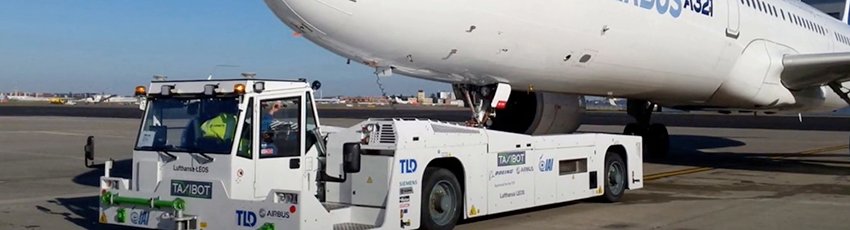
Transformative sustainability projects in aviation during 2025 included Copenhagen Airport leading with AI-powered APU emissions monitoring and Frankfurt and London Biggin Hill trialling world-first bio-based apron surfaces.
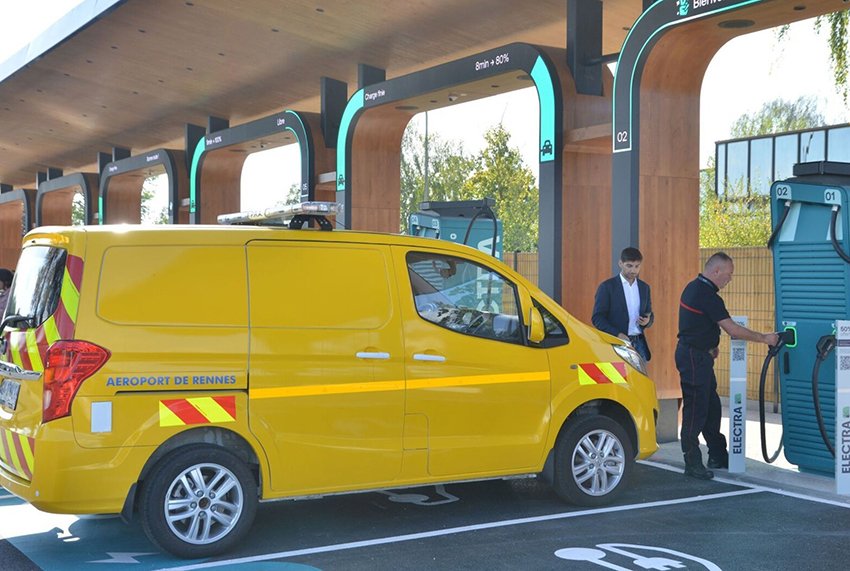
Elsewhere, in New York, John F Kennedy International Airport’s Terminal One launched the first centralised electric ground support fleet; easyJet trialled lightweight paint; and Queen Alia International Airport won an award for AI-powered smart cleaning.
WHAT CAN WE EXPECT TO SEE IN 2026?
So, what can we expect from 2026 in terms of sustainability trends/developments? A handful of sustainability experts give their views on what may be on the agenda for airports in 2026.
Claire Waghorn, Christchurch International Airport’s sustainability transition leader believes that looking at infrastructure-readiness for hydrogen and electric planes will gain traction in 2026.
She says: “This is a key year for airports to learn, plan, and prepare for low-carbon aircraft.
“With electric planes for short routes and hydrogen for regional routes, 2026 offers an excellent chance to collaborate and learn from Demonstrator pilots. Early action builds infrastructure, regulatory know-how, and primes airports for future airline support and revenue.”
Celeste Hicks, policy manager for the Aviation Environment Federation – the principal UK NGO campaigning on aviation’s impact for people and the environment – notes that 2026 will be a big year for airlines to step up their Corsia Offsetting efforts.
“One policy area, on the horizon in 2026, which will have an impact on airlines is the ICAO Corsia Scheme, whereby airlines will face their first offsetting obligations, covering emissions growth beyond 85% of 2019 levels,” says Hicks.
“Governments will notify carriers by end-2025, with compliance due by 2028 through credit purchases. While Corsia only focuses on offsets rather than actual reductions, its survival amid global challenges could signal progress toward meaningful aviation emissions cuts.”
WSP India’s Shuchita Garg, an ACI-qualified verifier for Levels 1-3+ of the Airport Carbon Accreditation programme, says: “The next 12 months will be pivotal as ISO and GHG Protocol collaborate through a joint working group to co-develop a global product-level GHG standard.
“Drafts are expected throughout 2026, with finalisation likely by late 2026. This will enhance consistency in carbon measurement and inform future Airport Carbon Accreditation requirements. Airports should align systems now; early engagement will reduce compliance costs and position them as leaders in transparent climate reporting.”
Christopher Imbsen, vice president for policy at the World Travel & Tourism Council (WTTC), notes that 2026 will see the launch of the EU’s first-ever EU Sustainable Tourism Strategy.
He says: “Launched in early 2026, the EU’s first-ever Sustainable Tourism Strategy aims to make tourism more sustainable, competitive and locally beneficial.
“For airports, this creates opportunities to act as low-carbon mobility hubs, investing in SAF infrastructure, improving multimodal connections, accessing green finance, and supporting airline decarbonisation while strengthening community value and resilience.”
Global Consultancy and Verification Services
WSP is an award-winning global leader in environmental consultancy and former Programme Administrator (2009–2024) of the ACI-owned Airport Carbon Accreditation programme, supporting 600+ airports in 88 countries.
Its global network of Airport Carbon Accreditation and carbon specialists support airports at every stage, from Level 1 certification to achieving operational Net Zero at Level 5 with services that include Strategic journey mapping and readiness assessments; Application preparation (planning, data gathering, conformance checks, submission); Multi-year consultancy, training workshops, and pre-screening to minimise non-conformities; Technical advisory on carbon reporting, management plans, target setting, stakeholder engagement; and Verification for Levels 1–5, offering impartial, third-party assurance globally.
You can find out more about WSP by clicking the following link https://tinyurl.com/7vbbpvdf
About the author
Dr Catherine Wilson is WSP UK’s sustainable aviation and tourism specialist. WSP researchers Soumya Sudhakaran,Nidhi Pancholi and Vishwas Magadal helped in the production of this article.