




Sustainability driver: ACI’s Airport Carbon Accreditation programme

The Airport Carbon Accreditation programme plays a key role in supporting the decarbonisation efforts of airports worldwide, writes Alexandre de Joybert, director of sustainability at ACI EUROPE.
The global aviation sector is committed to achieving net zero carbon emissions by 2050, with airports playing a vital role in this transition.
As essential hubs for connectivity and socio-economic development, airports are reshaping their operations and working closely with business partners to support a more sustainable future for air transport.
Within this context, Airport Carbon Accreditation provides a globally recognised and institutionally endorsed framework for measuring, managing and reducing carbon emissions, based on internationally accepted methodologies.
Airports around the world are using this framework to implement practical measures that reduce emissions, improve energy efficiency and upgrade infrastructure, demonstrating their role not only as centres of connectivity but also as catalysts of climate action in aviation.
A GLOBAL FRAMEWORK FOR AIRPORT DECARBONISATION
Through its seven levels of accreditation, Airport Carbon Accreditation recognises that airports are at different stages of their journey towards decarbonisation.
The programme provides a structured pathway, from measuring a carbon footprint to achieving net zero emissions for emissions under the airport’s direct control and engaging business partners in the transition to full decarbonisation – including all upstream and downstream sources.

It is open to airports of all sizes and business models, including those focused on cargo operations and general aviation.
Each airport faces its own set of challenges on the path to net zero, shaped by factors such as location, size, energy supply mix and local regulatory frameworks.
To date, more than 600 airports are accredited, illustrating the depth and breadth of the global airport community’s commitment to meaningful climate action.
A RECORD YEAR FOR CLIMATE ACTION
The 15th year of Airport Carbon Accreditation, running from May 2023 to May 2024, was one of the most significant in the programme’s history.
During this period, accredited airports collectively reduced more than one million tonnes of CO2 from Scope 1 and 2 emissions, an amount comparable to the annual electricity consumption of over 200,000 homes.
Progress towards the higher levels of the framework also continued to gather pace. At the time of writing, a total of 106 airports have reached Levels 4 and 4+, aligning with the goals of the Paris Agreement.
Meanwhile, 30 airports have achieved Level 5, the programme’s most demanding level, recognising airports that have reached net zero emissions under their direct control and committed to delivering net zero across their Scope 3 emissions by 2050 or sooner.
PROGRESS ACROSS THE WORLD’S REGIONS
The momentum for airport climate action is gaining speed across all world regions.
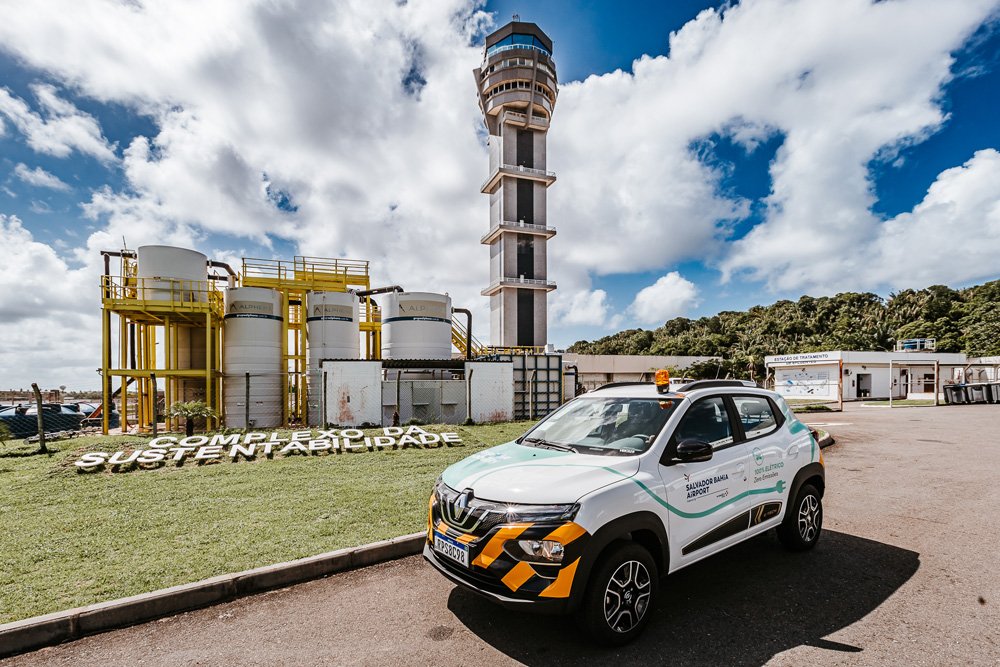
In Latin America and the Caribbean, Brazil’s Salvador Bahia Airport is one of the latest airports to reach Level 5, becoming the first in Brazil and the Americas to achieve the programme’s highest level of accreditation.
The airport has reduced more than 90% of its Scope 1 and 2 emissions and has committed to achieving net zero across its Scope 3 emissions by 2050.
Operated by VINCI Airports, Salvador Bahia Airport sets a strong benchmark and highlights the readiness for ambitious climate action across Latin America and the Caribbean.
The programme now includes 103 accredited airports in the region, making it the second-largest group after Europe.
In the Asia-Pacific and Middle East region, three more airports have reached Level 5, including Adelaide and Parafield becoming the first in Australia to achieve this milestone – as well as Chhatrapati Shivaji Maharaj International Airport in India.
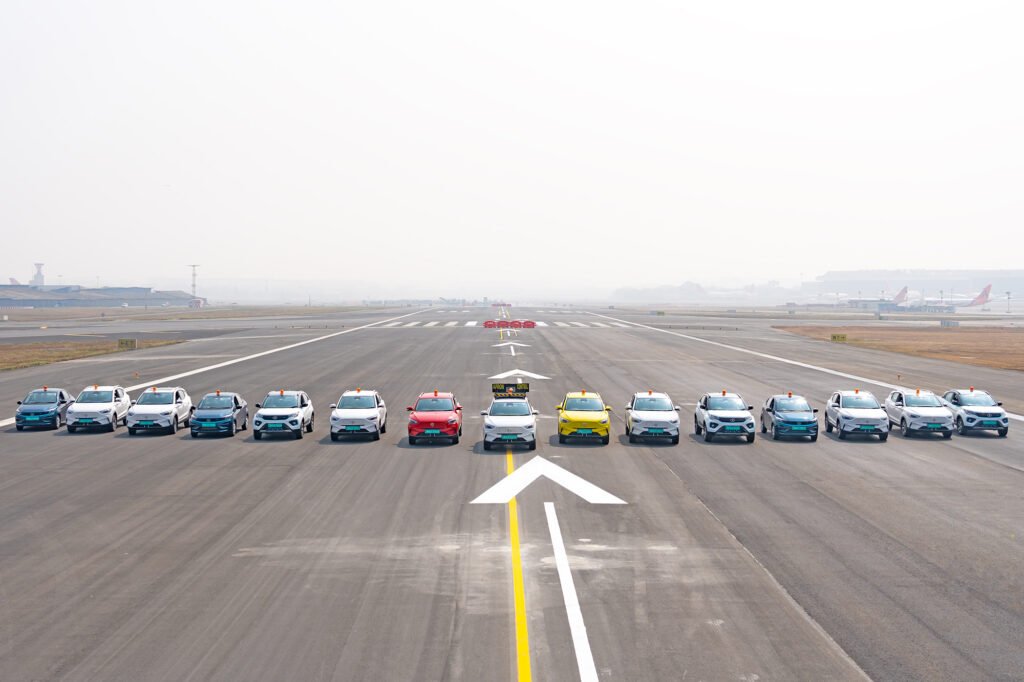
With seven airports now accredited at Level 5 across India, Australia and New Zealand, and a total of 96 airports participating in the programme, the region continues to advance ambitious decarbonisation targets.
Europe remains the largest and most advanced regional community in terms of airport climate action, with 265 accredited airports.
Lyon–Saint Exupéry Airport and Nice Côte d’Azur Airport have recently reached Level 5, reinforcing Europe’s net zero leadership.
In total, 22 airports in the region have attained the programme’s highest level, while 58 have aligned their carbon management strategies with the Paris Agreement.
North America also continues to make steady progress, with more than 100 accredited airports strengthening their performance through mature carbon management practices and long-term decarbonisation plans.
During the 2025 ACI North America and ACI World Annual General Assembly, Conference and Exhibition in Toronto on October 27, a ceremony recognised airports across the United States and Canada for their achievements within Airport Carbon Accreditation.

Kevin Burke, ACI-NA President and CEO, said: “Airports continue to raise the bar in environmental stewardship, and I am proud to recognise this year’s accredited airports for their progress.
“North American airports are advancing meaningful carbon reductions and demonstrating the practical steps our industry is taking towards a more sustainable future.”
Africa recorded one of its strongest years to date, with 11 new airports joining the programme, representing growth of 30.5%.
The region also reached a new milestone as La Réunion Roland Garros Airport became the second airport in Africa to achieve Level 4+, following Félix Houphouët-Boigny International Airport in Abidjan, Côte d’Ivoire.
INITIATIVES PAVING THE WAY TO DECARBONISATION
Airports are implementing a wide range of initiatives that are reshaping operations while delivering significant emissions reductions.
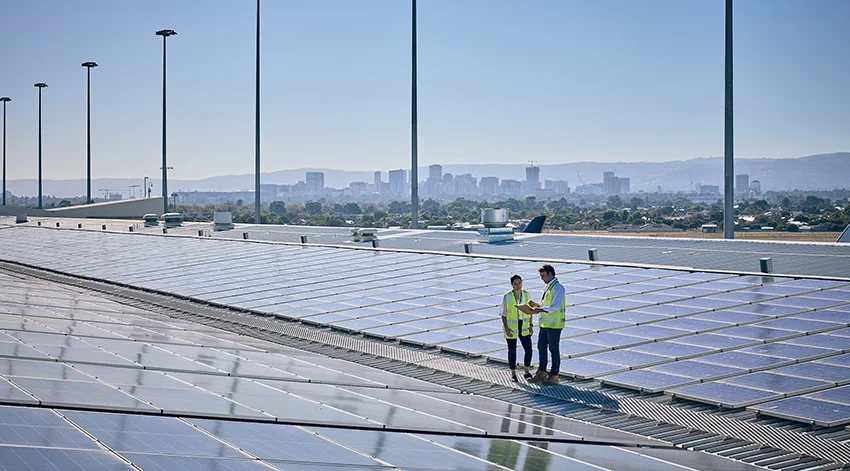
Large-scale on-site solar installations specifically set for auto-consumption are a popular choice, slashing both emissions and costs by generating clean electricity for terminals, airside operations and ground support equipment.

VINCI Airports operates around 40 solar farms worldwide, while Athens International Airport now produces sufficient onsite renewable electricity to cover 100% of its needs.
Airports are also accelerating the electrification of ground support fleets. Quito International Airport, Hartsfield–Jackson Atlanta and Singapore Changi have achieved notable emissions reductions, while Brussels and Zurich airports are advancing airside mobility through autonomous electric shuttle buses.
In parallel, investments in hydrogen infrastructure are laying the groundwork for future zero-emission operations, with pilot projects underway at Schiphol, Copenhagen and SEA Milan.
LOOKING AHEAD
As the aviation sector prepares for the UN Decade of Sustainable Transport (2026–2035), Airport Carbon Accreditation remains a robust framework for guiding co-ordinated climate action.
Continued progress will depend on close collaboration between airports, airlines, policymakers, energy providers and technology developers to scale sustainable aviation fuels, expand access to renewable and low-carbon energy, deploy hydrogen-ready infrastructure and accelerate the electrification of ground operations.
The programme continues to evolve in response to industry developments, scientific evidence and societal expectations.
By providing a structured and independently verified framework, Airport Carbon Accreditation enables airports to transparently track and demonstrate their decarbonisation progress.
With more airports aligning their strategies with global climate objectives, the programme remains at the forefront of the sector’s transition to net zero.