




The only way is up!

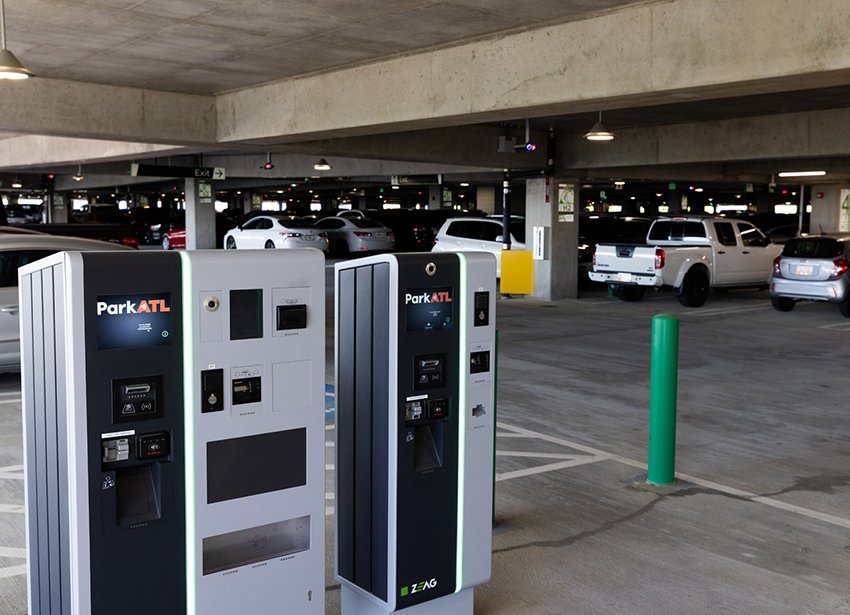
Building upwards instead of outwards provides a potential solution for airport car parks where space is tight, writes Christopher Tiessen, president/CEO of KLAUS Multiparking America.
Airport leaders everywhere face the same dilemma: passenger numbers keep rising, but airports themselves aren’t getting any bigger. And the skies are only getting busier.
Global air travel demand rose by 5.3% this year, according to the International Air Transport Association (IATA), underscoring that passenger growth is steady and sustained.
That’s good news for the industry, but it also means more vehicles, more congestion, and more pressure on ground-side infrastructure already stretched to its limits.
Across the US, the response has been to build outwards. From Chicago O’Hare’s $1.3 billion Concourse D to Dallas Fort Worth’s $4 billion Terminal F expansion, more than $8 billion in new projects are underway.
Yet as airports invest billions to expand their footprints, it’s worth asking whether we’re getting the most out of the land already in play.
MORE LAND ISN’T ALWAYS THE ANSWER
For most airport executives – especially operations chiefs, planners, and facilities managers – the space squeeze is nothing new. When passenger volumes rise, the traditional response has been to build outward: more parking lots, longer access roads, larger terminals.
But every acre devoted to vehicles or circulation is one that can’t be used for passengers, gates, or commercial activity.
Talking specifically about car parking, Tweed New Haven Regional Airport in Connecticut is planning to add new surface parking spaces. It’s a practical step, but it consumes land that could otherwise serve long-term passenger or terminal needs.
Similarly, at Bradley International Airport, recent funding for terminal upgrades came with the challenge of improving ground access in a confined footprint.
The trade-off is costly in more ways than one. Large surface lots create sprawling traffic zones, lengthen walking distances, and reduce the efficiency of passenger transfers. In cities with limited space or environmental restrictions, those inefficiencies add up quickly.
In short, building outward may buy time, but it limits flexibility and efficiency over the long run.
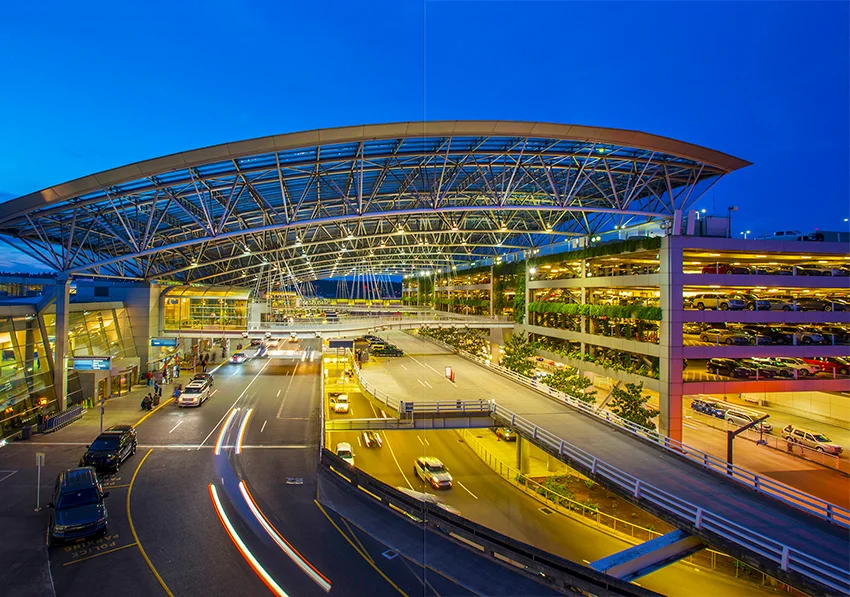
THE VERTICAL ALTERNATIVE
A growing number of airports are rethinking expansion from the ground up – literally. Instead of spreading out, they’re building smarter by moving vertically.
Compact, multi-level parking systems make far more efficient use of land, often cutting the footprint by as much as 40% while maintaining or even increasing capacity.
The reclaimed space can then support higher value uses such as passenger amenities, new gates, or multimodal transit links; investments that yield stronger long-term returns than asphalt ever could.
And the advantages extend beyond space savings. Vertical layouts streamline vehicle flow by centralising entry and exit points, easing congestion and improving wayfinding.
When paired with integrated EV charging, they also advance airports’ sustainability commitments while supporting the growing number of electric travellers.
McAllen International Airport in Texas offers a glimpse of this shift in action. As part of its $176 million terminal expansion, the airport is rethinking how each parcel of land can deliver more value.
A compact, multi-level parking design helps ensure that future growth supports smoother passenger movement, opens space for continued development, and drives stronger returns on every square foot.

SMARTER SPACE, STRONGER RETURNS
Forward-looking airport authorities are beginning to view land the way developers view downtown real estate: every square foot should generate value.
Where expansion is limited by space, regulation, or community constraints, compact parking infrastructure can unlock higher-yield uses. Even a few reclaimed acres can make room for hotels, logistics facilities, or expanded concessions that deliver stronger, steadier returns than surface parking.
Turning this approach into a workable plan starts with understanding where the land delivers the most value. Begin with a space audit: map how every acre is used, pinpoint congestion zones, and evaluate what each parcel contributes – or costs – in operational and commercial terms.
Next, conduct flow modelling to analyse how people and vehicles move across the campus and how a more compact layout might improve circulation and transfer times. These insights reveal where vertical infrastructure can have the greatest effect.
Follow with financial modelling to compare capital and operating costs over time. Multi-level or modular systems often offset higher upfront costs with faster construction, smaller footprints, and lower maintenance needs.
Finally, align plans with policy goals. Many airports face emissions, zoning, or energy mandates that reinforce the case for EV-ready, space-efficient designs.
Integrating these requirements early helps ensure compliance and adaptability as standards evolve.
Taken together, these steps form a clear framework: assess, model, cost, and align. Airports that take this approach potentially shift from simply adding capacity to creating systems built for long-term efficiency, adaptability, and financial strength.
BUILDING SMARTER, NOT JUST BIGGER
The aviation industry is at a crossroads. Billions are being invested in terminals and runways, yet the spaces that support them are often overlooked or inefficiently used.
As mobility continues to evolve – through rideshare, micro-mobility, and eventually autonomous vehicles – airports must design for a future that’s already on the horizon.
Smart, space-efficient infrastructure offers one path forward. But it’s not a universal prescription. Each airport’s geography, governance, and passenger profile will shape what “smart” looks like in practice.
What’s constant is the need to think vertically, plan collaboratively, and design with tomorrow’s constraints in mind.