


The recent decision to support the expansion of Gatwick Airport and continue with the planned Northern Runway Programme represents much more than the development of additional airport capacity.
It is an opportunity to show commitment to the UK’s aviation sector, stimulate economic growth, and demonstrate that expansion accompanied by environmental responsibility through sustained investment in decarbonisation can progress and work together.
The UK aviation industry is a critical enabler of economic prosperity. It connects businesses to global markets, supports tourism, attracts inward investment, and sustains hundreds of thousands of jobs across the country.

As demand for international travel continues to recover and grow, increasing capacity at key airports is essential if the UK is to remain competitive with its European neighbours and global leaders.
Gatwick’s expansion has the potential to unlock billions of pounds of economic value. Increased connectivity can support regional businesses, encourage investment, improve access to international markets and create employment opportunities both during construction, throughout long-term airport operations and indirectly into the local community and beyond.
Importantly, the benefits will extend well beyond the South East through strengthened supply chains, improved freight capability and enhanced domestic connectivity.

Similarly, the ambition signalled by Gatwick’s expansion need not stop with London. Instead, this key milestone for the capital could act as a catalyst for future investment across the UK.
Increased governmental support for airports’ expansion around the country would ensure progress is truly nationwide and not occurring in a southern silo. This would also allow businesses and communities in historically underinvested regions of the UK to directly benefit and reap the economic rewards of aviation growth.
However, expansion alone is not enough. Growth must be accompanied by meaningful investment in decarbonisation if the aviation industry is to meet its environmental commitments and maintain public confidence.

The sector has already made significant progress through more fuel-efficient aircraft, operational improvements and advances in air traffic management.
Yet achieving the ‘net zero’ aspiration in aviation will require continued collaboration between stakeholders, government, airports, airlines, manufacturers and the wider supply chain.
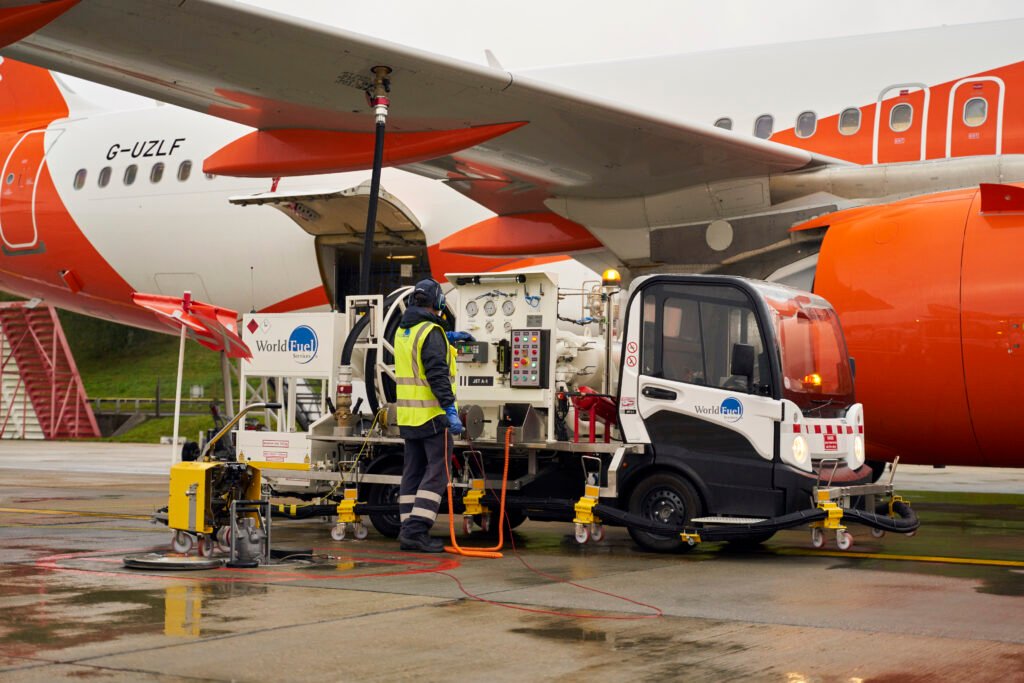
Investment is needed across several areas: for instance, Sustainable Aviation Fuel (SAF) production must be accelerated through greater domestic capacity, and supportive policy frameworks and airport infrastructure should continue to evolve with low-carbon energy systems, electrified ground operations and vastly improved public transport access.
Public Transport Access in particular requires much deeper investment. To truly realise its potential, it relies on national and regional government ensuring that infrastructure gets built to unlock the full benefits of airport expansion.
Wider research, such as that ongoing in hydrogen and electric flight technologies must also continue, to ensure that the UK remains at the forefront of aviation innovation.
Whilst I am specifically discussing the UK, it is hugely important for us all to recognise that aviation decarbonisation is not just a national challenge or one confined to individual airports – it is a global effort.
Other countries such as Denmark and Sweden have struck an admirable balance between promoting aviation expansion and ensuring sustainability is at the heart of development. The UK is in a strong position to draw on international learnings and do the same, especially as decarbonisation presents a significant opportunity for the British economy.
The innovative decarbonisation projects across the country, from SAF production facilities and renewable energy infrastructure to carbon capture, hydrogen generation and electricity grid upgrades, will all play an essential role in enabling a cleaner future whilst creating many long term highly skilled jobs in every region of the country.
The debate should therefore move beyond a choice between growth and sustainability. The UK’s future competitiveness depends on delivering both.

Airport expansion provides the capacity needed for economic growth, while sustained investment in decarbonisation ensures that growth is resilient, responsible and aligned with the country’s climate ambitions.
Gatwick’s expansion should be viewed as a leading part of a broader national vision – one that combines modern infrastructure, environmental innovation and long-term economic prosperity.
By investing not only in airports, but also in the technologies and projects that will decarbonise aviation, the UK has the opportunity to build an aviation sector that is both globally competitive and environmentally sustainable for the generations that follow us.
About the author
Richard Graybrook is head of aviation for UK&I and Europe at global engineering and sustainability consultancy Ramboll.