



Big and bold new infrastructure

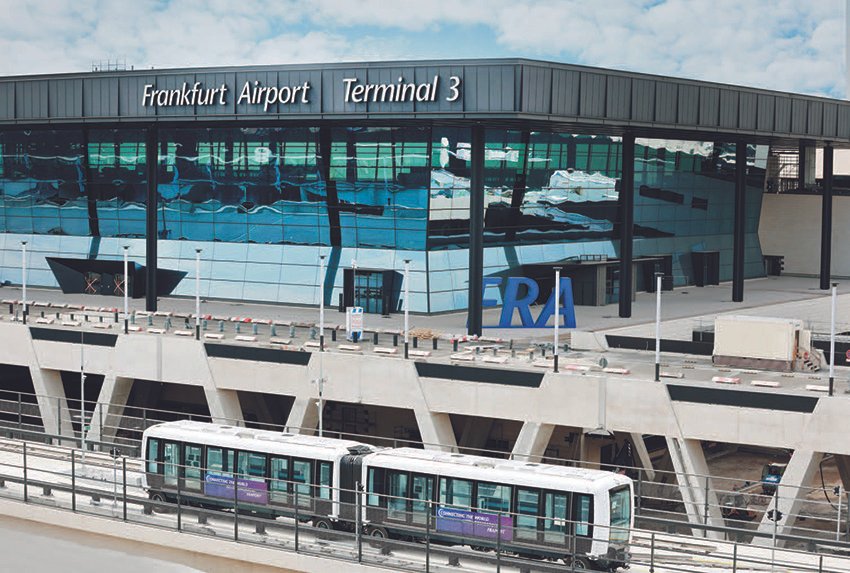
We shine the spotlight on new facilities in Frankfurt, Munich and Hong Kong and provide an update on plans for the new Terminal 2 at Phu Quoc International Airport in Vietnam.
In most parts of the world, adding key new airport infrastructure such as terminals and runways are massive projects, and sometimes political hot potatoes that can be in the pipeline for decades before they become reality.
For this reason, any new infrastructure needs to be celebrated, especially when they are game-changing new facilities that effectively breathe new life into a gateway by transforming its operational capabilities, raising capacity and taking the passenger experience to the next level.
This article shines the light on projects that were either successfully completed in the second quarter of 2026 or subject to significant design, planning and construction updates.
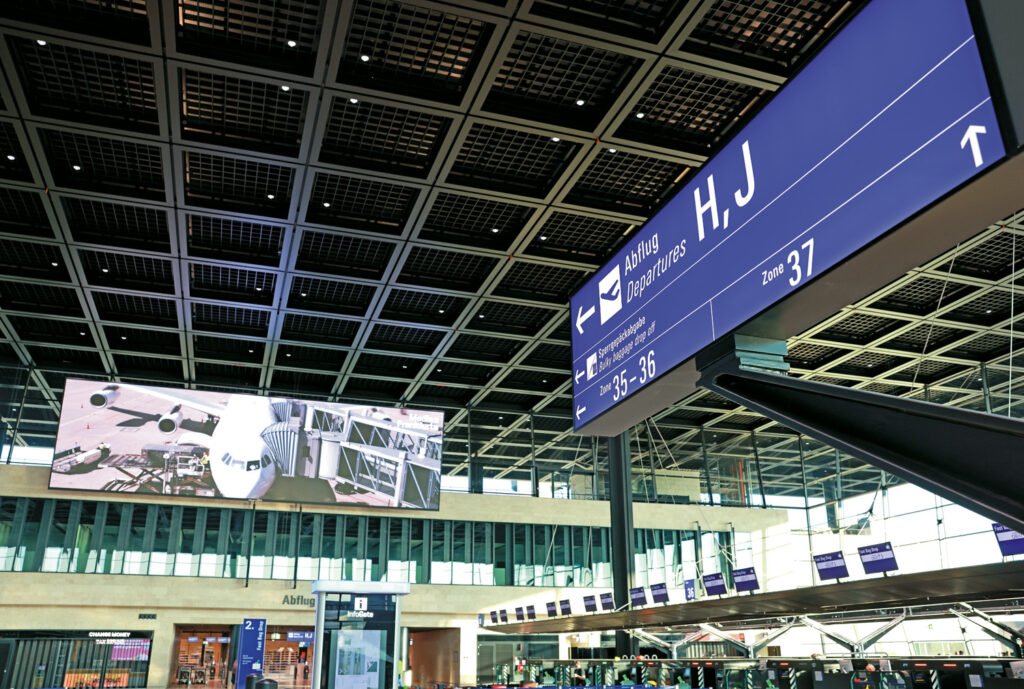
FRANKFURT AIRPORT’S NEW TERMINAL 3
The German gateway officially opened its new state-of-the-art Terminal 3 on April 22 with the €4 billion plus facility handling its first flights 24 hours later.
The inauguration marked the completion of the largest infrastructure project ever undertaken by the MDAX-listed company, ushering in a new era in Frankfurt Airport’s history.
Including Piers G, H and J, the new 403,000sqm addition to the airport’s core infrastructure is capable of handling up to 19 million passengers per annum.
However, with the addition of a future Pier K – Terminal 3 is already the size of 25 football pitches – this capacity is expected to rise to around 25 million passengers annually.
“With the inauguration of our Terminal 3, one of Europe’s most advanced terminals, we are positioning ourselves for long-term success,” enthused Dr Stefan Schulte, CEO of operator, Fraport AG.
“This brand-new structure is more than just a major step forward in our airport’s evolution; it also stands as a symbol of the outstanding collaboration among all those involved in the project.
Each of them has contributed to its success with their expertise, lifeblood, and abilities.”
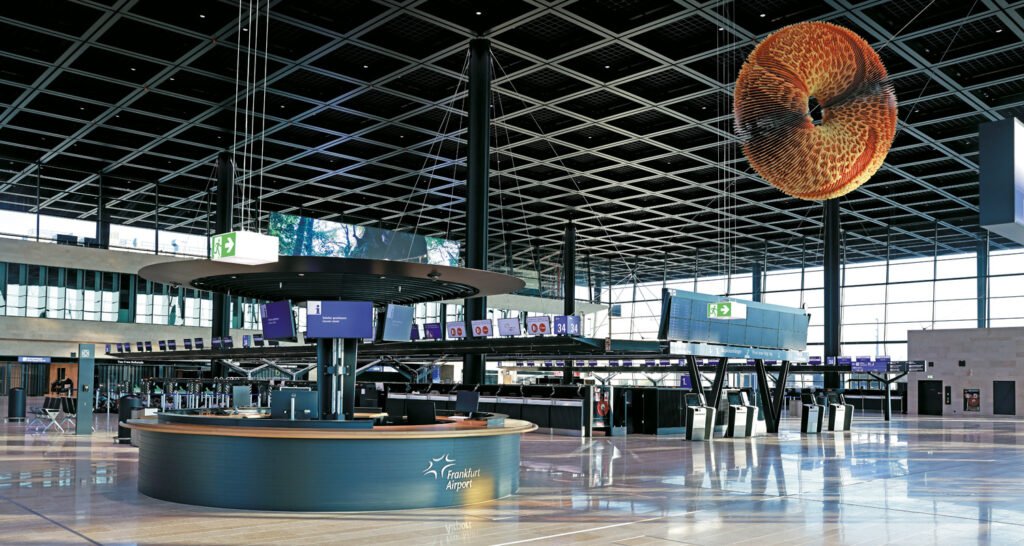
The new terminal will initially be home to 57 airlines, all of which are scheduled to have completed their move to it by June 9.
In addition, Condor – the second-largest airline at Frankfurt Airport – will be switching to Terminal 3 in the summer of 2027.
Fraport is confident that airlines, concessionaires and passengers alike will benefit from T3’s “timeless architecture, short paths and leading-edge technology”.
As well as fully automated luggage check-in and security checks with CT scanners, the terminal offers passengers a wide range of food and beverage outlets and shopping opportunities.
Indeed, T3 boasts 64 shops and F&B outlets spread across a total floor area of 12,000sqm. Frankfurt Airport Retail – a joint venture of Fraport and Gebr. Heinemann – is the main concessionaire.
During the peak of its construction, some 3,000 skilled workers were on site at the airport.
Fraport’s AG significant investment in the new terminal ensured that it is Europe’s largest privately funded infrastructure development project to date.
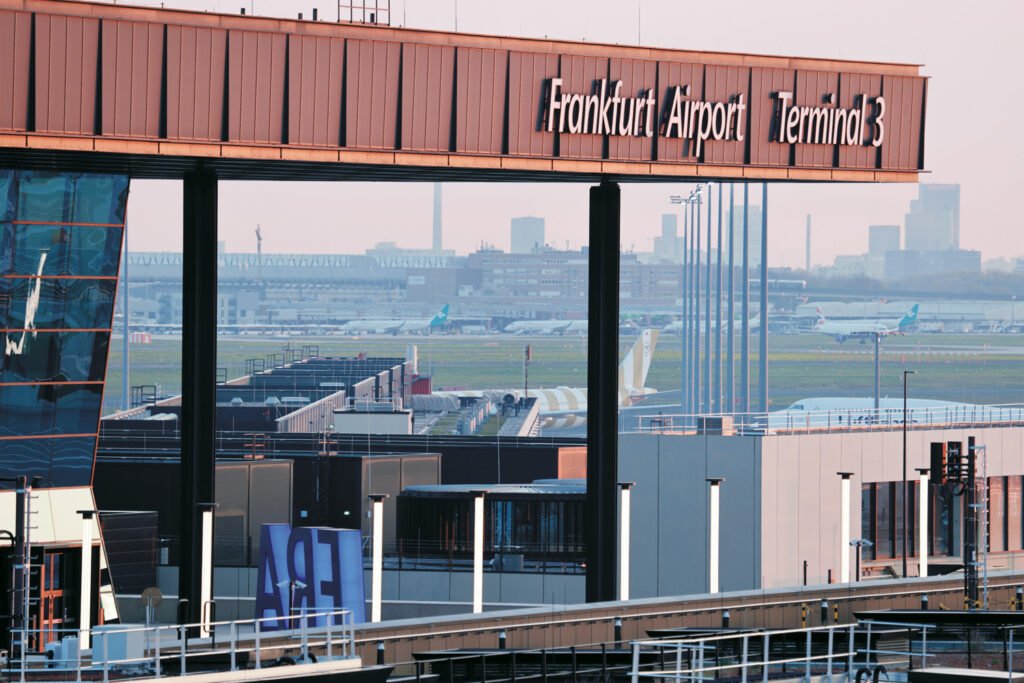
Fraport Ausbau Süd GmbH (FAS), a wholly owned subsidiary of Fraport AG, was responsible for all facets of the construction project.
“FAS was the driving force behind the project’s success,” noted Schulte. “It takes credit for completing Terminal 3 on time without exceeding the budget.”
Upon opening, Terminal 3 became the ‘greenest’ of all FRA’s terminals courtesy of its eco-friendly construction, and the fact that the entire building is designed to be very energy efficient, consuming significantly less power than Terminals 1 and 2.
Sustainable features worthy of note include highly thermally insulated building envelopes, photovoltaic systems on the roof, optimised use of daylight, water recycling and consistent use of LED lighting.
While a displacement ventilation system ensures a supply of fresh air everywhere from check-in to the gates.
Fraport AG is also quick to note that from July 26, all electricity consumption at the airport is expected to be sourced from renewable energy.
NEW TERMINAL 2 AT PHU QUOC INTERNATIONAL AIRPORT
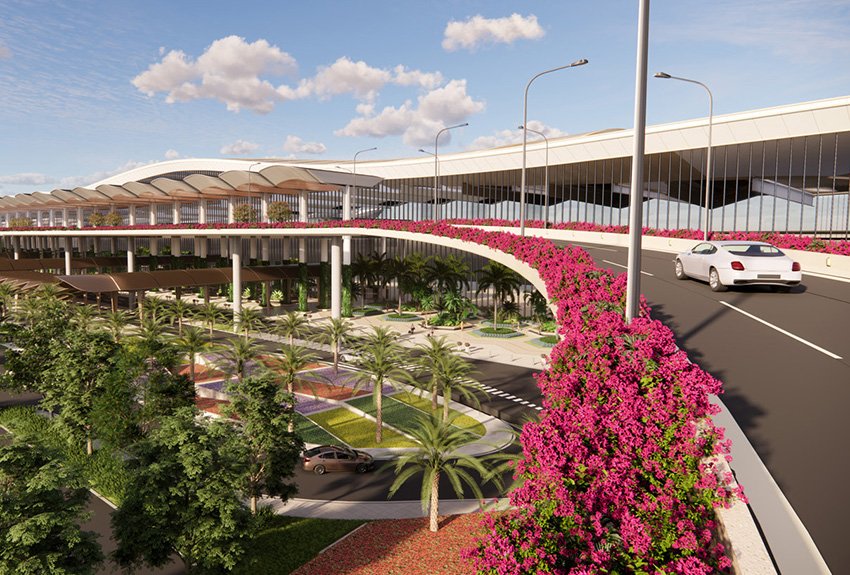
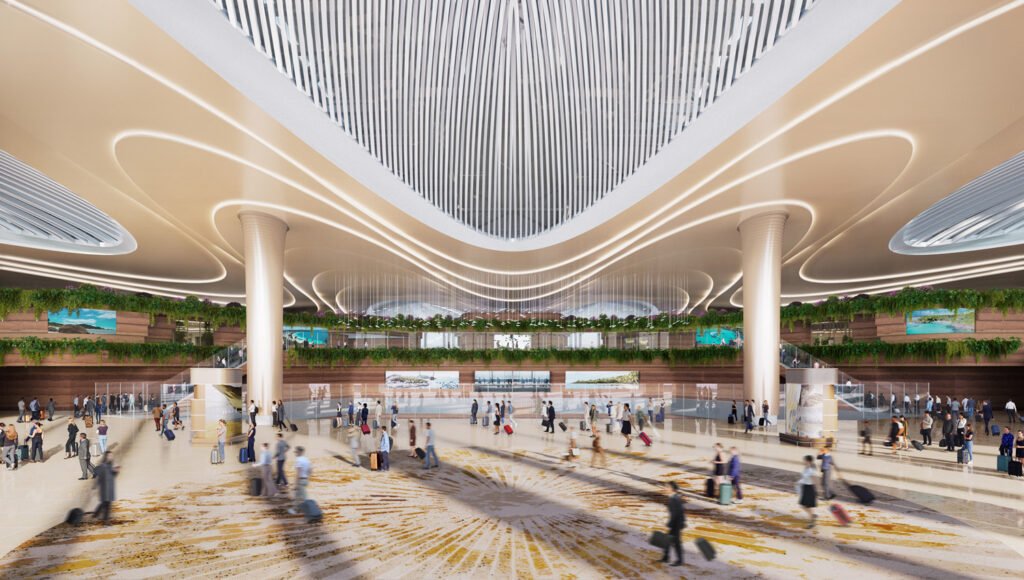
Working in collaboration with the Sun Group, HOK has unveiled the interior design for the departure spaces in the planned new Terminal 2 at Phu Quoc International Airport in Vietnam.
The design brief, says HOK, is for the terminal to be an iconic, hospitality and nature-inspired facility that supports the airport’s goal to serve 24 million passengers annually.
Phase I of the project is currently under construction and includes 21 gates in the terminal’s east wing for international and domestic travellers.
HOK’s interior design is said to blend Vietnamese culture with clear, intuitive wayfinding to create a calm and welcoming departure experience.
In the check-in hall, a triple-height ceiling will feature narrow, oval forms inspired by Vietnamese fishing boats.
Describing the finer details of the terminal’s design, HOK said: “Integrated metal baffles evoke the feathers of a phoenix, a sacred creature in Vietnam. Between these forms, softly illuminated, wave-like ceiling patterns reference water around the boats.
“At floor level, a radial sun motif anchors the heart of the space, establishing a central gathering point before travellers proceed to security screening.
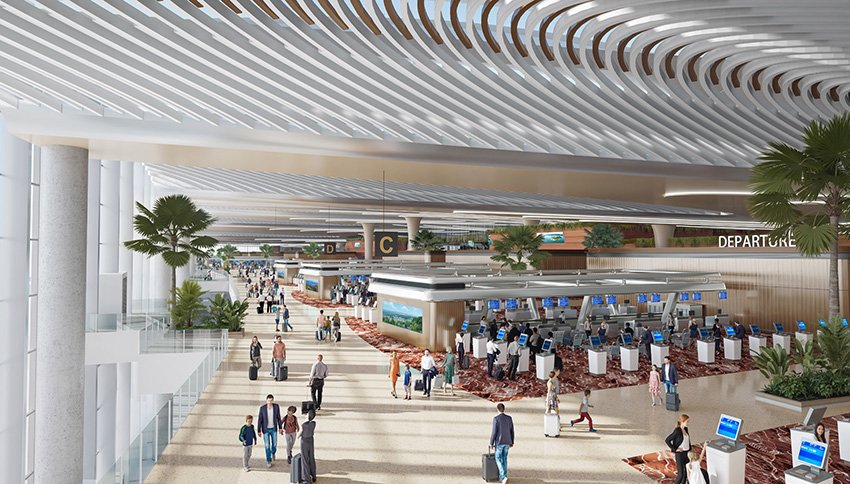
“Self-check-in kiosks are grouped on warm-toned carpeting, while adjacent circulation zones are finished in terrazzo flooring, clearly distinguishing areas intended for pause from movement.
“Palm trees and terraced landscaping reinforce the airport’s tropical setting and enhance traveller comfort. Skylights and expansive glazing draw natural daylight deep into the hall, supporting orientation and wayfinding.”
After security, travellers will arrive on an upper mezzanine overlooking the grand hall, with views of lush plantings below and floor-to-ceiling windows framing the airfield.
As people descend to the main level, they will encounter a curated mix of local and international dining and retail offerings, a gently meandering pathway through palm trees and native vegetation, and a viewing gallery for aircraft departures and arrivals.
Inspired by local craftsmanship, the interior palette will incorporate materials such as rammed earth and oak wood, celebrating natural texture, warmth and authenticity.
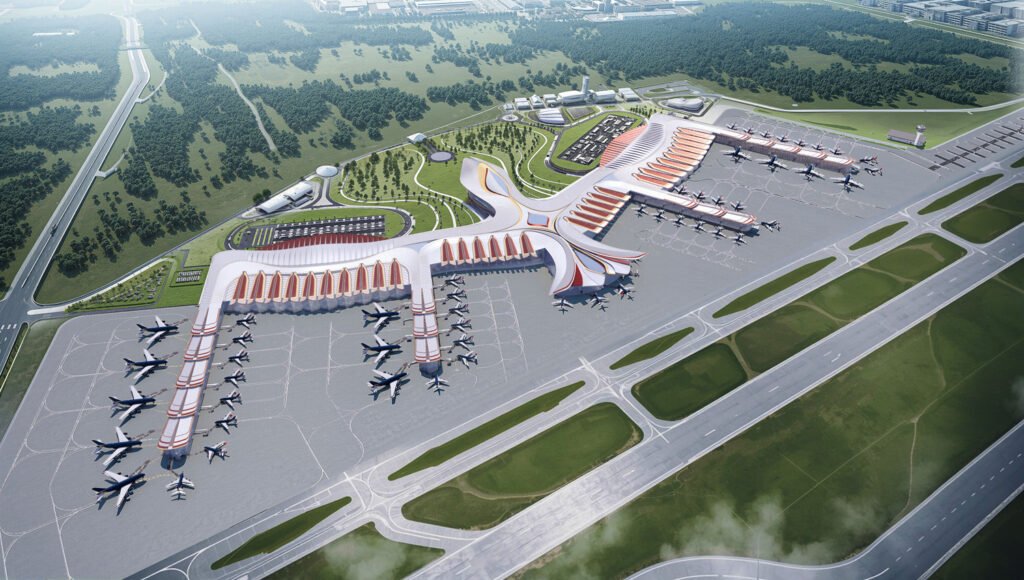
“Our client’s vision for Phu Quoc International Airport is a visionary gateway that celebrates the island’s natural beauty while acting as a catalyst for growth and transformation,” said Paul Collins, HOK’s principal-in-charge on the project.
“Our design translates that ambition into a modern, light-filled departure experience that reflects Vietnam’s culture and positions Phu Quoc as a distinctive, world class destination.”
Scheduled for completion by 2027, the terminal will boast the latest technology from SITA in a move the Sun Group say will enable a seamless, fully automated airport journey, from check-in and bag drop to biometric boarding.
SITA’s technology will include the gateway’s Airport Operational Database (AODB); Flex Hybrid, supporting 204 common-use workstations for passenger processing; 150 biometrically enabled Smart Path kiosks for check-in, seat selection, boarding pass printing, and tagging check-in bags; 100 Smart Path Bag Drop (Scan & Go) units for self-service baggage drop; and 38 dual-lane Smart Path Gates for automated boarding.
Sumesh Patel, SITA’s president for Asia-Pacific, commented: “Vietnam is one of the fastest-growing aviation markets in the region, and this partnership with Sun Group marks a key milestone in supporting that growth with future-ready infrastructure.”
In terms of the bigger picture for the gateway, Sun Group and Changi Airports International (CAI) have signed a strategic co-operation agreement to support its overall development.
Under the partnership, CAI will provide advisory services to enhance the airport operations, commercial programme, air connectivity and capacity and service enhancements.
The partnership aims to transform Phu Quoc International Airport into a travel destination, delivering world-class service standards and a seamless travel experience ahead of the APEC 2027 Summit, when the airport is expected to welcome global leaders and international visitors.
The collaboration further strengthens Phu Quoc’s position as an emerging aviation and tourism hub in the Asia-Pacific region.
Indeed, the airport’s rapid growth in recent years – it welcomed around six million passengers in 2025 but is projected to be handling up to 24mppa within the next five years – was the catalyst for the Vietnamese government approving the master plan for a new runway and Terminal 2.
Eugene Gan, CEO of CAI, noted: “We are impressed by Sun Group’s vision for developing Phu Quoc as the next upcoming travel destination.
“Its integrated tourism and entertainment eco-system provides a strong foundation for the long-term development of Phu Quoc International Airport as a key gateway for the island.
“We look forward to contributing our expertise to enable Sun Group to create a world-class airport experience.”
NEW PIER AT MUNICH AIRPORT
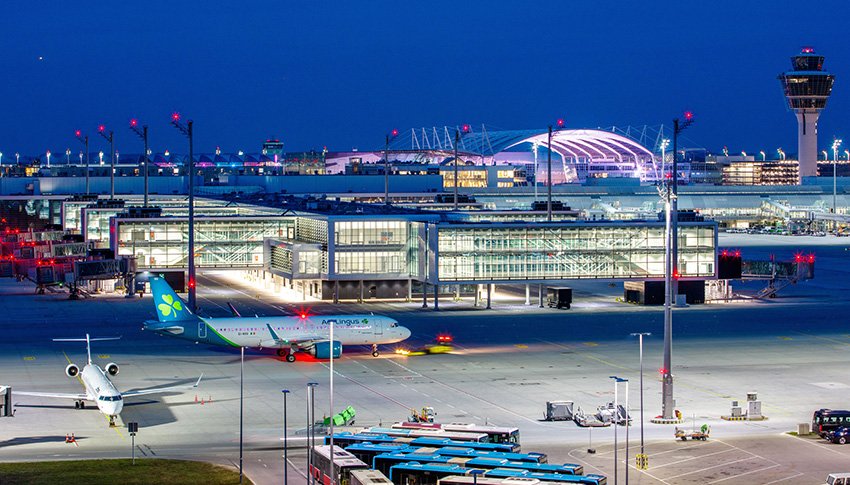
Describing the impact the new Terminal 1 Pier is expected to have on Munich Airport, CEO, Jost Lammers, simply noted that it represents the future.
“More capacity, more comfort, more international connections. As a modern gateway to the world, it strengthens our role as a leading European aviation hub,” he enthused.
The new €665 million addition is said to combine high-quality architecture with state-of-the-art technology and holistically planned passenger experience.
Spanning an area of approximately 95,000 square metres, the 360-metre-long pier has the capacity to handle up to six million additional passengers per year.
The six-level facility features modern check-in areas, centralised security checkpoints equipped with the latest CT technology, spacious waiting areas, and a host of retail and dining options.
Three of the levels are dedicated to passenger operations and will also include dedicated rest and quiet zones and prayer rooms for those that want them.
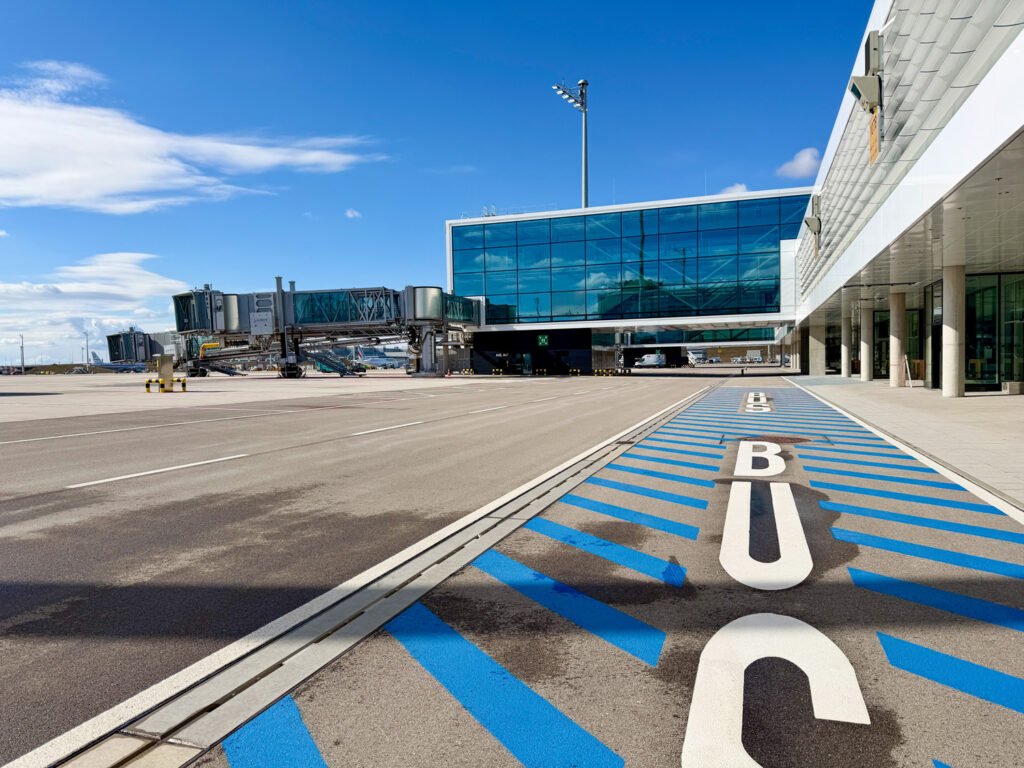
According to MUC’s fact sheet, the new pier can handle up to twelve short and medium-haul aircraft or six wide-body jets simultaneously. It is currently home to 40 international airlines.
Other highlights include the opening of two new lounges (Airport Lounge World and the Alpine) – the former offering spectacular views of airfield.
Eligible Emirates customers can enjoy the airline’s signature service and hospitality at the Emirates Lounge located in the pier – Terminal 1 A, Level 4.
With the opening of the new pier, Munich Airport states that it is introducing a completely revamped dining concept focused on high-quality products, modern design, and a comfortable atmosphere.
Five new restaurants – operated by the airport’s subsidiary Allresto – combine regional specialties with international trends, while also offering halal, vegetarian, and vegan options.
At the heart of the pier is a central marketplace, which MUC hopes will stand out for its appealing atmosphere. Surrounding it are some 20 retail and service areas that invite visitors to linger, relax, and shop.
The shopping experience includes Munich Airport’s first ‘walkthrough duty free’ area. Munich Airport’s managing director and chief operating officer, Thomas Hoff Andersson, was on hand to welcome passengers to the new pier on its first day of operations.
HONG KONG’S EXPANDED TERMINAL 2
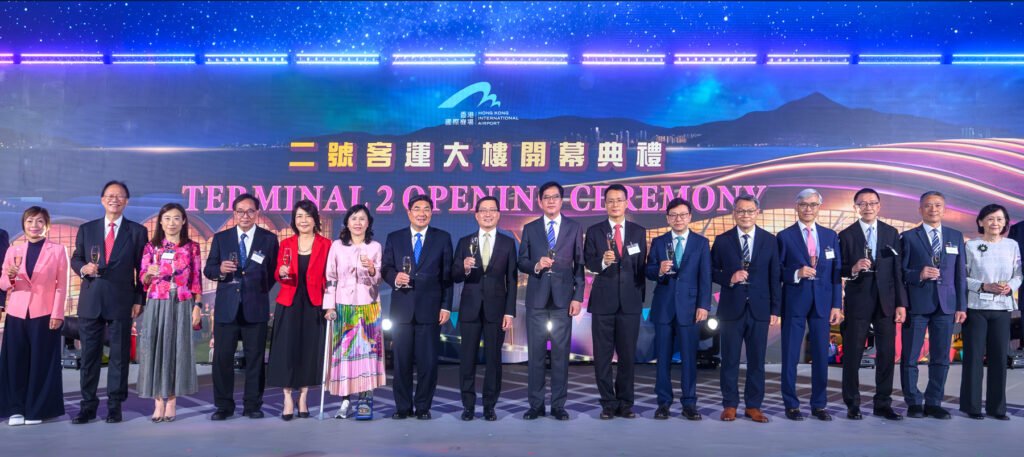
The new passenger departure facilities at Hong Kong International Airport’s Terminal 2 welcomed its first passengers on May 27, 2026.
While the full airside concourse and dedicated gates are unlikely to open until 2027, passengers can easily reach T2 via the Airport Express, where the same platform will be used for both terminals with doors opening directly into the new area.
The expanded T2 will offer a new generation of smart check-in facilities and automated technologies and is designed to provide a trendy and vibrant space for leisure travellers, served by some 15 airlines which mainly operate short-haul and regional routes.
According to Airport Authority Hong Kong (AAHK), the May opening will enable HKG to meet the anticipated surge in passengers during the summer peak season, providing “a new and pleasant travel experience for passengers”.
It is estimated the new-look Terminal 2 could handle around 15 million passengers by the end of 2026, and up to double that within a few years.
As part of the T2 project, HKG has gained a new Coach Hall that is currently served by tour buses, cross-boundary coaches, limousines, crew and resident coaches and has ticketing counters for cross-boundary transport connecting with more than 110 destinations in the Greater Bay Area.