



Saudi Arabia’s airport vision

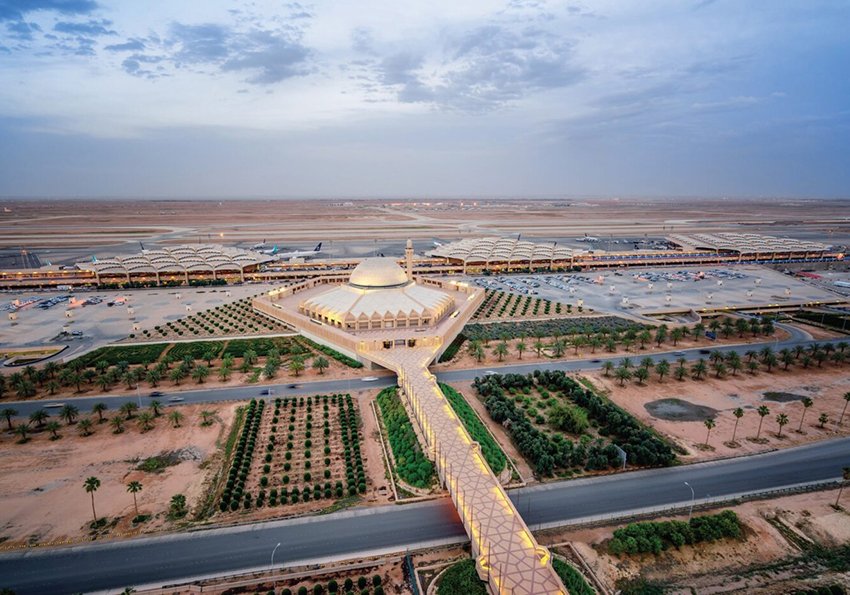
The Kingdom’s strategy is designed for growth, connectivity and enhancing the customer experience, writes John Reavy, Mott MacDonald’s aviation director for the Middle East.
Aviation is at the heart of the Kingdom of Saudi Arabia’s ambition for growth and a more diversified economy.
Indeed, it is essential for regional connectivity across Saudi Arabia’s vast geography, domestic and international tourism and trade.
Launched in 2022, the Saudi National Aviation Strategy sets out plans to strengthen air transport through modernisation of airport infrastructure across the country, the launch of a new national carrier Riyadh Air, and the development of King Salman International Airport, a mega project in Riyadh.
Sitting between Europe, Asia and Africa, the aim is for Saudi Arabia to become a global aviation hub, serving 330 million passengers annually.
As a central driver of Vision 2030, aviation will also help to spread the benefits of growth and economic diversification across the country through better regional connectivity.
To support these ambitions, significant investment will be directed towards Saudi Arabia’s largest international airports, particularly in Riyadh and Jeddah.
Modernisation of the Kingdom’s wider network of international and regional airports will focus more on improving operational efficiency and passenger experience within the same airport footprint.
Core planning priorities at these airports will be movement of passengers, increasing processing capacity and making busy airports feel less congested.
DESIGNING FOR GROWTH
Meeting growing demand, while maintaining operational efficiency, is one of the main challenges facing Saudi Arabia’s airport network.
As a result, there is a focus on right sizing airports for a five-to ten-year growth period without over-investment. Plans and designs need to be pragmatic, delivering value while retaining flexibility for future expansion.
Saudi Arabia’s airports were originally designed using a standardised model, which established a consistent baseline for infrastructure and operations across a wide network.
That standardised model is a good base for phased expansion across multiple airports, where modules can be added to existing airport footprint in phases, helping to upgrade the airports quickly, cost-effectively and keeping consistency.
Peak demand during events like the FIFA World Cup 2034 or Expo 2030 Riyadh will need to be managed through operational efficiency without adding excess capacity.
Faster, more predictable aircraft turnarounds could help airports optimise existing infrastructure.
Video analytics can monitor the turnaround process, identify deviations from plan and improve departure reliability. Greater predictability allows airports to reduce the time between arriving and departing aircraft, helping them to add capacity or manage peak demand more effectively.
IMPROVING THE PASSENGER EXPERIENCE
As airports handle more people within constrained footprints, passenger flow has a greater impact on capacity and customer satisfaction.
Advances in CT scanning are transforming hand baggage screening, helping security teams to identify the right bags to inspect more quickly. This, as we all know, will enable more people and bags to flow through security per hour.
Airports can also derive great value from the data generated by smart systems supporting passenger and aircraft processes.
Analysis of security operations can improve the performance of security lanes and, potentially, reduce the number of lanes required. It’s an example of how a process improvement can free up space for passenger amenities, food and beverage areas or retail outlets.
Large LED screens are becoming an integral part of the modern airport experience, improving passenger communication and wayfinding.
Delivering flight information either via digital apps or big screens, rather than making passengers search for it, creates a more relaxed and enjoyable journey.
To maximise the value of digital channels, airports need to balance passenger information, entertainment, support for retail and revenue generation.
TURNING DATA INTO OPERATIONAL INSIGHT
As tourism expands across the Kingdom, airports will need to use data more effectively to forecast and manage demand.
It will be particularly important as more large groups and tour operators travel via regional airports beyond Riyadh and Jeddah.
Integrating data from all stakeholders in an airport can improve understanding of passenger and cargo demand, helping operators to allocate resources more effectively and avoid overwhelming smaller airports.
Accurate demand forecasting depends as much on data quality and accessibility as it does on technology, such as machine learning. Bringing passenger, baggage, cargo and aircraft data together in a single data lake enables more effective analysis, compared with fragmented data spread across multiple systems and silos.
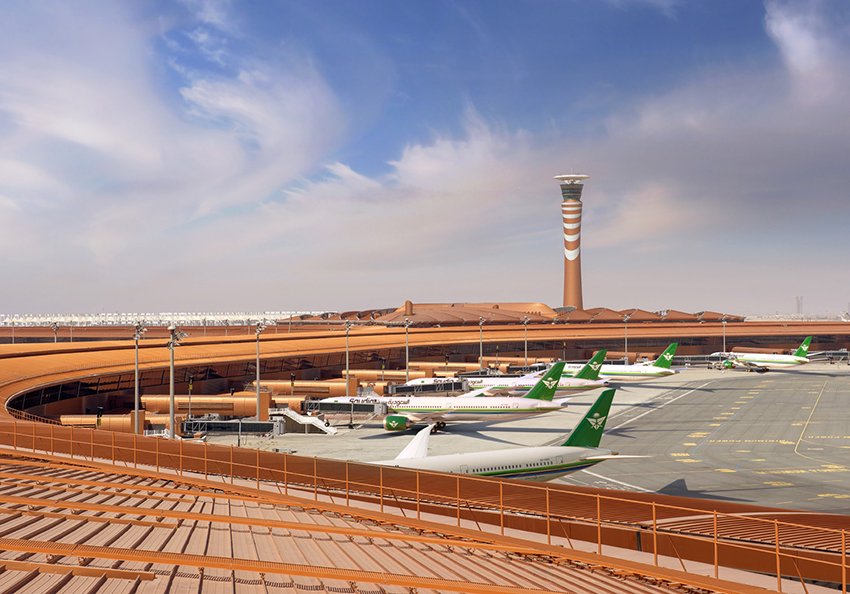
In Saudi Arabia, predicting the pace of growth in international tourism and the impact on cargo transportation will be challenging. But this is what will be required to match demand and capacity.
Regional airports will need to manage higher passenger volumes and demand for imported goods to serve new regional resorts, while continuing to support exports of local produce and manufactured goods.
A SENSE OF IDENTITY
As domestic and international tourism grows, the Kingdom’s airports will help to shape first impressions of new destinations.
In April this year, Saudi authorities gave approval for the first international airport in the holy city of Mecca (officially known as Makkah al-Mukarramah), improving access for visitors taking part in the Hajj and Umrah pilgrimage.
Design and operational planning for the new airport needs to be shaped by the spiritual needs of travellers, creating a meaningful and seamless journey.
Other regional airports beyond Riyadh and Jeddah will increasingly serve as gateways to heritage sites, luxury beach resorts and mountain and desert experiences.
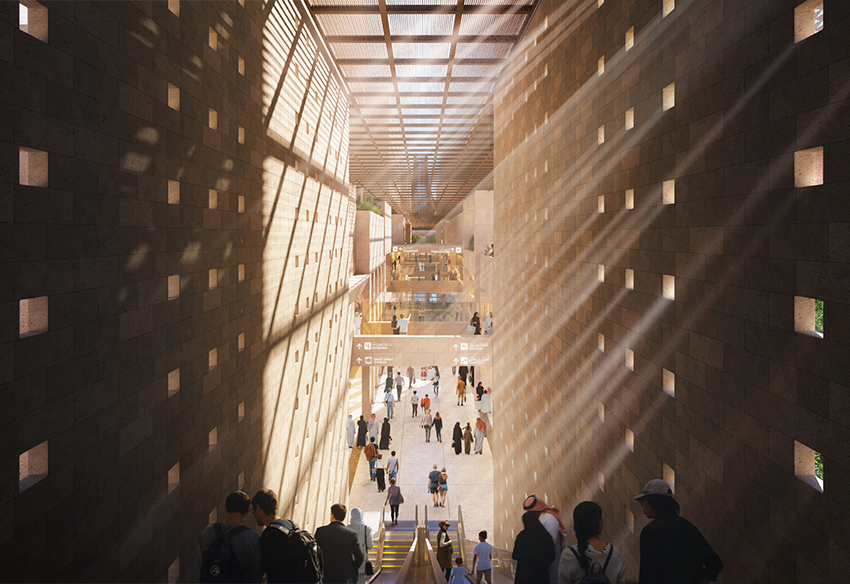
Architecture offers an opportunity to showcase local identity, landscapes and cultural heritage. Traditional geometric patterns and shading strategies using native plant canopies can create distinctive passenger experiences.
A great example of this is Medina airport, where the roof and internal canopy are inspired by its famous date palm orchards, giving it a striking and memorable feel.
By hiding the complexity of airport operations behind well-designed experiences, airports can create journeys that feel efficient and welcoming to Saudi nationals and a new generation of global travellers.