


Made for travel

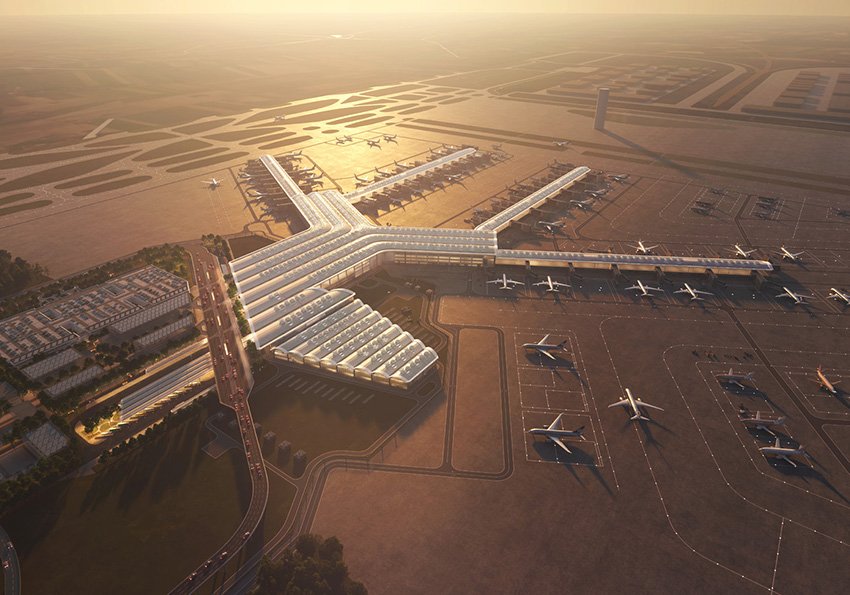
All road, rail and air links will soon lead to Poland’s new multimodal airport, writes Port Polska’s Agnieszka Stefańska-Krasowska.
Poland is advancing one of the most ambitious infrastructure undertakings in its history through the Port Polska investment programme – a wide-ranging initiative designed to reshape how the country, and the wider Central and Eastern European region, connects people and goods.
At the heart of this programme is a new airport and integrated transport hub, planned as a seamless interface between air, rail, and road networks.
Scheduled to open in 2032, the development is intended not just as a standalone airport, but as a long-term engine for connectivity, innovation, and economic growth.
Port Polska marks a departure from traditional infrastructure expansion models. Instead of relying on incremental upgrades to existing, capacity-constrained airports, Poland is building a fully integrated system from the ground up.
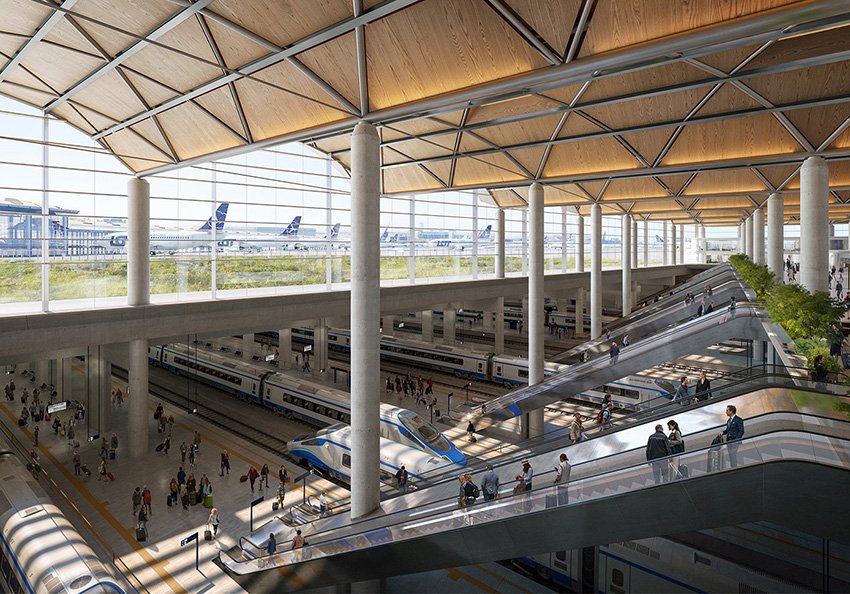
The new hub, located between Warsaw and Łódź, will combine a greenfield airport with high-speed rail links and upgraded road infrastructure, forming a multimodal gateway designed for efficiency, flexibility, and long-term resilience.
DESIGNING FROM THE GROUND UP
A key strength of the project lies in its greenfield approach. Unlike legacy airports that have developed over time – often resulting in fragmented layouts and operational inefficiencies – the new airport is being planned as a cohesive whole.
From terminal design and runway layout to baggage systems and digital infrastructure, every element is being developed in parallel.
This integrated planning model allows for more efficient aircraft movements, shorter turnaround times, and smoother passenger flows.
It also enables early incorporation of environmental considerations, including noise management, energy efficiency, and sustainable land use.
By aligning all components within a single masterplan, the project aims to avoid the constraints typically associated with retrofitted infrastructure.
For airlines, this translates into a more predictable operating environment, with infrastructure that can scale alongside demand and minimise common bottlenecks.
MULTIMODALITY AT ITS CORE
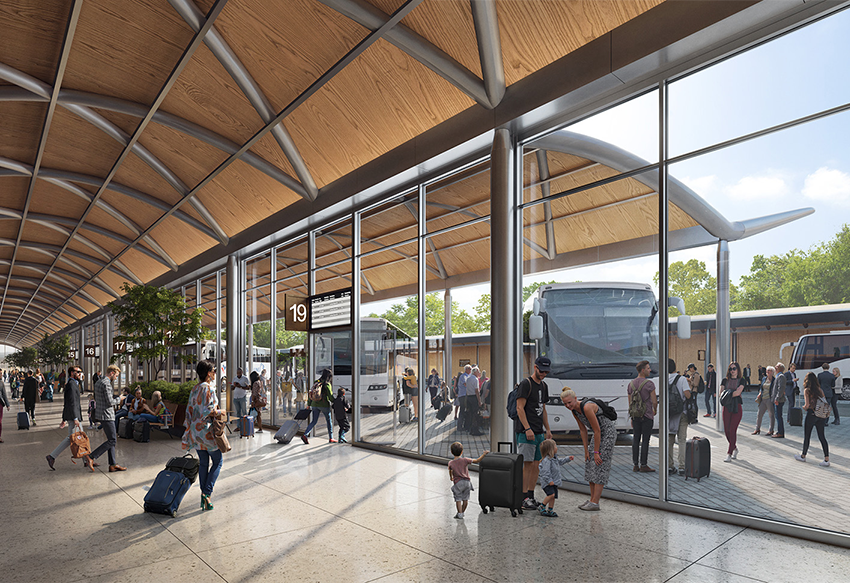
Multimodal integration is fundamental to the concept. The airport will be directly connected to a new high-speed rail network, significantly expanding its catchment area and reducing dependence on short-haul feeder flights.
Regional rail services and improved road access will further enhance connectivity.
Importantly, this approach goes beyond physical links. Planning also includes co-ordination of schedules, efficient transfer processes, and intuitive passenger navigation across different modes of transport.
The goal is to create a seamless journey – from city centre to departure gate – while improving punctuality and reliability for airlines.
EFFICIENCY MEETS PASSENGER EXPERIENCE
While operational performance is critical, passenger experience is equally central to the design. The terminal will be structured to ensure clear, uninterrupted flows through check-in, security, border control, and boarding.
At the same time, commercial areas will be integrated in a way that complements rather than disrupts the journey.
Architectural and cultural elements are expected to reinforce a sense of place, while maintaining clarity and functionality.
For airlines, this translates into smoother processes, improved on-time performance, and higher levels of passenger satisfaction.
CAPACITY, SCALABILITY AND CARGO INTEGRATION
In its initial phase, the new airport is expected to handle between 34 and 44 million passengers annually, with provisions for future expansion.
This built-in scalability ensures that capacity can grow in line with demand without requiring major redesign.
Cargo is also a central component of the project. The airport will be integrated into a wider logistics ecosystem that includes an Airport City and a Free Customs Zone.
These will support freight forwarders, integrators, and e-commerce operators by enabling efficient, value-added cargo handling.
With strong links to road and rail networks, the hub is positioned to become a key entry point for goods moving into and out of the European Union, offering predictable transit times and streamlined logistics processes.
DIGITAL SYSTEMS AND LONG-TERM READINESS
Digital integration is another major focus. The project aims to reduce operational fragmentation through the implementation of unified digital systems, including tools to support cargo management and information sharing across stakeholders.
By aligning with international standards and best practices, the airport is being designed to function as a co-ordinated mobility platform rather than a standalone facility. This approach is intended to ensure long-term adaptability as technologies and operational requirements evolve over the coming years and decades.
A COLLABORATIVE APPROACH
Port Polska is being developed with input from airlines, logistics providers, and other industry stakeholders from an early stage.
This collaborative model is designed to ensure that infrastructure and operational concepts reflect real-world needs, while also allowing for flexibility over time.
Rather than a fixed asset, the project is conceived as a dynamic platform capable of evolving alongside the aviation sector and supporting Poland’s long-term economic development.
CONSTRUCTION MOMENTUM AND KEY MILESTONES
Recent developments confirm that the project is moving rapidly from planning into execution.
A contract has been signed with TPF to design a dedicated VIP terminal, offering a high-comfort, end-to-end passenger experience from arrival to boarding, including premium retail and dining.
At the same time, Budimex has been selected to deliver deep foundations for the main passenger terminal, involving the installation of over 8,000 piles and columns forming the structural base of the future facility.
A consortium led by Hill International has also been appointed as General Contract Engineer, responsible for oversight, co-ordination, and collaboration with the ORAT consultant, as well as supporting certification under BREEAM standards.
Together, these milestones underline the strong momentum behind the Port Polska programme and its steady progress toward delivery.