


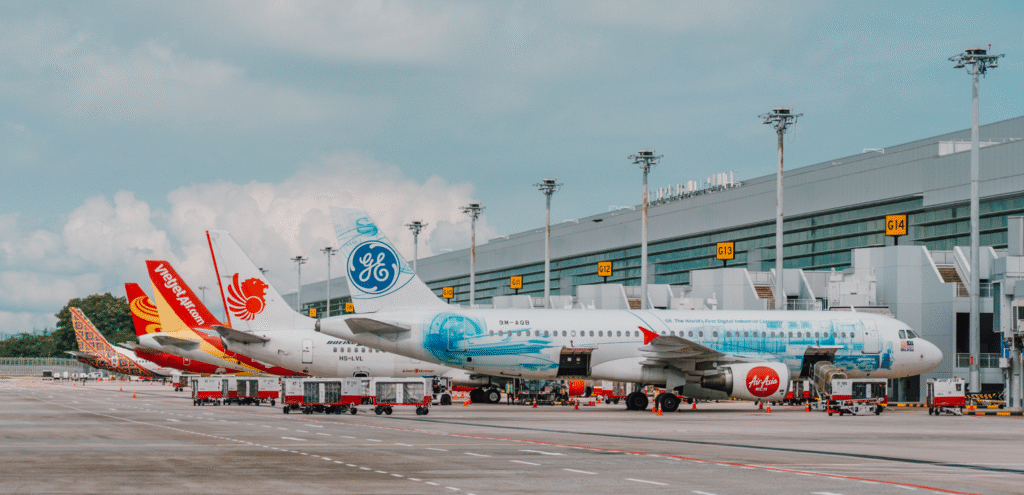
Singapore Changi Airport handled 17.2 million passengers in Q2 2026 – down 1.5% on the corresponding period last year.
The new data means that passenger traffic for the first half of 2026 remained positive, growing by 0.4% year-on-year.
For the quarter, aircraft movements, comprising landings and take-offs, decreased by 1.3% year-on-year to 92,400. For the first half of 2026, aircraft movements totalled 188,000, similar to the same period last year.

Traffic to and from Europe and Southwest Pacific increased 8.7% and 3% respectively during the quarter, as some airlines added capacity on services between Changi Airport and these regions to optimise their operations.
Operator Changi Airport Group (CAG) notes that against a dynamic operating environment, airlines continued to navigate higher operating costs arising from elevated jet fuel prices and fuel supply constraints.
This, it says, was reflected in reduced services especially on Southeast Asian routes which registered a 5% decline in traffic.
Changi Airport’s top five passenger markets for the quarter were China, Indonesia, Australia, Malaysia and India.

Vietnam and China maintained a strong growth momentum, recording year-on-year increases of 18.5% and 8.3% respectively, while Japan also saw healthy growth of 7%.
Kuala Lumpur, Jakarta, Bangkok, Denpasar (Bali) and Tokyo were Changi’s top five busiest routes in Q2. Stronger passenger demand on the Shanghai, Taipei and Tokyo routes underpinned the 5.1% growth for Northeast Asia.
In Q2, Changi Airport handled 567,000 tonnes of airfreight throughput, 9.8% higher than the same period last year. The strong performance was led by growth across all cargo flows, at the back of strong AI-related semiconductor and electronics shipments.
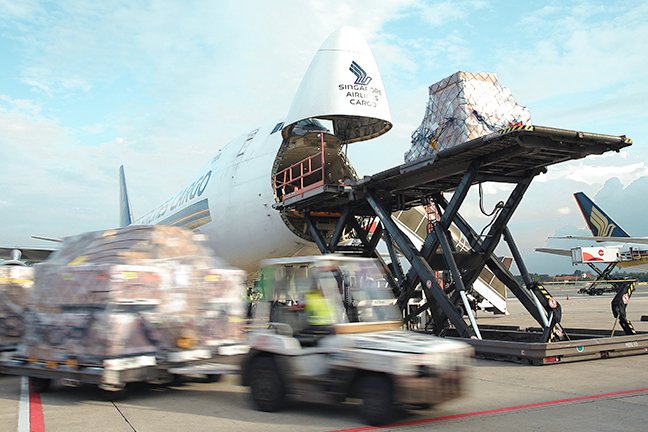
Changi’s top five air cargo markets for the quarter were China, United States of America, Australia, Hong Kong and India.
Lim Ching Kiat, CAG’ss executive vice president for air hub and cargo development noted: “While airlines continue to adapt their services in response to evolving operating conditions, we are encouraged by the sustained demand for travel, particularly to and from Europe and Northeast Asia.
“With jet fuel prices having eased from their March peaks, we are in active discussions with our airline partners to restore some of the services that were suspended earlier.
“At the same time, we remain focused on building a more diversified and well-connected hub through route development and joint marketing efforts, while improving operational efficiency to help airlines manage costs and operate reliably at Changi.”