

Multisensory design reduces passenger stress and creates a more welcoming terminal, writes Spectrio’s Christian Armstrong.
As much as we would like to think otherwise, airports are often stressful places for travellers, especially those juggling time, paperwork, bags, kids and gate changes.
Enhancing the airport experience is therefore a key goal for most gateways and, arguably, is why so many airports are placing greater emphasis on the physical environment itself.
Even small environmental cues can raise or lower stress for passengers. The sights, sounds, lighting, and subtle signals that shape a terminal can influence how confidently people move, how quickly they make decisions, and how comfortable they feel.
By tuning those sensory elements with intent, airports can ease pressure, improve flow, and elevate the overall experience.
VISUAL GUIDANCE
One of the most effective ways airports can shape the sensory environment is through what travellers can see immediately in front of them.
In general, once people step into a terminal, they make rapid, instinctive decisions based on whatever feels easiest to follow, and that instinct gives airports significant control over how crowds move.
Travellers follow the hallway that seems obvious, the sign that draws their eye, the line that appears to be progressing.
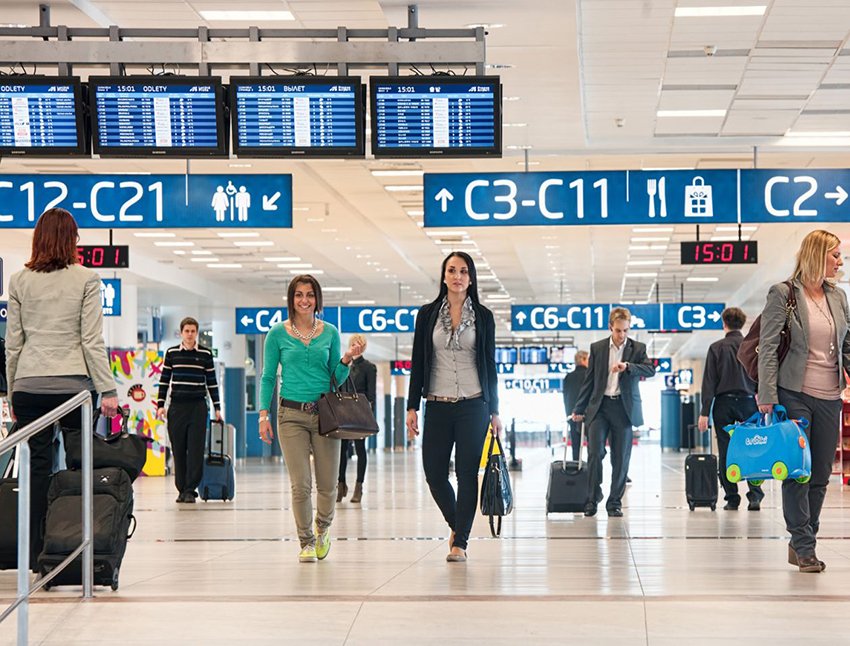
Consistent colour systems let them read a concourse at a glance.
Clear, distance-friendly icons help them spot key services without slowing down.
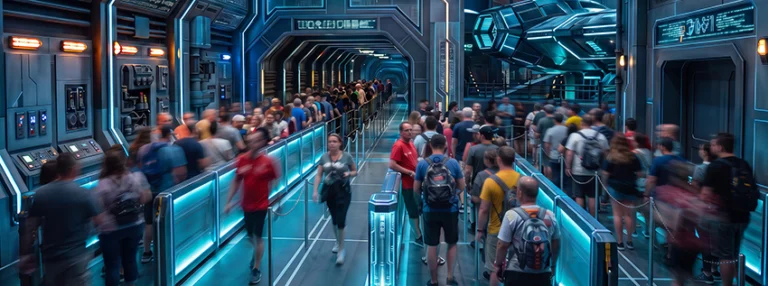
And wayfinding that stands out from the architecture – overhead signs, floor cues, lighting that directs movement – cuts the hesitation that leads to bottlenecks.
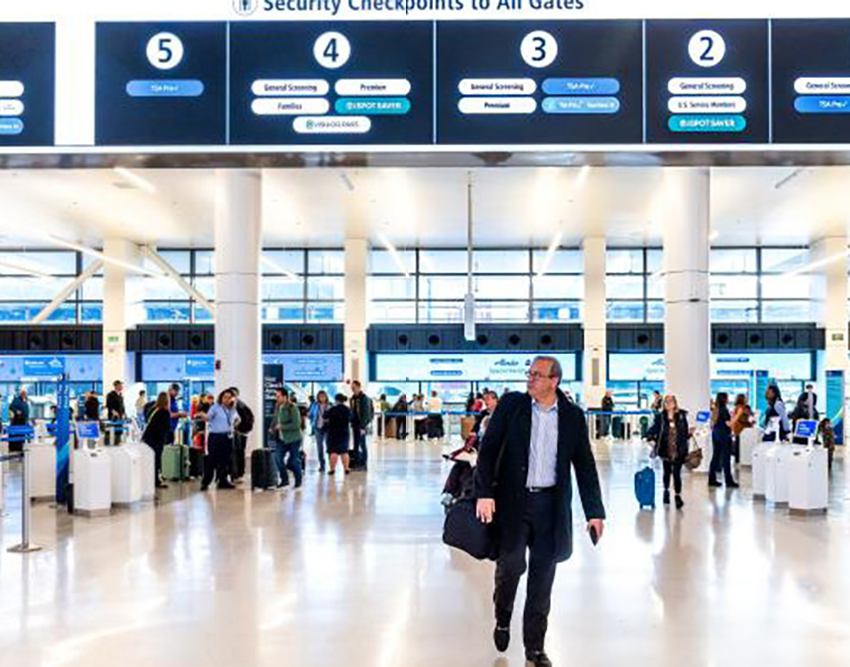
The strongest visual systems work in layers. Static signs and floor markings provide dependable anchors; architectural framing helps travellers anticipate where a path leads; lighting cues can reinforce direction.
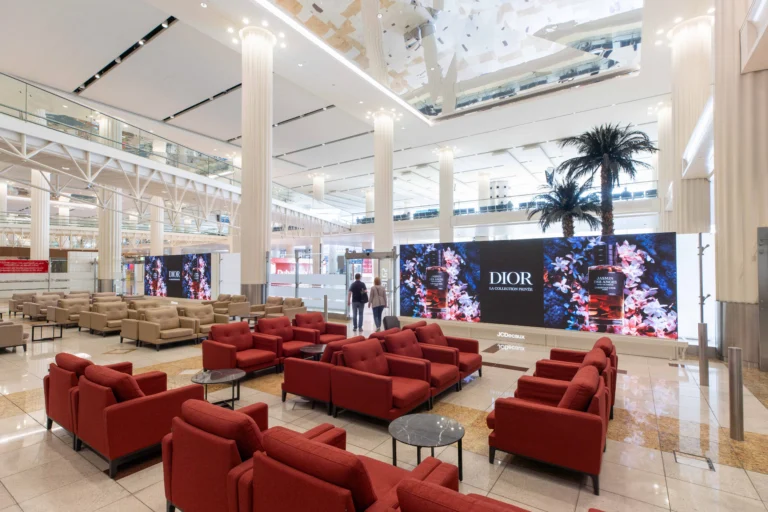
Digital displays can add additional clarity by adapting to real-time conditions, redirecting people around bottlenecks, or flagging a less-crowded security lane before a crowd builds.
When all the visual elements reinforce one another, passengers don’t have to parse competing signals or guess which direction feels right.
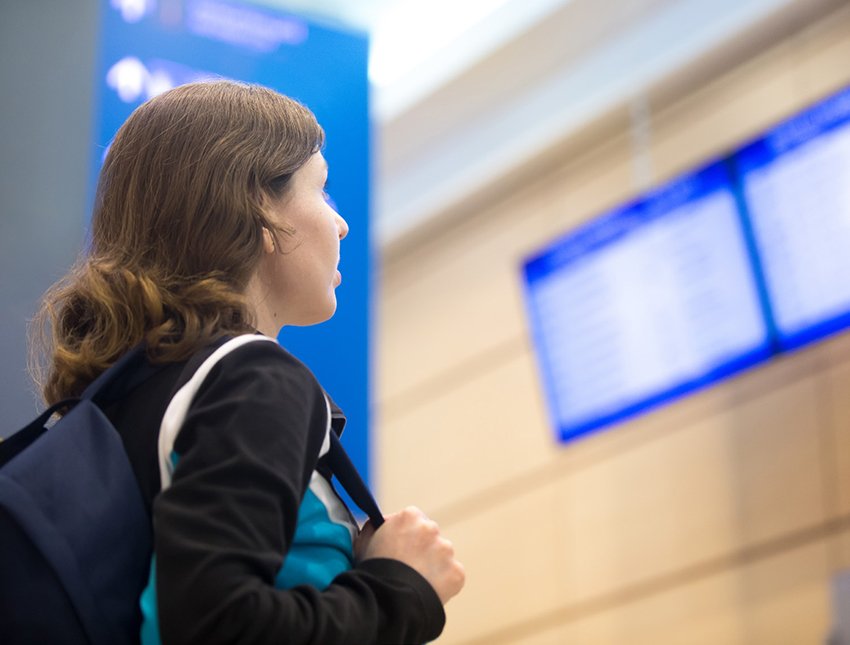
Placement is just as important as design. People tend to look straight ahead when they’re rushing and slightly downward when they’re stressed, which means cues need to sit where the eye naturally goes.
When signs, screens, and markers meet travellers in those sightlines, the whole terminal feels easier to navigate. It’s less about giving people more information and more about making the right choice feel effortless.
AUDITORY ASSISTANCE
If you stand in any busy airport for a few minutes, you’ll hear dozens of competing sound sources: rolling suitcases, food-court chatter, PA announcements, and the low hum of thousands of people moving at once.
While airports can’t eliminate this noise, they can shape the overall tone, so the terminal feels more welcoming and less chaotic.
A coherent soundscape goes a long way in lowering the general temperature. Soft background music can set a steady emotional baseline, giving travellers something calm to lean on without trying to entertain them.
Clear, evenly balanced announcements matter just as much. When people can clearly understand boarding calls or gate changes the first time, the terminal instantly feels more organised and less stressful.
Zoning is another practical tool. High-traffic areas like retail corridors can carry a brighter, more energetic sound profile, while seating areas benefit from quieter, more consistent audio.
That shift in tone helps people settle into the rhythm of the space, moving with purpose when they need to or unwinding when they can.
Effective audio blends into the environment, giving the terminal a sense of order without ever demanding attention.
MULTISENSORY CUES
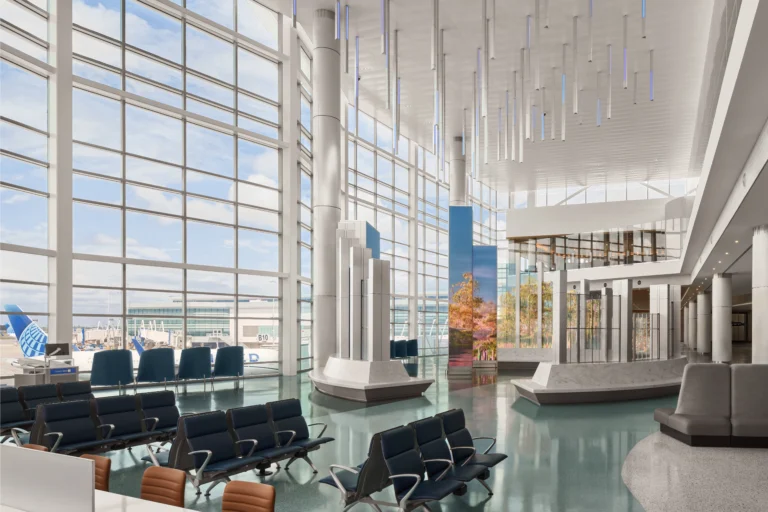
Lighting often sets the emotional temperature of a terminal long before travellers consciously register it. Diffused, warmer lighting in seating areas softens the industrial feel of large, open rooms and instantly makes waiting more enjoyable.
Brighter, more neutral lighting works better in movement zones like TSA queues, in the US, or ticketing halls, especially when paired with clear visual guidance that keeps travellers oriented.
Lighting systems that can shift between warmer and cooler light give airports a way to respond to the time of day, operational pressure, or extended delays without disrupting the space.
Scent can also have an influence. A clean, subtle fragrance in transitional spaces signals care and maintenance. Lounge areas with a gentle botanical note feel more restorative without tipping into anything overtly branded or heavy-handed.
What matters most is consistency. A sensory profile that shifts abruptly between zones or vendors confuses travellers instead of grounding them.
Small atmospheric details – conscious lighting, considered scent, and a clear visual language – create a rhythmic experience that passengers feel as they move from one stage of their journey to the next.
These touches don’t require full architectural redesigns. They’re atmospheric cues that signal quality and elevate the overall experience.
SMARTER TERMINALS
Multisensory design isn’t about creating spectacle. It’s about understanding how people react under pressure and shaping the environment in ways that make their path easier.
Clear visuals reduce hesitation. Thoughtful audio reins in the mental fatigue created by constant noise. Lighting and scent help soften an environment that can otherwise feel mechanical and overwhelming.
Each element plays a small but meaningful role in helping travellers find their footing.
When those cues align, the terminal becomes more comfortable to navigate. Flow improves, clustering eases, and passengers navigate with fewer questions and less uncertainty.
These shifts don’t replace the need for long-term infrastructure planning, but they do make existing spaces work harder and feel better, both for the travellers moving through them and the teams working to keep everything running.
About the author
Christian Armstrong is vice president of products at Spectrio where he specialises in content management and the company’s digital signage content strategy.