

Miami International Airport is transforming its infrastructure to equip itself for the next stage of its journey, writes Joe Bates.
With plans to invest at least $14 billion on enhancing its infrastructure to ensure that it is equipped for long-term growth, these are indeed busy and exciting times for Miami International Airport.
On the cards as part of its Modernization in Action (M.I.A.) capital improvement programme are proposals to reimagine and expand Concourse D, a complete revamp of the Central Terminal area, and the construction of a new Concourse K.
In essence, MIA’s future-ready masterplan is designed to position the gateway to accommodate around 77 million passengers and five million tons of cargo per annum by 2040.
Its ambitious infrastructure development programme will be supported by the adoption of the latest technology that includes robotics and agentic AI, and investment in facilities, and improved procedures and procedures that further improve the airport experience.
If all comes to fruition, operator Miami-Dade Aviation Department (MDAD), believes the combination of new buildings, state-of-the-art technology and customer friendly facilities will allow MIA to expand its connectivity and enhance the travel experience to ensure that it maintains its status as America’s second busiest airport for international passengers and biggest for international cargo.
MIA’s director and CEO, Ralph Cutié, has no doubt that the new infrastructure, especially the new-look Concourse D, will be transformational for the airport.
“MIA ranks among the fastest-growing global hubs since the pandemic, and the North Terminal expansion, coupled with the South Terminal’s future Concourse K and the Central Terminal redevelopment, will create a new future-ready gateway fully enabled to serve our millions of visitors for decades to come,” enthused Cutié.
NEW CONCOURSE D
MDAD is working hand in hand with hub carrier and anchor tenant, American Airlines, on the $1 billion investment programme to reimagine and expand Concourse D at the Florida gateway.
The upgrade is expected to define the next generation of travel and marks a huge vote of confidence in the airport, which the US carrier has served for nearly 40 years.
Indeed, earlier this year American Airlines CEO, Robert Isom, spelt out the importance of Miami International Airport to his airline when outlining the upgrade.
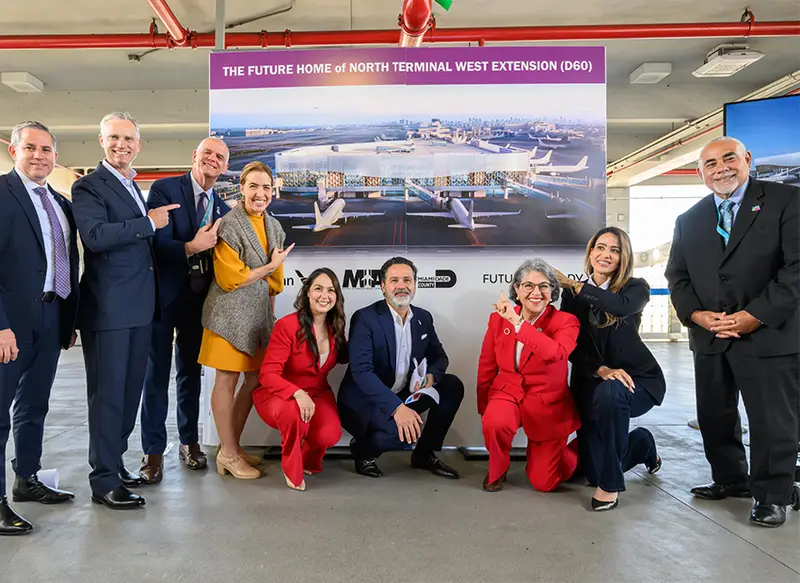
“Miami is an essential hub and international gateway for American, and it’s a key part of our history and our future,” said Isom.
“The brand-new, reimagined D60 is a transformational project that will provide a much-improved experience for our customers and our team.
“This investment — alongside new premium lounges and new routes — reflects our shared commitment with Miami-Dade County and the airport to ensure Miami remains the preeminent US gateway to Latin America.”
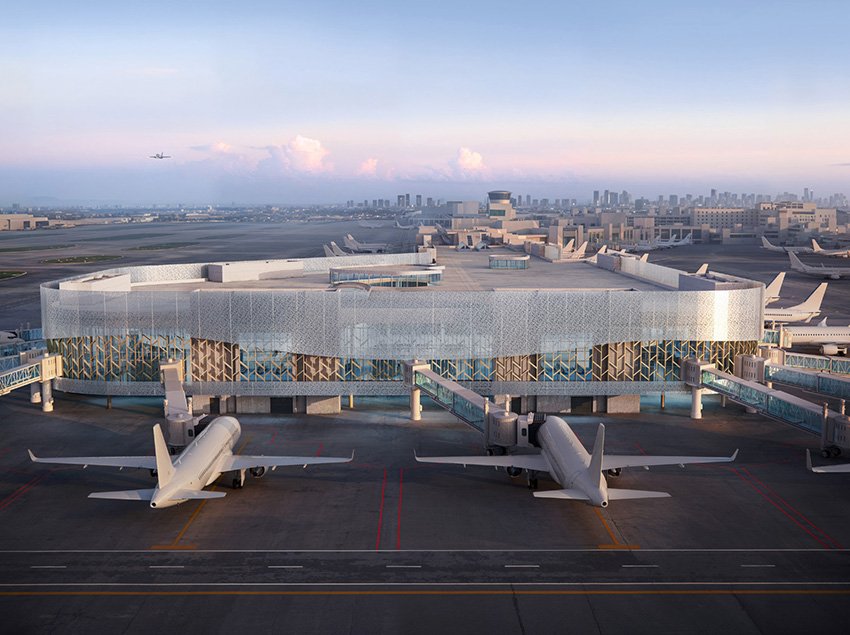
Set to break ground in 2027, the Gate D60 project charts the next chapter of travel at MIA, with a new concourse expansion designed for a premier airport.
Currently equipped to support ground operations for smaller regional jets, the new three-level Concourse D extension will create 17 new aircraft gates to accommodate larger aircraft and eliminate outside boarding.
All will provide convenient third-level connections to Concourse D’s US Customs and Border Protection facility for international arrivals.
The project will expand a single shared boarding area to include adjoining boarding spaces for every gate to improve flow and provide customers with more space and comfort.
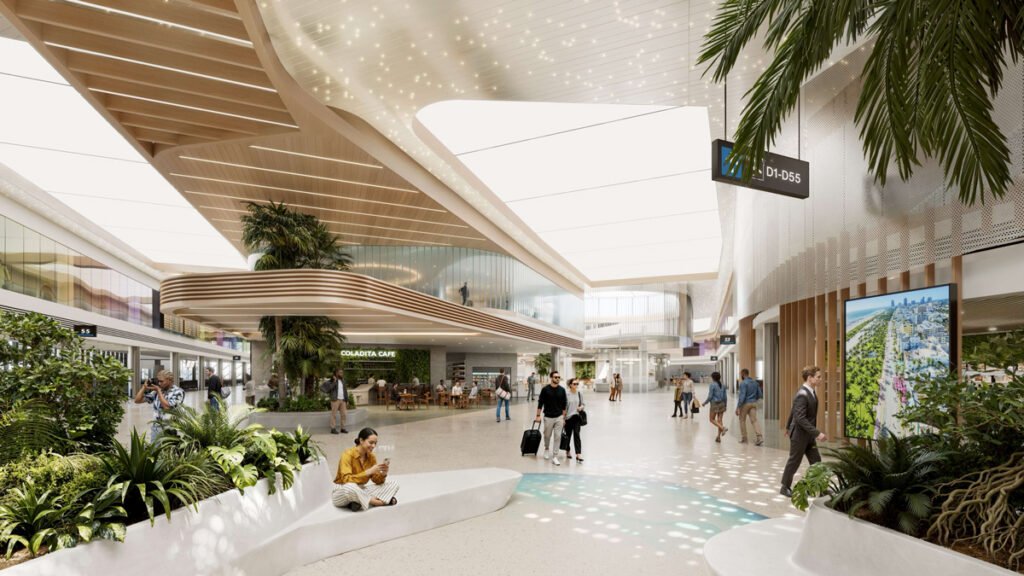
The expansion is designed to make international travel more seamless, something that will be particularly noticeable for international arrivals through its direct third-floor access to the MIA customs hall.
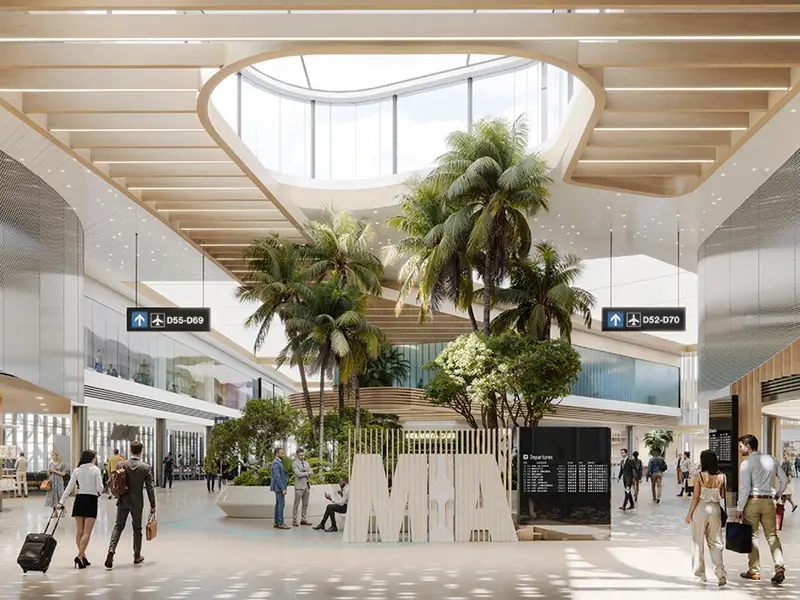
The concourse will feature bright, expansive spaces with sprawling indoor palm trees, as well as new dining and shopping options for travellers.
“The D60 expansion is one of the most monumental customer service improvements within our unprecedented airport-wide modernisation plan, which will transform the passenger experience at MIA from the cabin to the kerb over the next five years,” said Miami-Dade County mayor, Daniella Levine Cava.
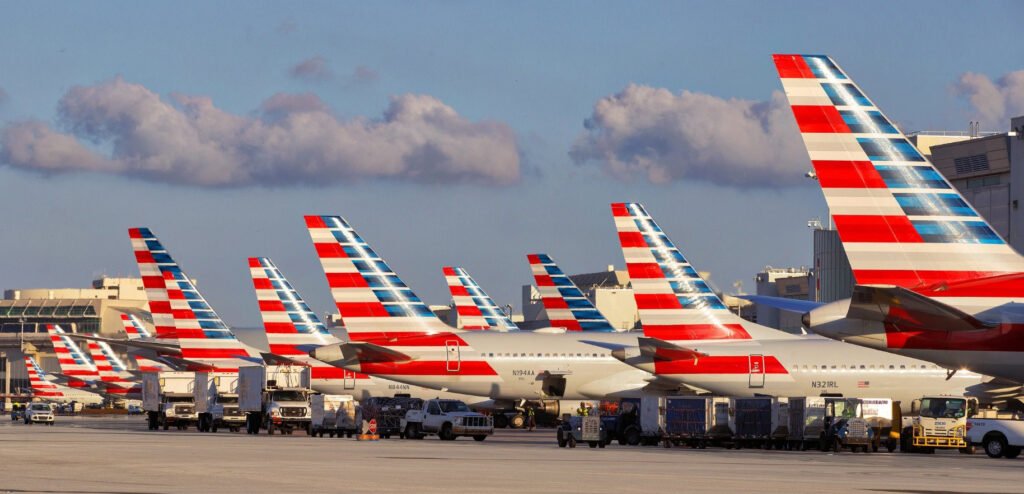
American accounts for more than 60% of the traffic at MIA, currently operating around 400 daily departures from the gateway. The airline plans to run its largest summer schedule ever from MIA this year with flights to 155 destinations across 45 countries.
MIA serves as its international gateway, delivering an industry-leading network to Latin America and the Caribbean and giving customers access to more than 90 unique destinations, served only by American at MIA, including new services this year to Milan, Italy, and Bimini, Bahamas.
CONCOURSE K AND NEW CENTRAL TERMINAL
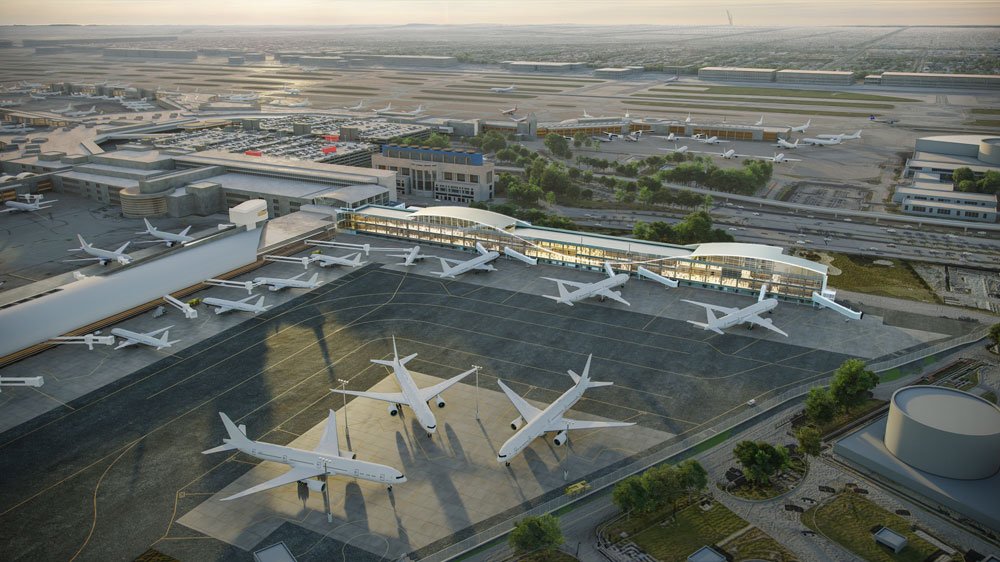
In addition to Concourse D, MIA plans opening a new Concourse K expansion in 2029, and has outlined proposals for a $745-million Central Terminal redevelopment project, which will moderniseMIA’s oldest terminal area by 2031.
The new Concourse K will be a 300,000-square-foot expansion that will add six new passenger gates and boarding areas for domestic and international flights, post-security concessions offering more dining and shopping options for travellers, and a new passenger lounge.
The future three-level concourse, MIA’s first terminal expansion since 2012, is slated for completion in 2029.
The $600 million Concourse K expansion will also include a new two-level ground support equipment maintenance facility, an enhanced baggage handling system, and critical upgrades to airfield infrastructure – all designed to meet MIA’s growing travel demand.
MDAD notes that Concourse K’s design incorporates the highest levels of sustainable construction practices as well, earning LEED Silver certification and Envision verification.
Work is expected to start on the phased renovation and expansion of the Central Terminal area between Concourses E and G in 2028.
OTHER DEVELOPMENT PROJECTS
The Gate D60 expansion, Concourse K and reimagining of the Central Terminal area are the biggest of more than 200 projects within the $14 billion M.I.A Plan.
Other major projects include the new Ibis Garage, which opened in December; modernisation and preventive maintenance for more than 600 elevators, escalators, and moving walkways; renovation of 196 public access restrooms located on all three levels of MIA’s terminal and concourses; and upgrading 126 passenger boarding bridges.
THE ROLE OF TECHNOLOGY
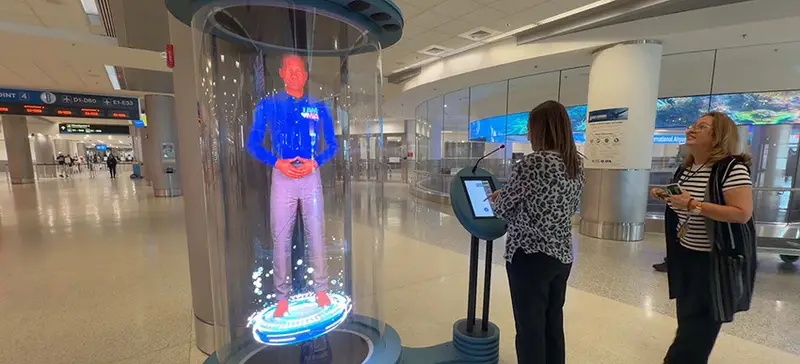
In April this year, while attending an IT conference, Miami-Dade County’s mayor showcased MIA’s AI-powered hologram chatbots, now available at four key entry points across the airport.
MDAD believes that the launch makes MIA the first airport in the world to deploy large-scale geo-aware, agentic AI across its digital infrastructure, delivering real-time, location-based assistance through natural conversation and enabling seamless interaction across web, mobile, kiosks, and on-site digital interfaces.
MIA’s hologram chatbots – developed in collaboration with Mappedin, Satisfi Labs, and Hypervsn – enhance the passenger journey by providing intuitive, personalised support from kerb to gate, marking a major milestone in Miami-Dade County’s use of artificial intelligence to improve the travel experience.
“This is what the future looks like, and it’s being built right here in Miami-Dade,” enthused Cava. “We’re not just keeping pace with innovation. We’re leading it, harnessing artificial intelligence to transform how we serve our visitors and our community every day.
“From our airport to our seaport, we are creating a smarter, more connected, and truly future-ready Miami-Dade.”
Do developments like this suggest that technology will play a major role will in the future development of MIA?
“We’ve been leveraging technology in co-ordination with our federal partners to expedite and simplify the security screening experience at MIA,” said Cutié.
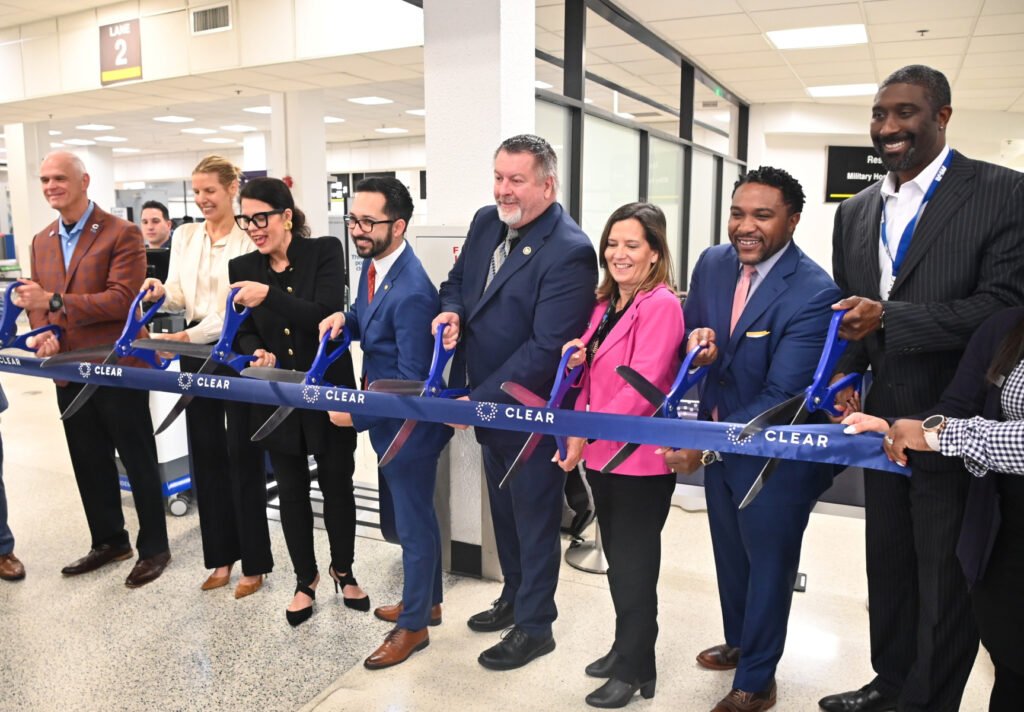
“In December, MIA became the latest US airport with CLEAR’s eGates, which allow CLEAR+ members to verify their identity within five seconds, bypass the TSA podium, and go directly to screening.
“For international arrivals, MIA last December completed the largest single deployment of Enhanced Passenger Processing (EPP) at any US airport, in partnership with CBP, to provide faster, more secure arrivals for US citizens. EPP captures and processes biometric photos to verify travellers in three seconds by matching images against CBP’s existing records.
“EPP is scheduled to be available to legal permanent US residents this summer as well. It also allows CBP to allocate more officers to process non-US citizens, thereby benefitting all passengers entering the United States at MIA.”
TRAFFIC TRENDS
MIA offers more flights to Latin America and the Caribbean than any other US airport and is also the leading economic engine for Miami-Dade County and the state of Florida, generating business revenue of $212 billion in 2025 (+17%) and approximately 60% of all international visitors to Florida annually.
A total of 55.3 million passengers passed through MIA last year ensuring that it broke the 55 million-barrier for the second consecutive year.
The annual total was 1.1% down on 2024’s record total of 56 million passengers (+7%), which the airport attributed to shifting immigration rules, global competition, and a softening tourism economy.
However, MDAD is quick to point out that it outperformed national trends, which it says highlights the continued strength and resilience of the region’s travel market.
Last year’s passenger totals comprised 24.8 million travellers on international services and 30.5 million on domestic flights.
And for the sixth consecutive year, MIA set a new cargo record, handling close to 3.5 million tons of freight in 2025 – 13.6% up on the previous year.
The healthy upturn in cargo volumes carried over into the first quarter of 2026, when freight shipments increased by 15.7% over the corresponding period a year ago.
Q1 passenger numbers in comparison have remained the same as last year’s first quarter volumes, but one factor that may generate growth going forward is the US government’s recent reopening of air services to Venezuela.
As a result, on April 30, American Airlines resumed daily Miami-Caracas services for the first time since 2019, and it will add a second daily flight on May 21. While on May 1 GlobalX began daily charter flights to Venezuela on behalf of Laser Airlines.
Venezuela formerly accounted for nearly 600,000 passengers annually at MIA, numbers that made it the gateway’s 13th busiest international travel market.
Healthy traffic numbers, of course, help power trade, jobs, and opportunities across Miami-Dade County.

CUSTOMER SATISFACTION
In 2025, MIA was ranked North America’s most-improved mega airport in customer satisfaction by J.D. Power, the Best Airport for Layovers by Global Traveler magazine, one of the Top 10 US Airports for Food and Drink by Food and Wine magazine, and the third best for US business travellers by travel platform Booking.com for Business.
MIA’s status as an important hub for international travel ensures that there is an ever increasing demand for overnight accommodation at the airport and in the surrounding area.
To help fill the void, MIA recently teamed up with Wait n’ Rest to launch the company’s first sleep rooms in North America inside Concourse D.
The 15 Wait n’ Rest luxury sleep rooms at MIA can accommodate up to four guests per unit and include luxury hotel-level bedding and linen, in-room touchscreen entertainment and access to private showers and bathrooms.
In essence, the sleep room concept allows passengers to step away from the airport crowds and rest and relax in privacy for up to eight hours in accommodation just minutes from their gate.
Wait n’ Rest is set to open a second location at MIA, in Concourse H, this summer.
EASING JOURNEYS THROUGH THE TERMINAL
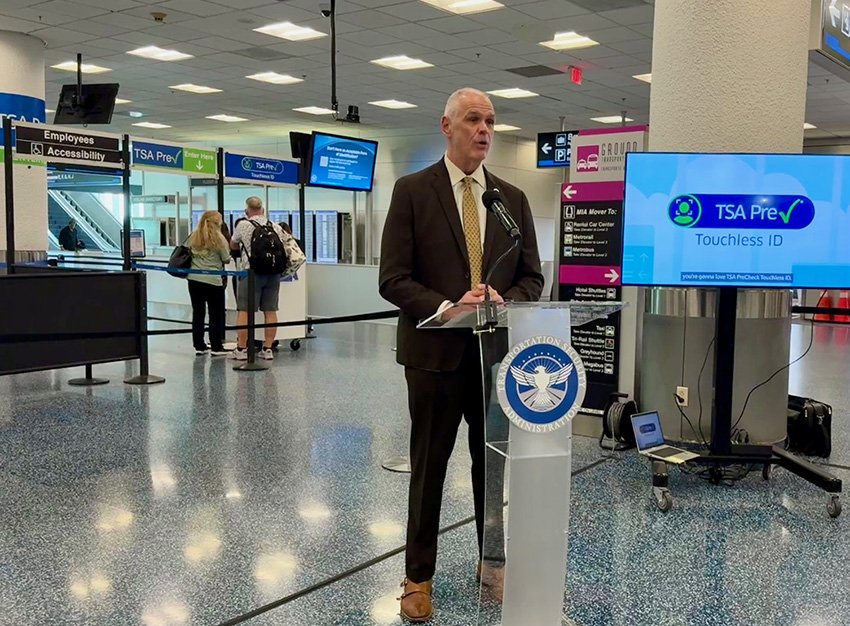
Another way MIA is hoping to enhance the airport experience for US passengers is through the adoption of the TSA’s PreCheck Touchless ID technology in MIA’s Concourses D, E, and H.
This cutting-edge biometric technology enables eligible TSA PreCheck members to experience a faster, more seamless identity verification process without presenting a physical ID or boarding pass at the security checkpoint.
TSA’s launch of PreCheck Touchless ID at three of MIA’s busiest checkpoints is the latest state-of-the-art initiative that is streamlining and simplifying the travel experience for our customers.
The move follows the earlier full modernisation of TSA Checkpoint 2, with the newest bag screening and bin return technology in the industry designed to be 30% faster than the traditional checkpoint lane.
SUSTAINABILITY
In response to being asked about how high a priority is the sustainable development of MIA to MDAD, Cutié states that it is key to the future growth of his airport, and outlines some of the carefully planned sustainability features of the gateway’s new infrastructure.
“Every major project within our $14 billion modernisation plan is designed with a sustainability component,” said Cutié.
“With up to 6.3 megawatts of on-site renewable energy generation, this initiative positions MIA as a national leader in clean energy among dense urban airports. Separately, in 2023, MIA entered into a $547 million partnership with FPL Services to upgrade MIA’s electrical infrastructure with zero-emission equipment, net-zero backup power generators, solar photovoltaics systems, and electric vehicle charging stations.
“On Earth Day, MIA unveiled eight new solar havens at its Central Garden area on the departure level. In addition to providing shaded outdoor seating for up to eight people at MIA, each solar-powered structure generates enough clean energy to charge 20 devices simultaneously – providing both a customer service and environmental benefit.
“Moving forward, the airport’s terminal-wide re-roofing programme will include installing solar panels over 400,000 square feet of MIA’s terminal. The system is expected to generate 893,138 kilowatts of clean energy annually.”

AIRPORT ART
Miami International Airport has long been a supporter of the arts and showcases a host of different displays throughout the year under the umbrella of its dedicated arts and exhibitions programme, MIA Galleries.
Established in 1996 and managed by the MDAD’s Fine Arts and Cultural Affairs Division, its stated mission is to “enhance the travel environment by presenting exhibitions and showcasing works that celebrate the rich culture, diverse landscape, and artistic resources of the local community”.
Two of the latest exhibitions include new murals toasting 130 years of Miami’s Overtown neigbourhood and a celebration of the centennial anniversaries of the nearby cities of Hialeah, Miami Springs, and Opa-locka, along with the legacy of their founder, aviation pioneer and land developer Glenn Curtiss (1878–1930).
The latter exhibition also features a scaled model of the Glenn Curtiss and June Bug Legacy Memorial monument, an upcoming landmark in Miami Springs by local artist Natalie Plasencia.
The monument will be unveiled this August in conjunction with Miami Springs’ centennial anniversary on August 23, to honour Curtiss’ innovation, courage, and imagination.
IS MIA READY FOR EVTOLS?
If industry updates are to be believed a new era of flight with electric vertical take-off and landing (eVTOL) aircraft is just around the corner, with commercial operations coming in the next few years.
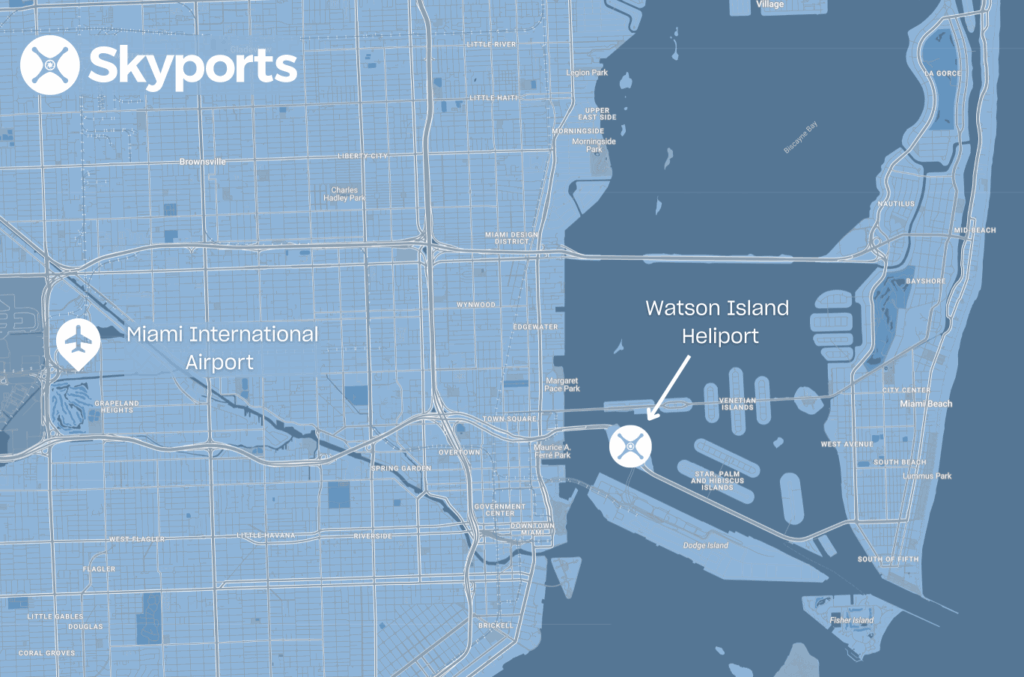
Indeed, Skyports Infrastructure has proposed a new hub for Advanced Air Mobility aircraft at Watson Island Heliport close to MIA. The airport itself appears ready for any eventuality.
“Under the leadership of Miami-Dade County mayor Daniella Levine Cava, an AAM Working Group was created in 2021 to prepare a comprehensive approach to the new technology,” explained Cutié.
“The Working Group holds quarterly meetings with the AAM industry in an open forum to update all interested parties. MIA also continues to discuss potential AAM operations with leading e-VTOL manufacturers.
“At the Paris Air Show last June, MIA announced a memorandum of understanding with Wisk Aero for strategic planning, information sharing, infrastructure development, and policy pathways for eVTOL operations in Miami.
“MIA, in partnership with Archer Aviation and the Florida Department of Transportation, is one of eight US locations selected by the US Department of Transportation and the FAA to participate in the government’s eVTOL and AAM Integration Pilot Program (eIPP).
“As part of the eIPP, MIA and Bell Dancy Industries will begin a pilot programme to evaluate safe CONOPs [Concept of Operations] for air routes, tactical and operational programme/systems, data/technology, which will be incorporated into future co-ordinated airspace management vertiport design.”
Whether it be investing in new infrastructure, embracing new technology, enhancing the offerings in its terminals or charting a sustainable future, it is all systems go at MIA!