


Retail theft has become a real issue for some major international airports and combatting the growing crime requires technology and teamwork, writes Ulbe Keegstra.
As airport retail revenues rebound, retail theft and organised retail crime have escalated into a material financial and operational risk.
Indeed, at some major international hubs annual losses now regularly reach mid-six-figure levels — driven increasingly by co-ordinated, cross-border criminal networks that deliberately move from airport to airport targeting high-value retail.
In effect, what airports are facing is no longer opportunistic shoplifting, but sophisticated criminal groups operating across borders with clear roles, planning and rapid exit strategies.
THE SCALE AND MECHANICS OF THE THREAT
Travel retail has recovered strongly post-pandemic, with passenger volumes and average spend per traveller rising steadily.
However, as revenues have grown, so too have losses. Industry estimates indicate that major international airports can lose between €300,000 and €600,000+ annually in theft-related shrink within duty free and travel retail environments alone.
Typical shrink levels range between 0.8% and 1.8% of turnover, heavily concentrated in high-value categories such as fragrances, cosmetics and premium alcohol.
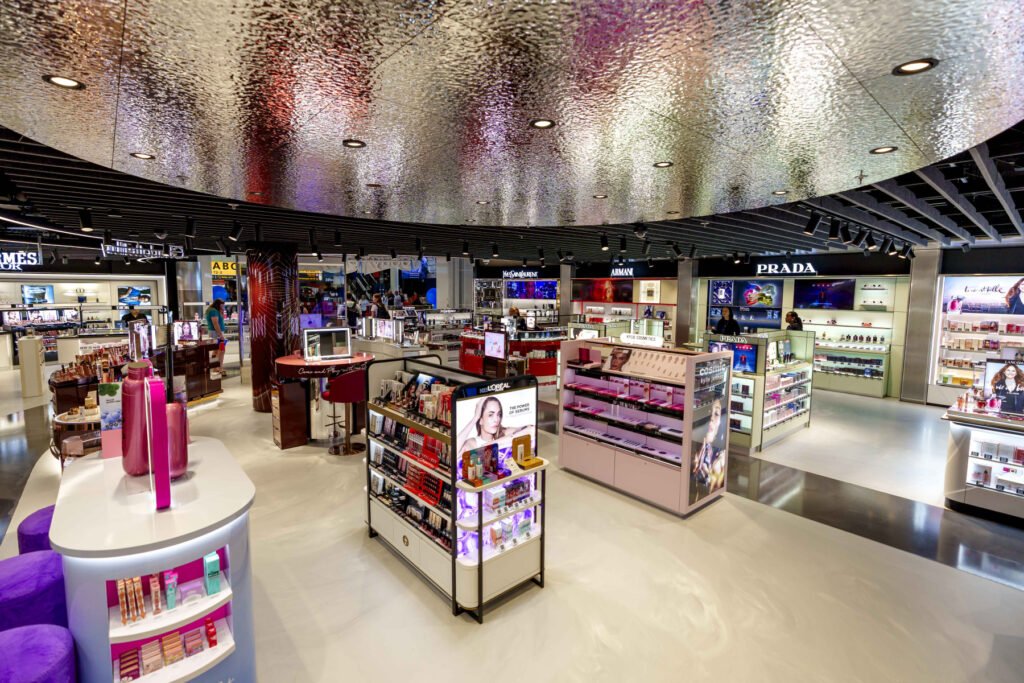
What has changed is not just the value of losses, but the sophistication of the offenders. Organised retail crime groups now operate across borders, deliberately selecting busy nternational hubs where passenger density and open-plan layouts create opportunity.
These groups often travel on short-haul flights with minimal luggage, operate within tight timeframes, and depart again within hours — making enforcement complex.
CO-ORDINATED TEAMS AND TACTICS
Organised groups typically operate with clearly defined roles. Some members act as scouts, monitoring staff movements, passenger peaks and store layouts.
Others create distraction, engaging employees or temporarily disrupting store focus. Dedicated collectors target specific high-value products quickly and methodically.
Teams often split up once inside the terminal, entering stores separately to avoid immediate detection.
Communication is subtle, sometimes non-verbal, allowing co-ordination without obvious interaction. Goods may be consolidated and transferred to one individual prior to departure.
The objective is speed, co-ordination and rapid exit — a structured ‘fly-in, operate, fly-out’ model that reduces detection risk and exploits inconsistencies in security approaches between airports.
WHY AIRPORTS ARE UNIQUELY EXPOSED
Airport environments present unique vulnerabilities: high-value merchandise, intense but temporary passenger waves, and the ability for offenders to leave the country rapidly.
Unlike traditional retail settings, jurisdictional complexity and international mobility significantly limit deterrence once offenders exit the terminal.
This transforms retail theft from a localised issue into a cross-border operational challenge with implications for non-aeronautical revenue, terminal safety and commercial partnerships.
BEYOND SHRINK: OPERATIONAL AND REPUTATIONAL IMPACT
The consequences extend beyond direct financial loss. Airports and retailers face rising costs for security personnel and loss-prevention teams.
Traditional countermeasures — additional guards, locked displays or heavy tagging — can introduce friction into the passenger journey and negatively impact sales in an impulse-driven environment.
Frontline staff increasingly report intimidation and confrontation, particularly when dealing with organised groups. For airport operators, such incidents affect not only commercial performance but also safety perception and terminal reputation.
FROM REACTION TO INTELLIGENT PREVENTION
In response, airports and retailers are shifting from reactive loss prevention to behaviour-based, assistive prevention models.
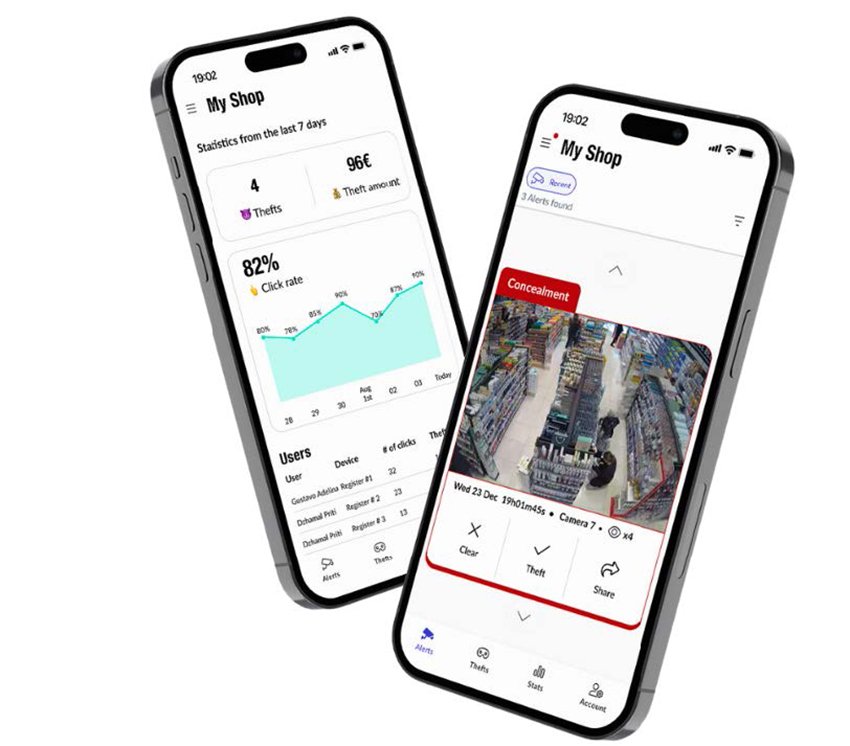
Rather than relying solely on product protection or post-incident investigation, modern approaches analyse behavioural indicators and gesture-based patterns in real time to support early intervention.
These systems are designed to operate discreetly and do not rely on facial recognition, biometric identification or identity tracking. They simply generate an alert when a situation requires attention, with all decisions remaining human-led.
Effective solutions integrate seamlessly within airport governance structures, comply with global data privacy principles, and deliver measurable financial impact without disrupting the passenger experience.
OPERATIONAL IMPACT AND MEASURABLE RESULTS
Experience from international hubs shows that behaviour-based prevention has a measurable impact.
Travel Retail Security Solutions (TRSS) integrates Veesion’s gesture-based theft prevention technology within airport retail environments, enabling early identification of high-risk situations.
Using this approach, TRSS supported a leading European airport in reducing organised retail theft, preventing approximately €350,000 in losses over a 24-month period.
Across multiple deployments, this model has delivered sustained shrink reductions typically ranging between 10% and 30%, translating into annual savings of several hundred thousand euros per major airport.
Equally important, incident escalation and staff confrontation levels decline, strengthening safety perceptions and operational stability.
IMPLICATIONS FOR AIRPORT OPERATORS
Retail theft can no longer be viewed solely as a concessionaire issue. It directly affects non-aeronautical revenue, terminal safety and the overall passenger experience.
As airports continue to develop their commercial strategies and offerings, intelligent retail security should be regarded as a revenue-protection enabler, rather than a standalone cost.
Airports that support data-driven, privacy-conscious and low-friction prevention frameworks will be better positioned to protect margins, strengthen retailer partnerships and safeguard terminal integrity.
CONCLUSION
Organised retail theft in airport environments has evolved into a co-ordinated, cross-border activity executed by structured teams with defined tactics.
Recognising this shift and responding with intelligent, airport-specific prevention strategies designed to protect both revenue and the passenger experience is essential for today’s airport operators.