

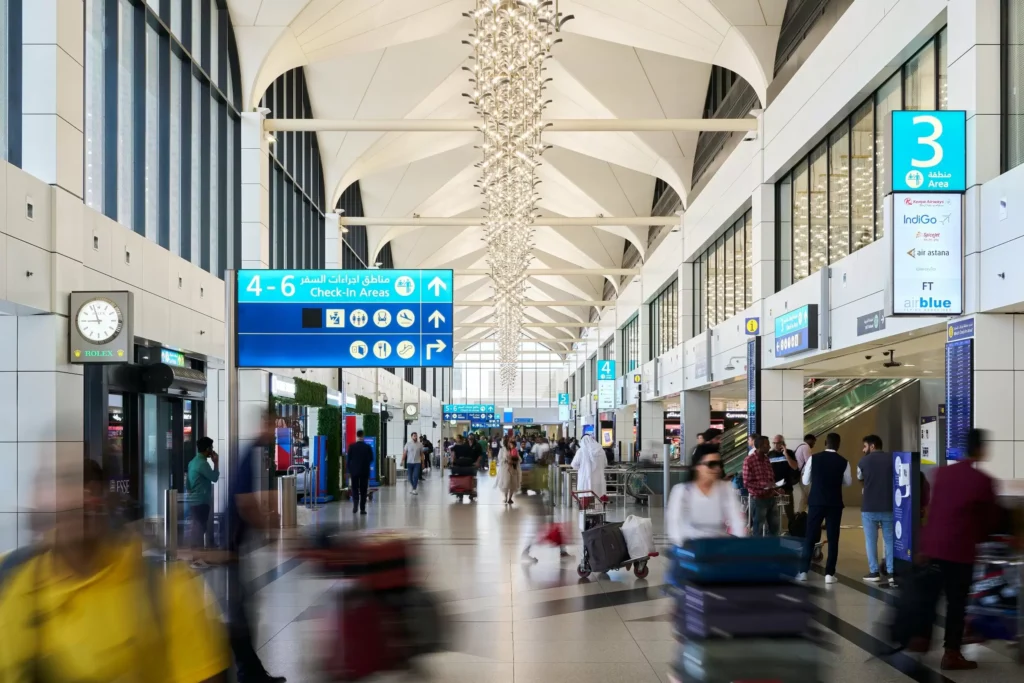
Figures released today confirm what we have known in reality for a long time, Dubai International Airport (DXB) maintained its status as the world’s busiest international airport and second busiest gateway on the planet last year courtesy of the 95.2 million passengers that passed through its facilities in 2025.
Only Hartsfield-Jackson Atlanta International Airport (ATL) handled more travellers in 2025, its yearly total once again exceeding 100 million passengers per annum, although its final year-end results have yet to be released.
For the record, ATL had welcomed 97.6 million passengers for 11 months ending November 30, 2025, and the final month of the year is traditionally one of its busiest.
DXB’s impressive 2025 passenger total represented a 3.1% increase on 2024, ensuring the busiest year in the airport’s history and the highest annual international passenger traffic ever recorded by any airport.
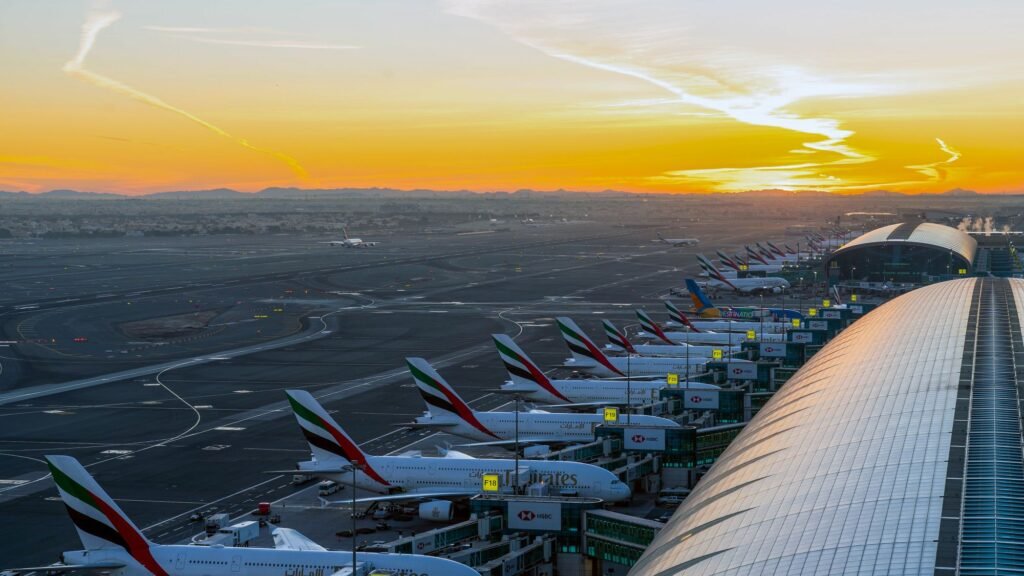
More significantly, notes operator Dubai Airports, 2025 was defined not by a single peak, but by sustained performance at record levels.
DXB achieved its busiest day, month, quarter and year on record, operating at the edge of physical capacity while consistently delivering operational excellence.
Indeed, it confidently states that what would represent extraordinary strain elsewhere has become part of DXB’s normal operating rhythm.
December closed as the busiest month in DXB history, with 8.7 million guests, up 6.1% year on year. The fourth quarter was also the busiest ever, with 25.1 million guests, an increase of 5.9% compared to the same period in 2024.
Total flight movements reached 118,000 in Q4, up 5%, bringing the annual total to 454,800 a rise of 3.3% year on year.
Despite continued growth in movements, average passengers per movement remained strong at 214, reflecting sustained deployment of larger aircraft and high load efficiency. The annual load factor stood at 77.6%, a marginal adjustment of 0.5 percentage points.
GLOBAL CONNECTIVITY
India retained its position as DXB’s largest country market with 11.9 million guests, followed by the Kingdom of Saudi Arabia at 7.5 million, the United Kingdom at 6.3 million, Pakistan at 4.3 million, and the United States at 3.3 million.
Several markets recorded particularly strong growth during the year. Traffic from China increased 16.6% to 2.5 million, Russia grew 6% to 2.8 million, Turkey rose 6.7% to 2.2 million, Egypt expanded 14.3% to 1.8 million, and Italy climbed 12.5% to 1.6 million.
London remained DXB’s busiest city destination with 3.9 million guests, followed by Riyadh at 3 million, Mumbai and Jeddah at 2.4 million each, and New Delhi at 2.2 million.
By the end of 2025, DXB was connected to 291 destinations across 110 countries, served by 108 international airlines, reinforcing its position as one of the most globally connected hubs in the world.

Paul Griffiths, CEO of Dubai Airports, said: “Airports are often defined by moments of intensity, but long-term performance is defined by how well those moments are sustained.
“In 2025, DXB showed that record traffic is no longer an exception, but part of its operating reality. That consistency at scale reflects the maturity of the system and the strength of collaboration across our oneDXB airport community to deliver excellence under growing demand.
“We expect traffic to approach 99.5 million in 2026, supported by close coordination across the sector and the oneDXB community.”
OUTLOOK
According to Dubai Airports, with demand continuing to build and capacity carefully managed, its airports are entering a phase where performance is defined not by how high it can surge, but by how reliably it can sustain growth while consistently delivering a superior guest experience.
As traffic patterns evolve, it adds, the complementary role of Dubai World Central–Al Maktoum International (DWC) will continue to expand, ensuring the emirate remains prepared for the next era of global aviation.