


Electric Ground Support Equipment: The green mile

Share

The operational and economic benefits of electric ground support equipment is not to be underestimated, writes Paulina Gustov, marketing strategist and market analyst at DINOBUS.
Electricity is the through-line as airports in every continent begin to rewrite the rules for ground support operations. Baggage tractors, pushbacks, GPUs, pre-conditioned air units, catering trucks, maintenance lifts, and apron buses are a few instances of electric ground support equipment (eGSE), which started out as a few pilot projects to replace the traditional use of diesel-powered equipment.
Besides leading to reduced emissions, the outcome includes a safer, less hectic ramp, fewer moving parts that might lead to malfunction, improved asset visibility, and fresh approaches for planning turnarounds.

To put it another way, electrification is altering the way the terminal operates on a daily basis as aviation looks for alternatives to conventional diesel equipment, which is now considered outdated because of the noise, heat and a mixture of CO2, NOx, and particulate emissions associated with its use.
At the stand is where the change is particularly noticeable. Diesel GPUs are being replaced by eGPUs and fixed electrical ground power, which also minimises the need for auxiliary power units (APUs) and lessens noise and emissions.
According to one supplier, trading out a single diesel GPU for a contemporary battery eGPU can substantially decrease NOx and ramp noise while conserving about 50,000 kg (110,000 lb) of CO2 annually, which is equivalent to the annual footprint of dozens of households.
As part of the initiative to make all non-aircraft ground traffic free of airside emissions by 2030, European airports have begun integrating these developments into infrastructure-level plans.
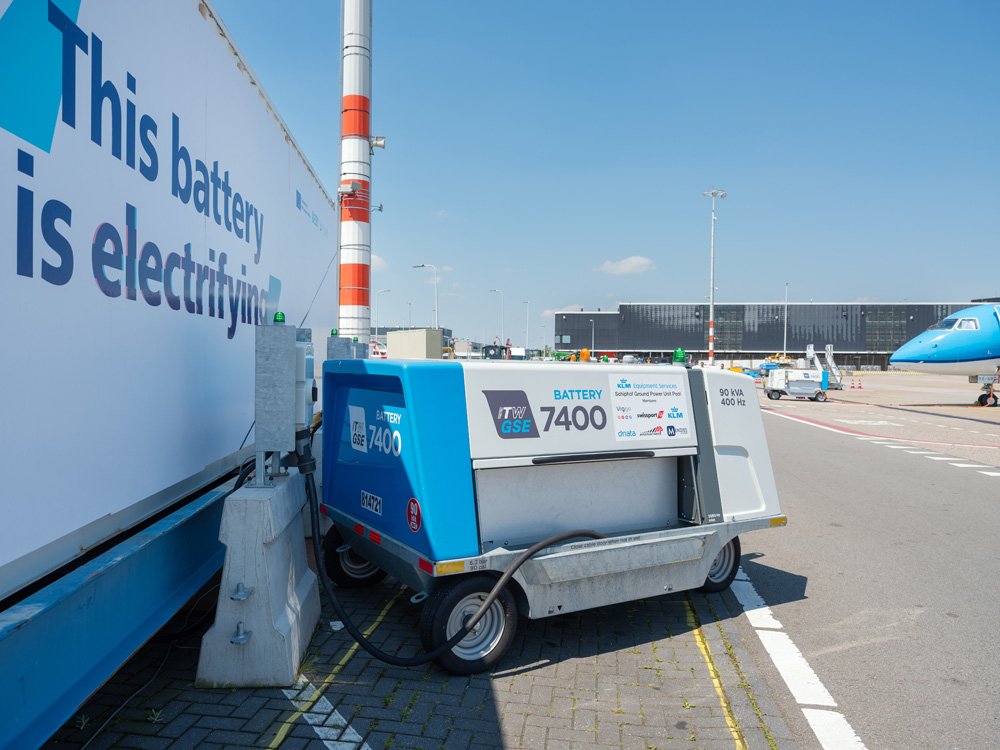
Photo courtesy of Amsterdam Schiphol/Roger Cremers.
Noise is often an operational problem just as much as it is a comfort one. When marshalling at a remote stand or during pushback, quieter loaders, GPUs, and tugs can better assist communication and co-ordination.
Near silent eGPUs, according to ramp crews, allow employees to communicate effortlessly next to the unit, strengthening situational awareness and preventing possible misunderstandings.
Additionally, a decrease in vibration results in fewer wear and tear on parts over time; seemingly minor advancements that gradually build up over hundreds of daily shifts.
Another important factor is the total cost of ownership (TCO). On a per-kilometre or per-hour rate, electrical power is generally more economical than diesel, and e-drive trains demand fewer consumables (fewer filters, no oil changes).
Indeed, according to analyses of eGSE deployments, longer equipment life and lowered fuel and maintenance costs resultin annual operating-cost savings of several thousand dollars per vehicle. That is without considering the avoided carbon fees or the costs that many airports incur for local air quality compliance.

Charging is the new logistics if power is the new fuel. Instead of addressing charging as a mere afterthought, hubs in North America and Europe are starting to integrate it into gate designs and roadways.
Back in 2014, with the objective of electrifying their fleets, Seattle-Tacoma International Airport installed hundreds of airside charging stations for new electric vehicles. This was a landmark effort that instantly allowed for a more intelligent dispatch.
Elsewhere, Vancouver International Airport has reported having more than 100 airside charging ports to accommodate eGSE and EV fleets. This network is combined with ground power to guarantee that vehicles can plug in, and crews can power down at the gate.
The transformation has been stimulated by funding and policy. In the United States, airports have the option to buy ZEVs and the necessary charging infrastructure with Airport Improvement Program (AIP) funds. Meanwhile, the companion VALE programme permits Passenger Facility Charges (PFCs) and AIP funds for gate electrification, recharging stations, and low-emission automobiles. These efforts have collectively benefited dozens of airports as they scale up their fleets.
In Europe, airside fleets are being encouraged to embrace zero-emission technologies by roadmaps and airport-operator agreements, which are commonly linked to ACI’s Airport Carbon Accreditation programme and wider 2030 climate objectives.
Early adopters are using eGSE to make immediate, quantifiable reductions in stand emissions.
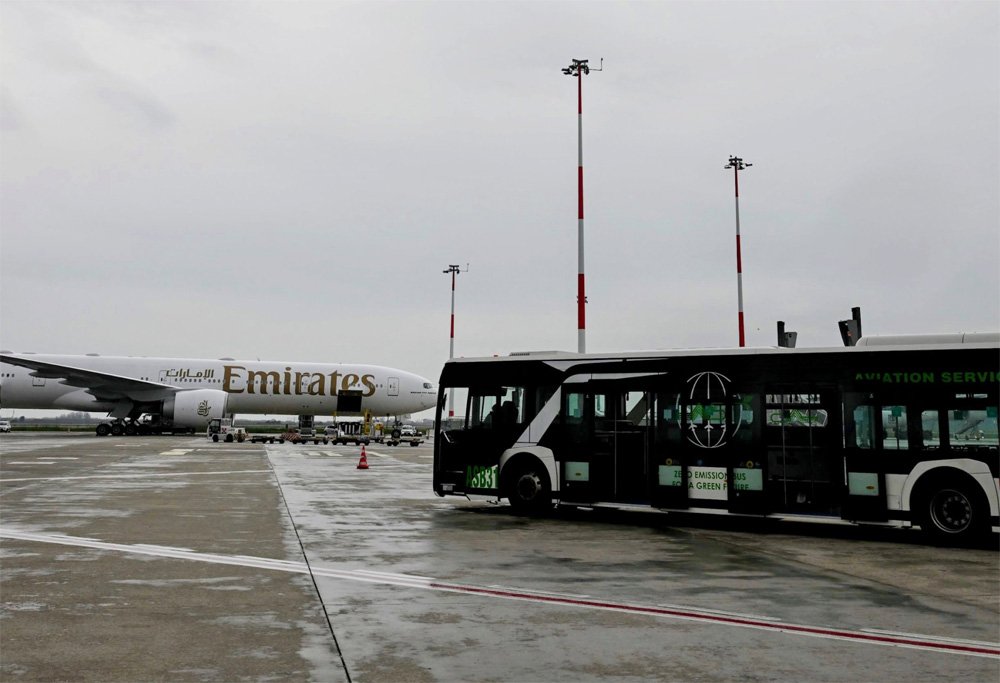
Of course, airport buses that run on batteries are no longer an unusual concept. They are now a prevalent tool for shorter down times, cutting local pollutants in areas with high passenger traffic, and improving peak-hour flows to remote stands.
DINOBUS and COBUS Industries offer fully electric apron buses for airports evaluating their eGSE options. The capacity (typically up to around 110 passengers), charging strategy (fast opportunity charging vs. longer overnight stretches), climate control in extreme climates, and software integrations are the main factors in choosing between models.
The durability and cold-weather challenges that hindered early demonstrations have already been tackled. Most airside-use buses benefit from reliable Lithium-ion Phosphate batteries. At the same time, dependable HVAC, pre-heating, and intelligent charge management can preserve range throughout the winter without sacrificing turnaround times.
Because of these manufacturing decisions, electric apron buses are now deemed dependable not just in ‘friendly’ climates but even in those harsher summers and Arctic winters. Electrification can also affect how airport teams function. For example, training emphasises more on consistency and ease of use than making up for gear changes or throttle lag. Electric tugs and loaders deliver precise, controllable torque.
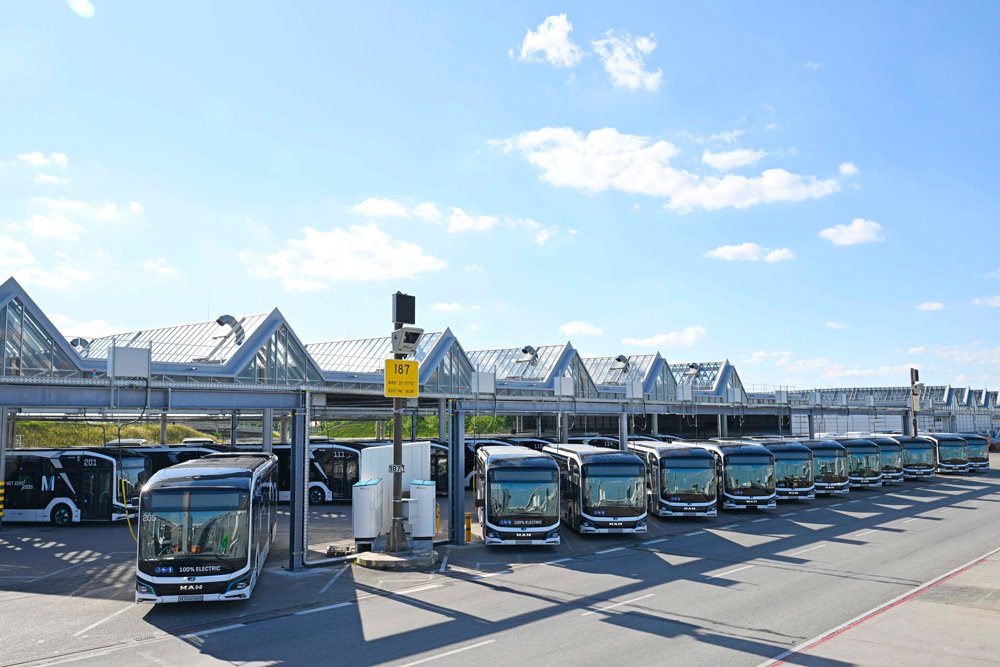
Duty managers have new tools thanks to telematics from the chargers and automobiles: they can even identify underperforming units in advance, and sequence operations so as to keep state-of-charge within a specific, battery-healthy window. A handy reference is emerging for airports and ground handlers thinking about their first significant eGSE wave:
- Where power achieves the most operational gain, begin there. PCA and eGPUs rapidly enhance the stand’s working conditions. Impressive stand emissions reductions and lower levels in ground-level noise have already been reported by European projects that migrated from diesel GPUs to battery eGPUs.
- Build and choose your charging as a core infrastructure element. Install airside chargers at the gates, baggage halls, and de-icing pads where the bulk of the work is done. Compared to airports that rely on a small number of fuel depot locations, those that disperse a number of charging stations closer to places of employment frequently experience higher utilisation and simpler fleet scheduling.
- Take full advantage of funding for the initial stages of your transition. Airside electrification is frequently supported by national clean-transport and airport-modernisation programmes in Europe as part of climate-action plans. ZEV grants in the United States can also co-fund vehicles and their adjacent infrastructure.
Electric GSE will connect to larger energy systems in the years to come. Airports will serve as micro-hubs as solar panels, battery storage, and smart building controls are incorporated.
Of course, electrification is not an all-encompassing solution for aviation’s environmental issues, but it is one of the swiftest and least disruptive solutions currently available to the sector.
Airports that move early can benefit from a cleaner, quieter, and easier to co-ordinate terminal, as well as new tools for their teams to ensure safer, faster operations every day.


