

Overnight accommodation and sleep options at airports continue to grow and now include everything from traditional hotels to cabins and sleep pods, writes Joe Bates.
The need for accommodation at or close to an airport is certainly not a new thing, with the Gate Lodge at London’s Croydon Airport, opened in the 1928, arguably being the first ever airport hotel.
Much has changed since then, of course, with hotels now found at most airports and located across the airport campus from inside terminals to commercial developments on airport land.
And as global traffic has grown and more people travel than ever before, airports have adapted to the changing needs of travellers and embraced a whole new range of accommodation options for passengers using their facilities.
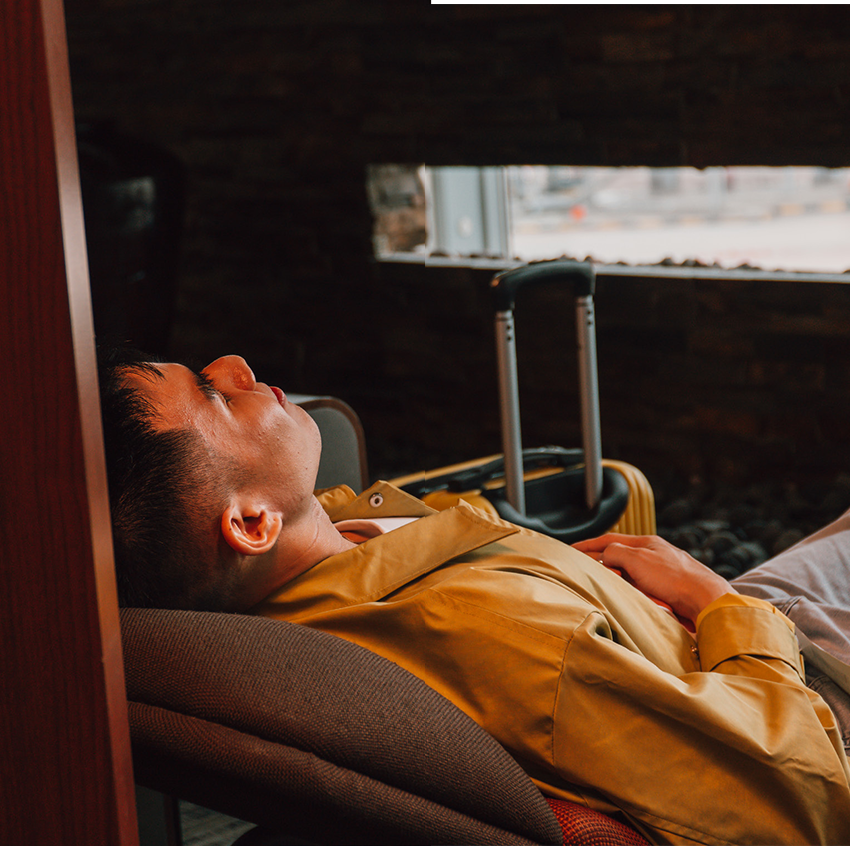
These include airside hotels for transfer passengers, dedicated sleep zones and pods, rooms, capsules and cabins that users can hire by the hour or overnight for longer stays.
In this article we will review the latest hotel openings, consider the growing value of the market for sleep pods/cabins, and talk to some of the major players in the market such as GoSleep, Napcabs and Airport Dimensions which unveiled its new Sleepover brand late last year.
We also hear from airports that have been among the pioneers of the adoption of all forms of sleep options – Munich (MUC), Amsterdam Schiphol (AMS) and Singapore Changi (SIN).
UK’S NEWEST AIRPORT HOTEL
The UK and possibly the world’s newest airport hotel is the £54 million Dakota Manchester Airport, boldly labelled by some as the city’s first luxury airport hotel, which opened for business on July 1.
Designed by KPP Architects, the new 154-room hotel will include a premium bar and brasserie-style grill on the ground floor and provide 130 car parking spaces and a dedicated chauffeur-driven shuttle service to and from the airport terminals.
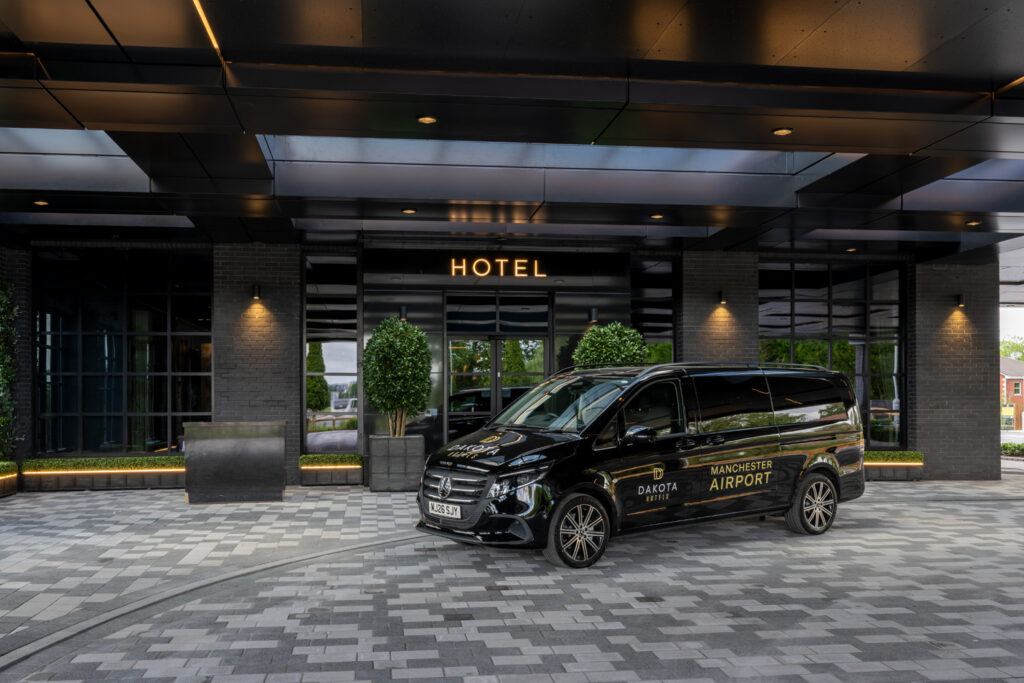
Located off Enterprise Way on a three-acre plot at Mix Manchester, it is also home to an al fresco Cigar Terrace and Humidor, exclusive private dining rooms, premium top-floor suites and a dedicated valet parking service, which have led to its luxury label.
Matt Townley, group operations director, said: “We look forward to becoming the hotel of choice for travellers, local guests, and businesses alike.
“Gareth Jackson, group property director for Manchester Airports Group, has previously described the Dakota as “a superb brand”.

NEW IBIS AT MUNICH AIRPORT
Also brand new is the ibis Styles Munich Airport, which opened in June, just in time for the summer peak period for the German gateway.
The airport notes that it “enriches” it’s existing portfolio of lodging and dining options and underscores the location’s dynamic development as a premier international hub.
Jost Lammers, CEO of Munich Airport, said: “The expansion of our hotel offerings creates additional capacity for business and leisure travellers, enhances the appeal of our airport, and simultaneously provides important impetus for growth and value creation in the region.
“Modern, experience-oriented hospitality offerings such as the ibis Styles Munich Airport underscore our commitment to further establishing Munich Airport as an innovative and future-oriented hub in the face of international competition.”
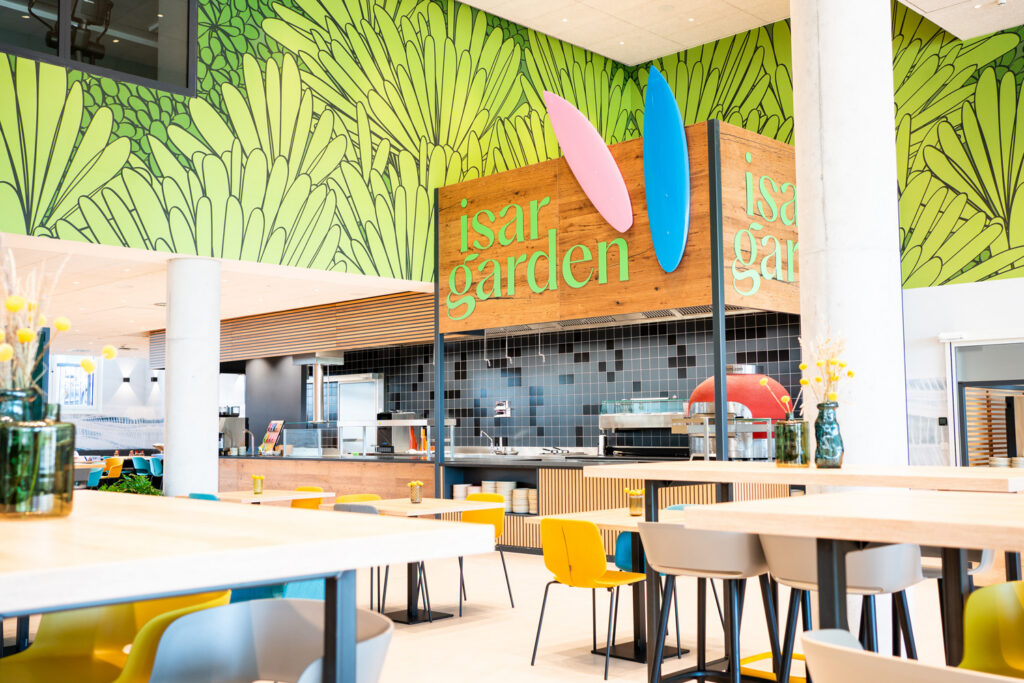
The creative design concept of the 358-room hotel is said to combine functionality and comfort, with its colourful interior décor featuring shades of green, blue and slate said to have been inspired by the landscape along the Isar River.
The Accor Group operated hotel, which joins the Hilton Munich Airport, is located close to the airport terminals and LabCampus, Munich Airport’s innovation centre.
ALMATY AND BRISBANE
Elsewhere in the world, a new 171-room Radisson Blu Hotel has opened at Almaty Airport in Kazakhstan, and Brisbane Airport is inviting hotel chains to submit their interest in potentially operating one of two new facilities it would like to open ahead of the 2032 Olympic Games in the city.
The potential new hotel sites at Brisbane Airport (BNE) are adjacent to the International Terminal and in its fast-growing Skygate retail and entertainment precinct.
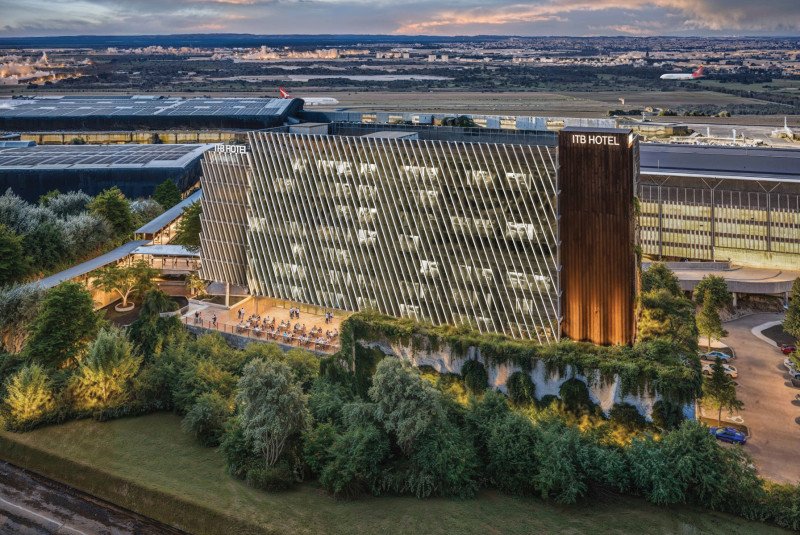
Brisbane Airport’s executive general manager for commercial, Scott Norris, said each location offered unique advantages for operators seeking to establish a presence at BNE.
“Location is everything, and it doesn’t get more connected than being at the front door of Queensland’s busiest gateway,” he noted.
“Brisbane Airport’s three current airport hotels are consistently at capacity, so there is no doubt there is demand for additional hotel rooms.
“Long-term, Brisbane requires thousands of new hotel rooms ahead of the 2032 Olympics and so we’re highly confident the airport can support five hotels.”
AIRPORT SLEEP PODS/CABINS
While we can imagine the potentially lucrative nature of the hotel business, it might come as a surprise to learn that the market for airport sleep pods is also huge.
Indeed, it was valued at $131.17 million in 2025, is projected to reach $144.54 million this year, and if it grows at the expected CAGR of 10.84% over the next six years it will be worth $269.7 million by 2032, according to ResearchAndMarkets.com research.
The figures are revealed in its ‘Airport Sleeping Pods Market – Global Forecast 2026-2032’ report, with the company noting that “airport sleeping pods have emerged as an innovative solution designed to transform idle time into restorative periods”.
It goes on: “These compact, self-contained units provide an oasis of privacy, allowing passengers to recharge before continuing their travels.
“In addition to enhancing passenger welfare, these pods present a strategic avenue for airports to diversify their non-aeronautical revenue streams.
“By integrating advanced features such as adjustable lighting, climate control and ergonomic sleeping surfaces, airports can position these offerings as premium services that appeal to business travellers seeking productivity and leisure passengers valuing comfort.
“Moreover, the introduction of modular pod installations contributes to space optimisation, enabling airports to repurpose underutilised areas for high-yield facilities.”
So, who are the main players in this market today and what offerings do they provide at airports?
They include Napcabs, GoSleep and Airport Dimensions courtesy of its new Sleepover product, although the fate of some of the original players in the airport market such as SnoozeCube and Sleepbox is unclear with both appearing to have ceased trading.
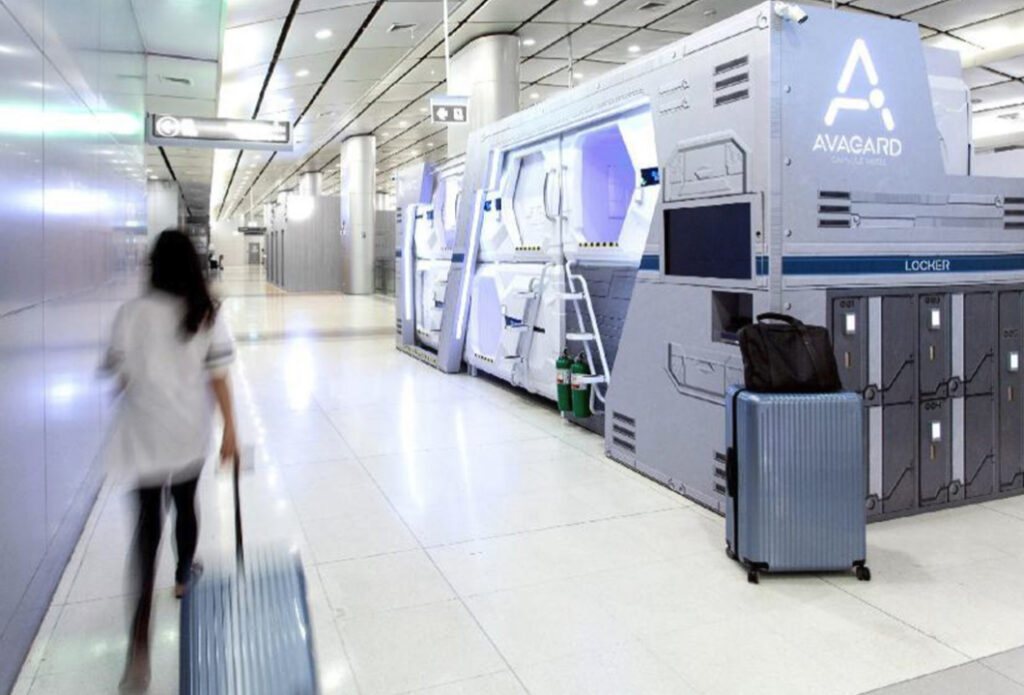
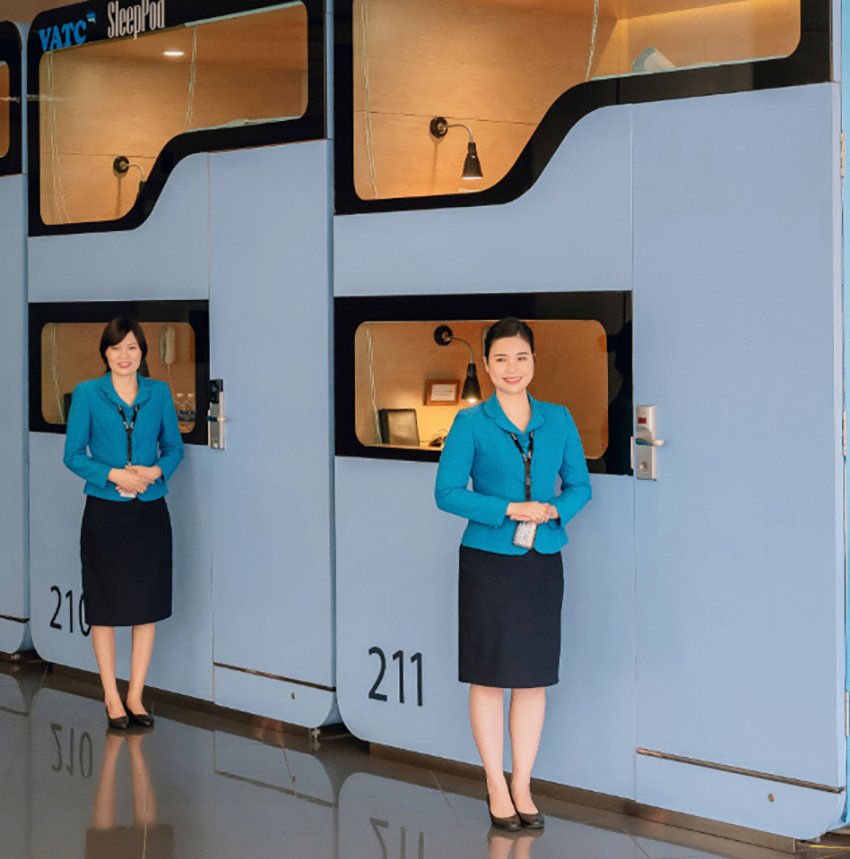
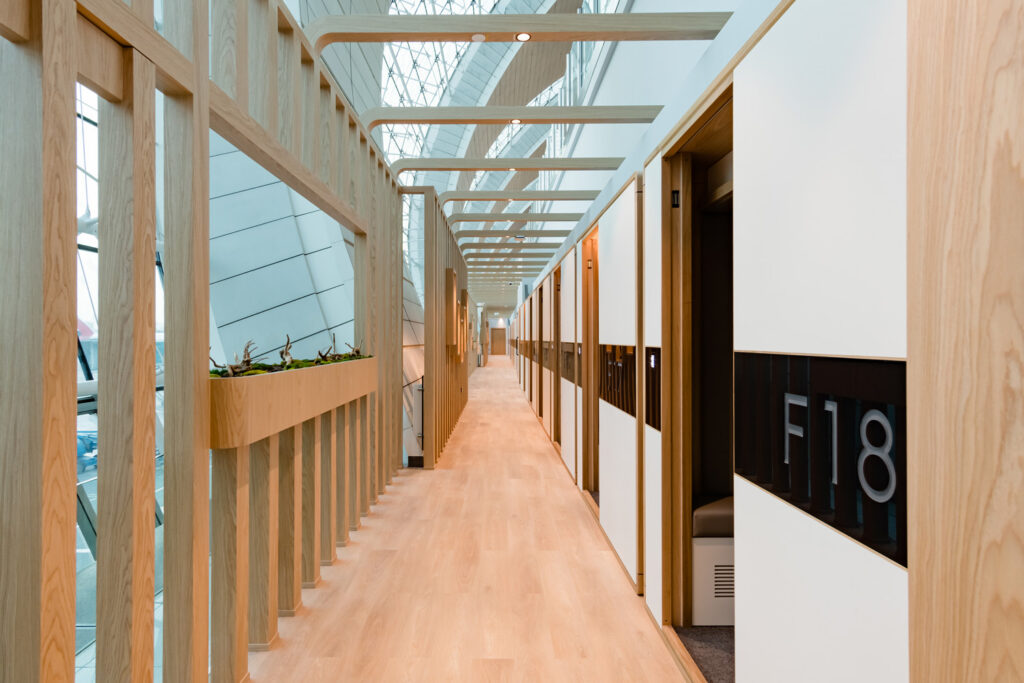
While an ever-increasing number of airports in Asia have their own hugely popular capsule/pod hotels for visitors. These include the Avagard Capsule Hotel at Bangkok Suvarnabhumi; 9h nine hours at Tokyo Narita; VATC SleepPod at Hanoi Noi Bai (pictured above)
READY FOR A SLEEPOVER?
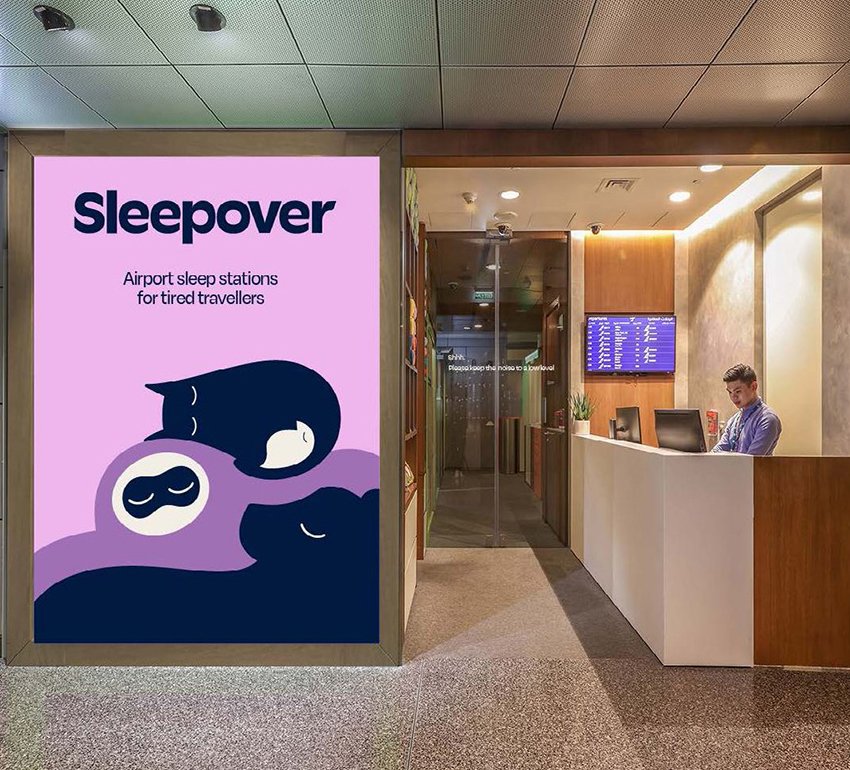
Airport Dimensions has rebranded its sleep product as Sleepover, formalising a new airport sleep station category.
It notes that “the bold evolution” of the former sleep ’n fly concept is a direct response to the changing needs of modern travellers.
Sleepover, it says, gives travellers privacy and real rest in the terminal while helping airports activate space that is often underutilised.
It believes that the private, pay-as-you-go option complements lounges rather than competing against them, meeting a different moment in the journey with a purpose-built solution
Talking about why Lima’s Jorge Chávez International Airport chose Sleepover, the airport’s travel retail manager, Marinela Beke, said:
“We saw the gap between the public concourse and premium spaces, especially around early flights and long connections. Sleepover closes that gap with a pragmatic approach.
“Early adoption has been strong, feedback is positive, and it complements our existing offer by giving passengers a practical way to travel more comfortably.”
Sleepover’s proposition is deliberately simple: modular pods and cabins that feel calm, safe, and comfortable, with optional add-ons such as showers.
According to its AX25 research, Airport Dimensions says that 49% of passengers actively want or are highly interested in sleep facilities at airports, while 95% of airport executives admit current terminal space is not being fully utilised.
Andrew Van Eeden, vice president, global new product and innovations, Airport Dimensions, said: “Travellers want privacy and real rest in the hours between or before flights, without having to compromise.
“Sleepover gives them that calm – in the terminal, on their terms – while giving airports a configurable, insight-led product that fits operational reality.”
TIME FOR SOME ZZZs IN A NAPCAB
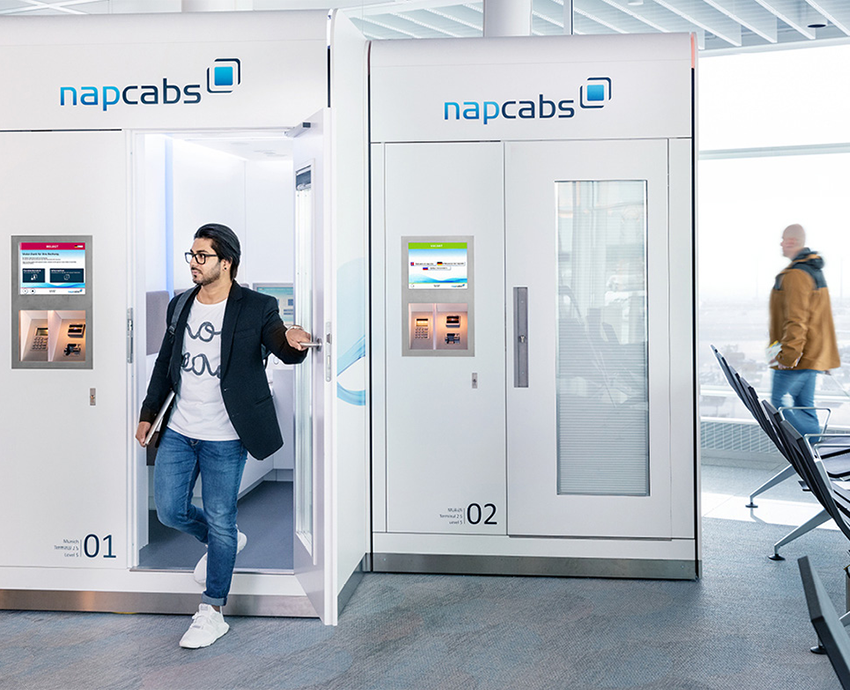
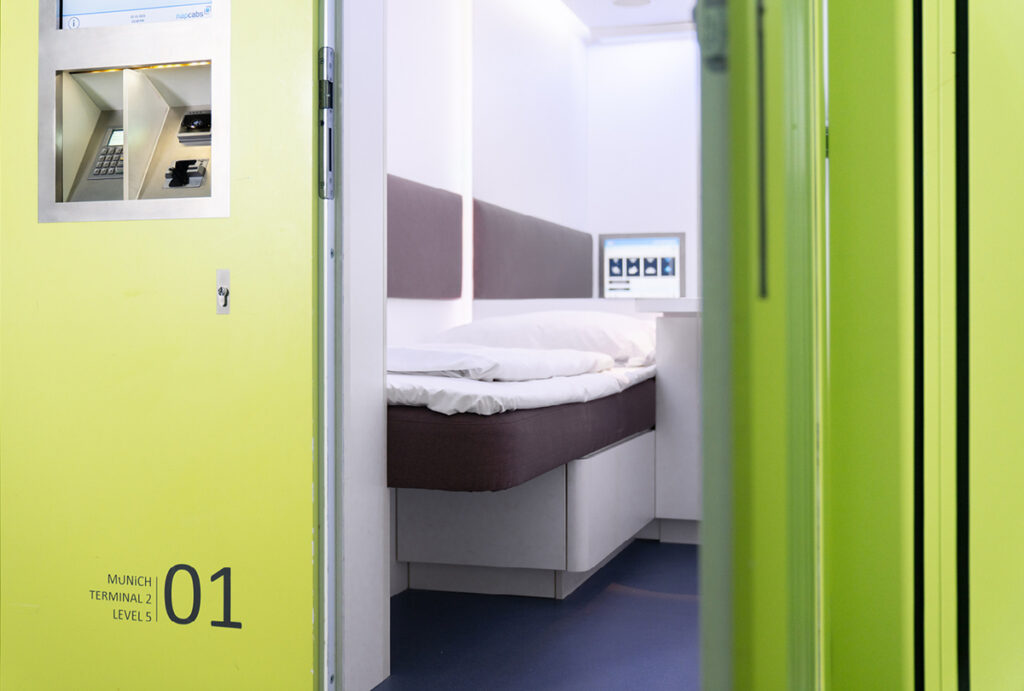
The dominant player in the German market is napcabs, which has air-conditioned micro-cabins at airside locations across Berlin, Munich and Frankfurt airports.
It boasts thirteen cabins at Munich Airport – eleven airside and two landsides – and eight at Frankfurt Airport, including two in the gateway’s newly opened Terminal 3.
Napcabs notes that each cabin provides users with a private, climate-controlled space to sleep, work or simply recharge.
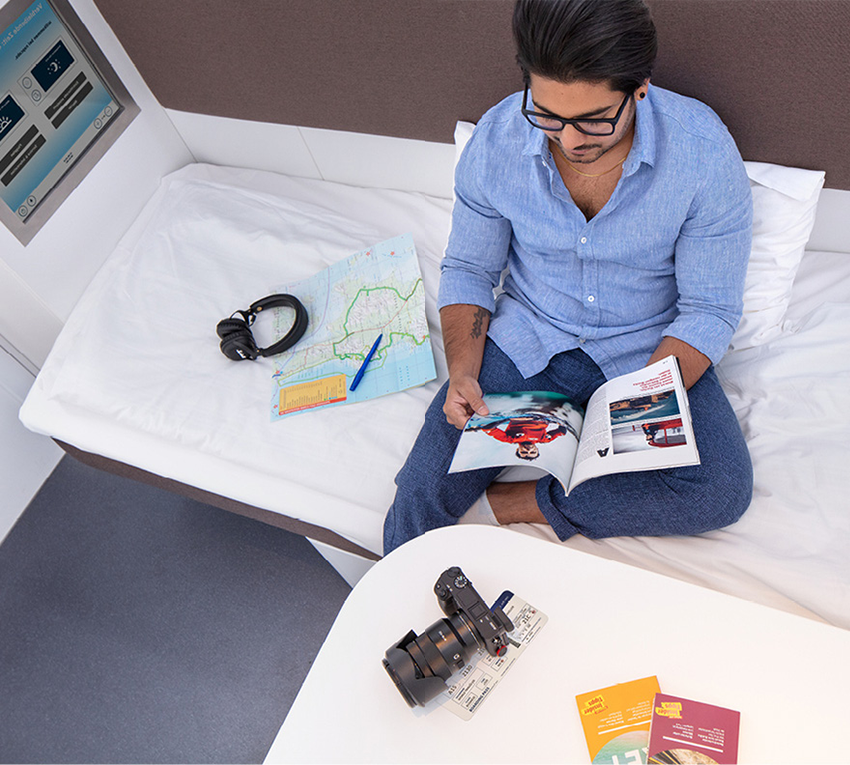
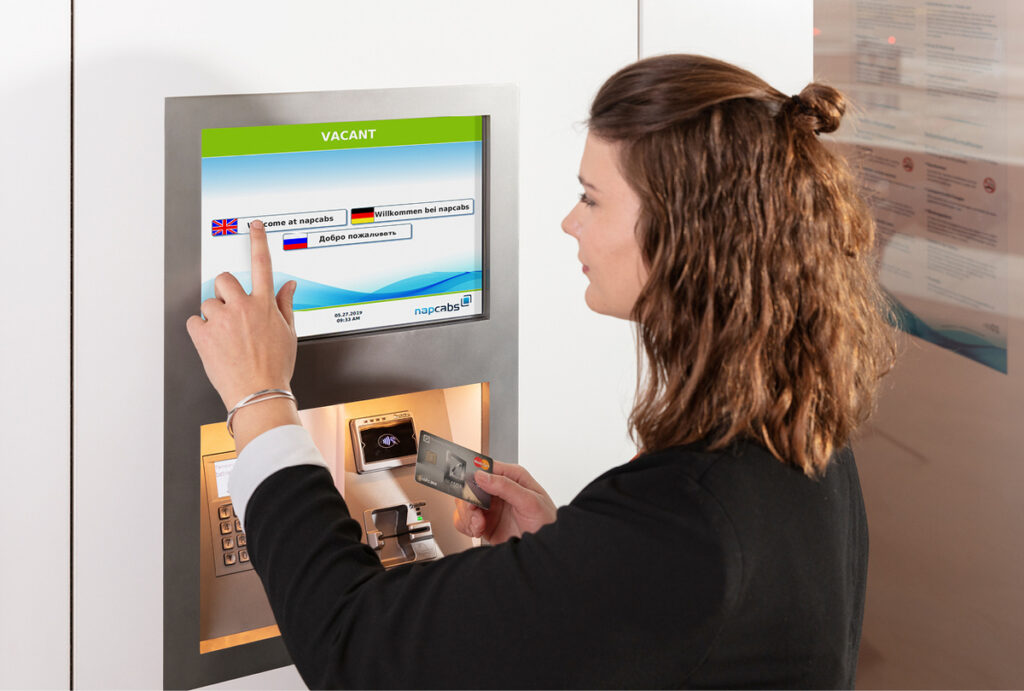
All feature a premium bed with fresh bedding, Wi-Fi, charging facilities, a table for working, and an intuitive self-service booking system, making them ideal for both short stays and longer layovers.
Napcabs CEO, Fabian Friedrich, believes that the evolution of its cabins and increase in demand for them over the past 18 years shows that travellers want more sleeping options at airports.
He says: “We’ve seen a shift in the way people travel. Airports have evolved from purely transit spaces into places where passengers spend considerable amounts of time.
“Today’s travellers expect privacy, comfort, and flexibility, whether they want to sleep, work or simply escape the busy terminal for a few hours.
“The consistently growing demand for our cabins confirms that passengers increasingly value dedicated spaces for rest. Sleep is no longer considered a luxury during travel – it’s becoming an essential part of a better passenger experience.”
Is the company actively working to expand its operations outside of Germany?
“International expansion is an important part of our long-term strategy,” admits Friedrich. We see growing interest from airports across Europe and beyond, as more airport operators recognise that high-quality rest facilities have become an important part of the passenger experience.
“When selecting new partners, we focus on airports that share our commitment to innovation and premium passenger services.
“While Germany remains our strongest market today, we are actively exploring opportunities to bring the napcabs concept to additional international airports.”
Napcabs started in 2008 with a pilot project featuring two cabins at Munich Airport. Its first permanent location opened in 2010 in the Schengen area of Munich Airport Terminal 2 with four cabins.
SLEEP POD TRENDSETTER
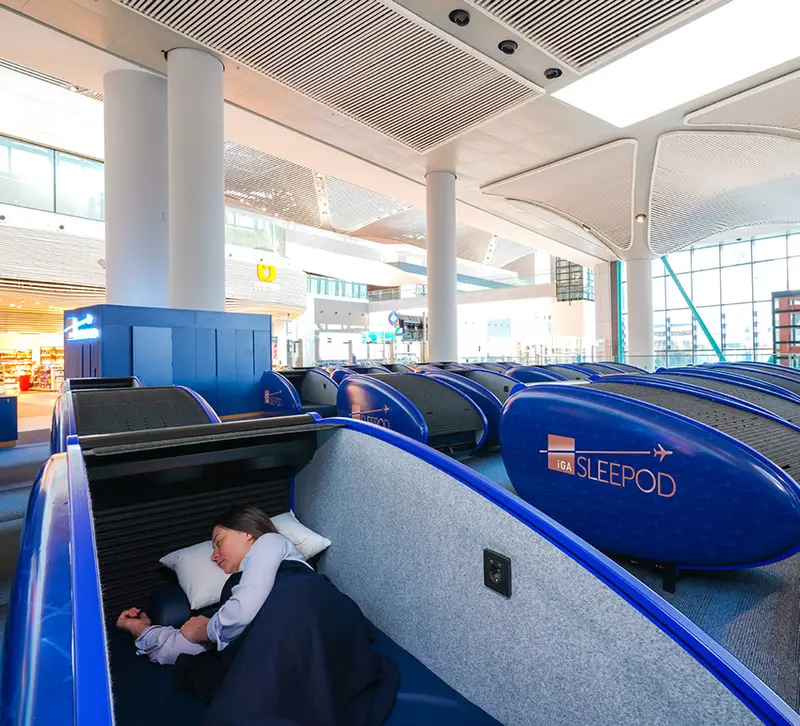
Finnish company GoSleep now has two different types of sleep pods in use at airports, the Recovery Pod designed for short-term sleep, and the more spacious Igloo Pod, which can also be used for work.
Between them they are currently installed at seven airports across the world – Amsterdam Schiphol (AMS), Helsinki (HEL), Istanbul (IST) and Warsaw (WAW) in Europe, Abu Dhabi (AUH) and Dubai (DXB) in the Middle East, and Perth (PER) in Australia.
CEO, Topi Piispanen, is in no doubt that demand for places where passengers can rest, relax and sleep in privacy at airports will only rise as demand for air travel grows in the coming decades.
He says: “Passenger expectations are changing rapidly. Today’s travellers increasingly look for convenient, comfortable and private spaces where they can rest, recover, recharge or focus between flights.
“We believe that our dedicated GoSleep on-demand rest solution occupies a unique position within the airport ecosystem. Hotels, lounges and sleep pods each serve different traveller needs, and together they help airports create a more complete passenger experience.
“What we consistently see from passenger feedback is strong demand for flexible, on-demand rest options inside the terminal. At GoSleep our mission is simple: Arrive tired. Leave rested.
“Our goal is to help travellers continue their journey feeling better than when they arrived. Our service is about rest, recovery, wellbeing and creating a better travel experience.
Talking about the success of the installation of its sleep pods at XWELL’s Xpres Spa location in Amsterdam Schiphol’s D-Pier a year ago, Piispanen says: “Regarding Schiphol, while we do not disclose operational performance metrics publicly, passenger feedback and partner engagement have been very encouraging.
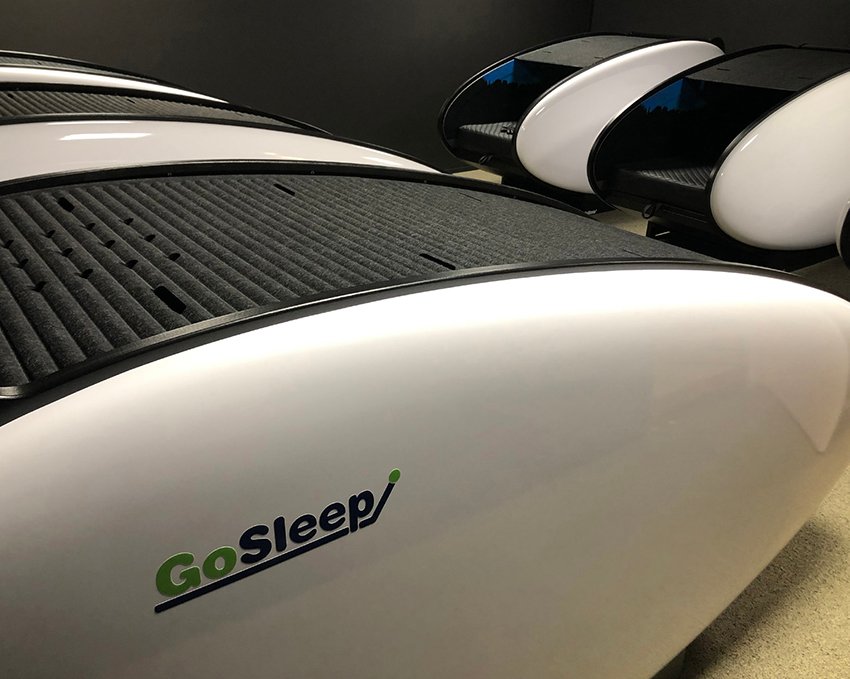
“The installation has reinforced our view that travellers value access to dedicated spaces designed specifically for rest, recovery and wellbeing within the terminal environment.”
Will more airports be added to the company’s growing list of customers in 2026? Piispanen replies: “We continue to see strong interest from airports and service providers exploring proven ways to enhance the passenger experience.
“While we do not comment on future projects until they are announced, we remain very optimistic about the long-term growth of the category.
“The successful introduction of our next-generation GoSleep pods at Helsinki Airport in January 2026 has reinforced our belief that we are only at the beginning of a much larger shift in how airports think about passenger wellbeing.
“Travellers increasingly expect airports to support not only mobility, but also recovery, comfort and wellbeing throughout their journey.
“Looking ahead, we expect rest and recovery services to become a standard part of airport infrastructure, alongside lounges, F&B, hotels, wellness services and other passenger-centric amenities.
“Airports are increasingly recognising that traveller wellbeing is not a luxury – it is an important part of the overall passenger experience.
“As passenger expectations continue to evolve, we believe our on-demand rest solutions will play an increasingly important role in helping airports create more comfortable and enjoyable human-centred travel environments.”
MUNICH AIRPORT
The same willingness to embrace new ideas, services and facilities could apply to Munich Airport (MUC), which hasn’t looked back with sleep cabins since first introducing them in 2008.
Seen as pioneering move at the time, the airport partnered with Munich-based napcabs GmbH on the first cabin and has worked with it ever since to expand its range of services.
Today, a total of 11 napcabs are available in Terminal 2 and the satellite building. They are equipped with comfortable sleeping and working areas, as well as free internet access.
MUC notes that the new napcabsXL is particularly popular, offering enough space for two people or families with a queen-size bed, a table, and an armchair.
The average booking duration for napcabs at Munich Airport is currently around 3.5 hours.
The company responsible for operating MUC’s Terminal 2, a joint venture between Munich Airport and Lufthansa, has seen a substantial year-over-year surge in revenues from the napcabs. And to meet the increasing demand, additional cabins are planned for 2026.
Ivonne Kuger, T2’s managing director, said: “With napcabs, we offer our gests a retreat that perfectly matches the five-star standard of our premium hub.
“The high demand shows us how valuable comfortable rest and work facilities are for modern travellers. That is why we are continuously expanding this offering to further enhance the passenger experience at Munich Airport.”

AMSTERDAM SCHIPHOL TAKING STOCK
Like MUC, Amsterdam Schiphol Airport was an early adopter of micro-accommodation, opting for a Yotel in 2008 before expanding its offerings last year with five GoSleep Recovery Pods.
The airport told Airport World that it is currently exploring how sleep facilities, including sleeping pods, can enhance the experience and wellbeing of passengers using its facilities.
“Wellbeing is an important pillar within Schiphol’s strategy. Therefore, we are currently exploring how sleep facilities, including sleeping pods, can best contribute to this,” said a spokesperson.
CHANGI COMMITTED TO REST & RELAXATION
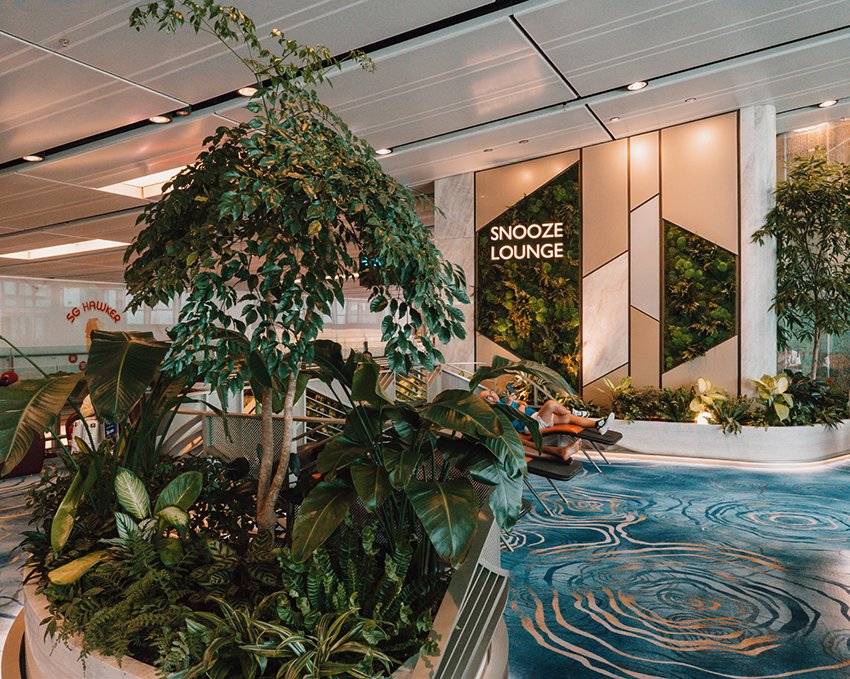
Going down a slightly more traditional route is Singapore’s Changi Airport, which doesn’t currently have any sleep pod accommodation in its terminals, but instead offers a variety of hotels and boasts its own snooze lounges.
The complimentary snooze lounges are located in designated areas in the transit zones of all four terminals at Changi, and form part of the holistic experience operator Changi Airport Group (CAG) wants to provide for passengers.
Open 24/7, each provide comfortable seating and soft lighting, making them ideal for naps. Power points allow users to charge devices while they rest.
In addition to the snooze lounges, Changi has Transit hotels in Terminal 1, 2 and 3; the Crowne Plaza at Terminal 3; and a YotelAir. A new Hotel Indigo, currently under construction next to Terminal 2, is expected to open in 2028.
CAG says that the new 255-room Hotel Indigo Changi Airport will feature innovative design elements and modern facilities, including a rooftop day club, bar and infinity pool offering panoramic views of the runway, airport boulevard and skyline.
It also reveals that “with layers of lush rainforest and hanging epiphytes stretching over seven storeys, its design will be centred around the concept of a ‘Floating Forest’.