


User friendly buildings
Terri Morrissey and Richard Plenty discuss the importance of remembering the human factor in airport design.
Whether you like it or not, travel can be a stressful business. The idea of a dream holiday or business trip can feel like a bit of a myth as reality sets in.
Oftentimes we are faced with long queues, delays, stressful checks, extremes of temperature, missed connections, getting lost in vast terminals … it is almost as if there is a plot afoot to deter people from travelling at all!
While it is impossible to make travel entirely stress-free, airport design that puts passengers first can make a significant difference.
The key is to see the experience of both passengers and airport workers from the user’s perspective.
Involving future users in the design process, clearly mapping the passenger journey through the airport, and applying new technologies and advanced design approaches can all help to create human-centred environments.
Psychology and anthropology are disciplines that underpin this approach. Observation tools, questionnaires, predictive analysis of behaviour, and understanding the nature of stress, can all be used to build the human into the design of the airport space.
‘Wayfinding’, for example, can be studied to observe how people make decisions when navigating through an airport.
Studying key points in the journey from public transport or parking to baggage handling, to security checks – right through to boarding a plane – can influence design resulting in a more efficient and less stressful process.
Attention to the human interface is key. Travelling to a recent meeting at the ACI EUROPE head office in Brussels by Metro provided a perfect illustration of how a failure to do so can cause confusion in any transport system.
The closest station, ‘Arts Loi’, was clearly indicated on the Metro map in the train carriage, but the sign on the station platform at the expected stop said ‘Kunst-Wet’. It turned out that this was the Flemish name for the same station but there was no indication on the station signage!
Looking ahead, the introduction of modern biometric technology is reshaping airport design and some airports, such as Incheon with its Smart Pass biometric boarding system, have already invested in this area.
Passengers can pass through immigration checkpoints and boarding gates using facial recognition rather than documents. Biometric should ultimately enable smoother journeys and customised individual support for the passenger journey.
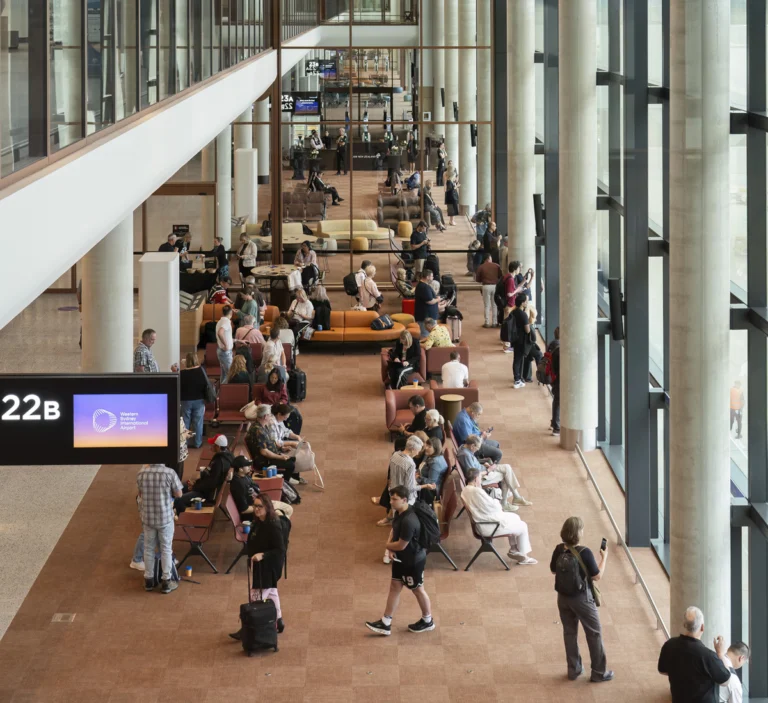
There are many other areas where attention to the human factor can make a difference to the passenger. A sense of belonging can be created through use of displays and interactive experiences.
The aesthetic experience should not be forgotten and is a feature of some ‘sustainability inspired’ airport designs which aim to bring aspects of the natural environment into the airport. This makes sense as sustainable design is something that demands particular attention in the airport context.
Physical comfort is always important and can be enhanced through controlling temperature, access, seating arrangements, ventilation and noise levels. We find that noise levels can be particularly annoying in some airports when waiting for a flight.
Catering outlets with loud music, high pitched sounds from coffee making machines; staff shouting orders and the inevitable screeching of small children can be enervating. Strategically placed screens; plants; and design of the layout with the customer comfort in mind could go a long way to making the experience much more comfortable!
Putting thought into the design of building and spaces coupled with the use of emerging technologies in sustainability can help create more user friendly and accessible buildings, create human centred environments and make the journey less stressful for all.
It just takes some imagination – and thinking more about the user!