



Clare Williams Fannin of Templemere discusses the hot topic of EES with Copenhagen Optimization’s Kasper Hounsgaard.
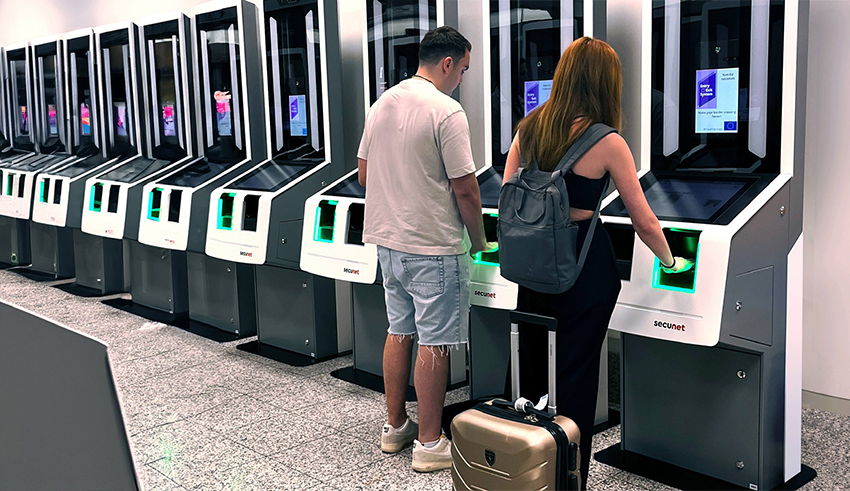
The full rollout of the European Union’s Entry/Exit System (EES) for non-EU nationals caused huge travel disruption across the continent’s airports this summer and prompted widespread discussion across the aviation industry.
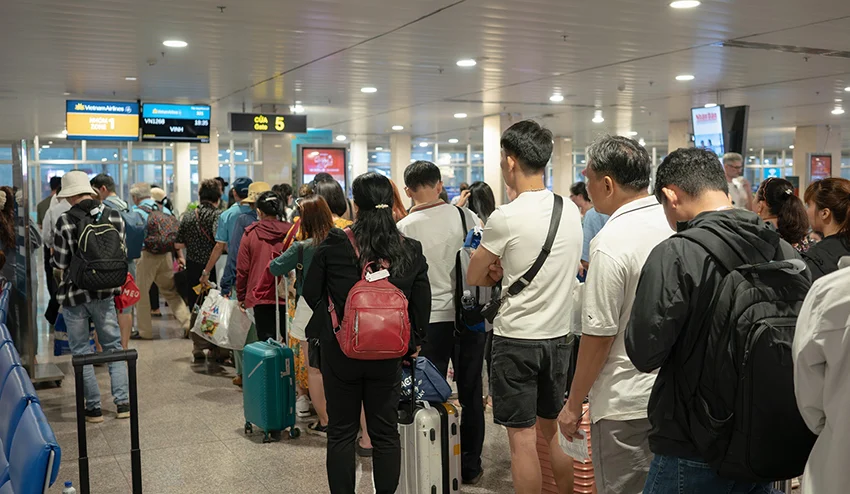
Indeed, five hour waiting times at some border control points led ACI EUROPE, IATA and A4E to submit an Open Letter to the President of the European Commission calling for the flexibility for member states to suspend EES whenever passenger volumes exceeded the operational capacity of border control facilities.
Naturally, much of that conversation has centred on border technology, processing times, and the potential impact on passenger queues.
Yet, while EES may have introduced a new operational challenge, it has also highlighted something much broader: many of the pressures airports are experiencing today did not begin with EES. They have existed for years.
Every major operational change presents airports with two challenges. The first is implementing the change itself. The second – and often the more significant – is understanding how that change ripples across the wider airport operation.
From Copenhagen Optimization’s perspective, EES has demonstrated that introducing new technology into an airport does not happen in isolation.
“An operational change at border control can have consequences for queues, staffing, passenger flows, gate operations, airline schedules, and ultimately the passenger experience,” says Kasper Hounsgaard, president and co-founder of Copenhagen Optimization.
“Many of the pressures associated with EES – long queues, mismatches between demand and staffing, and fragmented communication – were already familiar operational challenges.
“EES did not create the underlying planning problem, it exposed how difficult it can be to manage change when different stakeholders are working from different forecasts, assumptions, and operational plans.”
The broader lesson, he believes, is that technology alone cannot create resilience.
“Airports also need the ability to anticipate the operational impact of change, test different scenarios and co-ordinate their response across the entire operation,” notes Hounsgaard.
FROM REACTIVE TO PROACTIVE PLANNING
So, what are the biggest operational challenges airports need to address?
For Hounsgaard, many of the issues highlighted by EES are closely connected, but the fundamental problem is fragmented planning and the lack of a shared operational picture.
“When stakeholders use different data and assumptions, staffing becomes reactive and decisions are often made only after queues or delays have developed,” he explains.
“Limited scenario planning compounds the problem because teams may have a plan for the expected day, but no shared response for what happens when processing times increase, equipment fails or demand differs from the forecast.”
Better visibility is therefore important, but visibility alone is not enough.
“The real value comes from turning shared information into a co-ordinated plan and clear operational decisions,” says Hounsgaard.
This distinction is increasingly important as airports face greater operational volatility. Rather than simply responding to disruption once it has occurred, airports need to understand what might happen under different conditions and agree how they will respond.
BUILDING RESILIENCE INTO THE OPERATION
In practice, operational resilience means identifying pressure before it becomes disruption and having the ability to adjust the plan as conditions change. That starts with better forecasting, says Hounsgaard.
“Airports need to combine historic, scheduled, and live operational data to understand what is likely to happen, rather than relying on a static plan created at the beginning of the day or season,” he notes.
Continuous planning is equally important. Passenger demand, airline schedules, staffing availability, and operational conditions can all change, meaning that the plan needs to evolve alongside them. Scenario planning also has an important role to play.
“For EES, for example, airports should not plan around one assumed processing time,” says Hounsgaard. “They should model low, medium, and high-friction scenarios and understand when queues will form under each one.”
The benefit is not simply a better forecast. It is the ability to agree with what happens next.
He adds: “If you understand the point at which pressure starts to build, you can agree in advance what action should be taken, whether that means changing staffing levels, opening additional capacity, or adjusting gate allocations.”
This allows airports and their partners to move from reacting to disruption to managing it.
NO SINGLE STAKEHOLDER HAS THE FULL PICTURE
The need for better planning also reinforces the importance of collaboration between airports, airlines, border agencies, and other operational stakeholders.
Each organisation manages a different part of the passenger journey, but their decisions are closely interconnected.
“An airline schedule affects passenger presentation at the border; border processing times affect passenger flows and connections; and staffing or capacity decisions in one area can create consequences elsewhere,” says Hounsgaard.
“No single organisation has all the information or controls the entire journey. Collaboration is therefore essential, particularly as airport operations become more complex and less predictable.”
However, effective collaboration means more than exchanging updates when something goes wrong.
Hounsgaard says: “It means developing forecasts and scenarios together, agreeing which data and assumptions to use, and making decisions from one shared operational picture.”
That shared approach can help stakeholders make earlier and more confident decisions, while also allowing them to balance their individual priorities against the performance of the airport as a whole.
PREPARING FOR THE NEXT DISRUPTION
While EES provides a clear example of the challenges created by operational change, the lessons extend well beyond the border.
Airports are likely to face increasing volatility from extreme weather, sudden changes to airline schedules, diverted flights, workforce constraints, equipment or system failures, and future security and regulatory requirements.
“The specific cause of the next disruption may be difficult to predict, but airports can prepare the capabilities needed to manage it,” says Hounsgaard.
“Forecasting, scenario planning, flexible resourcing, and shared decision-making are applicable well beyond EES.”
For airports, therefore, the lesson from EES is not simply about how to manage a new border system. It is about how to build an operation that can adapt when conditions change.
“The next competitive advantage for airports will not come solely from introducing more automation. It will come from combining technology with co-ordinated operational decision-making, using shared data to anticipate pressure, evaluate options and act together,” concludes Hounsgaard.
EES may have exposed the challenge, but the opportunity for airports is to use that experience to build a more resilient operation for whatever comes next.