

Sergio Colella, SITA’s president for Europe, considers how Frankfurt Airport’s new Terminal 3 is an example of the type of dynamic, common-use infrastructure airlines want to fit their changing business models.
As the UK revisits airport expansion and capacity constraints, similar challenges are being faced across Europe.
Indeed, the next phase of airport growth will depend not only on building new infrastructure, but on how effectively existing capacity is used.
Europe’s next phase of airport growth will come from combining new infrastructure with smarter, more flexible operations that increase capacity without adding complexity. Frankfurt Airport Terminal 3 shows how this approach can be applied in practice.
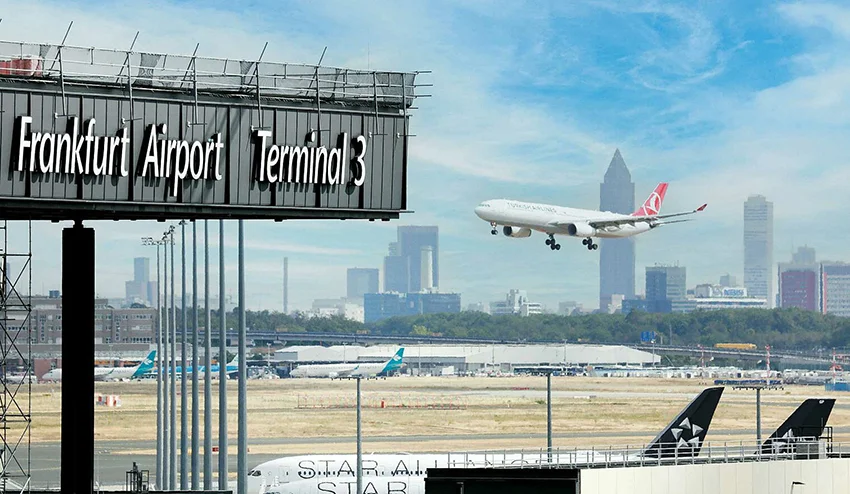
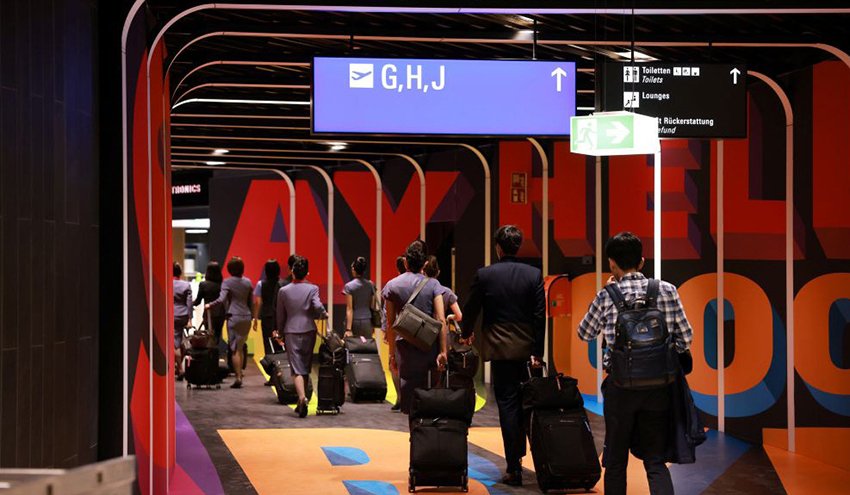
Designed to handle up to 19 million passengers annually in its initial phase, Terminal 3 is one of the most significant airport developments in Europe in recent years. Its importance lies not only in the additional space it provides, but in how that space is designed to operate.
The terminal has been built around a digital-first design, common use infrastructure, and flexible operations that allow airports and airlines to use capacity more efficiently while improving the passenger journey.
BUILDING CAPACITY IN A CONSTRAINED ENVIRONMENT
Expanding airport capacity in the UK and across Europe is complex due to land limitations, regulatory requirements, and the need to keep airports running during construction.
Frankfurt Terminal 3 has been developed over more than two decades, with construction beginning in 2015. Its phased design allowed the airport to add capacity while continuing to operate existing terminals.
The terminal introduces three new piers and allows airlines to move out of Terminal 2 so it can be renovated and brought back into use later, without disrupting day-to-day operations. This approach adds capacity in a way that can adapt as airport operations change over time.
DESIGNED AROUND DIGITAL FLOW FROM THE START
Many airports across the UK and Europe still rely on infrastructure that was not originally designed for digital passenger processing. Terminal 3 has been designed from the outset to support digital passenger flows across the entire journey.
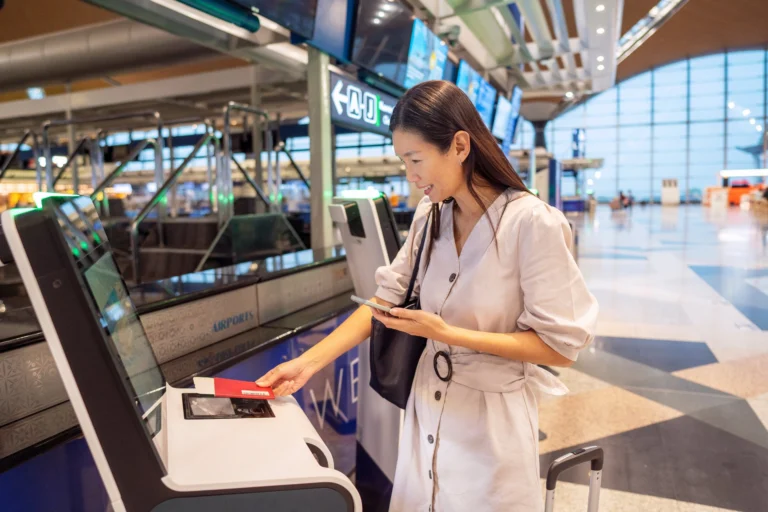
Common use infrastructure allows passengers to check in and drop bags regardless of airline, reducing reliance on fixed, airline-dedicated counters and enabling both airports and airlines to allocate space and staff dynamically.
This improves utilisation across the terminal and helps maintain a consistent passenger experience throughout the day.
Automated security, self-service processing, and digital passenger guidance are designed to work together as one system.
For airlines, operating in a common-use environment changes how capacity and the passenger experience are managed.
Instead of being tied to fixed check-in zones or peak-time counters, airlines can scale up or down using shared infrastructure as demand changes.
This reduces unused space, lowers the cost of managing dedicated facilities, and gives airlines and the airport greater control to shape a consistent passenger experience – without being constrained by where an airline happens to be located in the terminal.
This helps keep passengers moving and gives airport and airline teams more control over how capacity is used throughout the day.
HYBRID SELF-SERVICE THAT WORKS AT SCALE
Automation only improves the journey when passengers can use it easily and confidently. Terminal 3 combines self-service with staff support available at the same touchpoints, so passengers can get help without leaving the process.
Passengers who are comfortable can move through independently. Those who need support can get it immediately. At scale, this increases processing capacity while keeping the experience accessible for all passengers. It also makes it easier to manage changes, such as moving airlines between terminals.
CO-ORDINATING THE FULL AIRPORT ECOSYSTEM
Delivering a terminal of this scale requires systems, operations, and on-the-ground processes to work together.
SITA and CCM have supported this by deploying and integrating shared systems across the passenger journey, including check-in, bag drop, boarding, and seating areas.
This means the same infrastructure can be used by multiple airlines, and data can flow across each step of the journey to keep operations aligned.
The goal is a common-use environment that can adapt as demand changes.
This approach has been tested through large-scale trial operations involving around 8,000 volunteer passengers, allowing the airport to validate how the full journey works before opening.
FROM INFRASTRUCTURE TO IMPACT
For passengers, this approach reduces waiting times, makes each step easier to understand, and creates a more predictable journey.
For airports and airlines, shared digital infrastructure allows capacity to be used more efficiently without requiring more space, higher costs, or added operational complexity.
As airports in the UK and across Europe look to expand, the next real constraint on capacity will not be infrastructure alone, but how well passengers are able to interact with it.
Digital flow, intuitive self-service, and clear guidance increasingly determine whether capacity can be fully used.
When passengers move smoothly, infrastructure performs as designed. When they don’t, even the newest terminal can quickly become a bottleneck.
Frankfurt Terminal 3 shows that future airport growth will depend not only on how much infrastructure is built, but on how effectively passengers can move through and interact with it.