


The investor appeal of airport privatisation projects are now inextricably linked to their sustainability goals, writes Aervanta’s Arthur Lavier.
In the early spring of 2026, a major international airport transaction in the Middle East quietly collapsed, and it had nothing to do with the ongoing conflict in the region.
On paper, the asset was a crown jewel: double-digit passenger growth, a strategic location at the crossroads of global trade, and robust commercial revenues.
Ten years ago, sovereign wealth funds and global infrastructure operators would have triggered a fierce bidding war. Yet, when the bidding window closed, the highest-profile consortia had walked away.
The deal did not flounder on regulatory disputes or tariff structures. Instead, it stalled because the asset lacked a credible, science-based Scope 3 emissions reduction plan.
In 2026, the global capital markets delivered a definitive verdict: an airport that cannot prove its pathway to decarbonisation is no longer an investable asset.
This is the new, uncompromising paradox of airport privatisation.
The aviation sector stands at an unprecedented crossroads where the desperate need for capacity expansion collides directly with the absolute mandate for climate action.
THE NEW RULES OF AIRPORT INVESTMENT
For decades, airport Public-Private Partnerships (PPPs) were structured on relatively straightforward financial engineering. Investors evaluated passenger forecasts, non-aeronautical revenue potential, and regulatory asset base models to project long-term yield.
Today, that calculus has been fundamentally rewritten. ESG covenants are no longer optional addenda or superficial checklists buried deep within the annexes of a prospectus. They are now standard, hard-coded conditions in PPP term sheets.
Institutional investors – pension funds, insurance giants, and sovereign wealth managers – operate under strict mandates that forbid the deployment of capital into assets that risk becoming stranded.
Consequently, private operators are demanding that governments provide clear legislative frameworks for sustainable aviation fuel integration, grid electrification, and intermodal connectivity before they even submit an initial expression of interest.
The modern airport investor is not just buying a physical asset; they are acquiring a complex carbon liability that must be actively managed from day one.
THE PRIVATISATION PARADOX
This shift has created a profound geographical imbalance. In high-growth emerging markets across Africa, the Middle East, and South Asia, the demand for aviation infrastructure is surging.
Rapid urbanisation, a rising middle class, and the expansion of trade corridors require billions of dollars in capital expenditure that state treasuries simply cannot afford.
Yet, the very airports that desperately require private capital are the least equipped to attract it under modern investment parameters.
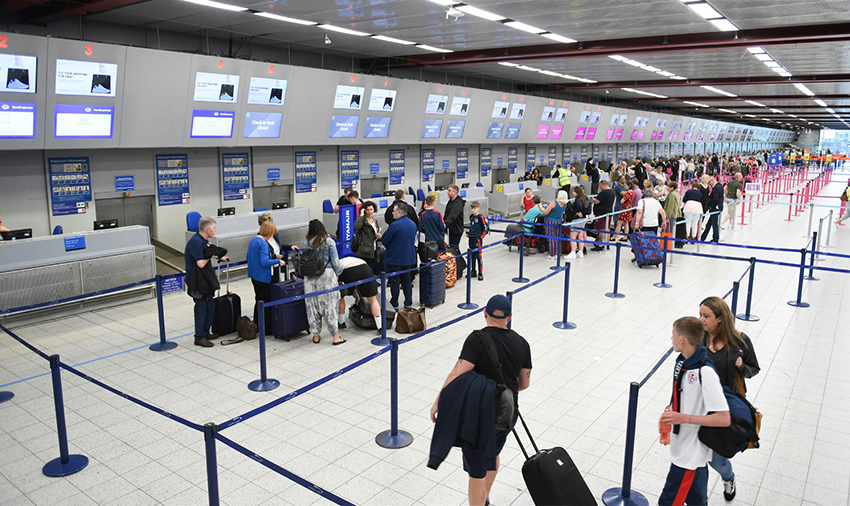
Many of these gateways lack the robust sustainability frameworks, local supply chains for sustainable fuels, or national green grid connections necessary to satisfy international lenders.
When a secondary gateway in Sub-Saharan Africa or South Asia attempts to launch a traditional concession tender, they find themselves trapped in a market vacuum. They often cannot secure the capital to modernise because they lack green credentials, and they cannot build those credentials without the capital that modernisation brings.
FROM CONCESSION TO HYBRID
To break this deadlock, the traditional long-term concession model is undergoing a rapid evolution. The historically popular thirty-year Build-Operate-Transfer (BOT) framework is increasingly giving way to sophisticated hybrid financing structures.
We are seeing the rise of blended finance, where development finance institutions, such as the International Finance Corporation or regional development banks, absorb first-loss risks or provide highly concessional equity tranches.
This initial public and multilateral backing de-risks the asset, allowing commercial banks and private equity to step in with confidence. Furthermore, traditional corporate debt is being replaced by green bonds and sustainability-linked loans.
These instruments tie the interest rate of the debt directly to verified operational milestones, such as achieving specific levels of Airport Carbon Accreditation, reducing water intensity, or transitioning ground support equipment to zero-emission fleets.
THE NET ZERO READINESS GAP
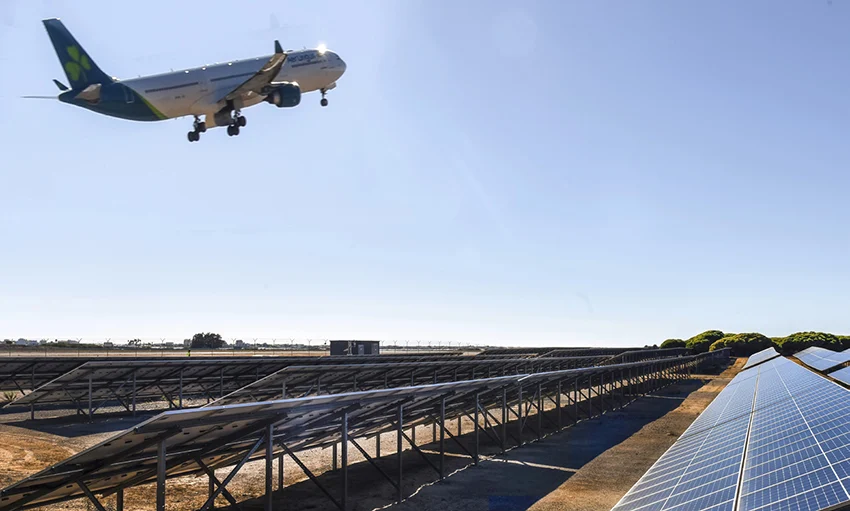
Through our transaction advisory work at Aervanta, we have identified a widening gulf between what we call “investment-ready” assets and those stuck in legacy operational paradigms.
A truly Net Zero-ready airport is characterised by a highly specific set of operational and structural attributes. It possesses a fully audited greenhouse gas inventory covering Scopes 1, 2, and 3, alongside a validated science-based target.
Its concession agreement explicitly defines the division of decarbonisation responsibilities between the state and the private operator, particularly regarding public transit connections and renewable energy generation.
To bridge this readiness gap, governments must treat climate strategy not as a post-transaction operational requirement, but as the foundational core of the transaction preparation phase itself.
WINNING THE NEXT WAVE
To position themselves successfully for the next generation of privatisation deals, governments and airport operators must act decisively.
First, states must integrate national aviation decarbonisation roadmaps directly into their PPP enabling legislation, giving investors legal certainty over long-term policy directions.
Second, airport authorities must initiate baseline carbon audits and establish preliminary ESG reporting frameworks well before bringing an asset to market.
Finally, transaction advisors must design bid evaluation criteria that weigh decarbonisation capabilities as heavily as financial offers.
The winning bidder should not merely be the one who offers the highest upfront concession fee, but the partner who demonstrates the most technically viable and financially backed plan to transition the airport to a low-carbon hub.
NAVIGATING THE GREEN TRANSITION
The era of simple capital deployment in aviation infrastructure has ended. As the industry advances through 2026, the gateways that thrive will be those that view capital and climate not as competing forces, but as twin engines of sustainable growth.
At Aervanta Aviation Consulting, we have spent years guiding governments and financial consortia through complex airport transactions across Africa and the Gulf.
Our experience has consistently demonstrated that when sustainability is designed into the very fabric of a transaction, it does not dilute returns – it secures them.
About the author
Arthur Lavier is managing partner at Aervanta Aviation Consulting (aervantaconsulting.com), a specialist advisory firm advising governments, operators, and institutional investors on aviation transactions, PPP structures and transition strategies globally.