

Airports Innovate: The future is now

Share
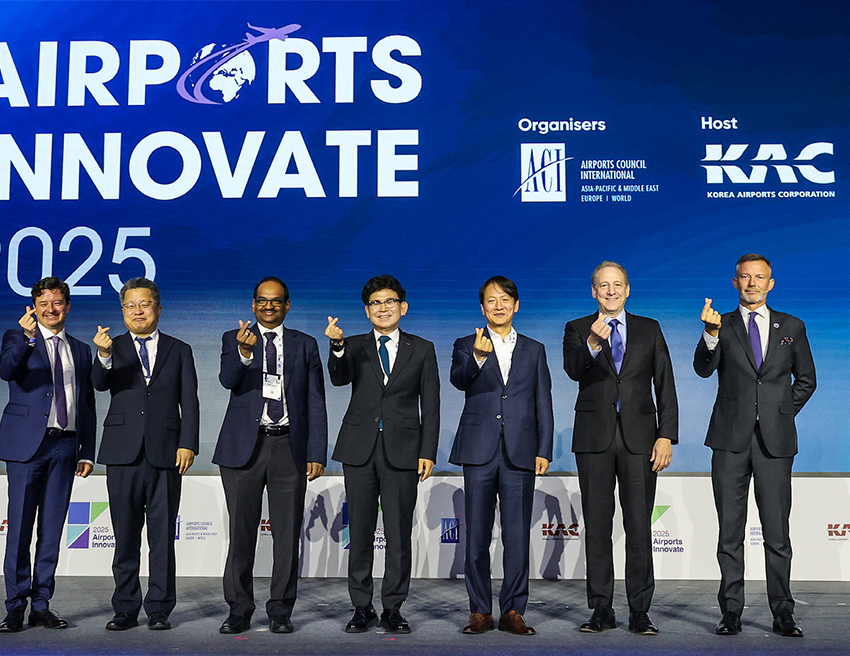
Busan in South Korea hosted the third instalment of ACI’s Airports Innovate conference. Editor, Joe Bates, was there to report on some of the conference highlights.
Airports Innovate may only be a few years old, but it has quickly established itself as one of ACI’s most dynamic conferences, giving participants a glimpse of some of the new technologies and innovative new ways of doing business that we can expect to see in the future.
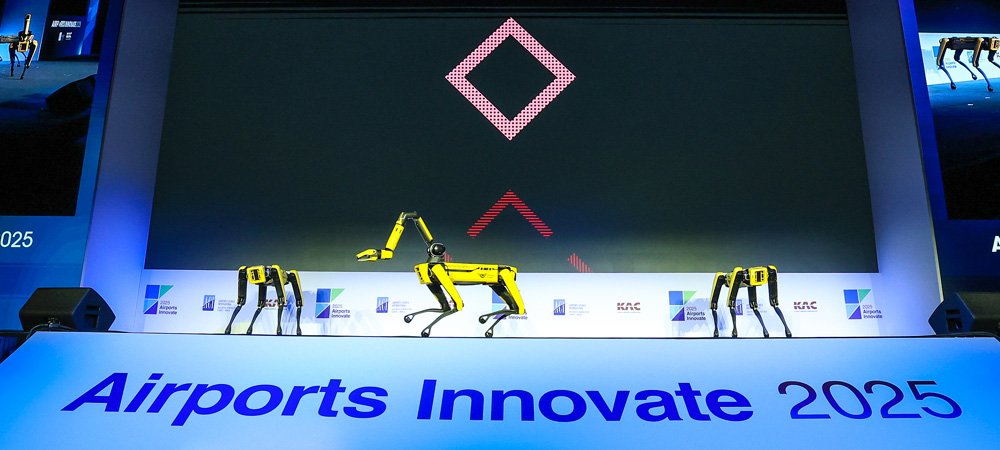
Indeed, from an opening that featured robotic dogs dancing to K-pop to discussions about the need for innovation ready leaders, artificial intelligence and mobility, smart security, and the evolution of the travel experience for passengers with disabilities, the event covered innovation from almost every angle.
And, it must be said that hosts, Korea Airports Corporation, (KAC) did a fantastic job of looking after more than 400 delegates in attendance, including providing arguably the best conference food I have tasted in 25 years of going to ACI World events!
Our round-up of November’s conference will focus on the state-of-industry addresses from ACI’s leaders, some panel sessions and a host of innovation awards presented during the event.
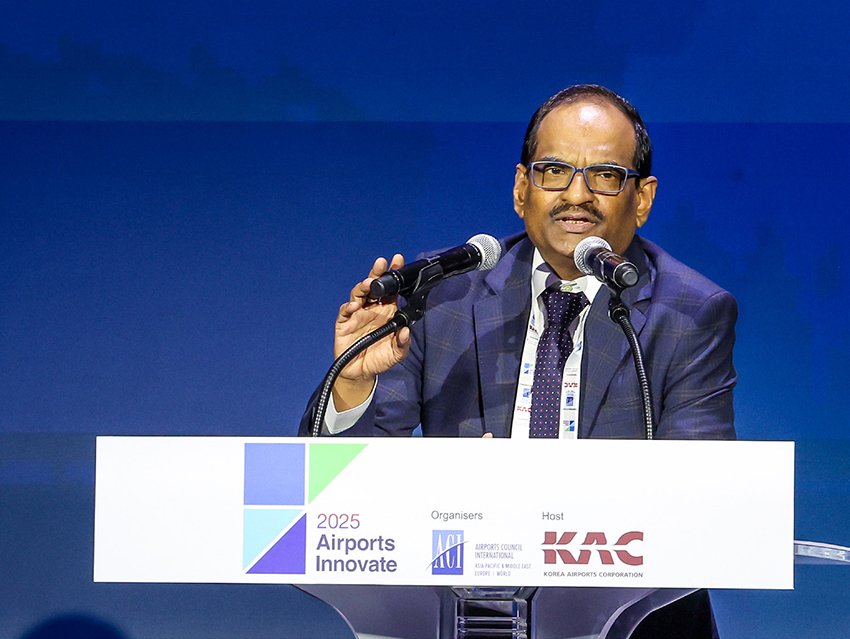
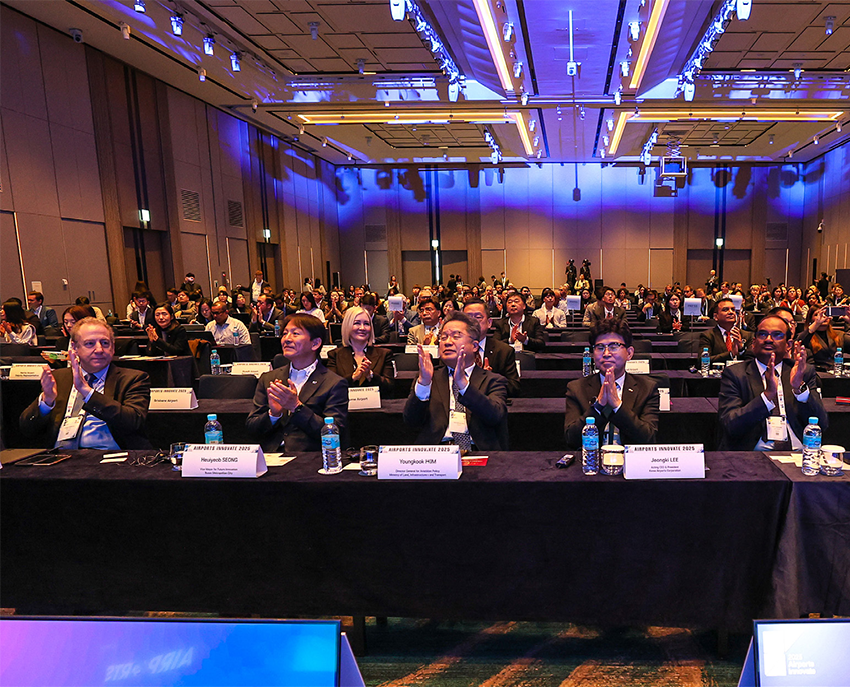
The impressive dancing robotic dog opening was followed by welcome addresses from SGK Kishore, executive director and chief innovation officer of GMR Airports; Jeong Ki Lee, acting CEO and president of KAC; Yeong-Kook Kim, Director General for Aviation Policy for South Korea’s Ministry of Land, Infrastructure and Transport; and Heui-Yeob Seong, vice mayor for future innovation with Busan Metropolitan City.
Stressing the key role technology and innovation will play in the future development and growth of the aviation industry, GMR’s Kishore reminded delegates of how far Hyderabad Airport in India had come over the last decade in terms of its digital transformation, embracing video analytics and biometrics to streamline processes and increase throughput.
INNOVATION ACROSS THE REGIONS
Airports Innovate is jointly organised by ACI Asia-Pacific & Middle East, ACI EUROPE and ACI World, and following the tradition of the first two events held in Muscat and Rome, the director generals of the three regions opened with state-of-the-industry addresses.
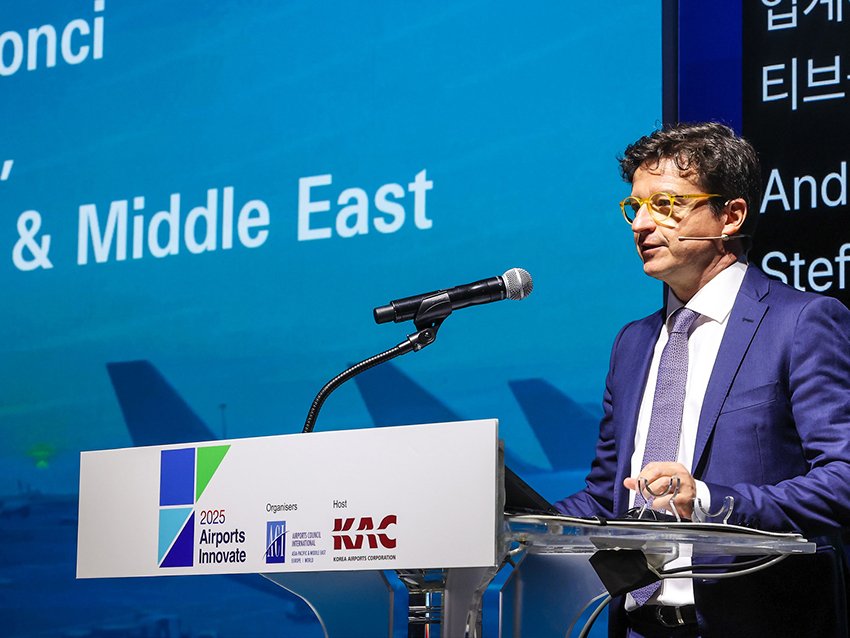
Up first, ACI Asia-Pacific & Middle East’s director general, Stefano Baronci, highlighted his region’s leadership in innovation with the Republic of Korea as a standout example.
On the topic of passenger expectations, Baronci said: “Today’s passenger expect not only a safe service, but also an increasingly sophisticated customer experience. And I’m proud to say that Asia, along with the Middle East, continue to outperform the global average in terms passenger satisfaction, according to the latest ACI data.”
He noted that ACI Asia-Pacific & Middle East’s recent survey on security innovation – based on insight from 48 airports of differing sizes in more than 30 countries – showed that the deployment rate of advanced screening technologies at major airports, particularly when it comes to CT screening for baggage (58%) and body scanners for passenger screening (83%), was gathering pace.
“Airports are progressively upgrading their passenger security checkpoints. And Jeju Airport, operated by KAC, was among the first ones in the world to introduce a smart security checkpoint in 2019, setting a strong precedent for others to follow,” he stated.
“The benefits generated by the volume of such machines is indisputable. They are more efficient. They are sharper, they increase passenger satisfaction and, potentially, readiness for the airport journey because they give customers more time to enjoy the commercial offerings before boarding in a better state of mind.”
Financial and logistical constraints posed the biggest obstacle to the large-scale introduction of CT scanners across Asia-Pacific & Middle East, he said, noting that a single machine is much bigger than a traditional X-ray machine and typically 10 times more expensive.
He also used his time on the podium to once again warn that slot allocation remains a critical challenge, arguing that historic regulations needed reforming to allow airports to make better use of their runway capacity.
This, he said, is hugely important to the future growth of traffic in Asia-Pacific, which is currently the second most congested region in the world after Europe with most of the “super congested airports globally” being located in China.
His counterpart at ACI EUROPE, Olivia Jankovec, then delivered a typically well-polished overview of what is happening in Europe in terms of passenger growth, trends and ever-changing market dynamics.
He reminded delegates that Europe’s airports finally returned to pre-pandemic traffic levels in 2024 when 2.5 billion passengers passed through the continent’s gateways – around 2% more than in 2019, with significant growth in all markets.
However, Jankovec pointed out that only 53% of Europe’s airport members had achieved a full recovery, remarking that today’s market is very different to before COVID and very fragmented in terms of performance.
Measured by size, airports handling over 40 million passengers per annum handled 0.6% more passengers in 2024 than they did in 2019 compared to 4% and 11% increases for airports handling 25-40mppa and 1-10mppa respectively. The worst performers were airports welcoming 10-25mppa (-3.8%) and Under 1mppa (-34%).
“I think what’s striking here is how our small regional airports are actually being left behind, not having recovered their pre-pandemic traffic problems,” said Jankovec.
From the demand side, he stated that the “new aviation market” was all about leisure, VFR and ‘bleisure’ (a blend of business and leisure) and not much about business, due to a fundamental shift in society for more experiential travel. More disposal income for younger and older travellers was driving the trend, said Jankovec.
On to the bigger picture stuff of “resilience and future proofing” the business, Jankovec revealed that the three big challenges faced by Europe’s airports was the need to decarbonise at the same time as protecting air connectivity, “decouple their financial viability from volume growth”, and “become masters of their own capacity”.
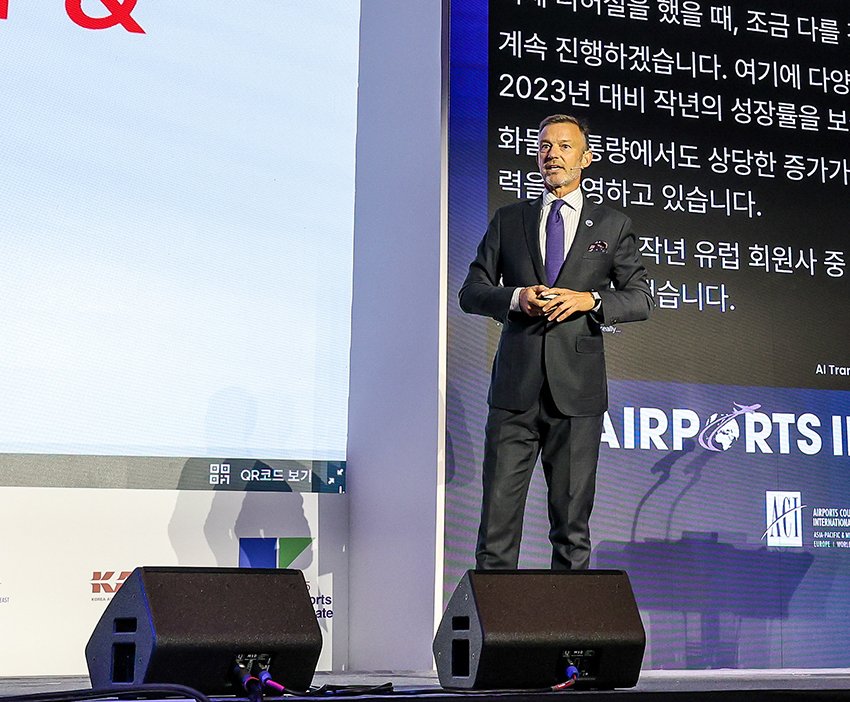
He said: “The last of these challenges, very linked to innovation, is the fact that we really need to become the masters of our own capacity.
“I think running an airport is very often akin to running a factory that you’ve invested in, but you don’t really control it because it depends on the directions of so many third parties, and that needs to change.
“We need to be more in control of the way our capacity is being used by airlines, by ground handlers, by air traffic controllers. This is about efficiency across the board. This is about connectivity and balance and performance.”
Securing enabling policies and regulations would also be key, added Jankovec, who concluded by stressing that Europe’s airports are embracing the transformation agenda by focusing on three issues – sustainability, innovation and diversification.
He said: “Just to conclude, as we all know, this is about boosting resilience and performance across everything in terms of airport management and development, leveraging, of course, digital and automation. And with that, I think it’s really time that we manage to break the operational silos which are holding us back.
“I think this is going to be, of course, about putting the passenger at the very core of everything we do, and it will also boost security, safety and potentially open up new business opportunities.
“I believe that we’re already doing a lot with Generative AI in terms of the wealth of data it gives us, but I think the prospect of Agentic AI is really exciting, because that’s going to allow us to develop really fully autonomous systems that will be able to manage very complex situations in real-time in a much more efficient way.”
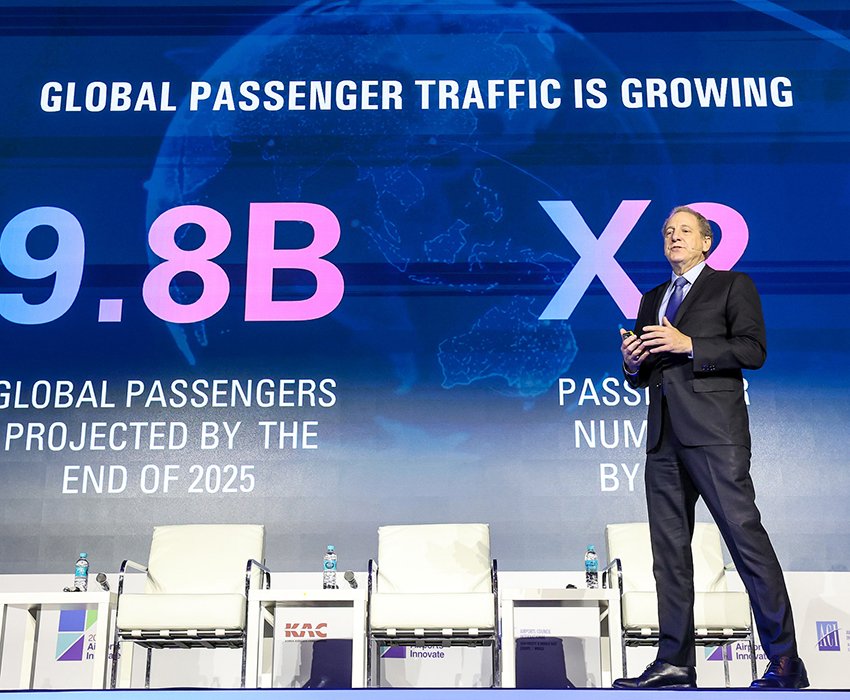
ACI World director general, Justin Erbacci, opened by providing insights into global aviation trends, stating that “the industry was in a period of significant growth” and on course to handle 9.8 billion passengers in 2025 and twice as many by 2047.
Based on the hugely positive long-term forecast, he revealed that ACI World’s mission and strategy was be positioned to help airports accommodate this growth, with a focus on five key areas.
He said: “The first one, is we have to help airports increase the capacity they get in their existing infrastructure. How do we get more passengers and more aircraft through our existing facilities? We need to do this as developing new facilities takes a long time and we need to be able to accommodate the growth in the shorter term.
“So, this is a very important area, not only on the ground, but in the skies as well. We know that our existing infrastructure is not sufficient to be able to accommodate growth, so we need to be able to help our airports build and plan to build new facilities or modernise existing facilities to provide additional capacity.
“The third key focus is we need to help our airports to be able to operate as viable businesses. We have often alluded to the strong pressure that airports are facing from a cost of revenue perspective, and we need to make sure that we’re advocating for proper policies to allow airports not just to be able to sustain their operation, but also to be able to get the money they need to build this new capacity.
“Then, of course, improving safety, security and the passenger experience is always critical, with a special emphasis on helping to improve the customer experience.
“And we need to make sure that we’re doing all of this sustainably by balancing growth with our environmental and social responsibilities.
“Now, of course, innovation, automation and new technologies will be essential to achieving success across these areas.”
Turning to innovation, Erbacci told delegates that while innovation is important, how it is perceived is even more critical, as it will ultimately determine an airport’s transformation.
He told delegates: “I was fortunate enough to have a strong focus on innovation throughout my career, often with innovation even in my title, which I never really liked, because one thing I learned is that innovation is much more than a title or a department.
“It’s a philosophy. It’s a mindset. It’s a way of working that must be embedded into everything an airport does, and by everyone who works there.
“It begins by everyone in the organisation, every day, asking how can we improve? How can we do things better?
“But successful innovation doesn’t stop there. Innovation doesn’t lack ideas. It lacks implementation. We’re only as good as what we deliver in the end.
“So, what separates successful innovation from the rest? What allows us to be able to take ideas and implement them successfully? Based on our observations and discussions with many groups, companies and airports across the globe, innovation depends on three key things.
“These aren’t exclusive, of course, but we think that they’re very important aspects. The first one is the approach. How do you approach innovation? Second one is, how do you gain support and alignment for innovation. And then, of course, the third is leadership. How do you meet innovation successfully?”
“We have to remember that innovation doesn’t start with technology and doesn’t even always involve technology. Innovation needs to start with a business problem or a challenge that needs to be solved, or a desire to make an existing process, service or product better or even obsolete.
“The winners are those who challenge themselves on principle every day and can align people and processes and technology to make change happen.”
INNOVATION-READY LEADERS
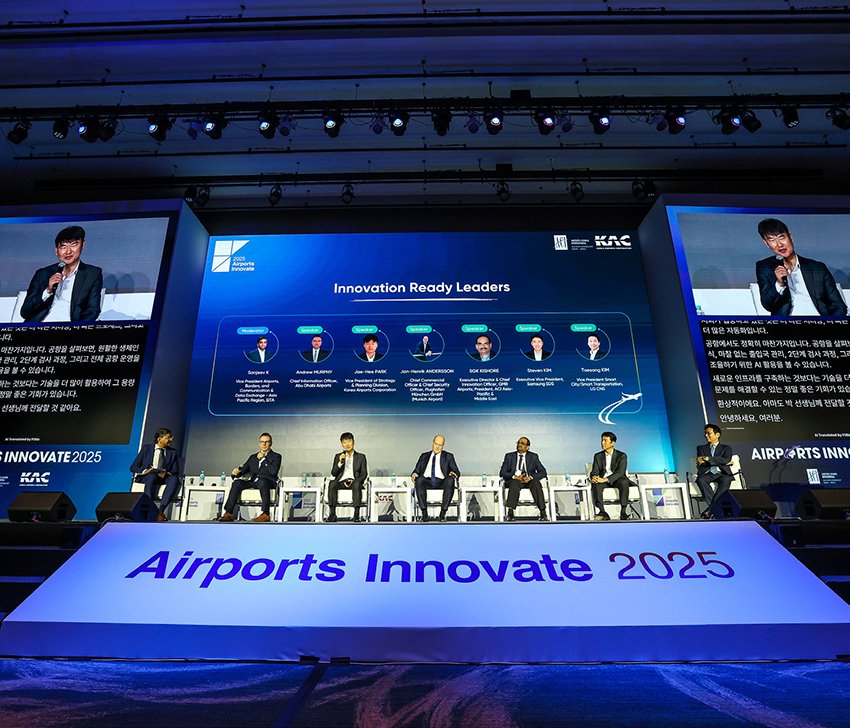
No less than four airport experts were on the panel for the ‘Innovation-Ready Leaders’ session where aviation leaders shared their views on what it takes to build future-focused, resilient, and digitally empowered airports.
Representing the world’s airports were Andrew Murphy, Abu Dhabi Airports’ chief information officer; Jahee Park, vice president of KAC’s Strategy & Planning Division; Jan-Henrik Andersson, Munich Airport’s chief commercial officer & chief security officer; and GMR Airport’s SGK Kishore.
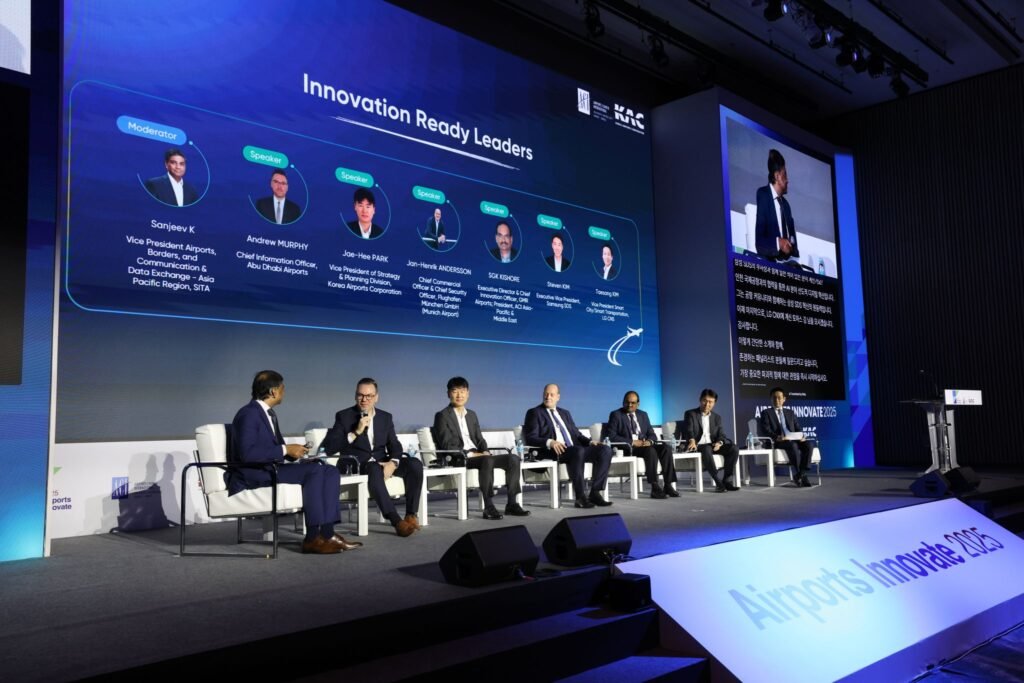
They were joined by Taesang Kim and Steven Kim, vice president of LG CNS and executive vice president of Samsung SDS respectively, and moderator, Sanjeev K, SITA’s vice president for airports, borders and communication & data exchange.
Opening the debate, Murphy said: “Probably most airports over the next 10 years are going to face the need to expand in some way to meet future demand, but that doesn’t necessarily always mean that you have to build new infrastructure.
“There’s really a great opportunity to try and make more use of technology to solve that capacity challenge.”
He noted that the widespread use of “an advanced and seamless biometric system” in Zayed International Airport’s new Terminal A had proved a huge success in terms of enhancing passenger journeys, operational efficiency and customer satisfaction levels, and that this system was now going to be extended to include all transfer passengers.
Murphy explained: “Today, some 50% of the total passengers at Zayed International Airport are actually transferring between flights, so they’re not necessarily enrolled into our biometric system.
“To address this challenge, and I think we are probably one of the first airports in the world to do it, we’re looking at an enrolment process that happens at transfer, prior to security search. It’s a simple process that takes seven or eight seconds.
“This will allow all passengers boarding aircraft to use the biometric system. And, what we’ve seen in terms of the benefits, is three seconds per passenger in terms of time to board and a reduction in the requirement for staff.”
The Abu Dhabi gateway is also set to embrace a new AI driven Intelligent Airport Management Platform (iTAM), in conjunction with SITA, that is capable of autonomous decision making to improve on time performance.
Taking about the potential benefits of iTAM, he said: “When you look at what that means for airports, it means much greater utilisation of stands and other assets. When you look at what it means for ground handlers, it means the optimisation of resources, and for the airlines it means improved on time performance.”
Looking at what we can expect over the next decade in terms of innovation, GMR’s Kishore noted that the way airports do business today is very different to 10 years ago, leading him to predict that we can be assured of big changes ahead.
“A decade ago, I used to go before an airline counter and stand in the queue to pick up my boarding card. Not anymore,” said Kishore.
“Today, entire operations at the airport are coming out of the terminal, so 10 years down the line I think the entire [airport] business and operating model, and therefore the entire way we plan will be much more seamless.
“I think passenger will walk into the terminal and straight onto the aircraft. Airport infrastructure will change. Technology will be a part of the gateway.”
The discussion focused on the future of airport infrastructure and operations, emphasising the need for digitalisation and automation to address growth and capacity challenges.
Key points included the need to integrate biometric technology for seamless passenger journeys, the importance of real-time data sharing among stakeholders, and the role of AI in optimising airport processes.
POLICIES TO FOSTER INNOVATION IN AVIATION
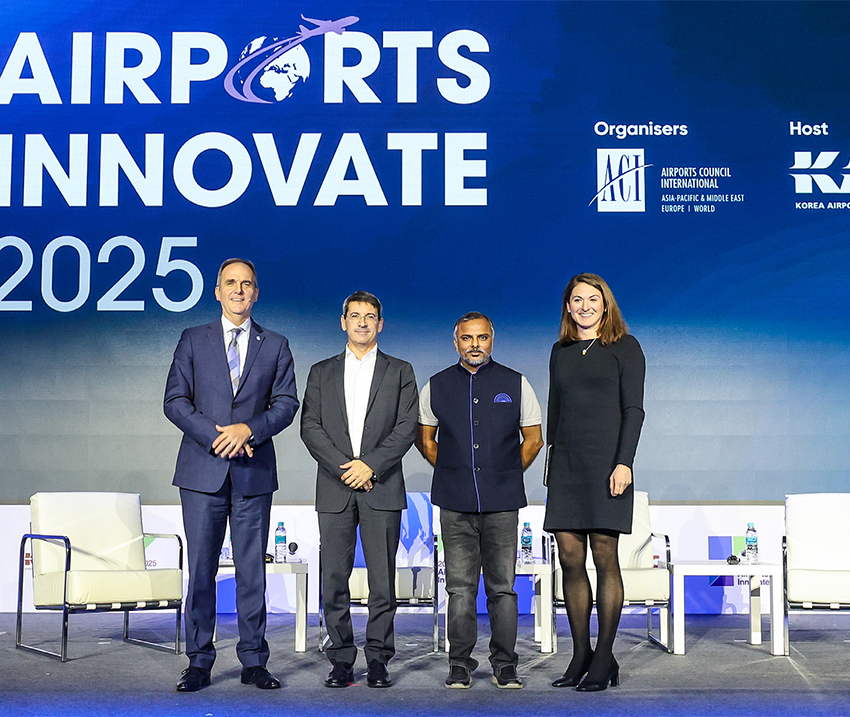
In the hot seat for this one were Vera Jakobsen, Munich Airport’s vice president for digital and innovation; Rama Iyer, head of innovation at the GMR Group; and Bradford Logistic Group’s executive vice president for Europe, Lorenzo Belicchi.
The session, moderated by ACI World’s senior vice president, Antoine Rostworowski, stressed the need for policies that would encourage innovation as new infrastructure alone would not be enough to help the world’s airports meet future traffic demand, which is expected to double by 2050.
Key innovation strategies for the panel include leveraging data, AI, and automation, and creating seamless passenger experiences.
Munich Airport aims to achieve net zero emissions by 2035, focusing on technology and sustainability. GMR Group supports start-ups with emerging tech. Bradford Airport Logistics uses automation for efficiency and improved working conditions.
The panel highlighted the importance of balancing regulation with innovation, advocating for policies that facilitate change rather than obstruct it. They also stressed the need for diverse perspectives and continuous education of regulators to support technological advancements.
EXPANDED SKIES: AI AND MOBILITY
Drones, Urban Air Mobility (UAM) and AI-based Digital Twins came under the microscope in the next session, which featured Chris Woo, manager of KAC’s Advanced Air Mobility Office; Hiroki Imahama, Japan Airport Terminal Co Ltd’s director of corporate planning, and Wonseok Jang, principal of smart logistics & city project division with LG CNS.
Woo explained how KAC has been developing a 3D Digital Twin Platform since 2020 to prepare its airports and South Korea for a future that will include a new era of commercial drones and UAM, the latter of which he expected to be operational from 2028.
He noted that the new 3D Digital Twin Platform was effectively created by integrating existing data into a common data environment that utilises emerging communication technologies such as IoT and LiDAR to collect and manage real-time data.
Woo said: “Based on this collective data and operational information, we will adapt AI based prediction algorithms to transform to a prevention and prediction focused smart safety management system.
“The emergence of new aircraft requires a new management system that integrates commercial drones, eVTOLs and traditional ATMs into a single platform for safety. It is called SWIM (System Wide Information Management) and can be integrated into our new platform.”
Woo said KAC will primarily use its new digital twin platform for construction management (clash detection, simulation and on-site visualisation), airport facility management (lifecycle management, safety management and emergency response) and operations (information integration through use of AI, sensors, robotic technology, UAMs etc, real-time traffic management, and wildlife hazard management).
JATCO’s Imahama talked about how Tokyo Haneda has enhanced its on-time performance through the introduction of a Ramp Bus Allocation System (RBAS), which has transformed the operational efficiency of bus operations, particularly to aircraft parked at remote stands, significantly reducing flight delays.
Day 2 began with a highly informative debate about accessibility, before numerous presentations showcasing examples of outstanding innovation, the winners of ACI World’s Technology Innovation Awards, and a future looking ‘Next Generation of Airports’ panel.

CREATING AN ACCESSIBLE AIRPORT EXPERIENCE FOR PASSENGERS WITH DISABILITIES
In the hot-seat for the accessibility panel – expertly moderated by Customer Centric Consulting’s Claire Donnellan – were Keith Hui, HOK’s regional leader of aviation and transportation; William Neece, CEO of Ozion Airport Software; and Dr Chi Ung Song, executive director of Incheon International Airport Corporation’s Airport Technology Research Institute.
Donnellan opened by stressing how important accessible travel is as passenger numbers are expected to double by 2047, with the total including a significant portion of people with assistance needs.
And she noted that there are many current and emerging technologies out there that can make life easier for passengers with disabilities, which is good news, as the ACI Global Traveller Survey reveals that up to 75% of passengers are willing to adopt technologies for travel.
Hui addressed the issue from a design perspective, suggesting that the easily achievable goals such as ramps for multi-level journeys, decluttering spaces, intuitive wayfinding and more respite areas for passengers can make a huge difference to the airport experience for those with disabilities.
While Song shared some best practices from Incheon Airport, including the use of robots for various tasks and the creation of sensory rooms for passengers, and emphasised the importance of listening to customer feedback.
Final take aways. Neece encouraged the audience to stretch their minds and consider innovative solutions for accessible travel, such as integrating robots and automated mobility devices. Song noted that it was important to remember that not all passengers were comfortable with new technology and that people and designing facilities for all passengers remain key to being an all-inclusive gateway.
While Hui said: “From St Louis and Salt Lake City to Shanghai Pudong we are seeing a lot of requests for sensory rooms. It seems to be a very popular thing. It’s trendy, and a lot of times these rooms are in kind of left over spaces that are tucked away and difficult to find.
“But what’s interesting is that the number of people identified as neurodivergent is rising. It used to be one in seven. Currently we’re seeing data that says that it’s one in five, and possibly that will increase to one in three in the future.
“There’s a lot of us that are neurodivergent, and I think that from a 3,000ft view, is just adding a sensory room really the right thing to do? Is it creating an inclusive experience or is it exclusive because you
are basically putting people into boxes, which I don’t think is ultimately our goal.
“So, we [HOK] are starting to look at what we design within a sensory room and try and bring some of that into more areas of the terminal as I think this will bring benefits for everyone.
“In my opinion we shouldn’t really be thinking about the sensory room, we should be thinking about the sensory terminal.”
INNOVATION SHOWCASES
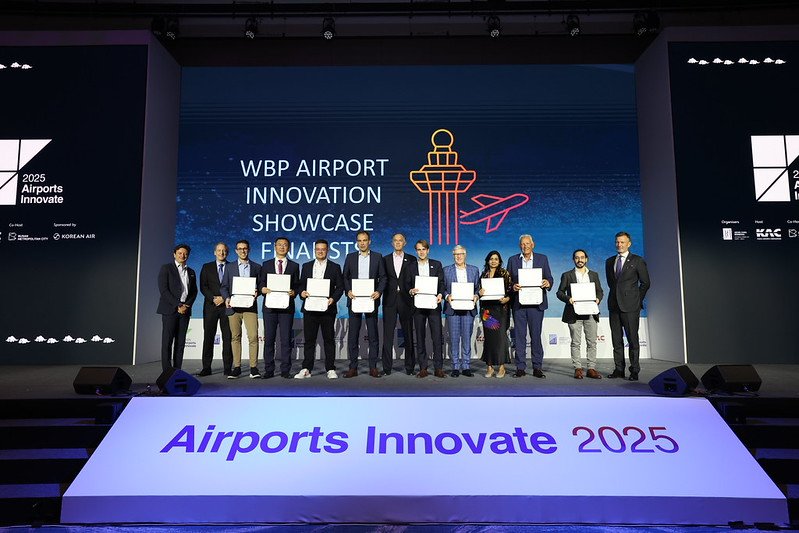
Part of programme this year was the addition of a curated Airport Innovation Showcase that allowed ten ACI World Business Partners to promote their breakthrough technologies.
Participants included ARC CAST, RDC Aviation, NACO, ThinkGov, Nuctech, Draxon, Roboxi, Idemia, Safe365 and Ethiack – each presenting case studies demonstrating how their solutions are already reshaping airport operations, from AI-powered robotics to intelligent screening systems and advanced data-driven decision tools.
Another innovation session worthy of note came in the shape of a commercial drone update from the Korea Drone Delivery Association’s Sora Baek, who revealed that South Korea is looking at the potential future use of drones to deliver everything from groceries to urgent medical supplies.
And she claimed that South Koreans are very much onboard with the idea as a 2025 survey revealed that 91% of the population have a positive perception of commercial drones and 87% said that they would be willing to use one.
NEXT GENERATION OF AIRPORTS
Airport development projects at Incheon, Tokyo Narita and across the Asia-Pacific region courtesy of Artelia Airports were under the microscope in final panel session of the event.
The panel comprised Incheon International Airport Corporation’s vice president Bumho Kim; Artelia Airports’ head of commercial for APAC, Mung-Fei Yim; and Narita International Airport Corporation’s executive officer and general manager, Shinichiro Motomiya, all of whom shared their visions of the future for their respective gateways.
Incheon’s Kim took the opportunity to outline IIAC’s vision tobuild a “hyper-connected airport where information, infrastructure, and data come together to create a smarter future”.
He noted that Incheon had been a pioneer in the adoption of new technologies since opening in 2001, most recently unveiling world firsts in the shape of its AirStar passenger service robot in 2017; AI-powered Information Kiosk in 2019; AirRide self driving vehicle within the terminal in 2020; and A-SMGCS onboard navigation system to detect airside movements in 2023.
Looking to the future, he said: “Our next step is to become a hyper-connected airport where information, infrastructure, and data are connected to create a smarter, seamless airport ecosystem.
“This vision is built on three pillars. Total Airport Management [TAM], 5G Connectivity and our AI Innovation Hub.”
TAM, he explained, will connect all airport operations information. Building a 5G network as the backbone of Incheon’s digital transformation will connect all airport infrastructure. While the AI Innovation Hub will collect and share airport data.
“The AI Innovation Hub will be the engine that powers Incheon Airport’s future innovation. When information, infrastructure, and data are truly connected, we create a smarter, faster, and more collaborative airport,” enthused Kim.
“This means efficient airport operations, a better customer experience, and continuous innovation for the future.”
Next up Artelia Airport’s Yim told delegates more about some of the huge infrastructure development projects that the company has been involved in over the last 25 years.
The projects – the Artelia Group 100% acquired Groupe ADP subsidiary ADP Ingénierie (ADPI) in late 2024 – include Guangzhou Baiyun International Airport’s recently opened Terminal 3.
Elsewhere, she said developments across the region included Macau Airport expanding both its airside and international facilities; Hong Kong enhancing its airside capacity with a new third concourse and third runway, while Zhuhai Airport has built a new terminal and Shenzhen Baoan International Airport recently opened a new satellite and plans to build another one at the same time as upgrading its two existing terminals.
Narita Airport’s Motomiya revealed that the airport plans consolidating all passenger operations into one mega new terminal in a bid to ensure that it is equipped to meet future demand.
According to Motomya, the new facility will replace today’s existing three terminals, and together with a planned Airport City development around the gateway will embrace automation, robotic and autonomous technology.
The huge transformation is needed as forecasts predict that Tokyo Narita’s traffic numbers are expected to soar over the next 20 years from around 40 million passengers and two million tons of cargo per annum today to up to 75mppa and three million tons of cargo between 2032 and 2048.

TECHNOLOGY INNOVATION AWARD WINNERS
Bengaluru’s Kempegowda International Airport for its biometric enabled baggage drop (Best Innovation in Airport Passenger Related Processes); Queen Alia International Airport for its Smart Cleaning System (Best Innovation in Airport Operations and Installations Management) and Roland Garros Airport for its “bioclimatic” airport building (Airport on the Rise) picked up the airport awards.
While Aena’s head of ideation and entrepreneurship, Pablo Lopez Loeches, was named as the Best Airport Innovation Leader.
ACI World’s Erbacci commented: “The 2025 Technology Innovation Awards winners are about successful innovation implementation – solutions that run every day, in real airports, under real pressure.
“This year’s winners spotlight measurable advances in digital transformation, data-driven operations, identity-enabled self-service, and sustainable, climate-smart terminals.
“These are the types of innovations airports need now – meeting today’s passenger expectations while keeping pace with rapid growth in air travel.”
Hosted by Aena, the next Airports Innovate will be held in Barcelona, Spain, between November 23-25, 2026.