



Cracking the code

Gresham Smith’s Wilson Rayfield explains why getting every detail right in airport design matters when it comes to the passenger experience.
Airports occupy a unique intersection of infrastructure, hospitality, and civic identity. Travellers pass through them during moments defined by anticipation, urgency, and often stress.
Some passengers move confidently through terminals every week; others may be flying for the first time ever. Despite these differences, most travellers want the same thing – a journey that feels predictable, clear, and under control.
Delivering that experience is more complex than it appears. Passenger satisfaction rarely hinges on a single dramatic feature or signature amenity.
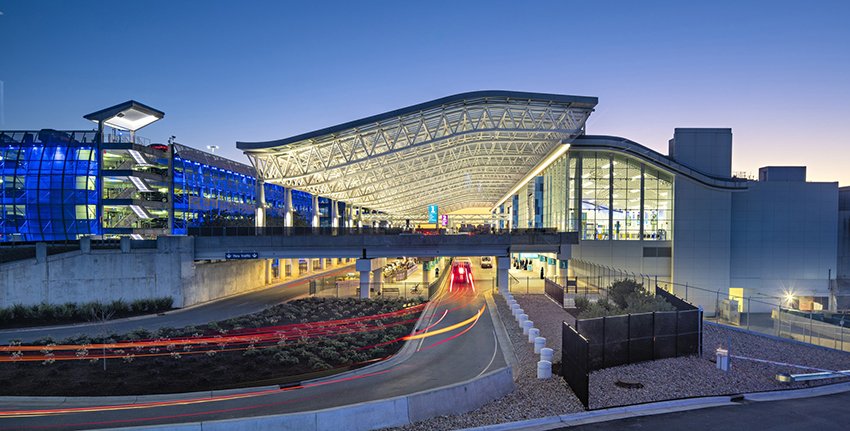
Instead, it comes from the cumulative impact of dozens of interconnected decisions such as circulation paths, lighting levels, restroom conditions, acoustics, seating layouts, signage clarity, concessions, and landside access, including parking, drop-off, rideshare, and rental car return.
When these elements align, travel feels seamless. When even one fails, frustration escalates quickly.
Understanding how these moments compound across the passenger journey has become increasingly important as airports face evolving travel patterns, broader passenger demographics, and rising expectations.
The challenge is not simply designing a terminal building but orchestrating an experience that works from the gateway to the gate and beyond.
THE PASSENGER JOURNEY AS A SYSTEM
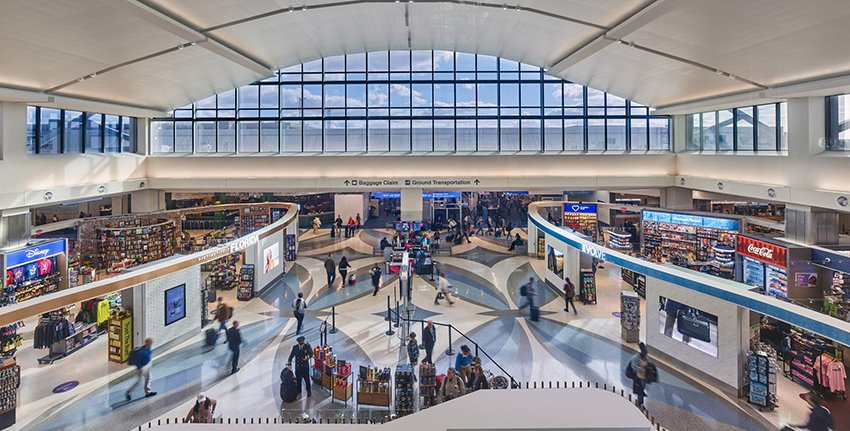
Airports are often discussed in terms of amenities like restaurants, retail, lounges, and public art. But passengers rarely experience these features individually. Instead, they perceive a continuous sequence of moments shaped by decisions about layout, circulation, and comfort.
From the first roadway sign to the final baggage carousel, every step contributes to the overall impression. Wayfinding, security screening, hold rooms, concessions, restrooms, and circulation routes aim to function as a co-ordinated system rather than isolated components.
When the journey flows logically, passengers move through the terminal with confidence. When it does not, confusion and anxiety build quickly.
Predictability is particularly important for frequent travellers who depend on efficiency and familiarity. Yet it is equally important for occasional travellers who may find airport procedures unfamiliar.
In both cases, passengers are looking for reassurance that they are in the right place and that their trip is progressing as expected.
Decision points – such as choosing between concourses or confirming a gate – become critical moments where clarity reinforces confidence. Within that journey, certain moments carry more emotional weight than others.
ANXIETY AT CRITICAL TOUCHPOINTS
Two stages consistently generate the greatest passenger anxiety: passing through security and confirming the correct departure gate.
Security screening represents the most uncertain phase of the journey. Passengers often approach it without knowing how long the line will be or whether they have complied with every regulation.
Long waits or unclear procedures can quickly heighten stress, particularly for infrequent travellers. Once passengers’ clear security, the emotional tone of the journey often shifts. Anxiety drops, and they begin to relax.
The second pivotal moment occurs when passengers confirm their gate location. Many head there immediately, even when they have time to spare, to verify that everything is proceeding as planned.
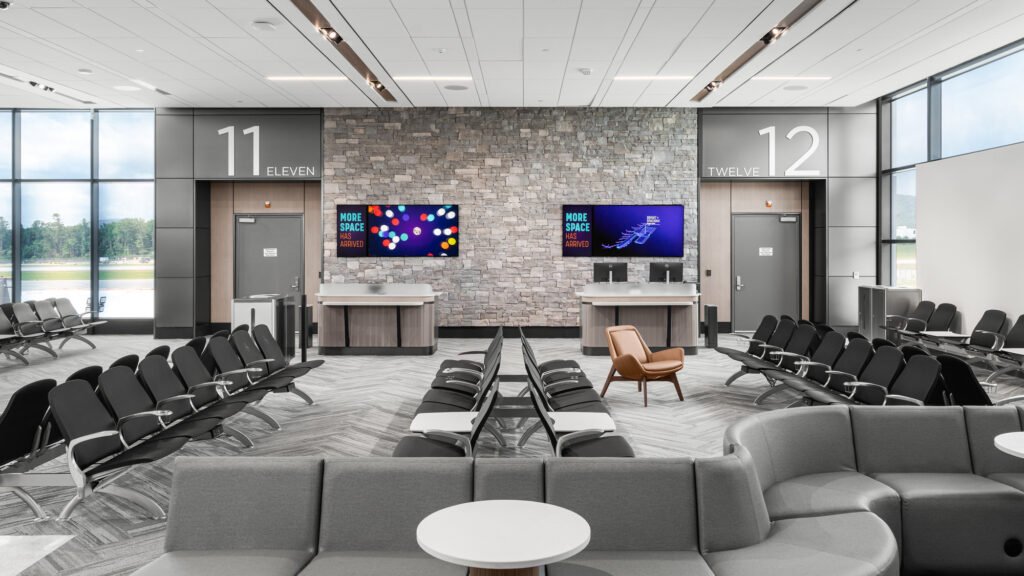
Seeing the aircraft at the gate or the boarding area filling with passengers provides reassurance that the trip remains on track.
Once these checkpoints are resolved, behaviour changes noticeably. Travellers who feel oriented and secure are more willing to spend money, resulting in exploring the terminal, engaging with its amenities, or beginning to relax into the trip ahead.
Yet reassurance alone cannot compensate for environments that feel uncomfortable or poorly organised.
CONGESTION, SCALE, AND THE HUMAN FACTOR
Designing airport space requires balancing two competing conditions: congestion and emptiness.
Terminals that feel overcrowded can frustrate passengers and slow circulation. Yet spaces that feel unusually empty can create uncertainty.
Passengers instinctively read spatial cues. A crowded concourse suggests inefficiency, while a space that feels oversized or underused may cause travellers to question whether they are in the correct place.
Human behaviour further complicates the equation. Travellers move at different speeds, carry different luggage, and navigate terminals in groups of varying sizes. Effective circulation design aims to allow passengers to move comfortably around one another without creating bottlenecks.
Right-sizing, therefore, requires more than theoretical capacity calculations. Project team leaders seek to account for how people move, pause, and gather within the terminal environment, while also considering how to react to events outside their control, such as TSA staffing shortages in the US or rare security breaches that can force entire concourses back through screening.
While circulation shapes movement, smaller details often determine how passengers judge the experience.
THE INVISIBLE POWER OF BASICS
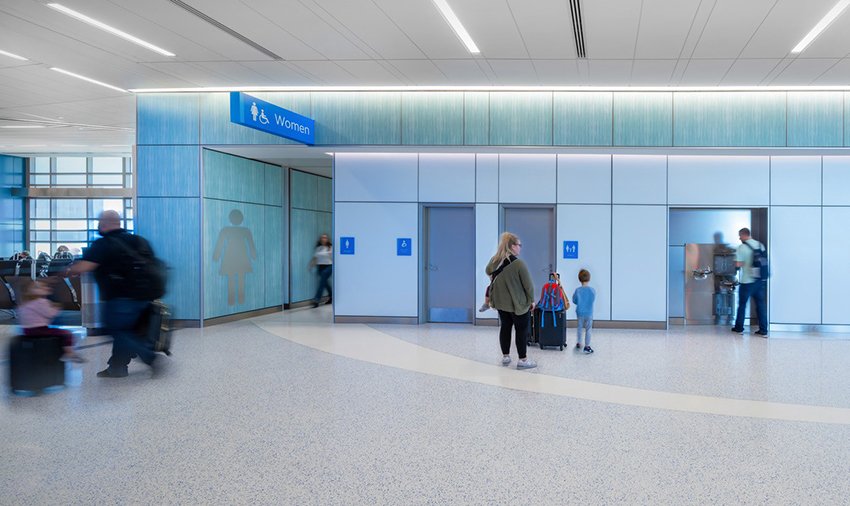
Some of the most influential elements of passenger experience are also the least glamorous. Restrooms, seating comfort, lighting quality, temperature control, and acoustics often shape impressions more than iconic architectural features.
A clean restroom can reinforce confidence in an entire facility, while a poorly maintained one can overshadow otherwise successful design investments.
Similarly, uncomfortable seating or excessive noise can turn waiting time into frustration.
Seating layouts illustrate how subtle decisions affect usability. Smaller seats may increase seat counts, but passengers often avoid sitting close to strangers. In practice, fewer but larger seats can achieve higher utilisation because travellers feel more comfortable using them.
Just as important is providing a variety of seating and spaces from family-friendly zones near children’s play areas to quieter work-oriented settings that appeal to business travellers.
Material selection also influences perception. Hard flooring surfaces amplify the sound of rolling luggage and foot traffic.
Many contemporary terminals address this by incorporating quieter flooring systems and softer materials in waiting areas.
These decisions – lighting levels, furniture scale, durable high-capacity seating, refreshable finishes like carpet, and material textures – collectively shape whether an airport feels calm and welcoming or chaotic and impersonal.
Beyond comfort, airports must also communicate a sense of identity.
THE CHALLENGE OF SUBJECTIVE DECISIONS
Airport design involves two types of decisions. Some, like calculating gate capacity, determining hold room size, or meeting code requirements, are objective.
These issues can be addressed through engineering and planning. Others are subjective. How should the terminal reflect its region? What materials or imagery best represent a city or state? What atmosphere should greet arriving passengers?
Without a shared vision early in the process, these questions can lead to delays or inconsistent outcomes. Successful projects, therefore, establish a guiding design ethos from the outset.
When teams agree on a concept rooted in regional identity or cultural narrative, it becomes easier to evaluate decisions and maintain consistency.
Meanwhile, changes in travel patterns are reshaping the expectations airports must meet.
A CHANGING PASSENGER PROFILE
Passenger demographics have shifted significantly in recent years. Leisure travel has grown, and low-cost carriers have expanded air travel access to new groups of passengers.
This shift has widened the range of expectations airports must meet. Frequent business travellers often navigate terminals quickly and efficiently, while occasional travellers may approach airports with greater sensitivity to pricing, signage clarity, and unfamiliar procedures.
Airports must therefore create environments that accommodate both experienced travellers and first-time flyers.
DESIGNING FOR TRUST
Airports shape how travellers perceive a city or region. For visitors,they are often the first encounter with a place. For residents, they serve as gateways to the wider world.
Passenger experience ultimately functions like a complex combination lock. Every element matters.
When each piece aligns, from signage and circulation to lighting, concessions, parking, and restrooms, the journey feels intuitive and dependable. When even one element fails, the entire system can falter.
For airport leaders and designers alike, the insight is clear. A successful passenger experience is not about a single memorable feature.
It is about cracking the code of the passenger experience by orchestrating hundreds of decisions in close collaboration with airport clients so effectively that travellers rarely notice the design itself, only the confidence that their journey is unfolding exactly as it ought.
About the author
Wilson Rayfield, AIA, NCARB, LEED AP is executive vice president of aviation at Gresham Smith. He can be reached at wilson.rayfield@greshamsmith.com.