


We provide a snapshot of the latest news stories and features from some of the companies that support the growth and development of the world’s airports.
AI-POWERED CONCIERGE SERVICE
Voncierge announced its entry into the US market at the recent 98th Annual AAAE Conference & Exposition in Los Angeles when it introduced its AI‑powered, human‑augmented concierge service.
Designed for high-traffic environments such as airports, the platform utilises lifelike AI avatars, multilingual automation and, if required, seamless escalation to live agents to assist passengers with everything from wayfinding, flight transfers and missed connection queries to urgent traveller needs.
It notes that its high-tech concierge service debuted at Singapore Changi Airport in 2025 and has supported over half a million passenger interactions at the gateway to date, significantly reducing the strain on frontline staff.
Voncierge is also keen to stress that the new addition is not about replacing humans, stressing that it can absorb routine traveller needs so staff can focus on other duties.
“Airports do not have a passenger volume problem. They have a service scalability problem,” says Nikhil Gupta, founder and CEO of Voncierge. We help them deliver instant, consistent support without asking already-stretched frontline teams to do more with less.”
ABM EXPANDS ROLE AT SCOTTISH AIRPORTS
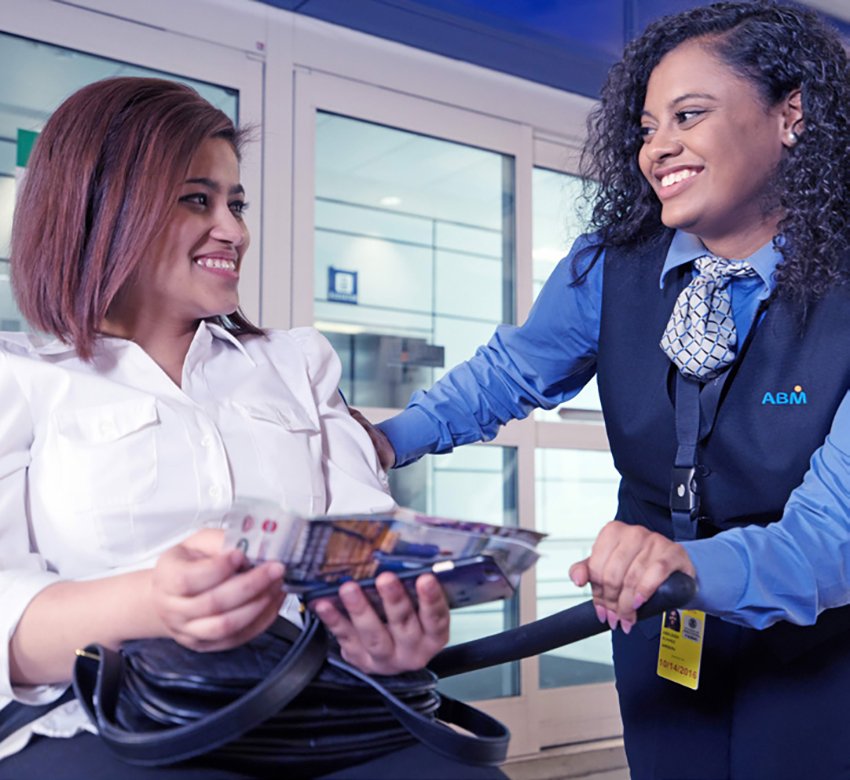
ABM, a leading provider of facility, engineering, transport and infrastructure solutions, has been awarded the service contract for passengers with reduced mobility at Glasgow Airport.
It has also secured a passenger experience contract at Edinburgh Airport which it claims will ensure a “welcoming, smooth, and reassuring experience” for the almost 17 million people who travel through the airport every year.
Myles Grima, head of service delivery and transformation at Edinburgh Airport, says: “Every touchpoint across the passenger journey plays an important role in shaping the experience people have when they travel through Edinburgh Airport. We are pleased to expand our partnership with ABM, whose teams have been a trusted presence at the airport for more than 15 years.”
NEW F&B OUTLET AT DXB
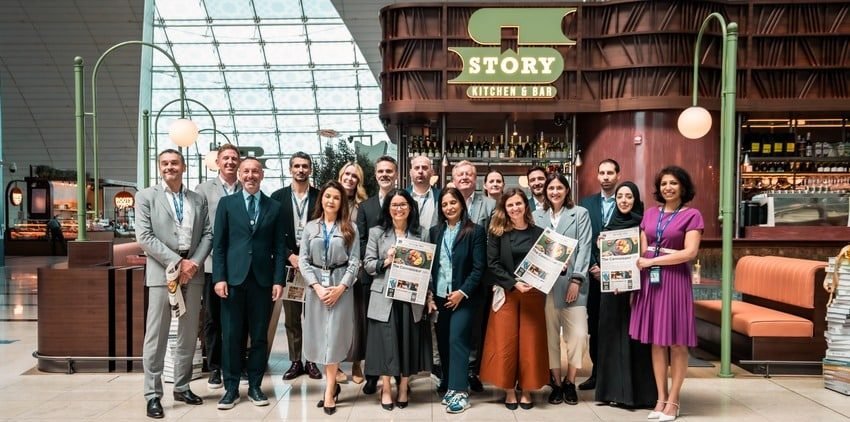
Lagardère Travel Retail UAE has opened STORY Kitchen & Bar at Dubai International Airport (DXB), the first outlet to launch within the new Concourse B West precinct in Terminal 3. Developed in line with Dubai Airports’ vision for the precinct, the concept is a contemporary dining destination that combines cutting-edge design, curated gastronomy and a strong sense of place, reflecting both the sophistication of Dubai and the expectations of its diverse mix of international visitors.
ROME AIRPORT OPERATOR EMBRACING PHYSICAL AI SOLUTIONS
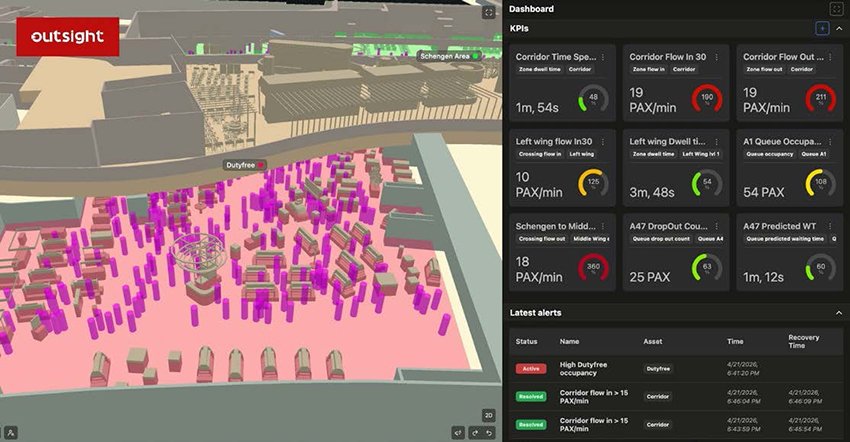
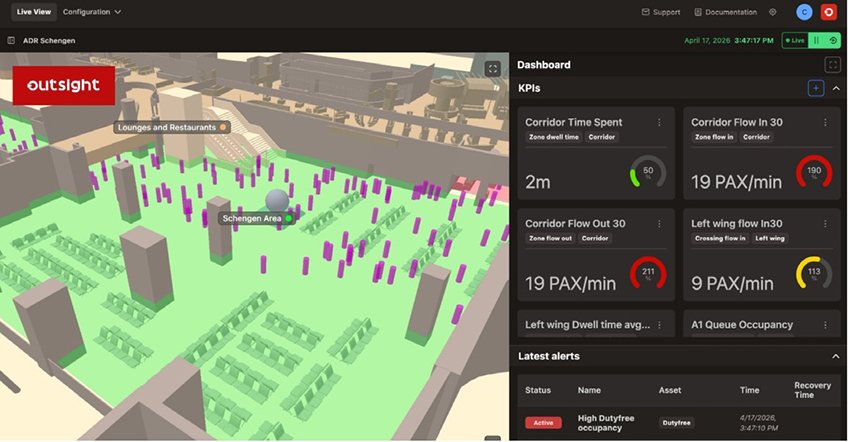
Aeroporti di Roma (ADR) and spatial intelligence solutions provider Outsight have announced a major expansion of their collaboration to enhance operational efficiency, passenger experience and data-driven decision-making at Rome Fiumicino Airport.
This deepened collaboration is marked by a large-scale deployment of Outsight’s technology across nearly all common-use areas within the Schengen zone.
Outsight first deployed its technology at Rome Fiumicino through ADR’s ‘Runway to the Future’ innovation programme. Following a successful initial phase that delivered tangible benefits in the Arrivals immigration area, the project is now moving to an industrial scale.
Deployed across Schengen common-use areas, Outsight’s Physical AI solution transforms real-time Lidar data into actionable insights on people flows, queue formation and congestion patterns.
This gives ADR, a Mundys Group company, an end-to-end view of the passenger journey, enabling more agile resource allocation, supporting data-driven process re-engineering, and laying the digital foundation for predictive, agentic AI-driven airport operations.
This large-scale deployment signals ADR’s confidence not only in Outsight’s spatial intelligence platform, but also in the broader potential of combining LiDAR, advanced analytics and artificial intelligence to shape the next generation of airport management systems. This major contract will also drive the continued optimisation of the technology within the unique complexities of a major international hub like Rome Fiumicino.
Emanuele Calà, ADR’s senior vice president for transformation and technology, said: “At Aeroporti di Roma, we see innovation as a practical lever to continuously improve operations, service quality and the passenger journey. The decision to expand Outsight’s technology across common-use areas within the Schengen zone, reflects our confidence in solutions that can turn airport data into actionable intelligence.
“Having full visibility over traveller flows in a sensitive environment enables us to act more proactively, optimise processes and support a more seamless and predictable experience for our passengers.”
ADB SAFEGATE’S ADVANCED DOCKING SOLUTION
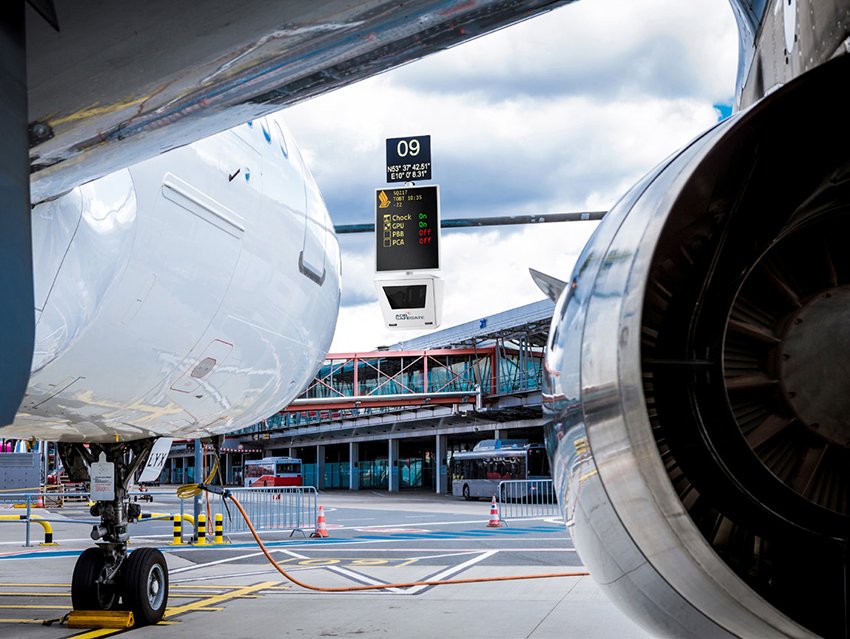
ADB SAFEGATE has announced that JetBlue Airways has selected Safedock FleX — the company’s latest generation Advanced Visual Docking Guidance System (A-VDGS) — for a multi-airport technology refresh across four of its major US stations.
The programme spans Boston Logan (BOS), New York-John Fitzgerald Kennedy (JFK), Fort Lauderdale-Hollywood (FLL), and San Juan Luis Muñoz Marín (SJU), and reflects JetBlue’s continued confidence in ADB SAFEGATE as its long-term gate technology partner.
“We are delighted to deepen our partnership with JetBlue on this important programme,” said Doug Woehler, ADB SAFEGATE’s business development director. “By deploying Safedock FleX across their network, we are helping JetBlue achieve their goal of continuous innovation —delivering a scalable, integrated apron platform that will support safe and efficient operations well into the future.”
DOING THE JOB
Clare Williams Fannin of Templemere talks to Kasper Hounsgaard, president and co-founder of Copenhagen Optimization, about the complexities of managing staffing levels.
Managing staffing in an industry that is often subject to dramatic and often rapid change has always demanded dexterity.
Whether the catalyst for change is new restrictions on passenger movement post-Brexit, or the requirement to bring large numbers of staff back into the workforce during the recovery from COVID, or the introduction of new entry/exit requirements for non-EU travellers visiting the European Union, the ability to respond quickly is essential if service levels and the passenger experience are to be maintained and profitability protected.
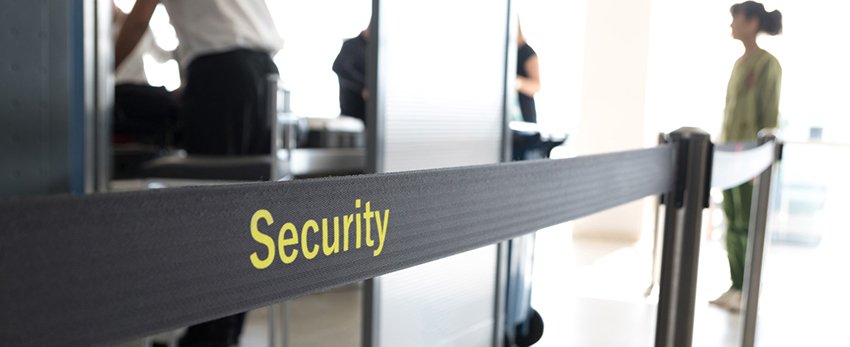
The introduction of new security CT-scanners that mean passengers no longer have to remove liquids from their hand-luggage has prompted a similar step-change in staffing needs, according to Kasper Hounsgaard, president and founder of airport operations optimisation specialists Copenhagen Optimization.
He says: “Based on our experience of working with airports of different sizes and markets, the introduction of new CT scanners typically improve the passenger process, but can also make the security operation more staff intensive.”
Staffing requirements tend to increase more than the lanes’ throughput, which leads to higher security operating costs.
“Airports can therefore plausibly find themselves facing a 20-40% increase in staffing-related OPEX, with 30-50% seen in more staff-intensive configurations or transition periods. As a result, there is likely to be a much stronger incentive to optimise staffing, along with a greater need for lane opening plans and operational control from the airport side,” adds Hounsgaard.
From a planning and operational perspective, the shift to CT lanes adds new layers of complexity. “Continuous changes in regulations and having to operate several different lane setups during the change overs can add to the challenges,” says Hounsgaard.
It also brings opportunities. “The new processes mean that data will become more easily accessible and of higher granularity, which will be a gamechanger for planning and execution,” he notes. “This includes the potential to understand how operations are performing in different locations and where there are bottlenecks.”
The new lanes can lead to more operational efficiency if they are used in the right way. “Throughput can be increased significantly compared with traditional lanes,” says Hounsgaard. “But airports invest considerable sums in the new lanes with a view to improving efficiency, and if these lanes are not staffed at the correct levels, that investment will be wasted.”
Clearly there is a need for staffing levels to be changed at different times in different locations, but it’s a complex task. Many airports are struggling with this because the human resource management systems they use are not able to cope with the demand or keep pace with changing conditions. Similarly, they may be tackling these tasks manually.
Others, however, are getting to grips with the challenges, according to Hounsgaard. He notes: “In the post COVID period, we worked with Manchester Airport Group, for example, to help it modernise its operations as passengers returned in numbers resulting in considerable improvements in operations.”
Hounsgaard concludes by stating that change is inevitable. He says: “We don’t know what form that change might take, but it’s important to be prepared, and to respond in an appropriate and timely fashion.”
NUREMBERG AIRPORT’S NEW SECURITY SCANNERS
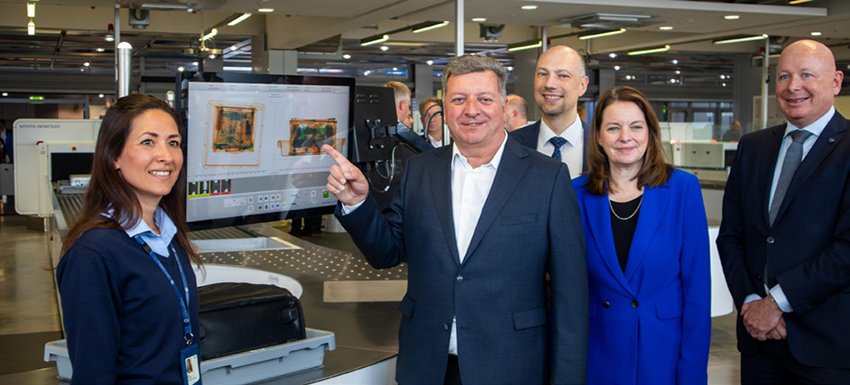
Nuremberg Airport in Germany has officially unveiled its modernised passenger security checkpoint.
Christian Bernreiter, Minister of State for Housing, Construction and Transport, the deputy mayor of the City of Nuremberg, and airport COO, Jan Bruns, were among those to attend a special ceremony to mark the event.
The security checkpoint has been gradually refurbished over the past few months. The switch to Smiths Detection’s HI-SCAN 6040 CTiX technology allows liquids, gels and electronic devices (such as smartphones, tablets or laptops) to remain in hand luggage during security screening.
The German gateway, officially known as Albrecht Dürer Nuremberg Airport, notes that each screening lane at its new security checkpoint has several storage areas for placing jackets, bags, etc. on the conveyor belts.
This, it says, will allow passengers who need more time to be ‘overtaken’, which in turn reduces waiting times.
NEW CHAPTER FOR RETAIL AT FRANKFURT AIRPORT
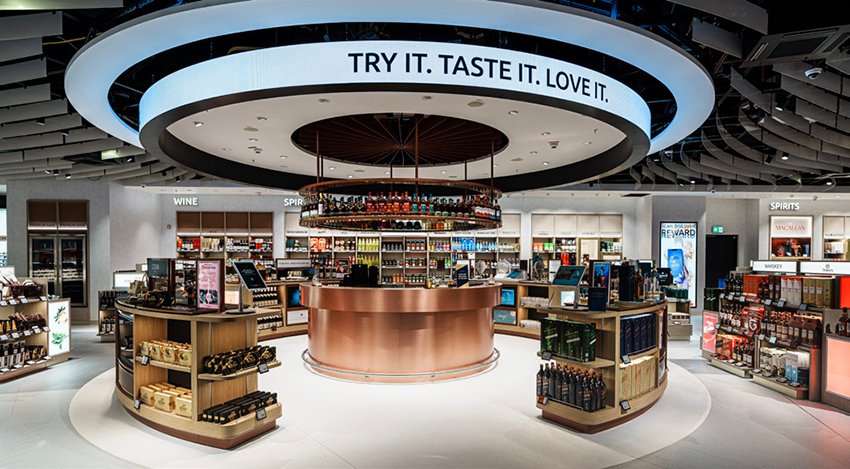
Frankfurt Airport Retail GmbH (FAR) – the joint venture between Fraport AG and Gebr. Heinemann – has opened more than 3,000sqm of new Duty Free and Travel Value retail space in Frankfurt Airport’s new Terminal 3.
FAR operates a diversified portfolio of duty free, travel value and mono-brand shops across the Schengen and Non-Schengen areas.
The central marketplace in Terminal 3’s Non-Schengen area is designed to invite travellers to discover, explore and engage.
While at the heart of the Non-Schengen area is the central duty free and travel value covers which is complemented by a pier shop, mono-brand boutiques from Hugo Boss, Polo Ralph Lauren and Montblanc as well as a Gatezero Store.
“Our goal is to actively shape and continually enhance the customer experience at the airport with unforgettable offerings that inspire and amaze,” said Fraport AG board member Julia Kranenberg.
EXPANSION ON AGENDA FOR VEOVO
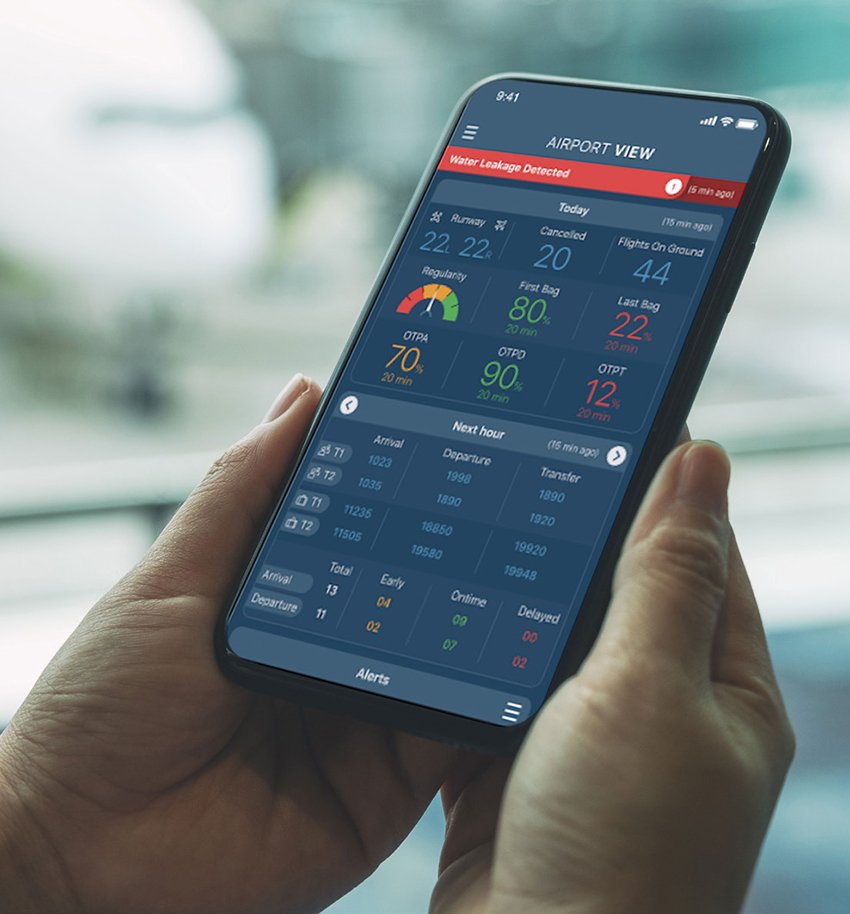
Veovo has entered into an agreement to acquire Dubai Technology Partners (DTP), a Dubai based airport technology and services provider with deep roots across the Middle East. The acquisition strengthens Veovo’s regional presence and brings new operational and AI-enabled capabilities into its Intelligent Airport Platform.
These include DTP’s AirportView mobile app for the whole airport community and tNexus, an integration and messaging framework, with ML models.
“Joining Veovo feels like the right next chapter for what we’ve built at DTP. We’ve spent the last few years working alongside the Veovo team, and there’s a real shared belief in where airport technology is heading,” enthused DTP’s managing director, Abdul Razzak Mikati.
“Nothing about our commitment to customers in the region changes – if anything, we now have more behind us to deliver on it. For me, staying on to lead this means continuing to back the people who made DTP what it is, and helping them grow into something bigger.”
Veovo CEO, James Williamson, noted: “Bringing our teams and technology together strengthens how we can continue to raise the bar and support more airports globally as complexity continues to rise.”