


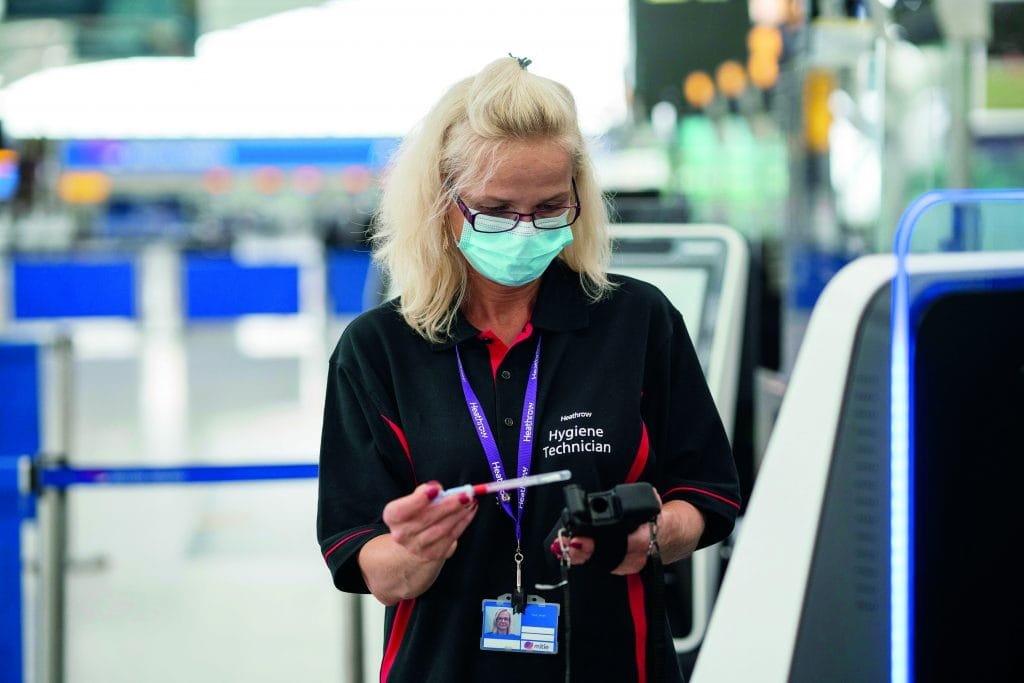
ACI World continues to play a leading role in aviation’s battle against COVID-19, writes external relations manager, Bojana Jeremic.
The impact of the COVID-19 pandemic on the aviation sector has been, and will continue to be, unprecedented in its scale and scope.
The airport sector, as an integral part of the global aviation ecosystem, has been among the industries most heavily affected by the global pandemic.
It is still very difficult to predict exactly how the recovery of the sector will evolve but prospects for recovery in the near-term have been significantly reduced due to inconsistent and ever-changing border restrictions and confusion about quarantine and test requirements.
Aviation – a major catalyst in supporting growth in other industries – is essential to the social and economic welfare across the world. Airports alone employ more than 6.1 million people globally, which makes up 60% of all direct employment in the aviation sector.
As we continue to navigate the current challenges, airports will undoubtedly play a key role in the global economic recovery and the aviation ecosystem.
At this year’s virtual ACI World General Assembly, a resolution was adopted to support the sector’s recovery by urging airports to implement best practices for the accommodation of health measures in accordance with global and regional guidance, based on ACI’s Airport Health Accreditation programme, which is supported by the International Civil Aviation Organization (ICAO).
Furthermore ACI, its World Governing Board, and the Annual Assembly, are encouraging airports and States to enter into bilateral arrangements as a short-term means to alleviate quarantine restrictions and travel bans.
Key to this will be working with international, national, and regional health authorities to develop consistent and effective protocols for prospective travellers.
ACI welcomed the publication of ICAO’s Testing and Cross-Border Risk Management Measures Manual as a step forward in promoting the recovery of the global air travel industry.
The aviation industry is united in the view that a co-ordinated and globally consistent approach to testing as an alternative to quarantine will have the dual effect of reassuring passengers that air travel is safe and encouraging them to fly knowing that they will not be subject to mandatory self isolation.
ACI’s recently published ASQ Global Traveller Survey found that 48% of travellers considered themselves likely to travel within the next three months, however, 80% of those who wanted to travel in the coming months would be dissuaded if quarantine was required.
Airports, airlines, and their partners need to continue to increase the level of confidence in the entire passenger journey and provide and communicate the measures they are introducing to keep passengers healthy and safe.
ACI’s Airport Health Accreditation programme provides airports with not only a tool to assess their health measures against globally recognised standards but also a way to communicate to passengers about these measures.
As an addition to the AHA programme, ACI has partnered with Bureau Veritas, a world leader in testing, inspection and certification, on the Airport Health Measures Audit Programme, to ensure the proper implementation of appropriate health and safety measures.
The on-site audits, conducted by Bureau Veritas, and the associated SafeGuardTM label will enable airports to demonstrate their compliance with a harmonised set of measures, aligned with the recommendations of national and international authorities.

Air connectivity key to global economic recovery
Another resolution issued at the recent World Annual General Assembly declared that airport slot allocation policies should support the recovery of air transport.
Airport connectivity is essential for the recovery of air transport, and will be a key driver of the wider global economic recovery, which is why ACI World is urging airport operators, airlines and slot co-ordinators to work together and to increase their collaboration in setting and maintaining a harmonised slot allocation process.
Historically, more than 200 airports worldwide have declared insufficient capacity to meet airline demand for flights, especially at peak times, and airports may be subject to capacity reduction in the recovery phase of the COVID-19 pandemic because of government regulations, physical infrastructure limitations or commercial considerations.
ACI World has called upon aviation oversight authorities to recognise the Worldwide Airport Slot Guidelines when designing, implementing and evaluating slot allocation policies and promote an evidence-based and data-driven approach to determine slot policies that support the recovery of air traffic.
“Increased air connectivity will be an important driver of the global economic recovery and it is important that future slot allocation policies do not constrain the industry’s capacity to sustain recovery,” said ACI World director general, Luis Felipe de Oliveira.
“While slot allocation policies ensure the most efficient use of available airport capacity and manage airlines’ requests for slots in an orderly manner, the prime objective is to optimise benefits to consumers.
“Governments and regulators should recognise the Worldwide Airport Slot Guidelines when creating slot allocation policies and we urge capacity-constrained airport operators to define the most efficient level of capacity and for airlines to use available capacity to avoid wasting scarce airport capacity.”