

Gresham Smith’s aviation studio leader, Zoë Fisher, argues that airports need a little theme park magic when it comes to managing queues and enhancing the customer experience.
Airports and theme parks rarely share the same conversation, yet both face the same challenge: moving large numbers of people through constrained spaces while maintaining a positive emotional experience.
A recent visit to a bustling, animal-themed park made that contrast clear. Even in heat, crowds and long lines, guests navigated the park with noticeably less stress than the passengers who funnel through airports every day. The difference wasn’t luck; it was design.
Theme parks treat queues as part of the experience: an opportunity to entertain, distract and prepare visitors for what comes next. Airports, by contrast, often treat queues as unavoidable processing.
That divide shapes how people feel, behave and move, and it presents a powerful opportunity for airports to rethink the passenger journey.
HOW THEME PARKS APPROACH QUEUING
Theme parks have spent decades studying crowd psychology and refining the art of waiting.
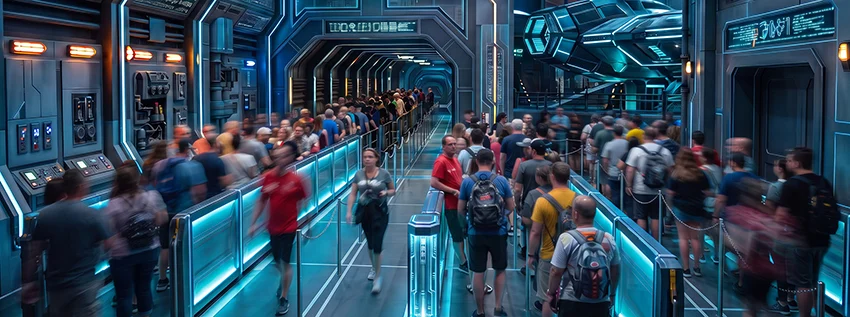
Their queues are strategically designed to engage and inform, using immersive pre-shows, interactive elements and scenic storytelling to make waiting feel purposeful. Guests begin the “ride” long before boarding.
Clear, progressive wait-time markers help visitors manage expectations and reduce anxiety. Digital tools play an equally important role.
Virtual queuing systems let guests reserve a place in line through apps or wearables, freeing them to explore shops and restaurants until their turn arrives. Behind the scenes, operators balance arrival rates with dispatch intervals to maintain steady flow and minimise bottlenecks.
These strategies work because they acknowledge a simple truth: people tolerate waiting far better when they understand it, feel engaged and know what comes next.
HOW AIRPORTS CURRENTLY MANAGE QUEUES
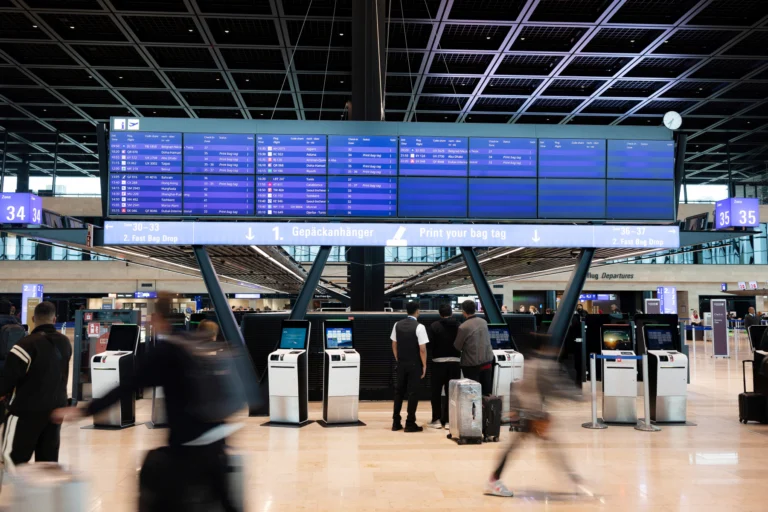
Airports, meanwhile, tend to treat queues like a necessary evil. The result is a landscape of stanchions, switchbacks and uncertainty that leaves passengers tense before they ever reach the gate.
Most terminals rely on static stanchions and serpentine lines that feel rigid and confining. Security and check-in queues often lack transparent wait-time information, leaving passengers unsure how long the process will take.
Amenities such as food, seating and restrooms are typically located beyond security, meaning travellers stuck in long lines have limited access to comfort.
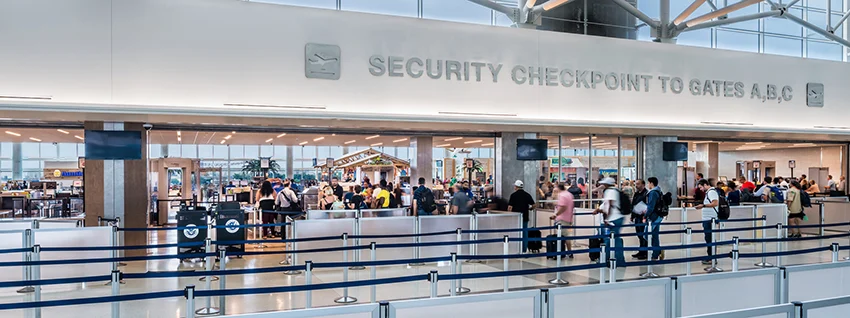
The outcome is predictable: rising stress, rushed behaviour and inconsistent flow. For many travellers, the security checkpoint remains the most stressful part of the journey, which in the US, helps explain the surge in TSA PreCheck enrolment among leisure passengers.
According to TSA, active PreCheck enrolment recently surpassed 20 million, driven by the value and ease of expedited screening.
LESSONS AIRPORTS CAN ADOPT
The good news? Airports don’t need animatronics or theatrics to improve the queuing experience. Instead, small, strategic shifts, rooted in intentional design and clearer communication, can dramatically change how passengers move and feel.
Virtual security checkpoints could allow passengers to reserve screening times, reducing physical congestion and giving travellers freedom to shop or relax until their window opens.
Real time wait-time indicators would help passengers manage their movement and reduce anxiety. Bringing refreshments or comfort zones closer to queues during peak periods would improve comfort without major infrastructure changes.
Data-driven flow management offers another opportunity. Computer vision, people-counting sensors and predictive analytics can help airports adjust staffing and lane allocation before bottlenecks form.
CURRENT TECHNOLOGIES IN USE AT AIRPORTS
Some airports are already experimenting with smarter queuing, though the industry hasn’t yet taken a full leap. Emerging tools show promise, even if they’re not being used to their full potential.
Hartsfield-Jackson Atlanta International Airport (ATL) for example, offers virtual reservations for early parking arrivals, encouraging timely entry and boosting concession activity.
While many terminals now incorporate cameras, Wi-Fi tracking and IoT sensors to measure crowd density and predict wait times.
Dynamic digital signage guides passengers toward shorter lines and improves wayfinding. In the US, smart gates and touch-free TSA PreCheck lanes, like those at Charlotte Douglas International Airport (CLT), streamline movement and reduce friction.
Smart stanchions tied to occupancy sensors can automatically adjust queue layouts based on real-time passenger volumes and flight schedules.
CHARLOTTE DOUGLAS: A CASE STUDY IN QUEUE EVOLUTION
CLT offers one of the clearest examples of how airports can rethink queuing at scale. For over a decade, planners and designers at Gresham Smith have reimagined how passengers move from landside to airside.
Beginning in 2017, CLT launched a major reconfiguration of its security checkpoints, consolidating five checkpoints into three more efficient, intuitive ones. The first opened in 2021; the final debuted in August 2025.
The redesign required maintaining passenger flow while construction continued. TSA’s checkpoint design guidelines are prescriptive, but CLT introduced open sightlines that allow passengers to see the airside beyond security.
That visibility reduces stress by giving passengers a sense of progress – light at the end of the tunnel.
The queues themselves are long but visually shallow, helping passengers understand where they’re headed. Operations within the queue were streamlined to reduce unnecessary movement. Travellers simply choose among three checkpoint locations based on where they enter the terminal.
Wayfinding signage has been especially well received. Digital displays tell passengers how long it will take to reach other concourses, helping them decide whether to walk briskly or move at a more relaxed pace.
With more leisure travellers and fewer frequent business passengers, transparency has become essential.
Charlotte Douglas is also exploring smart stanchions as they’ve now implemented passenger-counting systems that monitor congestion and publish wait-time information as travellers enter the queue.
Adaptable queue systems could now adjust gates and swing lanes based on flight schedules and real-time passenger numbers, reducing the need for constant staffing changes.
A PATH FORWARD FOR AIRPORTS
If theme parks have taught us anything, it’s that waiting can be designed – not endured.
Airports now have the tools to make queues calmer, clearer and more human-centred, turning a historically stressful moment into one that feels intentional and predictable.
By integrating psychological cues, virtual queuing, transparent communication and data-driven flow management, airports can create environments that feel more intuitive and less stressful.
CLT’s evolution shows what happens when airports treat queuing as a design opportunity. When passengers feel informed and reassured, they move more predictably, spend more time in concession areas and require less staff intervention – benefits that support both experience and operations.
Waiting will always be part of air travel. The challenge is to make that waiting feel purposeful rather than punitive.
Theme parks have shown that queues can entertain, inform and guide. Airports now have the tools, and the opportunity, to do the same.