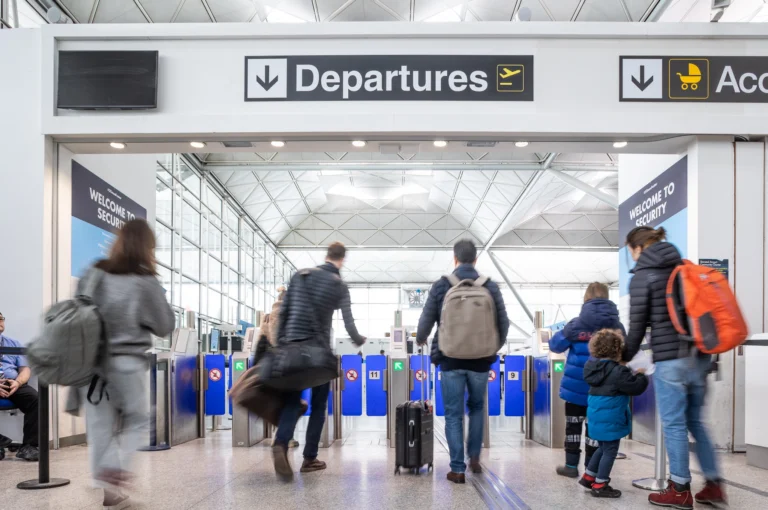


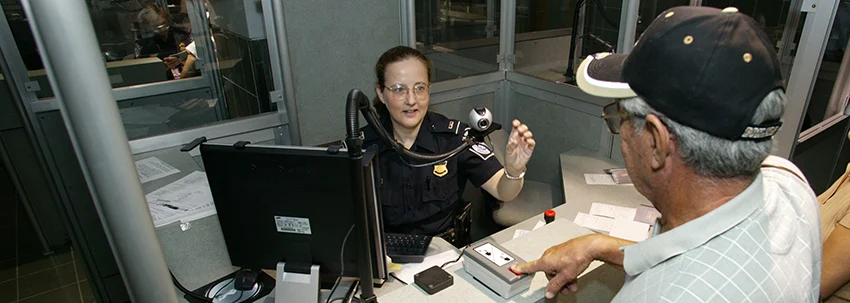
With the decision to admit most passengers made before they fly, SITA’s senior vice president for borders, Pedro Alves, argues that the next wave of border capacity will come from acting on this and not from adding more floor space at airports.
In today’s digital world, consumers expect personalised experiences from platforms such as Amazon, Spotify, and Netflix, where data is transformed into relevance, convenience, and value.
The most effective digital experiences are built on turning customer insight into action. Without doing so, organisations miss the opportunity to anticipate needs, personalise engagement, and create value at every interaction.
The same principle applies at the border. Travellers do not want to be treated as a transaction. They want a journey that is seamless, intuitive, and tailored to their circumstances.
The data to do this already exists. The opportunity is to use it intelligently, making border crossing simpler, faster, and more personal for every traveller.
That is the difference between collecting information and turning it into better decisions. It is also the most useful way I know to describe where border operations stand today. Borders are now reaching a similar moment.
For many domestic and international journeys, governments already know a great deal about a traveller before they arrive. They have access to advance passenger information, passenger name records, electronic travel authorisations, visa data, watchlist checks, travel history and other sources that help build a clearer picture of who is travelling and why.
The individual technologies matter. But the real transformation is not ETA, ESTA, eVisas, API or PNR. It is the emergence of traveller intelligence.
FROM TRAVELLER DATA TO TRAVELLER INTELLIGENCE
For decades, border controls were designed around a simple reality: the first meaningful opportunity to assess a traveller happened when they arrived at immigration.
That assumption no longer holds. Many governments can now assess eligibility, verify identity, identify risks and make informed decisions hours, and sometimes days, before travel begins.
Electronic Travel Authorisation programmes pioneered by Australia, and later adopted in countries such as the UK, US and Canada, are the most visible examples of this shift. But they are only part of a much broader transformation.
For decades, governments have been building the foundations for earlier border decisions through Advance Passenger Information (API), Passenger Name Record (PNR) programmes, visa systems, watchlist checks and risk assessment capabilities.
Today, more than 100 countries require airlines to provide API data, more than 70 operate PNR programmes, and more than 350 airlines exchange passenger information with governments worldwide.
Individually, these programmes solve different operational and security challenges. Together, they create something much more powerful: a continuously evolving picture of the traveller before they ever reach the border.
Australia provides one of the clearest examples of what this transformation can achieve. By combining travel authorisation, traveller data and risk assessment before departure, Australia has spent decades moving border decisions earlier in the journey.
This has enabled border authorities to build greater confidence in who is travelling, assess risk before arrival and focus resources where they are needed most.

CAPACITY IS INCREASINGLY A DATA INTELLIGENCE CHALLENGE
Queue times and levels of service remain important indicators of border performance. They tell us how efficiently travellers move through immigration halls.
But as passenger volumes continue to grow, they also expose a difficult reality: there is a limit to how much capacity can be created through infrastructure alone.
Immigration halls have walls. Airport expansion is expensive. And passenger demand changes far more quickly than physical infrastructure can adapt.
The challenge is that borders cannot build their way out of every capacity constraint.
Think again about Netflix, Spotify and Amazon. Their success does not come from having more content, more songs or more products. It comes from understanding what matters, predicting what comes next and acting on that intelligence before the customer asks. Borders are beginning to face a similar challenge.
For most countries, the majority of passengers are low risk. Yet many border processes still devote the same level of attention to every traveller, regardless of what is already known about them.
When governments combine travel authorisations, API, PNR, visa information, watchlist results and travel history, they gain something more valuable than data: confidence.
Confidence in who the traveller is. Confidence in whether they are eligible to travel. Confidence in whether they require closer attention.
That confidence allows routine decisions to move before departure, enabling officers to focus their expertise where it creates the greatest value, and the question changes from “How many travellers can we process?” to “How many decisions can we make before they arrive?”
WHAT LEADERS SHOULD MEASURE NEXT
For decades, border agencies have focused on delivering acceptable levels of service at immigration.
That remains important. But as borders become more intelligence-led, other measures become equally important:
- How many travellers can be assessed before arrival?
- How much officer time is dedicated to higher-risk or more complex cases?
- How quickly can operations recover after disruption?
- How effectively is infrastructure being used?
- How accurately can resources be deployed based on expected demand?
These metrics provide a more complete picture of border effectiveness than queue length alone. Because the goal is not simply moving people faster. It is making better decisions.
WHAT IT ASKS OF ALL OF US
This shift will only succeed if it is built on trust. A decision made before departure is only as good as the information that supports it. Airlines, airports and governments all have a role to play in ensuring information can be shared securely, accurately and responsibly.
Travellers should understand what information is being used, why it is needed and what choices they have. Governments must always retain authority over border decisions.
Privacy must shape the design from the beginning, not arrive as a final compliance check. And passengers should not have to prove who they are again and again as they move between countries.
The industry’s challenge is no longer collecting more information. It is creating trusted frameworks that allow information to be used more effectively.
That is why the theme of September’s ICAO TRIP Symposium in Montréal, Putting Trust into Practice, felt particularly relevant.
THE FUTURE BORDER IS BUILT ON INTELLIGENCE
Yes, there will always be travellers who require closer assessment. Yes, there will always be situations where human judgement is essential.
And yes, governments will always retain responsibility for deciding who may enter a country. What changes is where decisions begin.
Netflix, Spotify and Amazon built better experiences not because they collected more information than everyone else, but because they became better at turning information into intelligence and intelligence into action.
Borders now have the same opportunity. The next generation of border capacity will not come primarily from larger immigration halls, more counters or additional infrastructure.
It will come from making better decisions earlier, with greater confidence, using information governments already possess. Because increasingly, the border is no longer where the decision is made.