




Planning for the unexpected

Adaptable design and flexible development are key to airport resilience, writes Anthony Le Caherec, business leader for airports at Bouygues Construction.
While dealing with a busy summer period, airports also face a context of growing operational uncertainty.
Disruption caused by fuel supply constraints, rising oil prices, extreme weather and fluctuating demand is becoming an increasingly regular feature of aviation.
For airport owners and operators, this underlines an important reality: infrastructure cannot be designed solely for ideal conditions; it must also perform when the unexpected occurs and systems are under pressure.
Resilience is becoming one of the defining measures of airport quality. In practice, resilience is not just about recovering from disruptions and means creating environments that absorb shocks, adapt quickly and continue delivering safe, efficient and commercially successful operations.
EARLY INVOLVEMENT OF CONTRACTORS FOR MORE RESILIENCE
The construction phase is one of the most critical and most risky elements in any airport project, particularly in live operational environments.
Expansions, refurbishments and upgrades must be delivered while maintaining safety, security and continuity of service for passengers, staff, airlines and all operational processes.
Poorly planned or executed works can create bottlenecks, disrupt circulation routes and amplify operational vulnerability. Well-planned projects, by contrast, can strengthen resilience and goodwill.
Airports are increasingly recognising the value of bringing experienced constructor-developers into projects early, so that capabilities in airport finance, design, build, operations and maintenance can be considered together rather than in sequence.
Early involvement of contractors with strong knowledge of the very specific requirements of airports helps ensure that operational constraints, buildability and phasing requirements are factored in from the outset.
It also allows project teams to work collaboratively across airport operations, maintenance, access, transport and commercial functions, ensuring nothing falls between the cracks and providing a better long-term outcome.
RESILIENCE IS ALSO ABOUT ANTICIPATING FUTURE NEEDS
Thinking long term is particularly important given that airports are not static assets. They need to respond to traffic growth, evolving passenger expectations and changing safety and environmental requirements and regulations.
A successful project therefore has to look beyond the immediate brief. It must account for future expansion, preventive maintenance, electrification of infrastructure and equipment, and integration with other transport modes.
In this sense, resilience is no longer only about coping with disruption inside the terminal; it is about ensuring the airport remains adaptable, embedded in its local ecosystem and relevant over the long term.
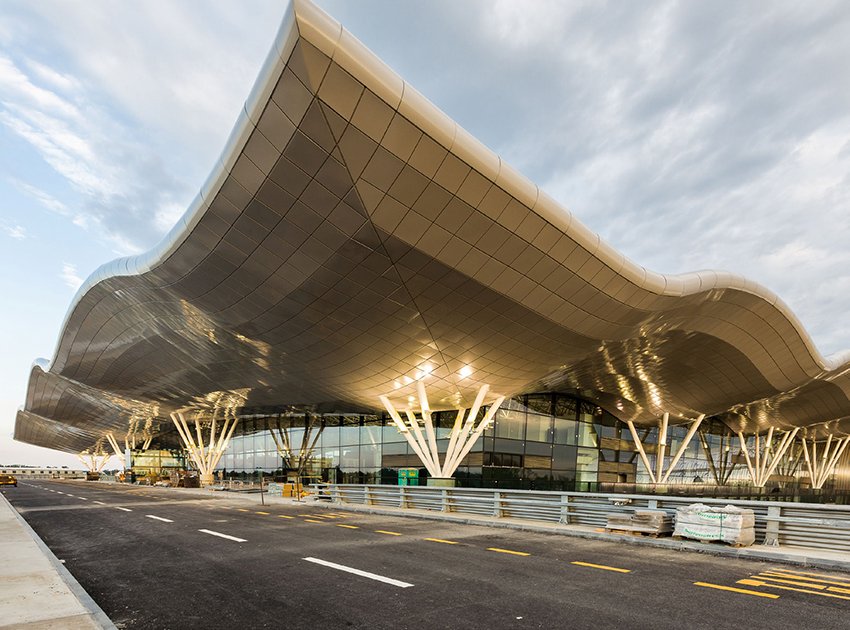
This more integrated approach can already be seen in major airport projects. At Zagreb International Airport, we delivered a new international passenger terminal while also operating existing facilities.
The project included a €300 million private financing package and was structured to preserve commercial revenues while extending the airport.
This highlights that when design, delivery, financing and operation are considered together, resilience and revenue are not separate objectives.
A terminal that protects operational flow under pressure is also one better positioned to protect its overall performance.
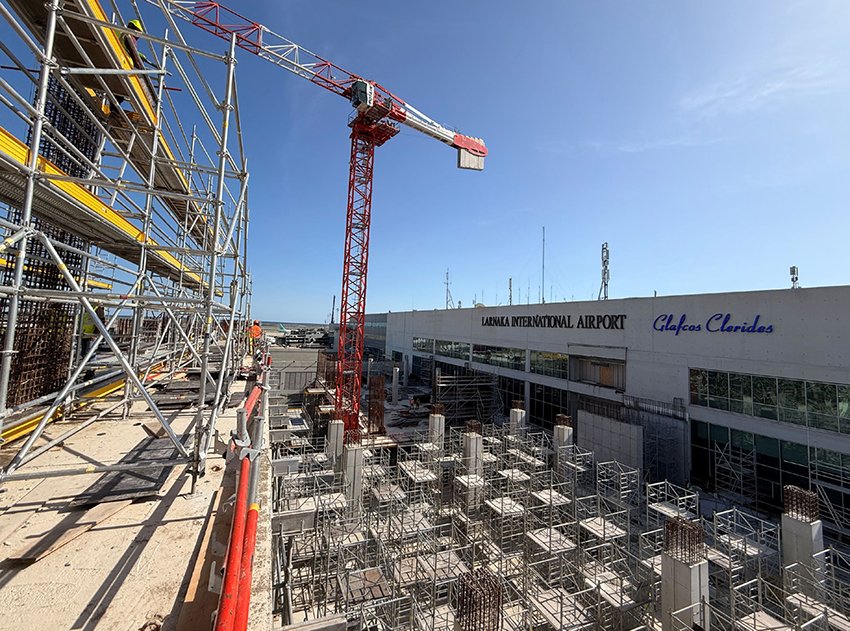
Long-term partnership is equally important. We first worked on Larnaca and Paphos airports in Cyprus in 2006, delivering then new terminals and modernising existing infrastructure under a long-term concession model.
Expansion projects are currently under construction while the airports remain live and operational. This will allow a significant increase of the overall capacity of both airports.
The continuity of our involvement shows how early design and construction decisions can support future scalability.
Rather than considering expansion as a new exercise years later, the airport can evolve on the bases of infrastructure already designed with growth and adaptability in mind.
It is also a strong example of resilience in practice: planning not only for what the airport needs today, but for what it may need in the future and how to deliver it without disruption.
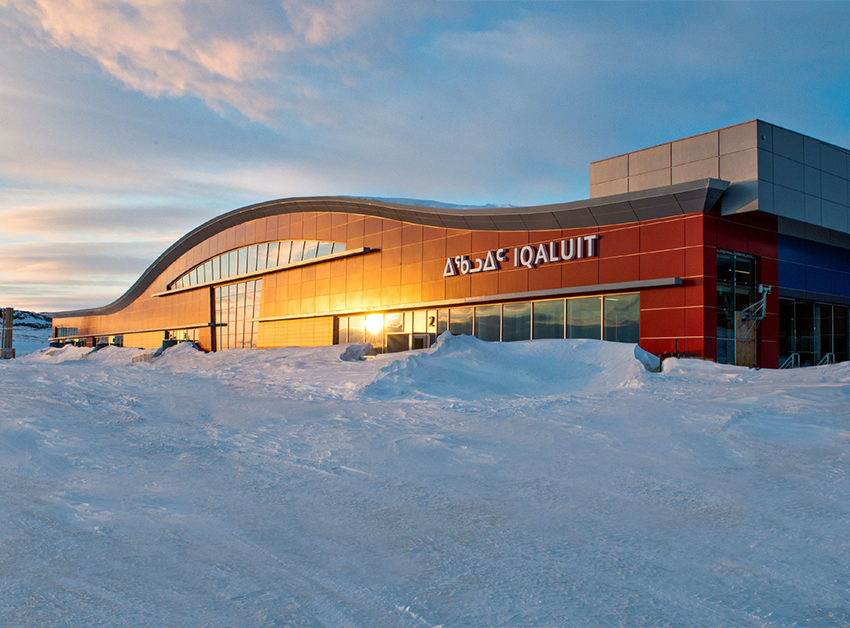
Other projects reinforce the same lesson. Our airport portfolio includes highly varied contexts, from Iqaluit Airport in Canada, where a new terminal and aircraft infrastructure were delivered in Arctic conditions, to airport developments in Madagascar and the future expansion of Paris Beauvais.
Different markets bring different constraints, but the principle remains the same: airport projects succeed when operational readiness, construction methodology, financing and long-term asset performance are considered together from the very beginning.
This is where experienced airport specialists add most value, by helping airport owners make decisions that improve resilience across the whole lifecycle of the asset.
AN ENVIRONMENTAL APPROACH FOR GREATER RESILIENCE
Sustainability is also becoming inseparable from resilience. Airports are under growing pressure to decarbonise, reduce operational emissions and comply with stricter ESG and regulatory frameworks.
That has major implications for design, construction and operations, from low-carbon materials and energy-efficient buildings to electrified infrastructure and sustainable financing models.
An airport that cannot adapt to environmental requirements will struggle to remain commercially robust in the years ahead.
For airport owners and operators, the conclusion is clear. Resilience cannot be added at the end of a project. It has to be integrated from the start, through a holistic development approach that connects designers, construction contractors and airport specialists early on, to ensure more collaboration between their respective fields of expertise.
The strongest airport projects will be those shaped early by experienced partners who understand how to align construction methodology and phasing with passenger experience, commercial performance, operational continuity and future adaptability.
In today’s volatile aviation market, planning for the unexpected is becoming essential for successful airport development.