


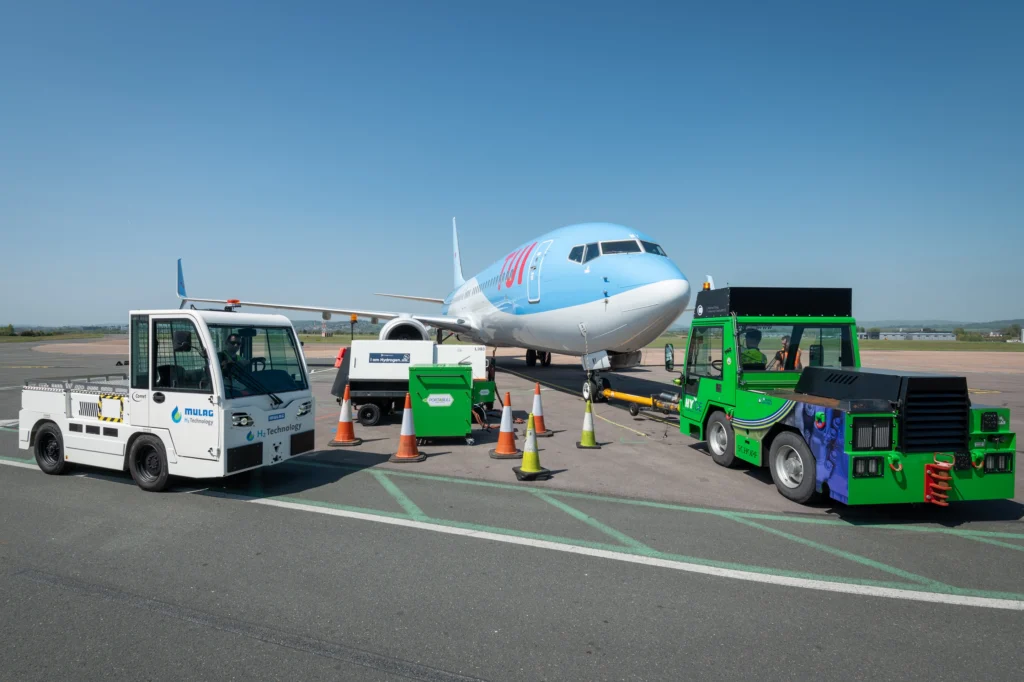
A UK airport trial has generated new operational evidence that could help the global aviation industry understand how hydrogen-powered ground equipment can be introduced safely and practically, and what is needed to support wider adoption, it is being claimed today.
The study, led by Exeter Airport, Cranfield University and ULEMCo, tested a dual-fuel hydrogen–diesel ground power unit over multiple days in winter operating conditions.
A new Cranfield University report finds that the equipment performed safely and reliably, delivered measurable reductions in diesel use and carbon emissions, and required little change for the ground teams operating it.
The findings are also said to provide insights into where dual-fuel hydrogen technology may be most effective, suggesting that its greatest benefits could be achieved in equipment used continuously or for longer operating cycles.
The Winter Operations HyGPU project follows the groundbreaking Zero Carbon Turn trial at Exeter Airport in April 2025, which achieved several UK firsts when three different hydrogen-powered technologies supported the live turnaround of a TUI Boeing 737.
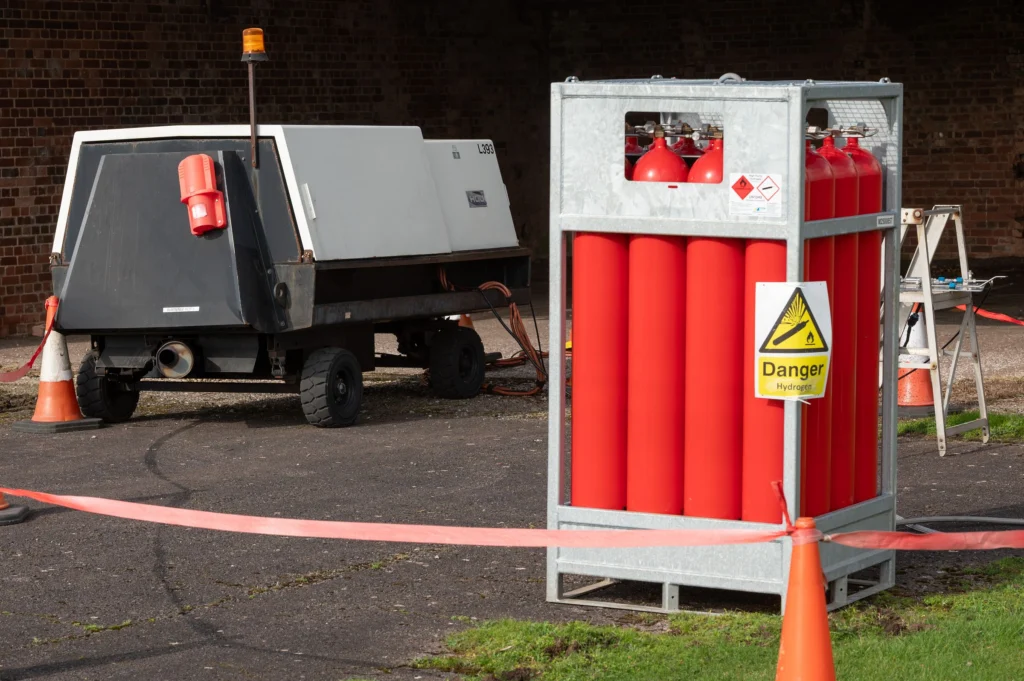
Delivered by Exeter Airport, Cranfield University and ULEMCo, with funding and support from the Connected Places Catapult and regulatory oversight from the UK Civil Aviation Authority, the latest project contributes practical evidence to the development of hydrogen infrastructure, operational procedures, safety frameworks and future investment decisions across the aviation sector.
Across eight operational days, the equipment completed 15 tests lasting a total of almost six hours. It consumed 7.41kg of green hydrogen, displacing an estimated 24.23 litres of diesel and avoiding approximately 63.9kg of carbon dioxide emissions.
No safety incidents or significant operational problems were reported. Airport ground crew also found little practical difference between operating the converted equipment and using a conventional diesel GPU.
The report estimates that converting all seven of Exeter Airport’s existing GPUs to the same dual-fuel system could potentially save more than 11,000 litres of diesel and approximately 35 tonnes of carbon dioxide equivalent each year.
Dr Thomas Budd, associate professor of airport decarbonisation at Cranfield University and author of the report, said: “This trial has taken us another step beyond a one-off demonstration and given us valuable operational evidence about how dual-fuel hydrogen equipment performs in winter conditions.
“The results show that the equipment can operate safely and deliver measurable reductions in diesel consumption and carbon emissions, with very little change required from the people using it.
“Although this remains a relatively modest dataset, it strengthens the evidence available to airports, regulators and equipment manufacturers as they consider where hydrogen can make the greatest contribution to decarbonisation.”
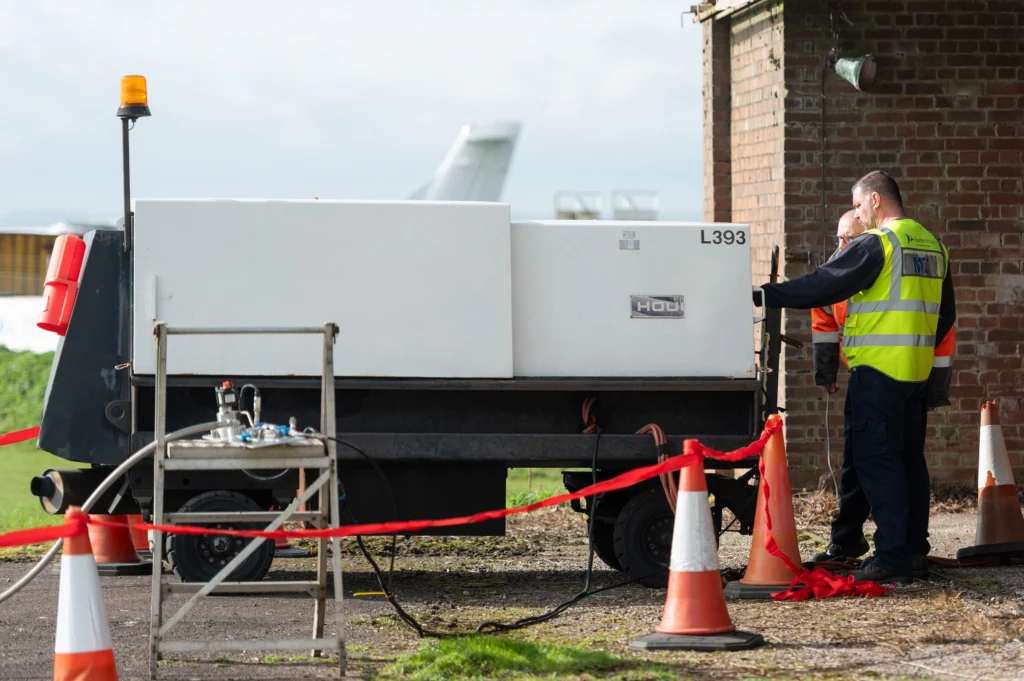
The report found no clear evidence that lower ambient temperatures, which ranged from 4°C to 14°C during the tests, directly affected the GPU’s technical performance.
However, the findings indicate that periods of inactivity, including overnight cold starts, may delay the point at which the equipment begins using hydrogen. This is because the dual-fuel unit starts on diesel and only introduces hydrogen after its engine reaches the required operating temperature.
The report says longer trials and a larger dataset would be needed to confirm the relationship between inactivity, temperature and performance.
The findings suggest dual-fuel technology may offer the greatest benefit for airport equipment used continuously or for longer periods. Equipment used for short, intermittent tasks may be better suited to other zero-emission technologies.

Exeter Airport’s managing director, Stephen Wiltshire, said: “The original Zero Carbon Turn project proved that different types of hydrogen-powered ground equipment could work together safely in a live airport environment.
“This latest study delivers on our commitment to build on that by testing the technology over a longer period and in more representative winter conditions.
“The new report gives us a much clearer indication of the potential operational and environmental benefits. It shows that converting existing equipment could provide airports with a practical way to reduce emissions while the infrastructure for fully zero-emission technologies continues to develop.”
The first Cranfield University report into the project called for hydrogen technology to be tested for longer periods and under a broader range of operational conditions. The Winter Operations HyGPU trial was developed directly in response to that recommendation.
The latest report identifies three priorities for further research: longer trials as part of normal day-to-day airport operations; the development of higher-volume hydrogen storage and semi-permanent refuelling facilities; and scalable on-site testing of hydrogen fuel purity.
Dr Budd added: “The next stage must be to move from limited trials towards longer-term use as part of business-as-usual airport operations. That will allow the sector to expand the evidence base, develop the necessary infrastructure and build the operational knowledge and skills required to support hydrogen-powered aviation in the future.”