
Business exchange

Share
We provide a snapshot of the latest news stories and features from some of the companies that support the growth and development of the world’s airports.
SCREENING UPGRADE IN BNE’S DOMESTIC TERMINAL
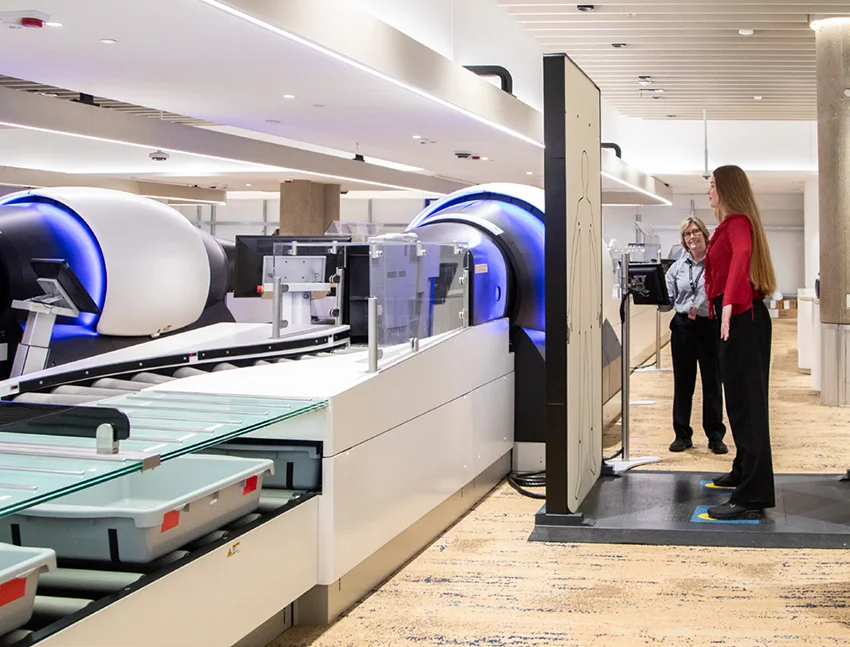
The brand-new northern screening point in Brisbane Airport’s Domestic Terminal is set to deliver a smoother, more streamlined screening experience for Qantas passengers.
It features five brand-new security lanes equipped with Rapiscan CT (Computed Tomography) screening technology, which delivers a more secure screening process and, importantly for passengers, allows laptops and aerosols to remain inside bags, making for a smoother screening experience.
“We’re incredibly excited to see this brand-new screening point open to passengers,” enthused Stacey Pollard, Brisbane Airport’s head of terminal operations.
PRIVATE MEETING PODS UNVEILED AT EDINBURGH AIRPORT
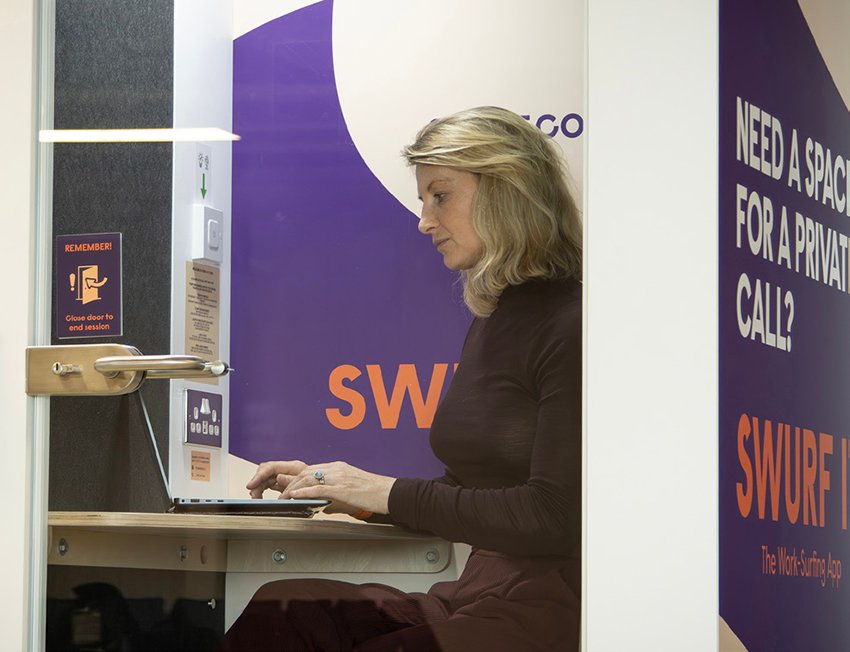
Edinburgh has become the first UK airport to deploy on-demand private meeting pods, following a partnership with Scottish travel tech company SWURF.
The ‘SWURF Pod’ features advanced soundproofing, private Wi-Fi networks with security-grade encryption, smart LED lighting, air filtration systems, and ergonomic seating for those who suddenly find they need a private space for sensitive business calls.
The gateway’s chief commercial officer, Stephanie Wear, said: “We’re always looking for new ways to make travel easier and more comfortable for our passengers, and these new SWURF pods are a great example of that.”

PPG OPENS HOTEL ATMADRID BARAJAS
Hospitality giant, Plaza Premium Group (PPG), has opened a new landside hotel in Terminal 4 of Adolfo Suárez Madrid-Barajas Airport, Spain’s largest and busiest gateway.
Madrid joins London Heathrow, Singapore, Kuala Lumpur, Cebu, Qingdao, Sydney, Rio de Janeiro-Galeão, Muscat, Jeddah, and Shanghai Pudong in boasting Aerotels located either airside or landside on the airport campus.
“By bringing a hotel right into the terminal, we’re giving travellers peace of mind and the simple luxury of more time to relax,” says PPG’s VP for southern Europe, Analia Marinoff.
APOC SOLUTION FROM WAISL COMING TO EUROPE
A pioneering tech company whose AI-powered system has helped boost the efficiency of ground operations at airports in India is looking to export its solution to the UK, Europe and the rest of the world.
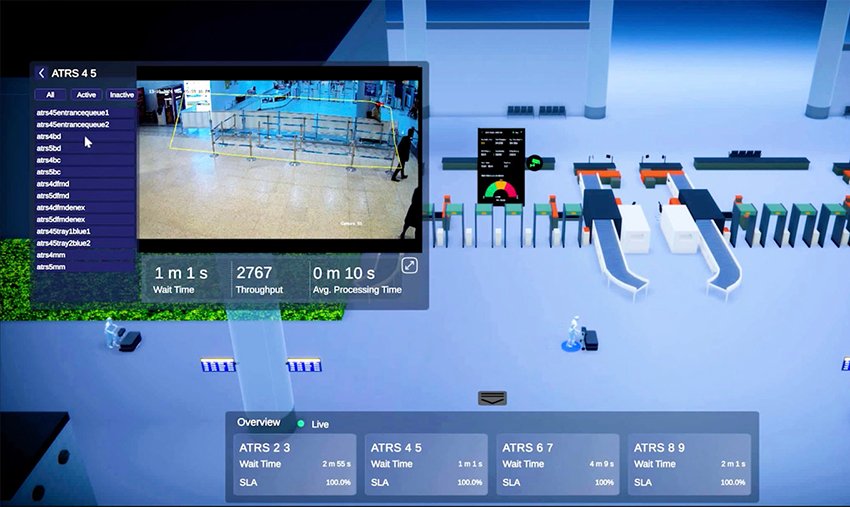
According to WAISL, ‘AeroWise’, a first-of-its-kind Airport Predictive Operations Centre (APOC) has driven efficiencies, increased capacities and provides significant savings for its airport customers in India.
Indeed, it believes that its solution has “revolutionised” the running of Hyderabad’s Rajiv Gandhi International Airport and expects the same results when it is fully operational at Delhi’s Indira Gandhi International Airport.
WAISL notes that its solution integrates ‘landside’, ‘terminal’ and ‘airside’ systems to enhance operations. It can track people and aircraft across the airport campus, and also predicts problems and offers solutions.
Andy Bordass is heading WAISL’s roll-out of AeroWise in Europe, and has no doubt that it could help some of the continent’s more capacity constrained airports, including megahubs like Heathrow, which handled an all-time high of eight million passengers in August.
He says: “This is a game-changer. Having worked in the sector for many years, I am only too aware of the stress our airports are under, and the need for efficiencies and increased capacity.
“There are so many systems used in airports, but they are rarely integrated and usually operate independently of each other. What WAISL has done is to enable the integration of them all.
“In Hyderabad, it has successfully integrated more than 40 IT and OT systems. It monitors more than 100 KPIs, provides real-time insights and enables far better planning, faster incident responses, enhanced safety and high levels of passenger satisfaction.”
Bordass continues: “One great thing about this tech is that we know it works; it is already operating and making a huge difference.
“Where installed, AeroWise has delivered a 30% improvement in staff and resource utilisation, a 25% reduction in turn-around delays, and an 80% reduction in manual surveillance workloads.”
These kind of savings can lead to shorter queues, a better security experience, reductions in missed flights and mishandled baggage, improved traffic flows and more efficient aircraft parking, making airports more sustainable.
Bordass notes that airport retailers can also benefit from AeroWise by improved traffic flows in the terminal.
“Passengers benefit because everything is more efficient and the whole airport experience is better – we know this because it is what passengers going through Hyderabad tell us,” he says.
“The UK is a world leader in the sector – our aviation network is second only to China and India’s – but to remain so, we have to improve our airports.
“With physical improvements so difficult, technology is often the only option and WAISL’s AeroWise is a terrific solution.
“The time it takes to get it up and running depends on the size of airport and the number of systems to integrate – it took 30 months in Hyderabad, an airport with almost 30 million passenger journeys a year.
“Thanks to AI and the tech pioneers at WAISL, we now have a system that can deliver what European airports desperately need.”

BOOSTING GATE EFFICIENCY IN CALGARY
Assaia has announced a comprehensive deployment of its ApronAI technology across 67 gates at Calgary International Airport (YYC) in Canada.
The deployment, which started this summer, builds on a successful 10-gate pilot programme already operational at YYC.
“This comprehensive approach addresses a critical AI opportunity – ensuring the technology reaches its full potential through complete coverage and adoption,” says YYC’s chief information officer, Megan Gupton.
“We expect it to provide consistent, airport-wide visibility and efficiency to turnaround operations.”
The airport broke passenger records in 2024, reinforcing the need for advanced operational tools to manage increasing traffic volumes while maintaining service excellence.
Funded in part by a C$1.1-million investment from the Government of Canada through Transport Canada, the phased implementation ensures thorough integration with YYC’s existing operations while maintaining service continuity throughout the deployment process.
FRAPORT EXTENDS NASHVILLE RETAIL CONCESSION
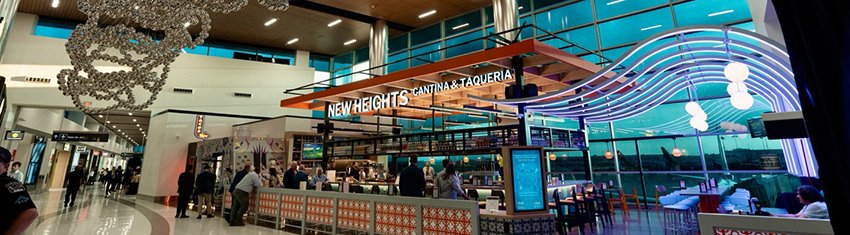
Fraport Nashville LLC will continue to act as the developer and manager of the concessions programme at Nashville International Airport until at least 2034 after singing a five-year extension to its contract with the Metropolitan Nashville Airport Authority (MNAA).
“Our team in Nashville has aligned itself with the goals and vision of the authority and is cultivating an environment that brings the real Nashville to the airport through flavours, brands, community and opportunity,” said Sabine Trenk, CEO of Fraport USA Inc.
“Since our partnership with MNAA began in 2018, it has been a privilege to support its vision of creating an authentic Nashville experience for millions of travellers at the airport. This extension further strengthens our collaboration and our commitment to enhancing the passenger experience through a concessions programme that embodies the true spirit of Music City and Tennessee.”
Fraport Nashville and BNA were awarded the prestigious 2025 ACI-NA Richard A Griesbach Award for Excellence in Airport Concessions. Since 2018, it has introduced nearly 100 new shops, restaurants and services.
MODULAR AND FLEXIBLE
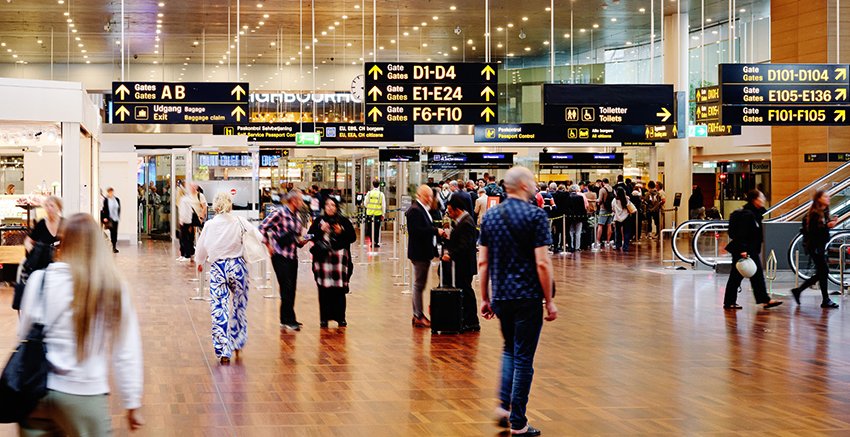
Copenhagen Optimization shares how a new operating landscape is bringing ‘best of breed’ suppliers into one data-management planning and operating system.
Airports have long been asked to choose between sprawling, do-everything platforms or a patchwork of specialised tools.
A best-of-breed approach offers a better third way: assemble the strongest specialist systems for each job – AODB (Airport Operational Data Base), RMS (Resource Management System), billing, content management, passenger tracking etc – and integrate them into one coherent operation.
Each component can be built by a team dedicated to that specific domain, so the airport gets higher quality in every area, plus the ability to swap parts without ripping out the whole stack. In other words: modular by design, flexible by default.
WHY THIS IS WHERE THE INDUSTRY IS HEADED
Two shifts make a best of breed approach inevitable. First, the operational challenge: airports must grow throughput and improve passenger experience without expanding their physical footprint.
They can’t build their way out of every constraint. But they can unlock capacity – often quickly – through sharper allocation and planning. Freeing up gates through better stand allocation or smoothing peaks at check-in can deliver millions in value far faster than a multi-year build.
Second, the technology is ready. Modern, cloud-native systems pave the way for clean APIs (application programming interfaces), well-documented interfaces, and support integrations across any data point.
That means the airport can orchestrate data in and out, align decisions across functions, and keep each system current as requirements evolve.
Crucially, this architecture restores leverage to airports: if a module underperforms, that module can be replaced rather than performing open-heart surgery on the entire IT estate.
Just as important, best-of-breed keeps the focus on outcomes over software. Specialists who live and breathe a single problem iterate faster with users, so tools evolve with the operation – not the other way around. More bottom-up pull can be expected from planners and controllers who know there’s a tool that fits their job exactly and want it in production.
GETTING STARTED: A PRAGMATIC PATH TO BEST-OF-BREED
- Target the biggest win first. Airports should start where pain is sharpest or the upside is obvious – baggage planning, stands and gates, billing accuracy, or passenger flow visibility. Replace that component, integrate it with the existing AODB or EBS (enterprise service bus), and prove value quickly.
- Make openness non-negotiable. In procurement, require API-first design, cloud readiness, and clear integration patterns. Define data ownership and exit rights up front to avoid lock-in.
- Design for replaceability. Treat every system like a contract: clear inputs/outputs, SLAs (service level agreements), and business outcomes. If expectations aren’t met, the airport should be able to substitute the module without destabilising operations.
- Choose the rollout rhythm. Some airports modernise domain by domain; others bring a consortium of best-of-breed vendors to replace a legacy suite in one move. Airports should pick the cadence that matches their appetite for risk and internal bandwidth.
- Bring users to the table. Planners, dispatchers, and ops controllers should help shape requirements and roadmaps. When tools reflect real workflows, adoption sticks, and benefits arrive sooner.
Best-of-breed isn’t a trend; it’s an operating model. Build the digital core from excellent parts that play beautifully together, and an airport can gain the agility to meet today’s pressures – and the headroom to seize tomorrow’s opportunities.