


Business exchange

We provide a snapshot of the latest news stories from companies that support the growth and development of the world’s airports.
WOWING PASSENGERS IN PORTLAND
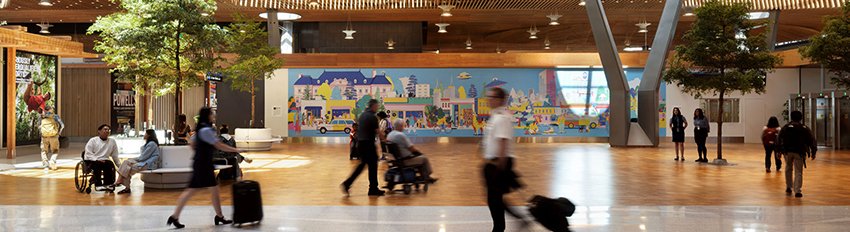
The second and final phase of the globally acclaimed Portland International Airport (PDX) main terminal expansion is now open. Designed by ZGF for the Port of Portland, the one million-square-foot project is the largest public infrastructure project delivered in Oregon’s history and realises a decade-long vision to create a more welcoming, sustainable, and distinctly Pacific Northwest gateway for travellers.
Since phase I opened in 2024, the terminal has received multiple international honours, including the Prix Versailles World’s Most Beautiful Airport award, Fast Company’s Best Design in North America distinction, and recognition from the Holcim Foundation for Sustainable Construction.
Featuring a nine-acre mass timber roof, the terminal evokes the feeling of walking through a Pacific Northwest forest. Views of the airfield, abundant natural light, and interior landscapes that celebrate the beauty of the region are present at every step of the passenger journey.
The second phase introduces a distinct arrival experience for passengers landing at PDX. New exit lanes on the north and south ends of the terminal streamline concourse connections, leading arriving passengers to a new descent to baggage claim. Expanded post-security gatheringareas create comfortable spaces for welcoming arriving travellers, while skylit all-user restrooms, new local retail and dining options, and art installations complete the passenger experience.
“This airport is designed to meet the needs of travellers today while adapting to the demands of the future, enabling it to serve the region for decades to come,” stated ZGF’s managing partner, Sharron van der Meulen.
Arguably, the project’s sustainable design sets a new standard for airports worldwide. The main terminal expansion doubles passenger capacity while achieving a 50% reduction in energy use per square foot with a highly efficient, all-electric ground-source heat pump. While resilient design strategies enable the terminal to withstand a 9.0 magnitude earthquake in the Cascadia Subduction Zone.
MENZIES AVIATION SIGNS SAF MOU
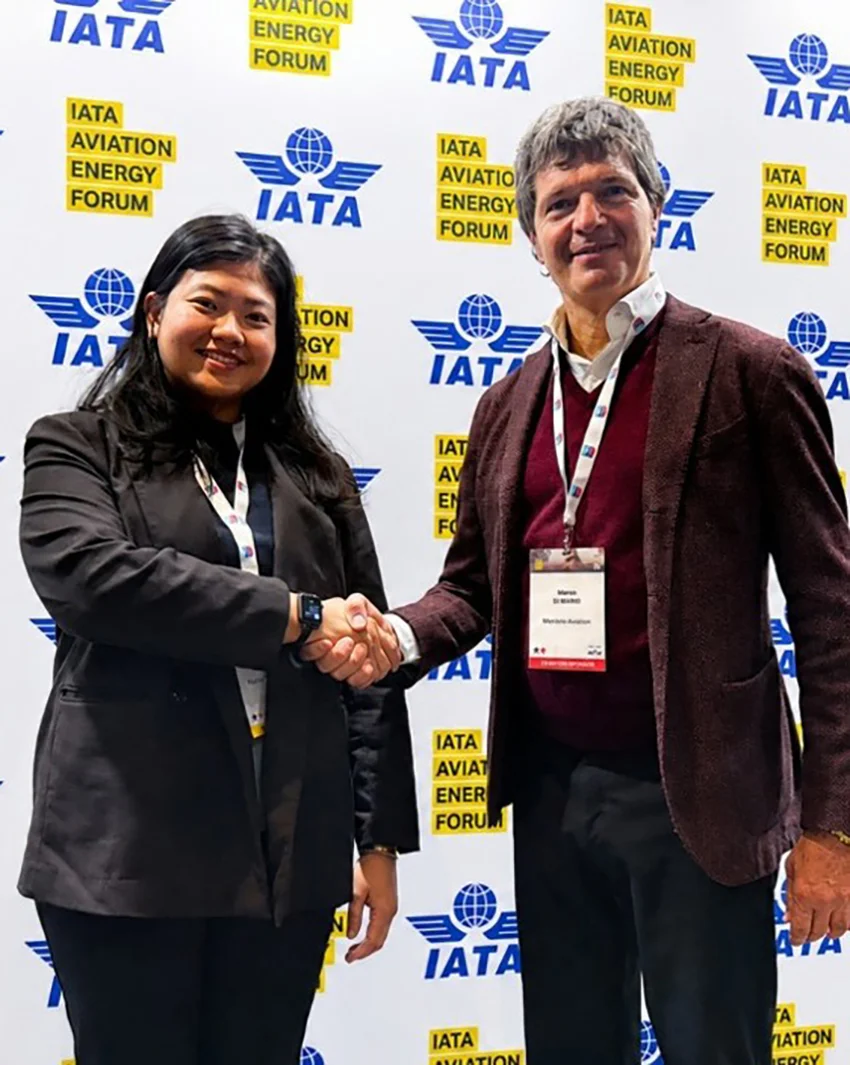
Menzies Aviation has signed a Memorandum of Understanding (MoU) with FlyORO Technologies Pte Ltd to support the distribution of sustainable aviation fuel (SAF).
Menzies will use its experience in fuel operations and its footprint of more than 16 airports in Europe to support the management of FlyORO’s AlphaLite blending solution.
The aim is to enable more compliant and efficient blending, storage and delivery of SAF at or near airports, helping more airlines access sustainable fuel. The partnership supports Menzies’ focus on helping the aviation industry reduce emissions by improving fuel infrastructure and expanding access to SAF.
Its executive vice president for fuels, Marco di Mario, said: “Our role is to keep aviation operations running safely and efficiently. As SAF becomes more important, we want to support its growth by ensuring it is handled safely and in compliance with industry standards.
“We look forward to working in partnership with FlyORO, and helping facilitate SAF that are accessible, compliant and cost-effective.”
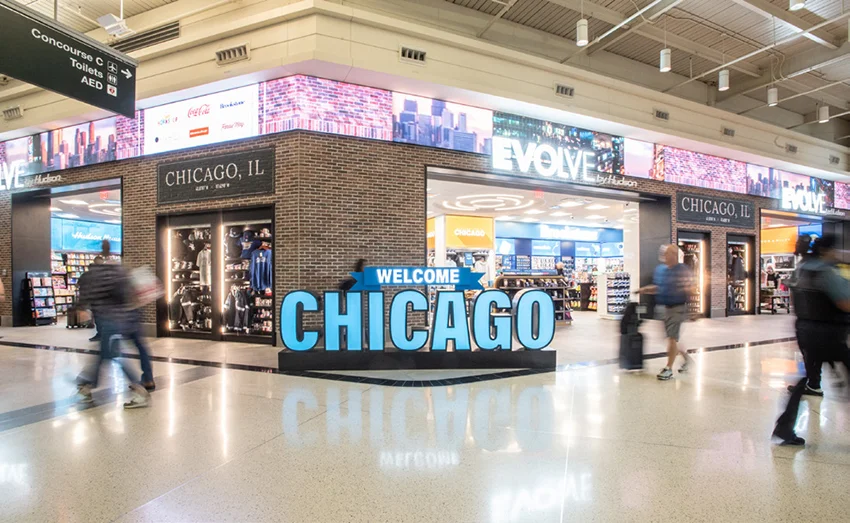
AWARD WINNING CONCESSIONS PROGRAMME
Midway Partnership, in collaboration with the Chicago Department of Aviation (CDA), has been awarded the Richard A Griesbach Awardof Excellence in Airport Concessions by ACI North America (ACI-NA), the highest honour recognising outstanding airport concessions programmes.
The award recognises Midway Partnership’s comprehensive redevelopment of the dining, retail and passenger amenities programme at Chicago Midway International Airport, which has transformed the traveller experience while delivering meaningful economic impact for the City of Chicago.
“Midway International Airport is an essential gateway for Chicago, and this national recognition reflects our continued commitment to investing in world-class amenities that serve residents, visitors and the broader community,” said Mayor Brandon Johnson. “Through this partnership, Midway is delivering a concessions programme that celebrates Chicago’s local businesses, creates jobs and ensures that travellers experience the very best of our city.”
Midway Partnership – a joint venture comprised of Vantage Group, SSP America and Hudson – has invested more than $75 million to transform the airport’s concessions offerings, bringing more than 70 new dining and retail brands to Midway and expanding the total concessions area from approximately 40,000 to 70,000 square feet.
The redevelopment has prioritised iconic local Chicago brands alongside national and global retailers, creating a strong sense of place for the more than 22 million passengers who travel through Midway each year.
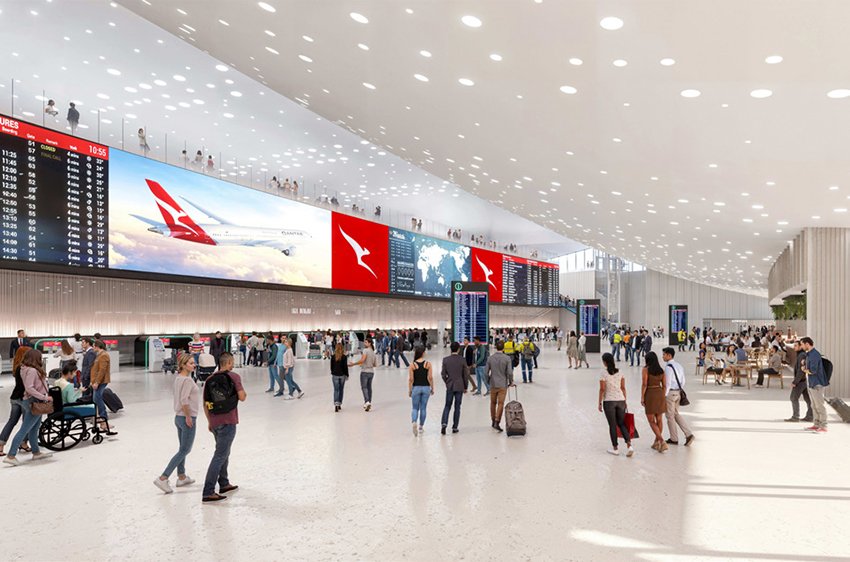
NEW TECH PARTNER FOR PERTH AIRPORT
DXC Technology will be responsible for the design, integration, testing and commissioning of more than 70 information technology and operational systems that will support the new terminal at Perth Airport.
The new terminal facilities, scheduled to open in 2031, will realise Perth Airport’s One Airport vision to bring all commercial airline operations into a single central location which will improve efficiency and enhance the passenger journey.
“We’re extremely proud to partner with Perth Airport on a technology transformation that will support Western Australia’s long-term economic growth,” said Robert Le Busque, president, for Asia Pacific Japan at DXC Technology.
Perth Airport forecasts that by 2046, it will support 30 million passengers annually, generate more than 75,000 jobs, and contribute A$17billion to the Western Australian economy.

ASSAIA SOLUTION FOR NEW CHITOSE AIRPORT
Assaia’s AI-powered turnaround management solution ApronAI is being deployed across the international terminal at Japan’s New Chitose Airport by Hokkaido Airports Co (HAP).
Facilitated by Marubeni Corporation, the partnership marks the first fully Japanese-supported implementation of Assaia’s flagship technology. It also marks the first full-scale deployment of a computer-vision-based turnaround management solution in Japan.
Assaia’s chief commercial officer, Jan Willem Kappes, said: “HAP recognises the value of real-time operational intelligence in helping airport stakeholders respond faster to developing issues on the ground and create more resilient operations.”
The system, which is scheduled to go live in the winter of 2026, will also introduce full Japanese language support for the first time, allowing frontline teams to work directly within the platform in their native language.
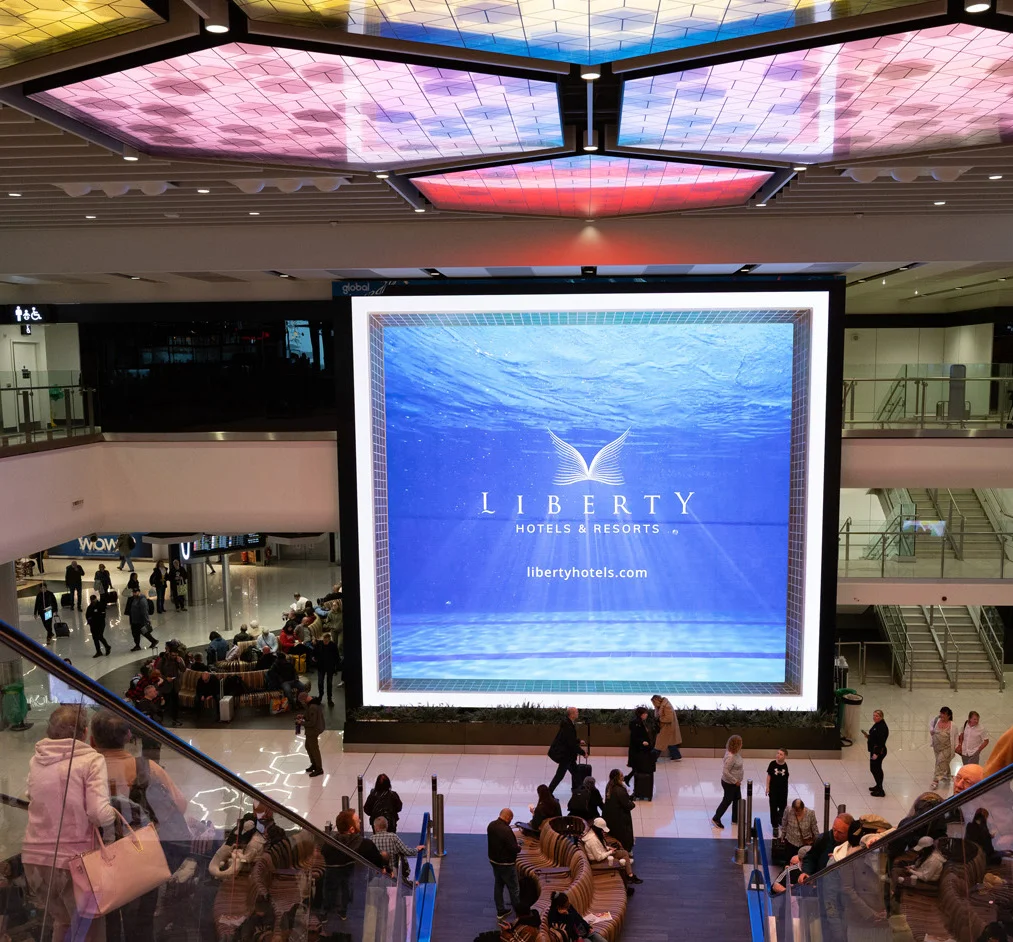
WONDERWALL UNVEILED AT MANCHESTER AIRPORT
Manchester Airport has launched a suite of brand-new digital billboards across the airport’s newly renovated and expanded Terminal 2.
The state-of-the-art screens, introduced in partnership with media and entertainment group Global, provide advertisers with new opportunities to reach more than 32 million inbound and outbound passengers.
Manchester Airport’s £1.3 billion revamp of Terminal 2 now introduces a 4K HD ‘Sky Screen’ with full motion and dynamic capabilities stretching five metres wide, plus 15 premium small and large format displays throughout the terminal.
The addition of the new screens takes Global’s advertising inventory to a total of 68 digital screens across the airport and 31 classic posters, including Europe’s largest advertising site in an airport – The Wonderwall.
Nicole Guerretta, Global’s director of partnerships for transport and business development, said: “The expansion of Terminal 2, alongside a major investment in new digital screens across the space, creates a powerful opportunity for brands to connect with audiences at the moment their journey really begins.
“People arrive at the airport in a receptive, ready to spend mindset, open to what’s around them. Coupled with a fast paced and engaging retail environment, and a mix of large format, full motion and 4K screens strategically placed throughout the terminal, brands can show up in that moment and be part of a passenger’s journey from check in through to departures and back again when they return.”
Manchester Airport is the UK’s third busiest airport, and the largest outside London. A ten-year transformation has enhanced the airport’s capacity and services to meet the needs of its evolving traveller base.
DUBAI AHEAD OF THE GAME WITH VERTIPORT
Dubai has achieved another first with the world’s first purpose-built commercial vertiport receiving regulatory certification for electric vertical take-off and landing (eVTOL) aircraft operations.
The green light for Skyports Infrastructure’s VDX vertiport from Dubai’s General Civil Aviation Authority (GCAA) paves the way for the future commencement of commercial Air Taxi services in Dubai.
Duncan Walker, CEO, Skyports Infrastructure, said: “This certification is a defining moment for Advanced Air Mobility, demonstrating that the infrastructure, operational standards and regulatory frameworks required for commercial eVTOL services are now a reality.
“With VDX now certified and construction of the wider Dubai Air Taxi Network progressing at pace, we are one step closer to launching commercial air taxi operations, and unlocking a new era of safe, efficient and sustainable urban transport.”
VDX will serve as the first and primary hub within Dubai’s planned Air Taxi Network, with three additional vertiports currently under development.
The network and vertiports are being developed by Skyports in collaboration with Dubai’s Roads and Transport Authority (RTA).
VDX includes two dedicated take-off and landing areas, rapid charging infrastructure for electric aircraft and high throughput passenger facilities.
The four-storey facility spans approximately 3,100 square metres and can accommodate up to 170,000 passengers annually once commercial operations commence.

MISHANDLED BAGGAGE STILL COSTLY FOR INDUSTRY
Aviation’s digital transformation efforts saw mishandled baggage rates drop by 23% in 2025, according to the SITA 2026 Baggage IT Insights report.
It reveals that the mishandling rate fell to 4.9 per 1,000 passengers last year, but despite the improvements over 24 million bags were mishandled, which cost the aviation industry $6.3 billion.
What changed in 2025 was not one technology, says SITA, but a shift in how systems connect: real-time data sharing, AI routing, biometric bag drop, and connected passenger devices.
“Baggage is shifting from a logistical problem to a digital service,” said Nicole Hogg, SITA’s portfolio director for baggage.
“Passengers expect to know where their bag is at every moment, and they’re increasingly willing to help us track it.
“The next phase is about bringing the technology we already have to every transfer, every handler, and every airport, offering greater visibility and connecting every step of the journey. That’s how the industry earns the trust passengers now expect.”
The report also notes that across the longer term, mishandling has fallen by close to three-quarters since 2007.
Transfers remain the core mishandling driver at 39% of cases in 2025, down from 41% the year before.
SITA believes that the trajectory is clear with three in four airlines planning to invest in AI over the next two years and more than half intending to give passengers real-time baggage updates.
David Lavorel, CEO at SITA, said: “Airports are operating closer to their physical limits every year, and the answer isn’t always more concrete.
“Data, AI and predictive operations let us get more out of the airport we already have, at check-in, security, the gate, on the apron and in baggage halls. Baggage shows the formula works.”
The SITA 2026 Baggage IT Insights report is available at SITA Baggage IT Insights.
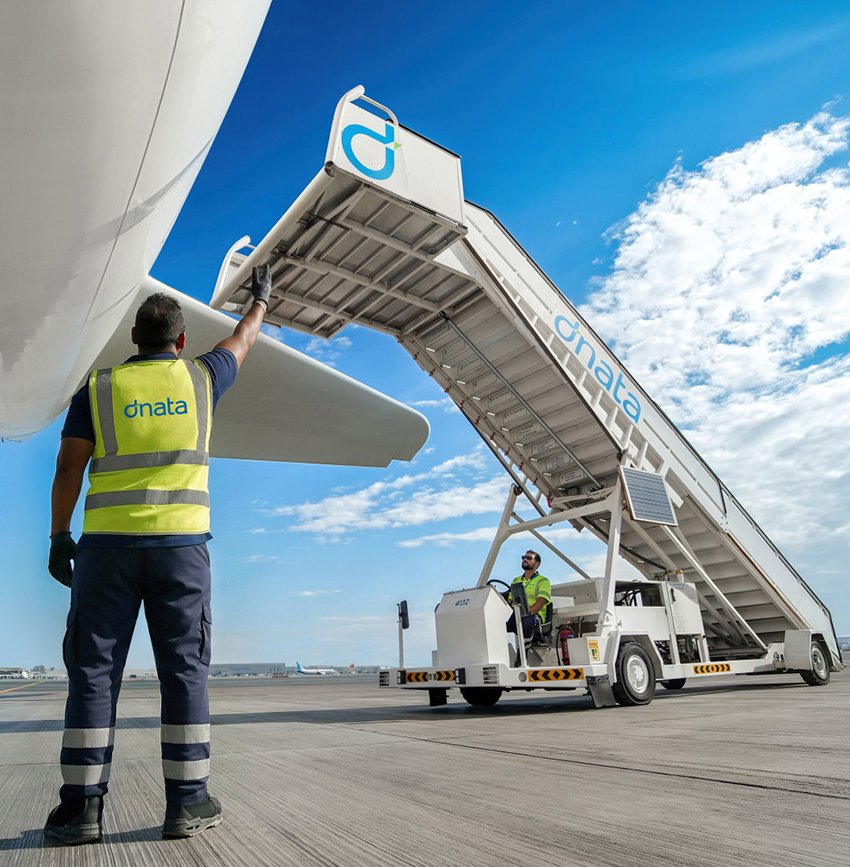
DNATA TO CONTINUE JOURNEY AT AMSTERDAM SCHIPHOL
Global air and travel services provider dnata has renewed its ground handling license at Amsterdam Schiphol Airport (AMS) in the Netherlands.
The award follows a competitive public tender by the airport operator and enables dnata to continue providing ground handling services at AMS for the next seven years, as Schiphol moves into the next phase of its ground handling operations.
It has provided passenger, baggage, ramp and cargo services to a diverse portfolio of major international carriers and specialist operators for more than a decade.
The company currently supports more than 20 passenger and cargo airlines at Schiphol, with a team of over 1,200 employees handling approximately 500,000 tonnes of cargo and around 16,000 flights each year.
“Schiphol is a critical hub in European aviation, and this is an important moment for the airport’s ground handling community,” stated Thiemo van Spellen, dnata’s managing director for the Netherlands.