

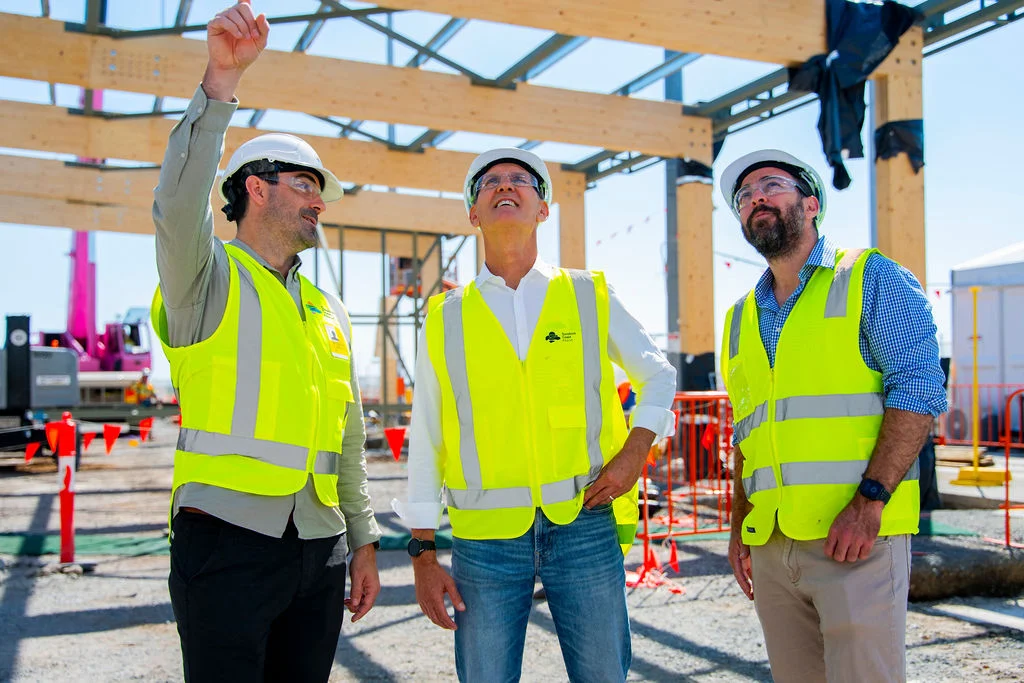
Sunshine Coast Airport’s A$170 million Terminal Redevelopment Project has reached a new milestone, with installation now underway on around 30 tonnes of timber chosen for its sustainability and environmental benefits, and reflecting the region’s subtropical landscape and laid-back character.
When completed it will be Australia’s first mass timber engineered terminal, creating a passenger environment unlike any other airport in the country.
As well as reinforcing the terminal’s connection to the landscape that surrounds it, the use of timber over traditional steel and concrete materials reduces the terminal’s embodied carbon with an estimated Global Warming Potential (GWP) saving of roughly 40 tonnes of CO2 equivalent.
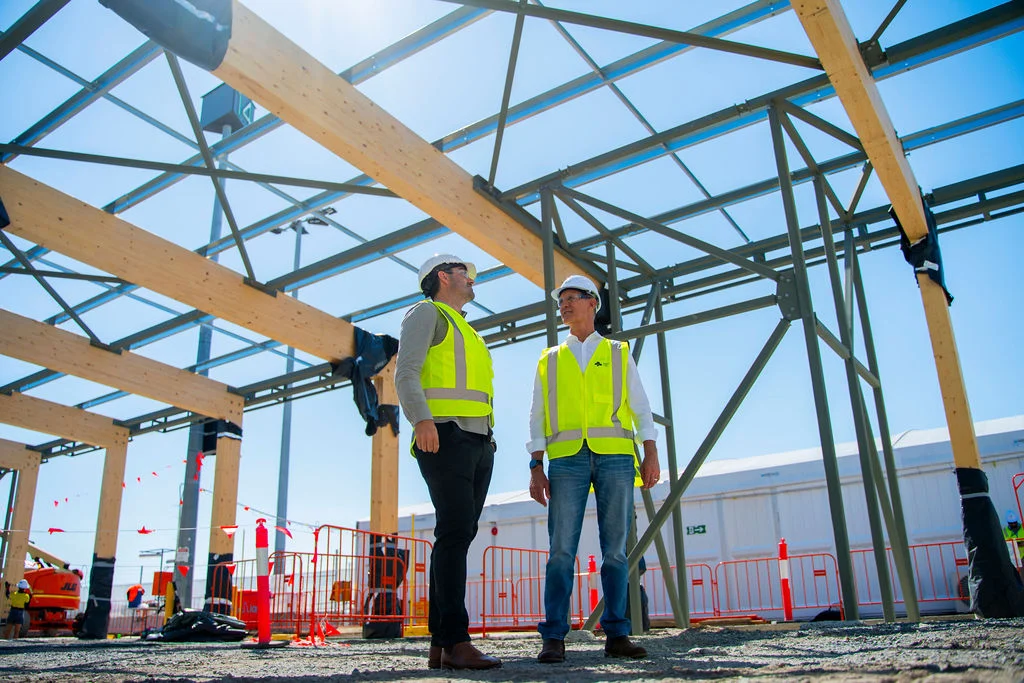
The engineered timber, known as glulam or GLT, is being installed to form the terminal’s dramatic raking roof frames – a defining architectural feature designed by global architecture firm Populous: Fentress Studios’ Australian team in partnership with builder McNab.
Sunshine Coast Airport’s general manager for projects and planning, Robin Mace, said: “The timber frames will become one of the most recognisable features of our new terminal, and watching them go in is an exciting sign of the progress being made on this $170 million investment in our region’s future.”
The scale of the installation is unusual for an airport project of this size – at around 30 tonnes, it’s a similar weight to an adult humpback whale, a familiar sight migrating past the Sunshine Coast coastline each year.
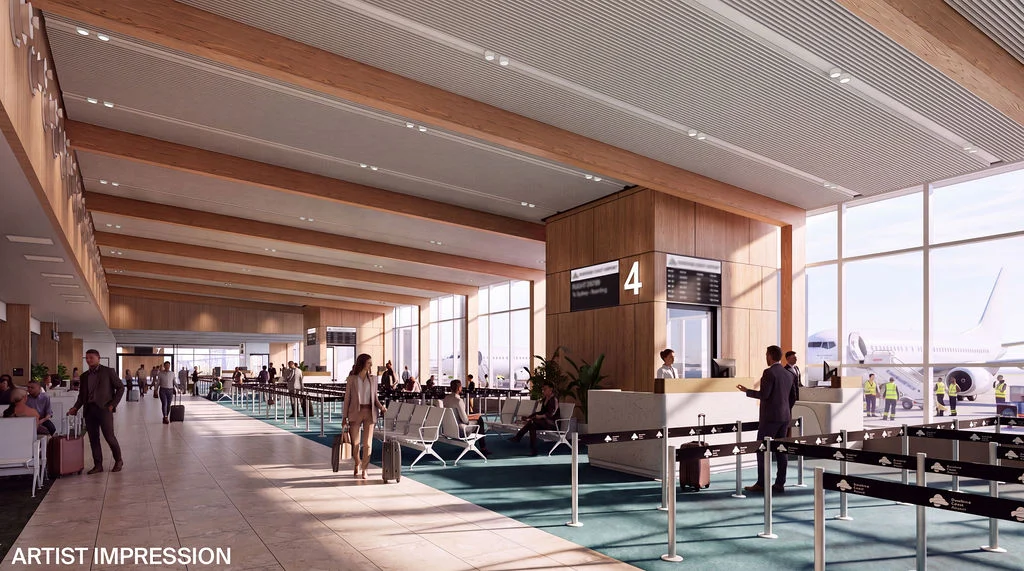
“It’s genuinely rare for an airport to use timber at this scale,” said Matt Findlay, principal and head of aviation, APAC at Populous: Fentress Studios.
“Most terminals of this size rely on steel and concrete, so committing around 30 tonnes of glulam to the roof structure is a significant statement about the kind of building we wanted to create – one that feels like nowhere else in Australian aviation.”
The airport notes that the terminal’s biophilic design draws on people’s innate connection to the natural world to help lower stress and improve wellbeing.
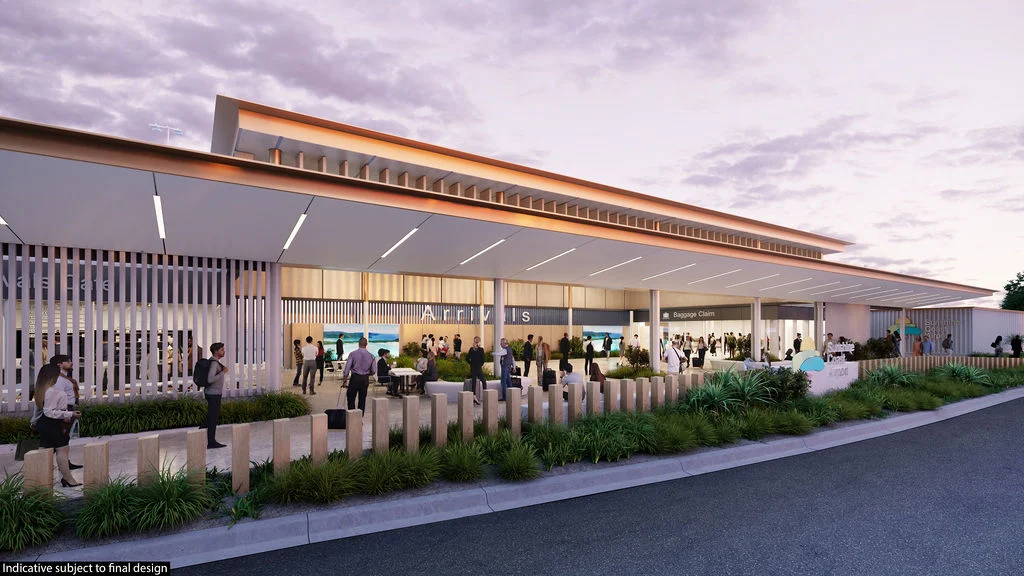
By replacing concrete and steel with warm, exposed timber, the terminal is expected to have a calming effect on passengers from the moment they arrive.
Sean Powyer, associate principal and architect at Populous: Fentress Studios, noted: “The Sunshine Coast is the only place in the world that’s home to three continuous UNESCO Biospheres, and our airport serves as a gateway to three of Australia’s five Biosphere Reserves.
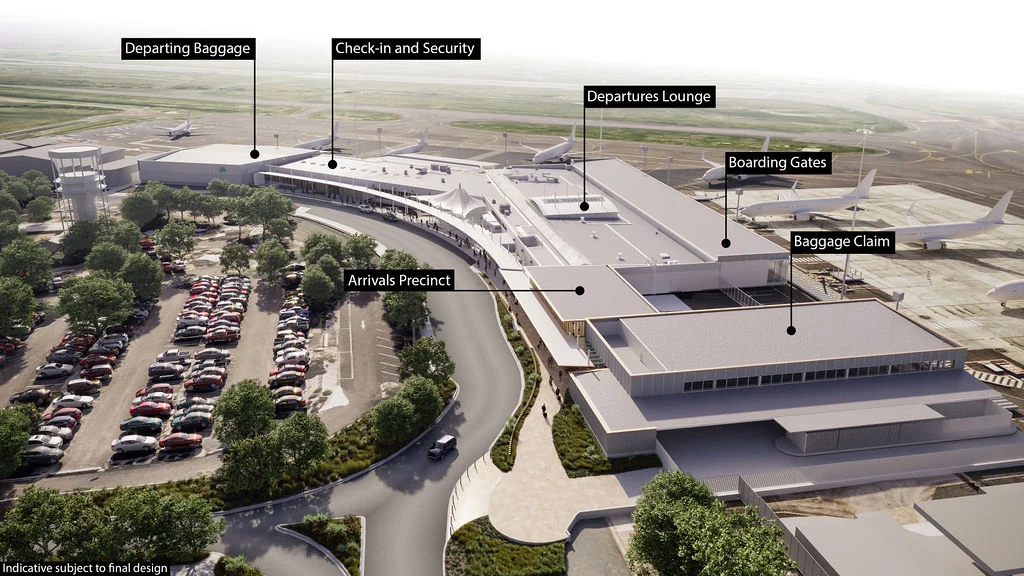
“Timber was a natural choice for the terminal, reflecting the surrounding subtropical rainforest and reinforcing the building’s connection to the landscape it sits within.”
As a renewable material, engineered timber can lower a building’s embodied carbon compared with traditional steel and concrete construction – one of a number of sustainable design principles being explored across the redevelopment.