

New gateway to act as catalyst for growth, trade and development of Gelephu Mindfulness City in the Kingdom of Bhutan.
Gelephu International Airport is a stunning new airport being built against the background of the Himilayas in Bhutan’s Gelephu Mindfulness City Special Administrative Region.
Located around 10 kilometres from the Indian border in southern Bhutan, the airport will serve Gelephu Mindfulness City (GMC) and boast an initial capacity of 1.3 million passengers per annum when it opens in 2029.
Early traffic projections suggest that passenger numbers won’t reach this figure until 2040, but such is the confidence in the success of project that plans are already in place to increase the airport’s capacity to 5.5mppa by 2065.
The airport is a collaboration between the Kingdom of Bhutan and aviation engineering firm NACO, and an integral part of the GMC masterplan designed by Bjarke Ingels Group (BIG), Arup, and Cistri.
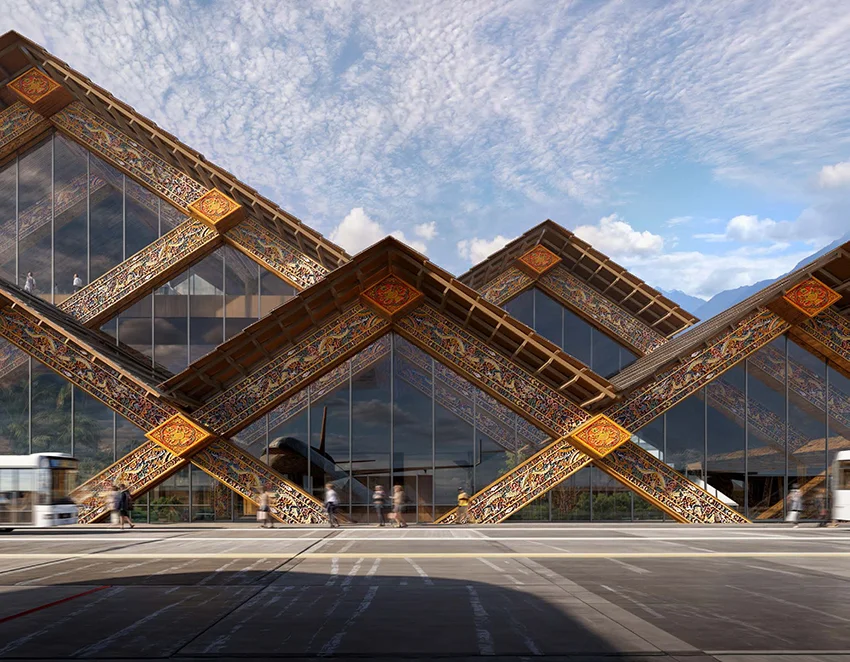
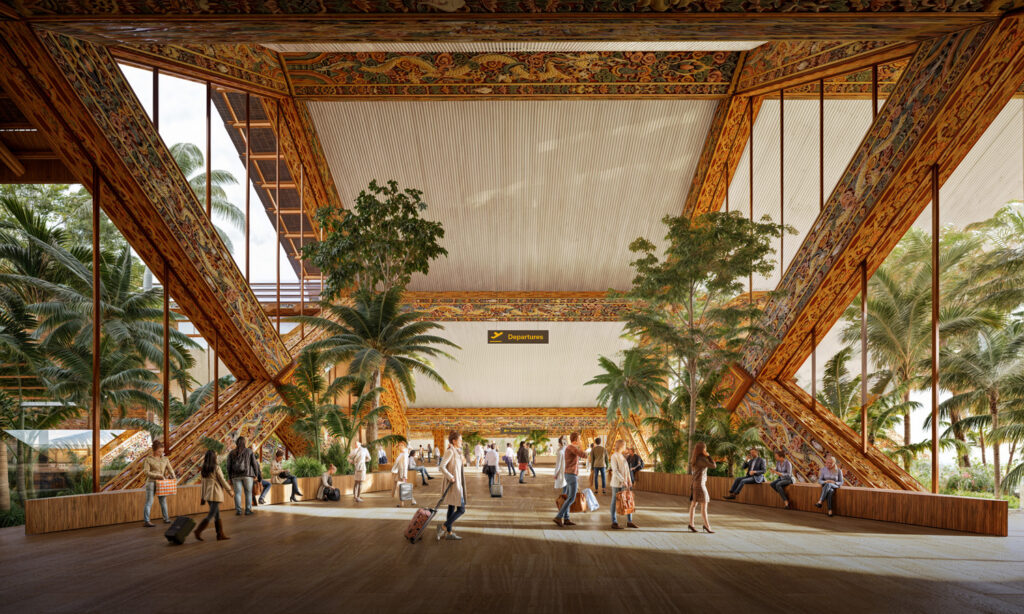
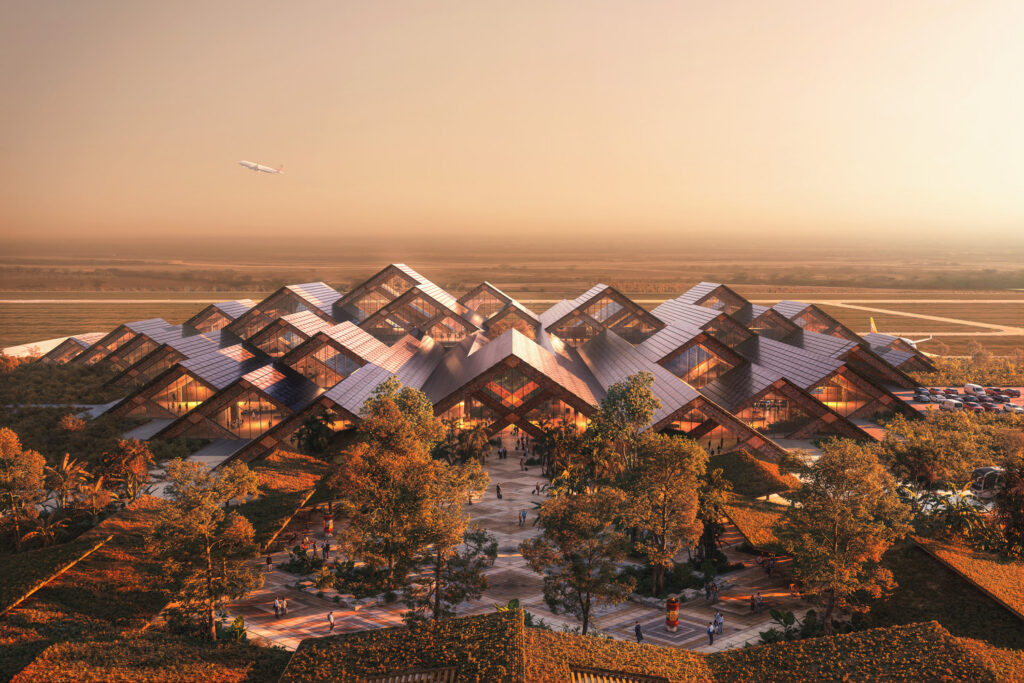
The striking diagonal structure of the 68,000sqm terminal building will be crafted from locally and sustainably sourced timber and adorned with traditional Bhutanese woodcarvings by local artists.
According to the design team, the painted façade is said to draw inspiration from the ‘Kachen,’ a wooden pillar revered for its structural significance and intricate design, embodying Bhutanese architectural heritage and spiritual symbolism.
Designed to accommodate GMC’s projected growth, the airport’s timber frames are structurally independent, allowing for simple disassembly and expansion. The airport’s roof features PV panels, in line with Bhutan’s position as a carbon-negative nation.
Bjarke Ingels, founder and creative director of BIG, says: “An airport is the first and last impression you get of a place you visit. For the Gelephu International Airport, we have tried to embody the nature and culture of the country and the Mindfulness City.
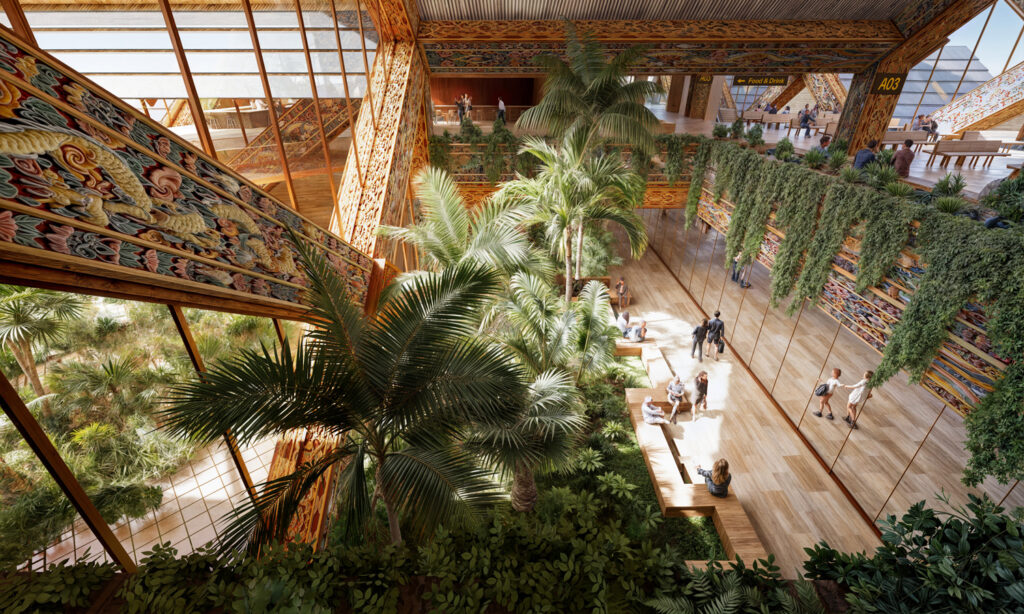
“The forests that cover the highlands are allowed to flow from the arrival plaza through the airport all the way to the tarmac. Tropical trees provide shade for travellers, and the forest courtyard lines the main functions of immigration, security, and luggage.
“The airport architecture is composed of modular mass timber frames providing flexibility and expandability, resembling a stylised mountain range at a distance.
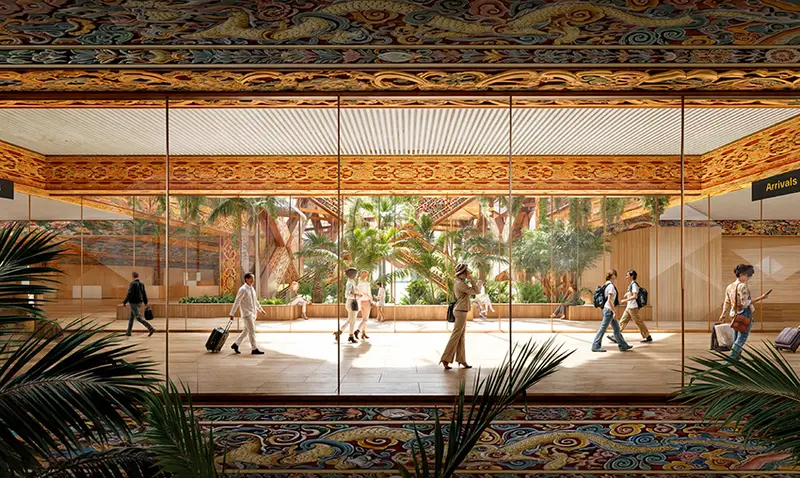
“Upon closer inspection, all the mass timber members are carved and coloured according to traditional craft, adorned with three types of dragons representing the past, present, and future of Bhutan. The result is traditional yet avantgarde, forward-reaching and rooted.
“For me personally, this unusual embrace of traditional craft and colour is a true testament to how affected I have been by my encounter with Bhutan, the country, its culture, and its people.”
Harmoniously blending into the surrounding natural terrain, the arrival plaza is designed as a series of four zones each dedicated to specific plants found within the forests in Gelephu.
A gathering space features paving made from local natural stone and integrated seating areas, while abundant greenery and a canopy provide protection from the elements.
Bhutan’s biodiversity corridors are pulled into the airport and its interior courtyard. Aptly named the Forest Spine, the courtyard divides the terminal into two sections, with domestic flights on the west side and international flights to the east.
Visually accessible from anywhere in the airport, the Forest Spine offers travellers a connection to nature even inside the airport, with tranquil green spaces, a treetop walkway, and indigenous fauna.
According to the design team, every aspect of the Gelephu International Airport is a celebration of Bhutanese culture, showcasing regional craftsmanship including Shing-Zo (carpentry), Par-Zo (carving), Lha-Zo (painting), and Tshar-Zo (traditional weaving techniques).
The traditional Bhutanese carvings extend from exterior to interior. Designed to instill mindfulness into the often-stressful experience of travelling, the airport is bathed in natural light, with a grand triple-height entry, expansive floor-to-ceiling windows, and skylights.
Indoor and outdoor lounges will provide tranquil spaces for yoga, gong baths, and meditation for travellers to recentre and recharge, embodying Bhutan’s values of happiness and psychological wellbeing.
BIG notes that the airport’s layout is driven by passenger experience and operational efficiency. Intuitive wayfinding through clear visual cues and thoughtfully designed circulation paths ensures a smooth journey from arrival to gate.
Gates will be situated on the upper level alongside retail and food and beverage areas, offering expansive views of the apron and the dramatic Himalayan landscape.
“For the Gelephu International Airport, we wanted to create an experience that feels deeply Bhutanese – calm, welcoming, and connected to nature,” says BIG partner, Frederik Lyng.
Gelephu Mindfulness City Special Administrative Region is described as “a visionary initiative to build a world-class and vibrant economic hub in southern Bhutan, centred on mindfulness, sustainability and innovation”.
Located along Bhutan’s southern border with India, the city is focused on eight priority sectors that range from aviation and logistics to spirituality, green energy and technologies, finance and tourism.