

Joe Bates discovers how Noida International Airport has fared in its first few months of operations and what we can expect to see in terms of its growth and development over the coming decades.
Noida International Airport (DXN), India’s newest airport and the second gateway built to serve Delhi and the National Capital Region, officially opened for business this summer.
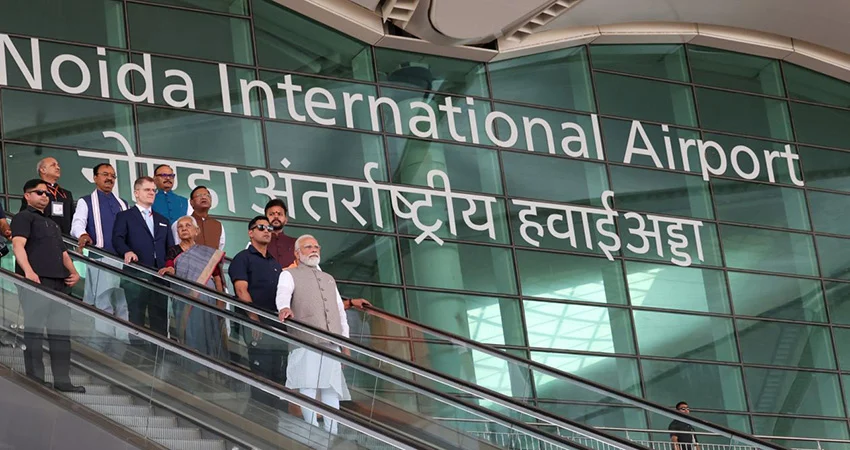
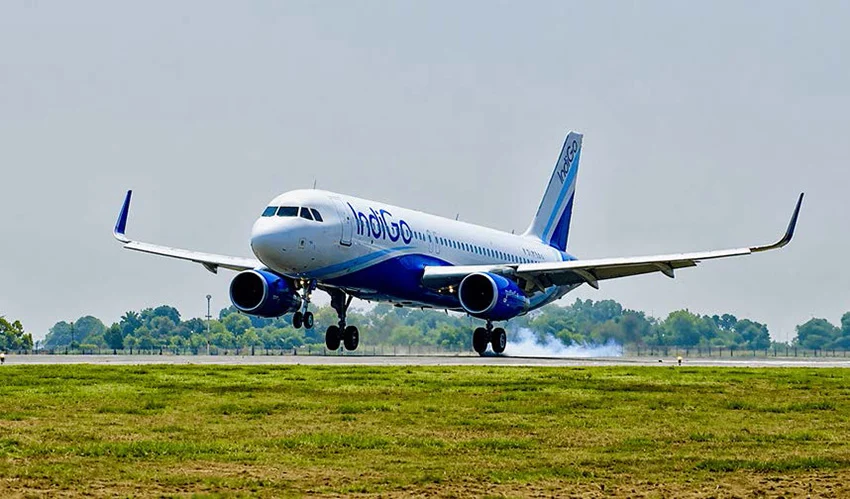
Inaugurated in March by India’s Prime Minister, Narendra Modi, the airport handled its first commercial flight on June 15 with the arrival of IndiGo flight 6E-2278 from Lucknow.
Located in Jewar, around 75 kilometres south-east of central Delhi, the new $900 million greenfield gateway is initially capable of accommodating up to 12 million passengers per annum.
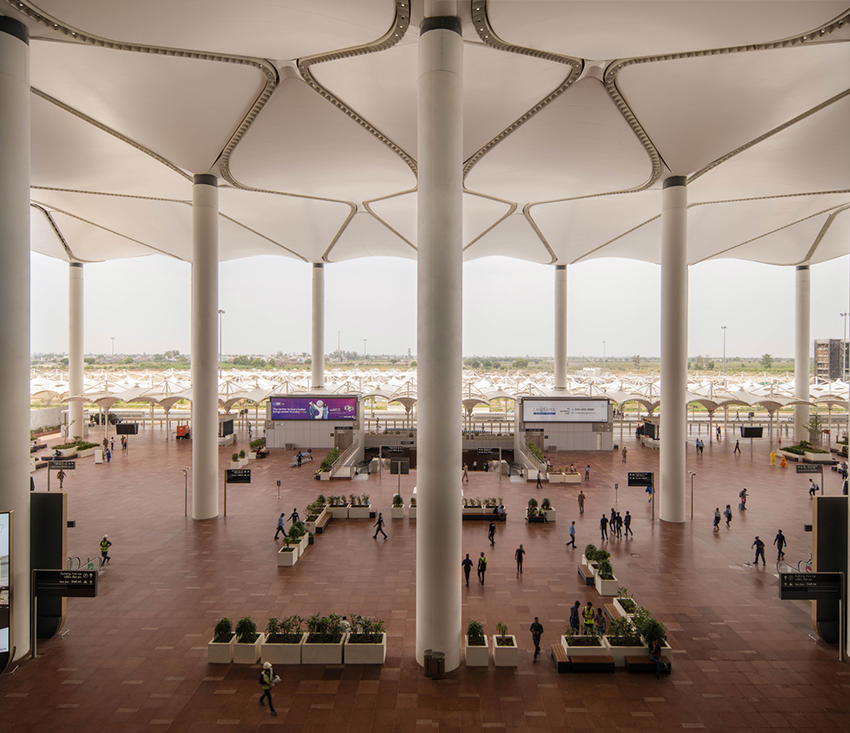
It boasts a 137,985sqm terminal with 10 boarding bridges, 28 aircraft parking positions, a privately operated cargo terminal and a 3,900-metre runway capable of handling aircraft up to the size of A380.
However, with phased future expansions, the airport is expected to have an ultimate capacity of 70 million passengers per annum.
The total would ensure that between them, Noida and Delhi’s Indira Gandhi International Airport (DEL) are more than capable of accommodating traffic growth to India’s capital city region to 2060
and beyond.
And it’s not just passenger traffic, as DXN is expected to become a key cargo hub for the surrounding region as it is located in an industrial belt known for its manufacture of electronic goods and close to major farming regions that need to export their products.
The bulk of cargo at DXN will be handled by Air India SATS (AISATS) – a joint venture between Air India and global airport provider SATS – which currently operates a 22,000sqm terminal and is working on the development of more dedicated cargo facilities across an 80 acre site.
Afcom, a Chennai-based international cargo airline, has agreed to base its fleet of three Boeing 737-800 freighters at Noida, a move that strengthens the airport’s potential to become a key logistics and cargo hub in North India.
The more than one million tonnes of cargo handled at DEL each year arguably shows the current and future potential of the air cargo market in Delhi and the National Capital Region (NCR).
“I’m very optimistic when it comes to cargo, probably as optimistic as I am about passenger growth, as Noida has great potential to become an important cargo hub,” comments Christoph Schnellmann, vice chairman and former CEO of Noida International Airport.
So, how big a milestone for India and the NCR is the opening of Noida International Airport?
“I think Noida International Airport is a very important addition to India’s aviation infrastructure,” says Schnellmann.

“Looking back over the past two decades we’ve seen passenger volumes and air travel grow by double digits annually, while air traffic in Delhi has grown eight-fold, and we expect that trajectory to continue, so the need has certainly come for additional airport infrastructure in India’s National Capital Region and Western Uttar Pradesh.
“We’re very happy that we’ve been able to deliver the new infrastructure and now have the opportunity to provide additional connectivity to the region, and especially the eastern and southern parts of it, including the growing areas of Noida and planned future city of Greater Noida.”
Initially viewed as an alternative to DEL, Noida International Airport was built, and will be operated by Yamuna International Airport Private Limited (YIAPL), a special purpose vehicle set up for the job that is 100% owned by Zurich Airport International.
Schnellmann, for one, has no issue with stating that DXN will complement operations at DEL as the Indian market is huge – around 30 million people live in Delhi alone – and needs all the capacity it can get.
Handling close to 80 million passenger per annum, DEL will of course continue to meet the main aviation needs of Delhi for the next few decades, although the gap between them in terms of traveller volumes is likely to get smaller over the years as DXN grows its route network and facilities.
“Time will, of course, tell how our market and catchment area develops, but for now, we’re providing core connectivity for Greater Noida, for Ghaziabad, for Faridabad, and for towns further south,” notes Schnellmann.
“I expect our passenger numbers and appeal to grow as we develop an international route network.
“The development strategy is simple. It’s about providing additional air connectivity to Delhi, to the National Capital Region, and to Western Uttar Pradesh.
“It’s also about providing and being part of the economic growth and development of Noida and the surrounding region.”
AIRLINES AND ROUTE NETWORK
Noida International Airport is currently served by Indian low-cost carriers IndiGo and Akasa Air, which between them operate 35 to 40 domestic flights daily to 17 destinations across the country.
The cities served from DXN are Amritsar, Bareilly, Bengaluru, Bhopal, Dehradun, Dharamshala, Hyderabad, Jaipur, Jammu, Jodhpur, Kishangarh, Kolkata, Lucknow, Mumbai, Pantnagar, Srinagar and Udaipur.
The latest addition is Udaipur, which IndiGo launched daily non-stop services to/from on October 25.
IndiGo and Akasa were meant to have been joined on DXN’s opening day by Air India Express, but cost cutting within the Air India Group is believed to be behind its eleventh-hour decision to postpone the launch of operations from the new airport.
The airport remains hopeful that it will see Air India Express services in the future, but for now Schnellmann is happy with DXN’s route network, which provides connectivity to a host of Indian cities and some tourist destinations in the north and south of India.
He reveals that DXN is already seeing some domestic transfer traffic through Noida, and believes that this will increase over time as its route network grows and international services join the traffic mix.
The airport expects to handle its first international flights early next year and is initially targeting destinations in the Middle East and Southeast Asia.
“Based on our conversations with the airlines, we anticipate that our first international destinations will be nearer abroad initially, so we are looking at destinations in Southeast Asia and the Middle East,” says Schnellmann.
“These new routes will feed traffic directly into global airline networks and bring international passengers to Noida, and potentially onto other destinations in India, via our domestic network.”
He is, however, quick to point out that he doesn’t see DXN as competing directly against Indira Gandhi International Airport for traffic.
“We see ourselves as complementing their offer and the access and infrastructure that is that is already available in the region,” says Schnellmann.
“Perhaps a better way of saying it is that Noida International Airport is providing a platform for aviation in India to continue growing.”
EARLY TRAFFIC FIGURES
How has Noida International Airport fared since opening in terms of passenger numbers and cargo volumes?
“We’ve been open four months now, and we’ve seen traffic growth and we’ve seen the network grow to 17 destinations. Looking forward to the winter timetable, we anticipate these volumes to almost double, so I think we are doing OK,” comments Schnellmann.
“I’ll be honest with you, it’s not the easiest time for aviation right now, particularly so in India, where I think a number of factors have seen the air transport industry suffer more perhaps than elsewhere.
“For the first time in decades, leaving COVID aside, we have seen year-on-year traffic decline a little bit in the past few months. This has, of course, affected air travel everywhere, including at our airport.
“But, all things considered, I’m really pleased with the ramp up, and I’m pretty pleased by the interest and the commitment that the airlines continue to show in Noida.”
The only traffic figures made available by the Airports Authority of India (AAI) at the time of going to press showed that Noida International Airport welcomed 25,000 passengers and 204 flights in June, and this figure increased to 77,000 passengers and 1,044 flights in July.
PASSENGER AND AIRLINE FEEDBACK
Schnellmann has no hesitation is stating that the early feedback from both the travelling public and airlines using the airport has been very positive.
“I know I could hardly be expected to say otherwise, but the feedback has been very encouraging,” he says.
“Yes, as with any new infrastructure, and particularly one where parts of the building aren’t fully open yet, there have been some issues. Indeed, we continue to discover some snags, but I am pleased to say that there’s been nothing major that’s disrupted our operations or passenger comfort.
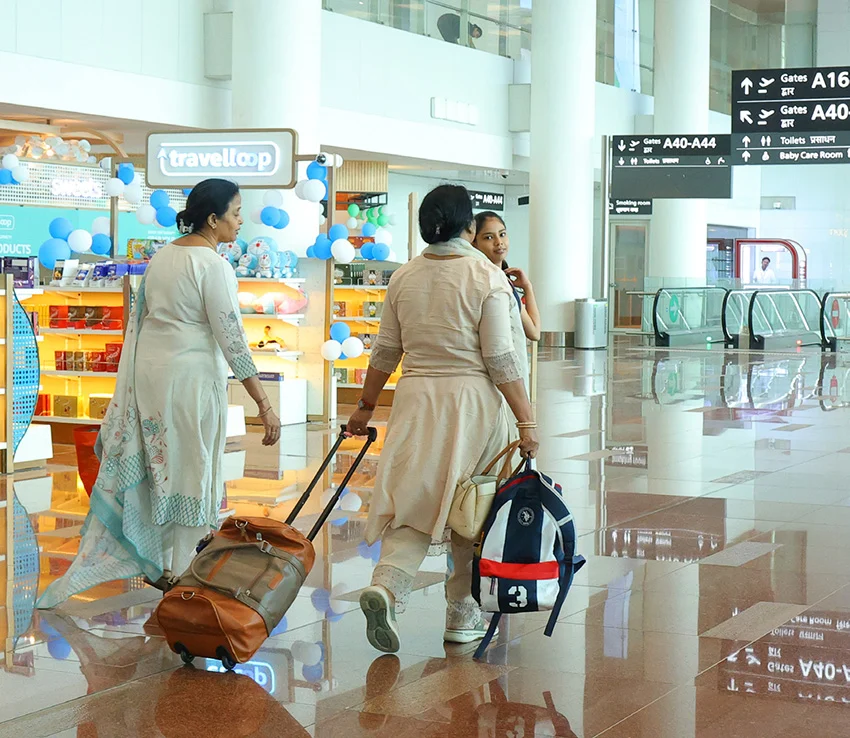
“One of the points that some of the passengers have made is that they look forward to a larger retail and food and beverage offering, and this is something we plan to address within the next few weeks with the opening of additional outlets.”
The ease of use of the gateway – passengers can get from the kerb to the nearest boarding gates just 200 metres away in under 20 minutes – is one of Noida International Airport’s attributes that has most impressed travellers.
Schnellmann remarks that the terminal’s designers have created “a really nice space”, adding that the facility’s gate seating areas have also proved popular, as have what he calls the ‘lifestyle furniture” at the windows next to the boarding bridges.

NEW TECHNOLOGY
Although DXN is equipped with eGates, self-service check-in and baggage drop kiosks and embraces biometrics throughout the journey, Schnellmann doesn’t really think of Noida as being a high-tech airport.
He explains: “What we do, and continue to work on doing, is to deploy technology in the interest of the passenger experience and in the interests of smooth and efficient operations.
“As a new airport we had the opportunity to embrace the latest technology that’s available and, one specifically Indian thing that I’m very excited about, is the use of the Digi Yatra technology.”
Digi Yatra is a government backed digital initiative for Indian residents that uses facial recognition-based technology to effectively enable contactless identity verification at entry and security points, cutting processing times and enhancing convenience.
Talking about its adoption at DXN, Schnellmann says: “Once you are registered for it you can effectively walk through the airport from kerbside to boarding.
“I think that this is one of the areas where we’ve gotten it right. Yes, there’s a lot of technology at work across the airport, but hopefully it doesn’t feel like it as passengers just enjoy an easy-to-use facility, and seamless experience.”
GROUND TRANSPORT LINKS
The six-lane Yamuna Expressway certainly makes getting to and from DXN by road quick and easy for passengers travelling from Delhi, Agra and Lucknow.
Indeed, DXN is located just 600 metres from the expressway that connects Greater Noida to Agra, and plans are underway to add a new link road connecting the airport to the Delhi-Faridabad-Ballabhgarh-Sohna stretch of the Delhi-Mumbai Expressway.
Schnellmann notes that a “pretty robust” bus network has been in operation since the airport opened, while app-based taxis, limousines, and rental cars also provide ground transport options for those not wishing to use the public transport system.
He says: “We promised from the start that there would be a quick and easy way to reach the airport for every budget, and I think we’ve met that promise.
“You know, Delhi is a very large place with 30 million inhabitants, and as a result, millions of people live within a 45 or a 60-minute drive of the airport.
“It obviously depends on where you are coming from and the time of day you travel, but from some parts of northern Delhi, parts of western Delhi or Gurgaon, it might be quicker to reach this airport than Indira Gandhi International Airport.”
GROWING SUSTAINABLY
Schnellmann states that sustainability has been “front and centre” for DXN and operator YIAPL since Day One, as it is for parent company Zurich Airport International.
Sustainability initiatives at DXN include having its own 10-megawatt solar farm, the use of all-electric vehicles for almost all activities other than fire rescue, a zero-liquid-discharge policy, the operation of a circular-waste system, and plans for a windfarm.
He says: “We made sure that sustainability concepts and the commitment to grow sustainably would flow into the airport design and become an integral part of its construction.
“Our shareholder, Zurich Airport Limited, has made a commitment to operate all of its airports across the world on a net zero emissions basis by 2040. We have set an even more ambitious target of 2030.”
Schnellmann expects DXN to begin to feel the benefits from the planned new windfarm, being built off-site, before the end of the year.
CUSTOMER EXCELLENCE
“Indian hospitality clubbed with Swiss efficiency” is how Schnellmann describes Noida’s customer service strategy.
“That’s the tagline we use as hospitality is something that India does incredibly well,” he says.
“That sense of warmth and that human touch is something we’ve really tried to bring to the airport and encouraged our teams to embrace across the campus.
“We also want this warmth and hospitality to be reflected in our retail and food and beverage outlets, in our architecture and elsewhere in the terminal, and recognise that this needs to be in lockstep with smooth and efficient airport operations.”
FUTURE DEVELOPMENT
With the airport being open for business for less than six months, it seems crazy to be talking about its future development already, but that is exactly what operator YIAPL has done in its four phase master plan.
“It does seem mad to be thinking about new infrastructure when we only opened in June, but we are already talking about it because such are the growth prospects in in India,” enthuses Schnellmann.
“Indeed, one the things the Zurich Airport Group learnt from developing Bangalore Airport in the past was that if anything, we underestimated the growth, and the speed of growth, in India.
“So, the master plan we’ve developed for Noida sees the airport building expanding to accommodate over 70 million passengers per annum.
“The triggers for further expansion are our passenger volumes. That’s also enshrined in our concession agreement. The design capacity of the existing terminal is 12 million passengers per annum. Once we reach 80% of that, we’re obliged to plan the next phase of expansion, which will more than double Noida’s capacity to 30 million passengers yearly.
“We’ve actually designed a terminal for 30 million passengers, and only built half of it, so we would sort of mirror the existing facility, doubling it in size, in the first expansion phase.
“After that we’d be looking at the case for a second terminal elsewhere on the airport site and a second runway.”
He admits that it is almost impossible to put timescales on the future development of DXN’s core aviation facilities, although says he wouldn’t be surprised to see work begin on the expansion of the existing terminal by the end of the decade.
The ability to act swiftly to upgrade its facilities when the time arises shouldn’t really come as a surprise as Schnellmann reminds me that DXN was built and up and running within six years of the land being acquired for the project.
That is hugely impressive for an airport project that had previously been talked about for more than 20 years without ever getting off the ground.