




Lean and green

It has been a summer of sustainability firsts with airports across the globe demonstrating their green credentials, writes Joe Bates.
Western Sydney International (Nancy-Bird Walton) Airport’s (WSI) inaugural Sustainability Strategy demonstrates how Australia’s first greenfield international airport in more than 50 years has embedded sustainability into its design, significantly reducing its carbon footprint, while charting a path for a net zero airport future.
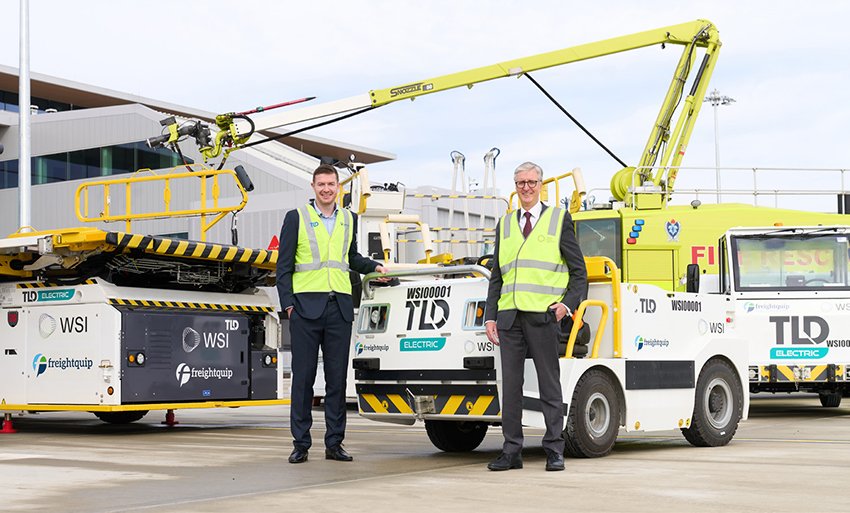
Sydney’s new 24-hour global gateway has secured two key partnerships that are pivotal to realising this vision, with CleanPeak Energy set to support the delivery of 100% renewable electricity for the airport precinct, while Freightquip will supply and operate an almost entirely electrified GSE (Ground Support Equipment) fleet covering the full scope of airport operations.
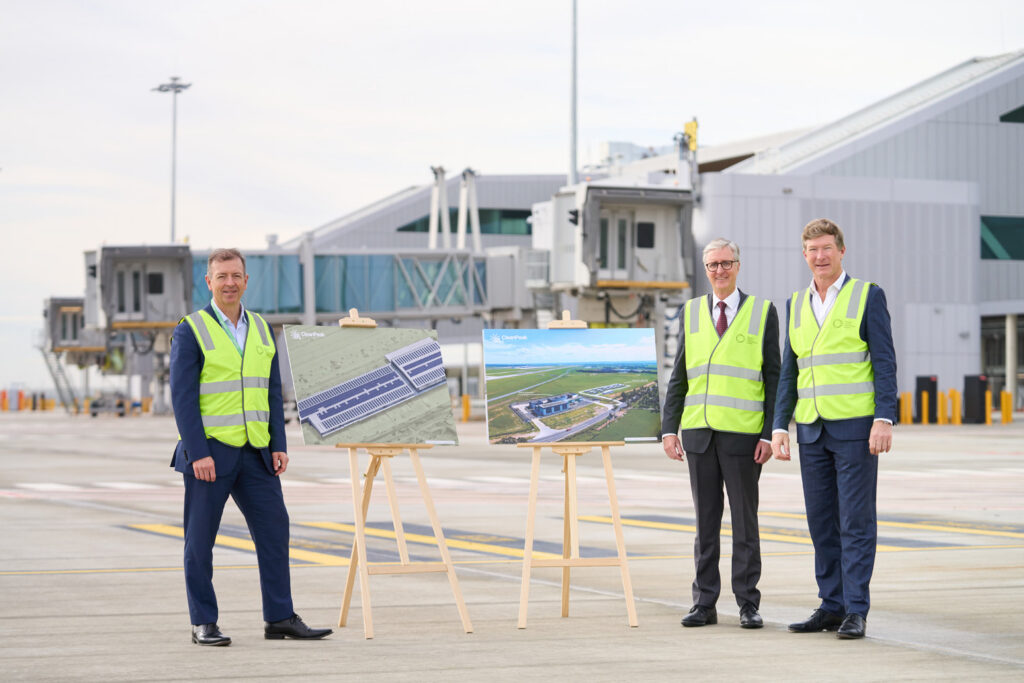
Airport CEO, Simon Hickey, said embedding sustainability into the gateway’s design and construction had set it up for success and helped ensure WSI will soon be powered by 100% renewable electricity.
Federal Minister for Infrastructure, Transport, Regional Development and Local Government, Catherine King, said Western Sydney’s new airport was designed with sustainability and future proofing in mind, inside and out.
She enthused: “As you step into the beautiful, air-conditioned terminal, watch your bags roll away at check-in, and scan into your first flight at Western Sydney International Airport, each of those steps will be powered by 100% renewable electricity.
“We didn’t want to limit sustainability to the terminal, that’s why we’ve ensured this new airport is SAF ready, with facilities in place so jets can be refuelled with locally produced biofuels.”
The comprehensive energy system partnership with CleanPeak Energy will include the management and operation of WSI’s existing rooftop solar (that has capacity to produce 4.5MW (megawatts) of electricity, capable of powering 40% of the terminal) and the installation and management of an additional 9MW rooftop solar energy system that will gradually be built at WSI’s Cargo Precinct.
CHANGI’S SUSTAINABLE NEW SATELLITE GATE
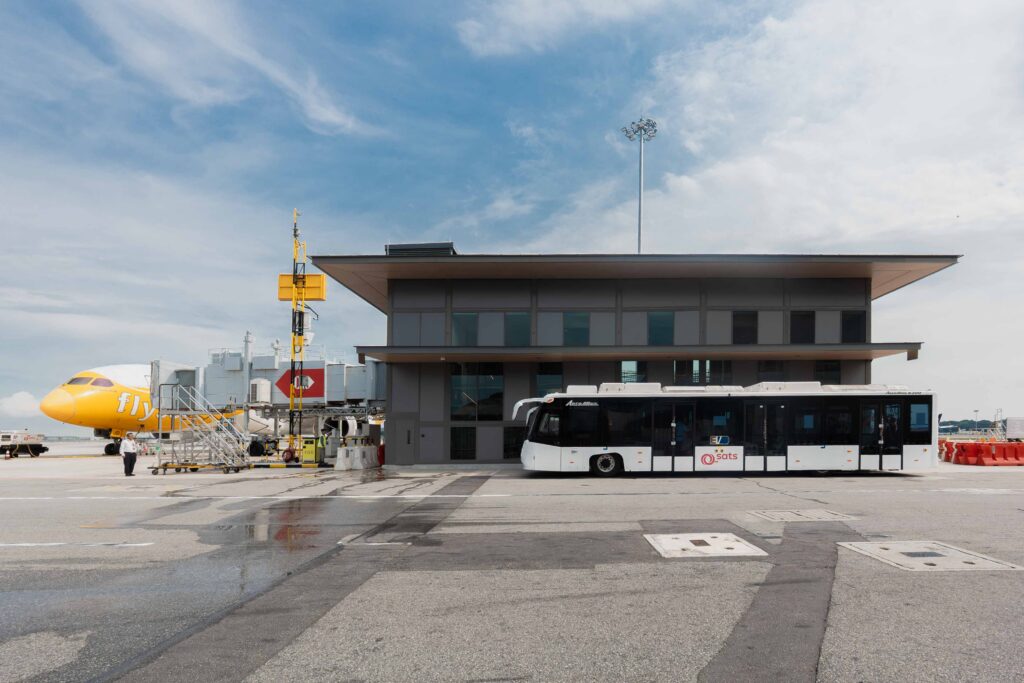
In line with operator Changi Airport Group’s sustainability efforts, the new satellite gate at Singapore Changi Airport is designed as a zero-energy facility powered entirely by its rooftop solar panels.
Electricity generated by the panels is stored in an off-grid battery system nearby, reducing reliance on the airport’s power supply and supporting more energy-efficient ground operations.
The satellite gate is also equipped with smart building features. Air-conditioning is automatically activated based on real-time flight information to ensure that the facility is ready to serve ahead of flight crew and passenger use while optimising energy consumption.
CAG’s executive vice president for engineering and development, Koh Ming Sue, said: “As we continue to enhance Changi’s infrastructure, we are integrating environmental sustainability features and smart technology into new developments to reduce carbon emissions, strengthen operational resilience and improve service efficiency.”
Preparations to ensure operational readiness are currently underway, with use of the gate for selected flights set to commence by August 2026.
SOLAR POWER LEADERSHIP
Turkey’s iGA Istanbul and Dalaman airports both celebrated major solar power milestones this summer.
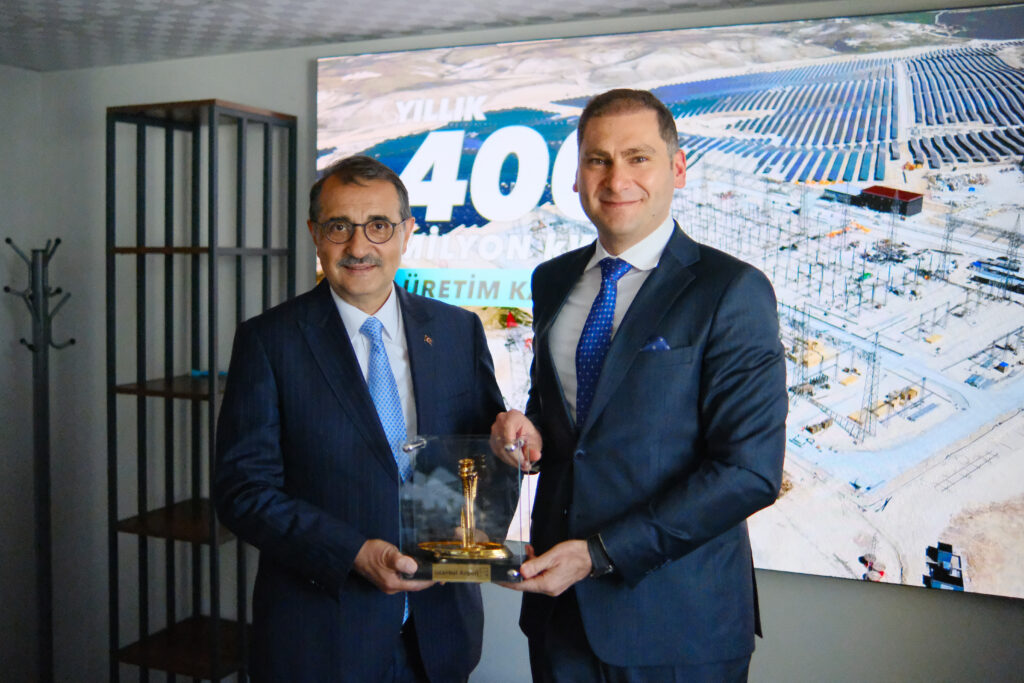
iGA Istanbul Airport has become the world’s first mega-airport to meet 100% of its electricity needs from solar energy, thanks to its new €220 million Eskişehir Solar Power Plant.
While Dalaman is believed to have become the first airport terminal globally to meet 100% of its electricity demand solely through rooftop solar installations.
iGA Istanbul Airport CEO, Selahattin Bilgen, noted that sustainability is not a secondary aspect of its operations, but rather its core foundation.
He stated: “We are now able to meet 100% of our electricity needs within our scope from solar energy. This means one of the world’s largest airports is powered entirely by 100% renewable electricity – a first in aviation history.”
Dalaman Airport’s solar success is as equally impressive following the completion of Phase 2 of its rooftop solar power project.
The installation generates more than 20,000MWh of renewable electricity annually, avoiding approximately 8,500 tons of CO2 emissions each year – equivalent to the environmental benefit of around 380,000 trees.
CUTTING CARBON EMISSIONS AT BHX
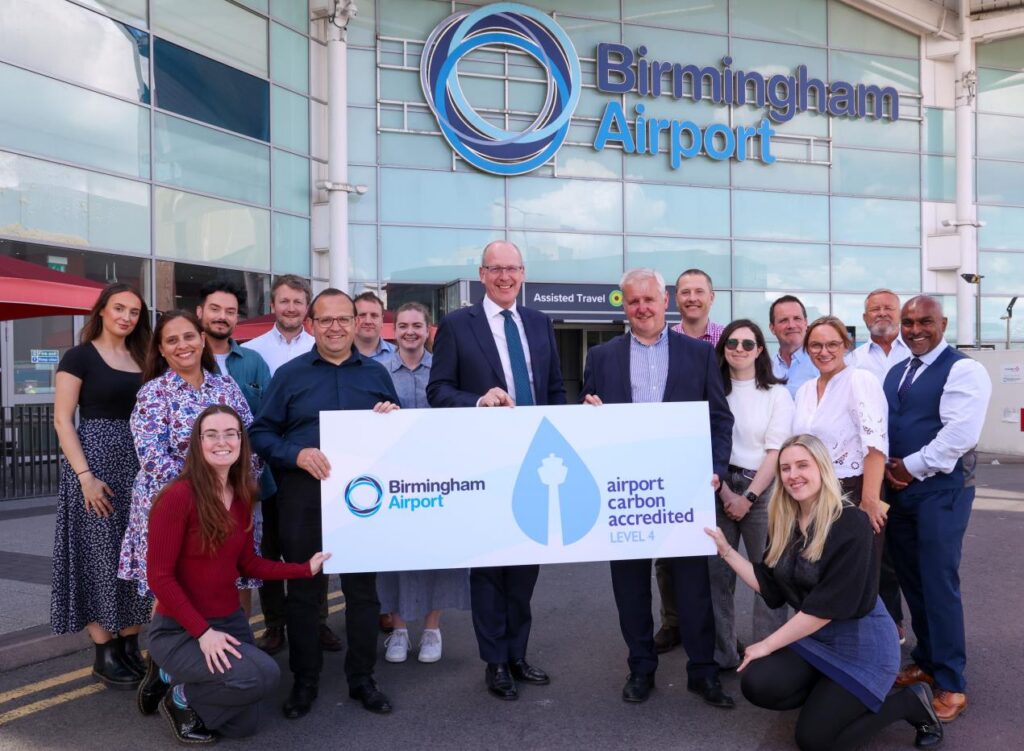
Birmingham Airport (BHX) has achieved Level 4 status in ACI’s Airport Carbon Accreditation (ACA) programme.
The latest figures show that its location-based greenhouse gas emissions fell by 11% during 2025/26, despite a 6% increase in passenger numbers.
Continuing its long-term downward trend, the UK airport reduced its annual emissions by 798 tonnes of carbon dioxide equivalent over the past year to a new low of 6,455 tCO2e.
The latest savings were achieved through a combination of energy efficiency improvements, renewable energy generation and lower-carbon fuels across airport operations.
The new fuels include the use of Hydrotreated Vegetable Oil (HVO) for ground support vehicles. Made entirely from renewable waste, this green diesel alternative improves local air quality and slashes carbon emissions by 90%.
CLEANER FUELS AT SALVADOR BAHIA AIRPORT
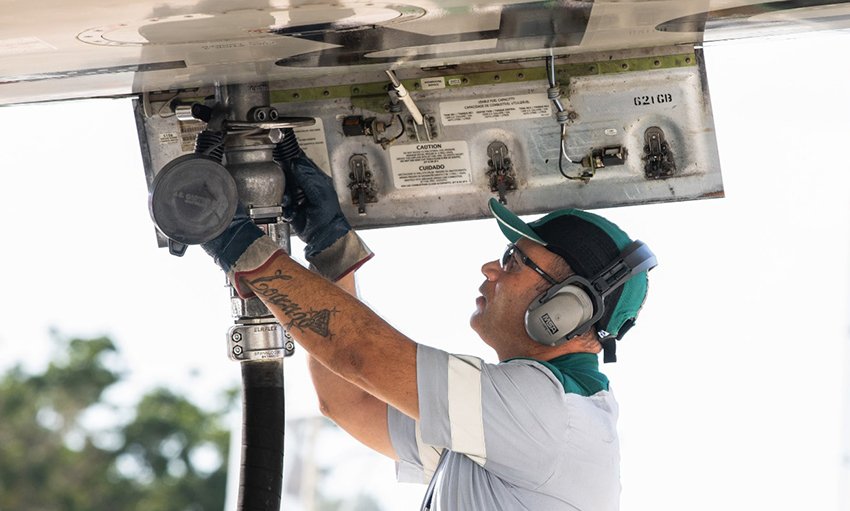
Salvador Bahia Airport in Brazil has taken another important step in its sustainability agenda by expanding the use of cleaner fuel in aircraft operations.
Since December 2025, two daily flights departing from Salvador have been operating with a mixture composed of 10% pure SAF and 90% conventional fossil fuel, the highest percentage ever made available in Brazilian aviation.
This operation is expected to continue until December 2026, aiming to meet the targets established by the Future Fuel Law, which foresees a minimum adoption of 1% SAF from 2027 onwards.
According to the gateway, this initiative strengthens its decarbonisation strategy and will help ensure Salvador Bahia maintains its lofty Level 5 status in ACI’s Airport Carbon Accreditation programme.
Alessandra Reis, environmental manager at VINCI Airports in Brazil, said: “This initiative is aligned with VINCI Airports’ global commitments, which have clear goals to reduce emissions by 66% by 2030 and achieve net-zero emissions by 2050, contributing to the environmental transformation of the aviation sector.”
HYDROGEN HUB EDMONTON
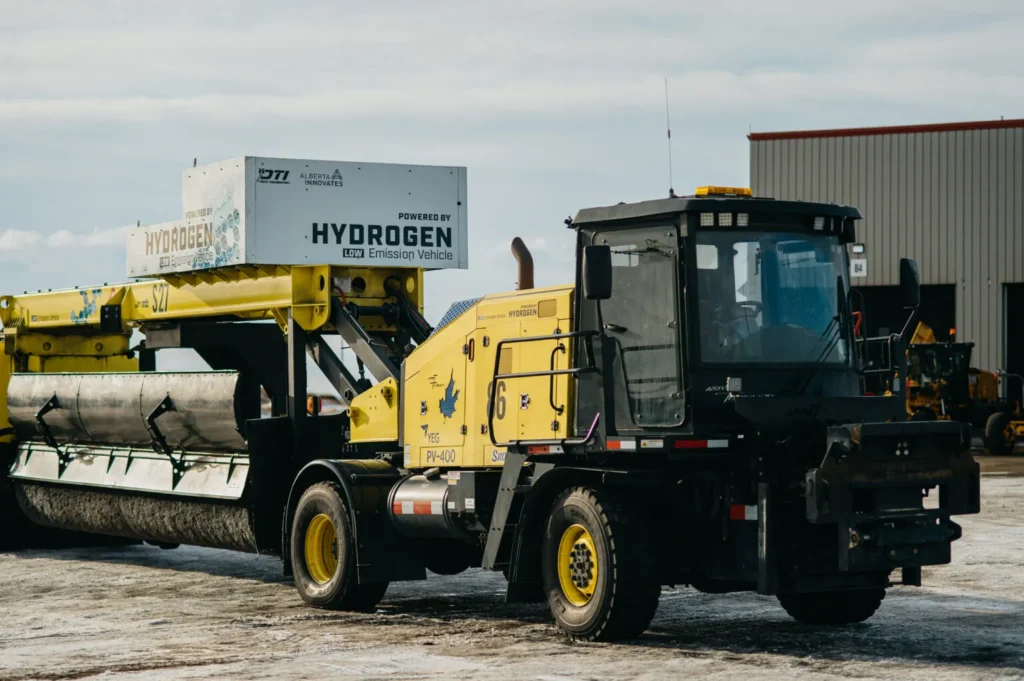
Edmonton International Airport (YEG) is progressing its decarbonisation efforts through a hydrogen diesel dual fuel pilot project for runway snow sweepers, marking a first of its kind application globally.
The initiative is testing the integration of hydrogen into existing diesel engines to reduce greenhouse gas emissions and fuel consumption while maintaining operational performance in challenging environments.
“This is about taking real, practical steps to reduce emissions in some of the most demanding parts of our operation,” noted Myron Keehn, president and CEO of Edmonton International Airport.
“By introducing hydrogen dual-fuel technology in equipment that operates in extreme winter conditions, we are demonstrating that innovation and sustainability can go hand in hand.
“YEG is proud to serve as a real-world testbed for solutions that can be scaled across the aviation sector and beyond.”