

The heightened scrutiny of sustainability and cutting through green washing is increasing pressure on airports to step up their waste management efforts, writes Emma Cooke, operations manager with waste and tech specialist Envirovue.
Getting rid of all that waste in a sustainable way in a daily challenge, and as the aviation industry faces growing environmental scrutiny and tighter regulations, airport waste management has to become even more of a priority for airports in the coming decades.
Airports are, of course, highly regulated, security-sensitive environments with multiple users generating waste in different ways and, arguably, this reality makes engaging the expertise of specialist waste-management companies essential to meeting sustainability goals.
Indeed, I would argue that working with waste and tech specialists can create and deliver achieveable circular economies for airports at the same time as reducing emissions and cutting costs.
AN ARRAY OF WASTE CHALLENGES
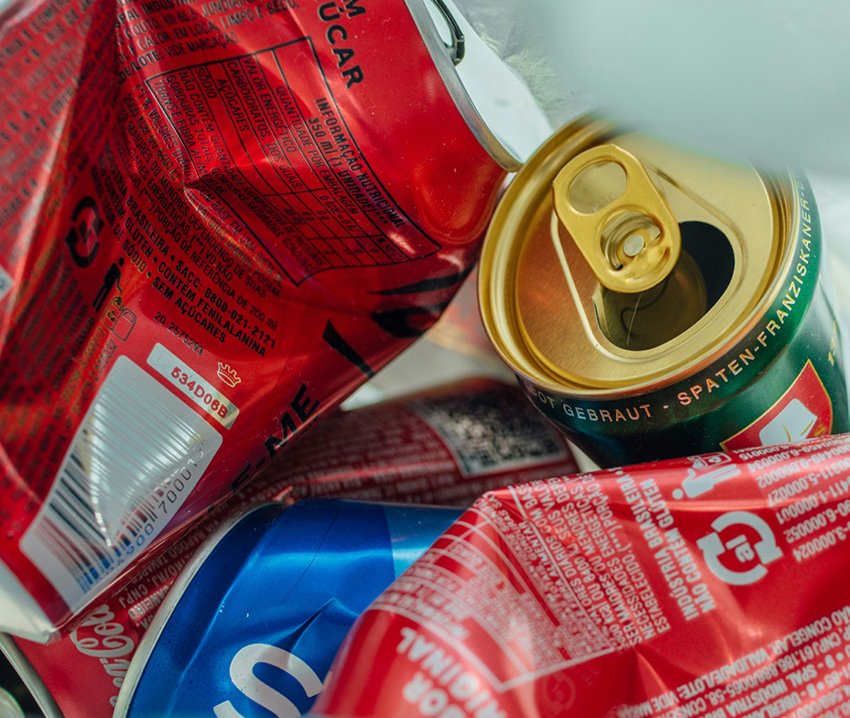
Airport waste is far from linear. Passenger and terminal waste is often a contaminated mix of food, packaging and single-use plastics.
But it also includes aircraft waste, including used PPE and cleaning materials that can pose hygiene risks, and maintenance waste such as oils, batteries, tyres and e-waste which require specialist handling and high-purity recycling routes.
Retail and commercial outlets add another layer of difficulty, generating cardboard, plastics and surplus stock that often falls outside organised recycling systems.
These challenges are made harder if airports have limited space for segregation, unclear responsibility boundaries between internal parties and rapidly rising regulatory demands for traceability and transparent reporting.
WASTE CHAMPIONS AND EDUCATION
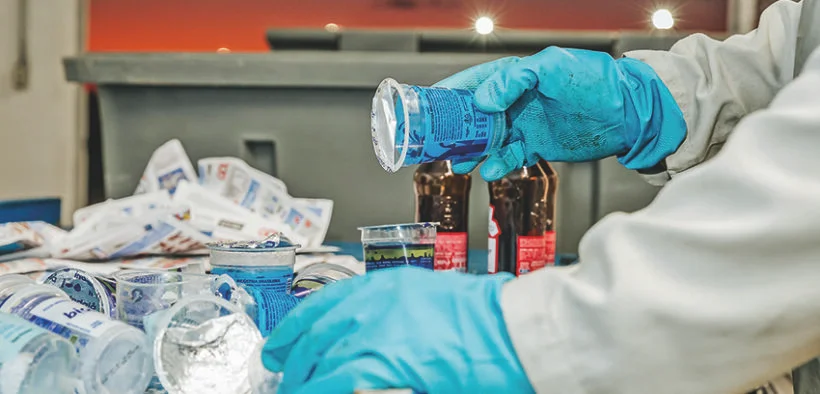
Effective segregation and waste management is a crucial component of airport waste management, requiring a thorough understanding of all the types and volumes of waste generated.
A comprehensive waste audit is essential to identify opportunities for waste reduction, reuse for a circular strategy, and more efficient handling, helping operators to optimise processes and minimise environmental impact.
The challenge many airports are finding is that they don’t have the time or resources to fully review all waste streams and root causes of waste production, leaving them using older operating models or working reactively to problems as they arise.
Robust segregation of hazardous waste is also essential to avoid cross-contamination and enable effective recycling or treatment.

By accurately separating waste streams each type can be managed and tracked according to its specific regulatory and environmental requirements.
Education is also key. All employees must understand the importance of waste separation and how to do it correctly. It is crucial to provide staff with adequate training on waste identification, segregation, and proper handling procedures.
This also ensures that all employees within your business can identify opportunities for re-use, the first step to creating a circular system.
APPLYING CIRCULAR ECONOMY PRINCIPLES
A circular economy approach offers airports a practical path forward by keeping materials in use for longer through optimised segregation.
Prioritising re-use options can lower disposal costs, reduce carbon emissions from collection and associated waste operations, improve regulatory compliance, and deliver cost savings.
While closed-loop schemes for items such as catering equipment and airline textiles must be tightly controlled, limiting re-use possibilities, organic waste can be composted and requires less emphasis on re-use strategies.
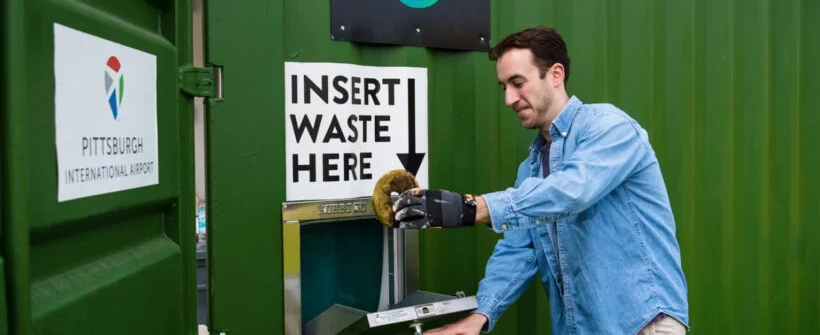
Digital tools and traceability systems, supported by waste specialists, can monitor volumes and contamination across airport operations, helping to build a stronger waste network across airports.
GAINING AN ADVANTAGE
Waste-management specialists play a pivotal role in creating circular, cost effective strategies within airports.
Independent expertise ensures all waste is mapped and handled correctly, whilst pinpointing potential contamination before it has happened.
The right waste partner can also unlock high-quality data and waste tracking, AI-driven sorting, digital classification and real-time monitoring to provide clear visibility across complex operations, enabling airports to assess performance, identify inefficiencies and progress with confidence.
FROM BURDEN TO OPPORTUNITY
Airports face unique waste challenges, but they also have unique opportunities to create large-scale sustainable hubs.
By embedding circular economy principles and partnering with specialist waste-management providers, airports can transform waste from an operational headache into a source of environmental and commercial value.
In a sector striving for sustainability, smarter waste management is fast becoming a runway to long-term resilience.
KEMPEGOWDA’S INTEGRATED SOLID WASTE MANAGEMENT CENTRE
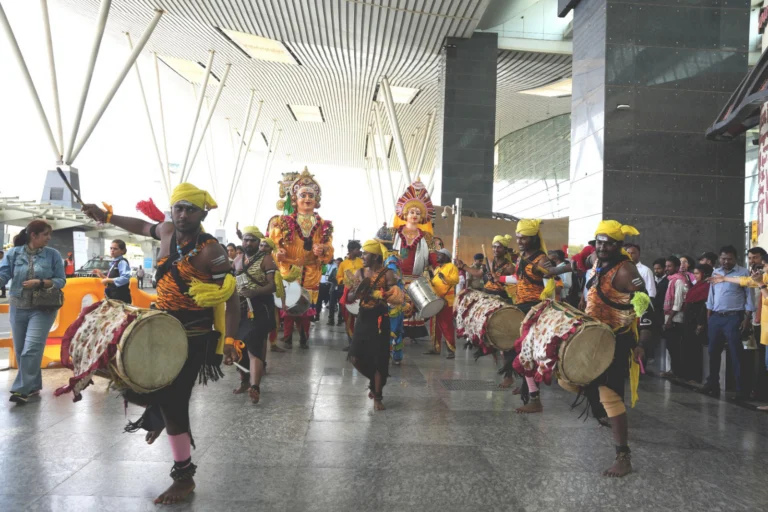
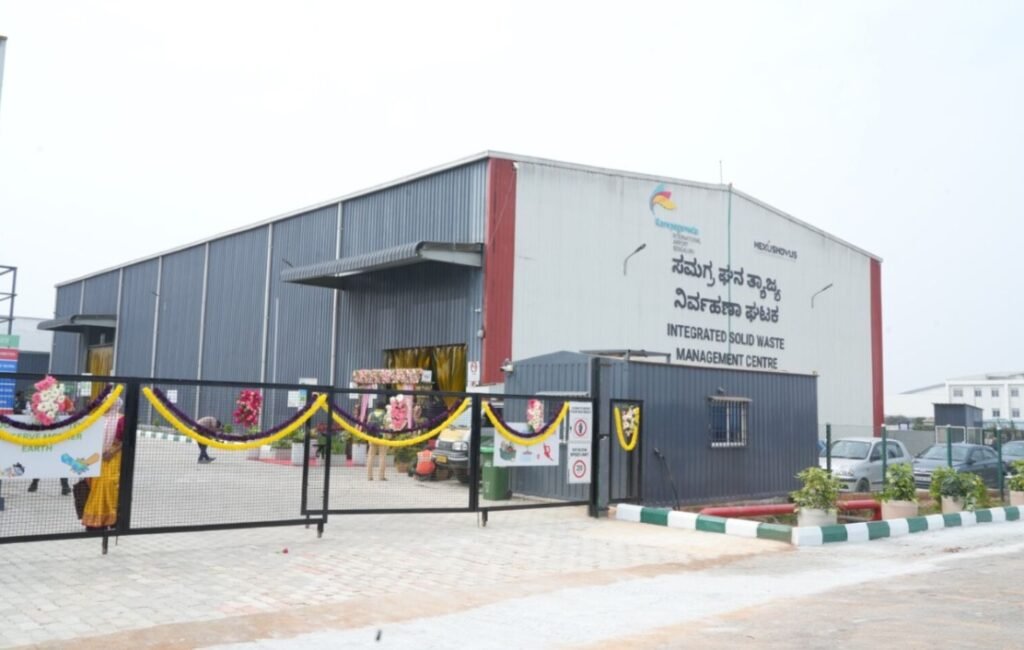
Bengaluru’s Kempegowda International Airport (BLR) has inaugurated its own in-house Integrated Solid Waste Management Centre (ISWMC).
The facility is said to strengthen scientific waste processing and circular economy practices across the airport ecosystem, reinforcing the airport’s commitment to responsible growth.
As one of India’s busiest airports, BLR generates approximately 24–26 tonnes of solid waste per day across terminals, airside operations, commercial outlets and allied facilities currently.
The ISWMC enables scientific, end-to-end waste processing at source, enhancing operational control, reducing reliance on external handlers, minimising transportation-related environmental risks, and contributing to lower emissions, improved compliance, and greater operational resilience.
With the facility in place, the airport expects to reduce landfill disposal to 2–3% of its total waste, enabling 97–98% of waste to be recycled or recovered through in-house processes and authorised partners.
Designed with a total processing capacity of 77 tonnes per day (TPD), the ISWMC is designed to manage both organic and inorganic waste streams.
Organic waste, up to 50 TPD, is treated through bio-methanation technology, converting biodegradable waste into compressed biogas (CBG) for use in airport kitchens, along with liquid organic manure and compost to support landscaping requirements.
The remaining 27 TPD of inorganic waste is processed through advanced segregation systems, with recyclables directed to authorised recycling partners and recoverable material utilised for co-processing in the cement industry.
Hari Marar, managing director and CEO of airport operator, BIAL, enthused: “As a rapidly growing airport, we are conscious of the responsibility that comes with managing our environmental footprint.
“The Integrated Solid Waste Management Centre strengthens our ability to manage waste at source, transform it into a resource, and embed circular economy principles into everyday operations. This initiative reinforces our commitment to resilient infrastructure and responsible growth as we scale for the future.”