




Hot streak for Copenhagen Airport

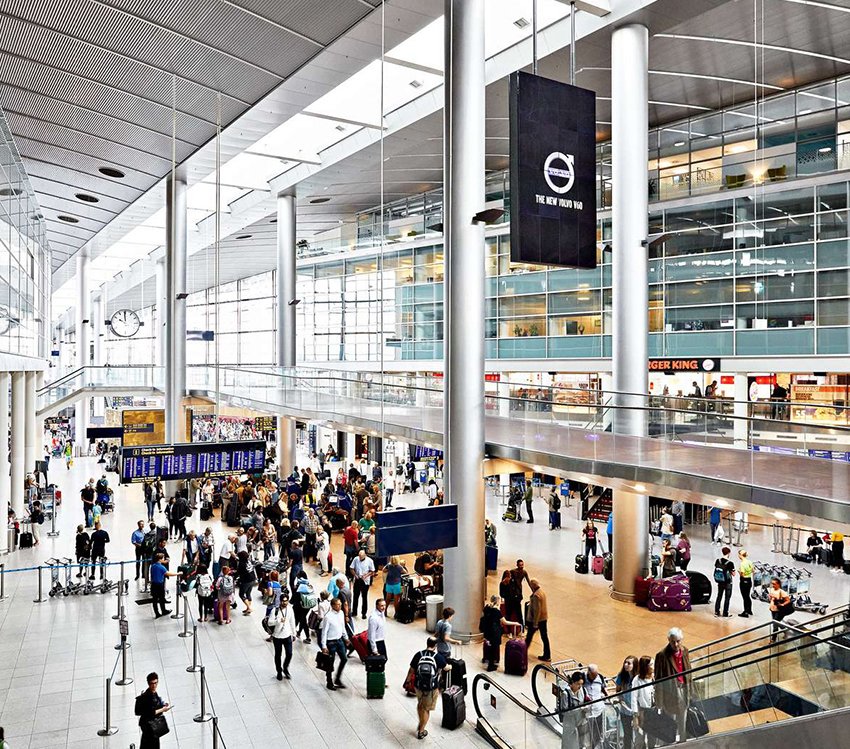
With the ongoing expansion of Terminal 3 gathering pace, record traffic figures, and the Danish state once again in control of its destiny, these are good times for Copenhagen Airport, writes Joe Bates.
The final figures are in, 2025 proved to be the best year ever for traffic at Copenhagen Airport (CPH) with a record 32.4 million passengers passing through its facilities.
The total, which is around 8.5% up on 2024 and 6.5% higher than its previous best of 30.3 million set in 2019, is expected to lead to a healthy 8% increase in annual revenue for the Danish airport operator.
A record-breaking summer that included months of solid year-on-year growth appears to be the catalyst for its impressive performance.
Indeed, some 9.6 million travellers passed through Copenhagen Airport in July, August and September – the highest number in the airport’s 100-year history – ensuring that 24.5 million passengers used the gateway in the first nine months of the year, 8% more than in the corresponding period in 2024.

This was followed by Copenhagen Airport’s busiest October, November and December on record, 2025 ending on a high when 2.46 million passengers used the gateway in December – an impressive 13% rise on the same month in 2024.
“Overall, there were 2.5 million more travellers through the airport compared to the previous year, which we are naturally very pleased with,” enthused the airport’s chief commercial officer, Peter Krogsgaard.
Growth on intercontinental routes was the driving force behind the upturn in traffic over the busy summer months when the 43 long-haul routes outside of Europe served from CPH led to a solid 11% rise in passenger numbers.
When announcing the airport’s operational and financial results for the year to date in mid-November, CEO, Christian Poulsen, noted that the new long-haul routes had helped cement the gateway’s status as a key transport hub of northern Europe offering attractive connections to destinations worldwide.
New routes launched from the airport in the final quarter of 2025 included an IndiGo service to Mumbai, a new SAS route to Tel Aviv, and Vietnam Airlines introducing a non-stop route to Ho Chi Minh City in mid-December.
Are there any more international routes coming in 2026, and does the 11 new long-haul routes inaugurated in 2025 and soaring passenger traffic mean that it was a successful year for Denmark’s gateway to the world?
Poulsen tells Airport World: “The 100th anniversary of Copenhagen Airport was a record year with more routes and a growing number of passengers, so I am very pleased with the development.
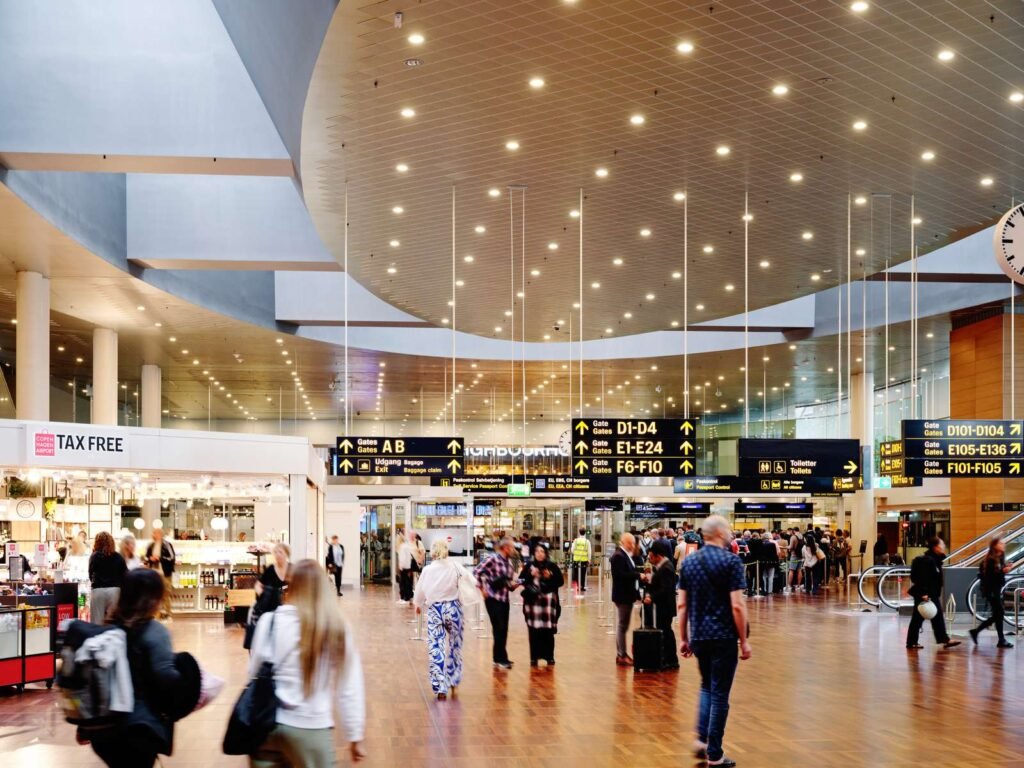
“Copenhagen Airport is in a strong position as the leading airport in Northern Europe and an important hub.
“We have gained a wide range of new routes, and I can reveal that more are on the way. Good connections to and from the whole world opens Denmark to more tourists and visitors, helping to create jobs and growth.
“In addition, good accessibility is crucial for attracting foreign companies and labour to Denmark, just as new direct routes give Danish businesses easier access to the world. This has great value for our entire society.”
As impressive as CPH’s long-haul network is becoming, it should, however, be noted that European routes currently make up about 85% of its total traffic, which at the height of 2025 extended to 184 non-stop destinations across the globe.
BACK UNDER STATE OWNERSHIP
In late September, the Danish State via the Ministry of Finance acquired a controlling interest in Copenhagen Airports A/S by buying the interests of former majority shareholder ATP for $4.52 billion.
The Danish State now holds 99% of the shares in Copenhagen Airports A/S. The remaining shares are primarily owned by private minority shareholders.
At an extraordinary general meeting held on October 23, 2025, a new Board of Directors of Copenhagen Airports A/S was elected to serve under chair, Lars Nørby Johansen.
It includes former board member Lars Sandahl who returns as one of two deputy chairs. The second deputy chair is Anne Louise Eberhard who is to the board, along with Birgit Otto, Anne Skovbro Andersen, Henrik Dam Kristensen and Michael Holm.
Poulsen enthused: “I look forward to a good collaboration with the new Board and our new owner. For Copenhagen Airport, it is important to have an owner that ensures that Denmark continues to have a strong international airport with a high level of connectivity to all areas of the world.
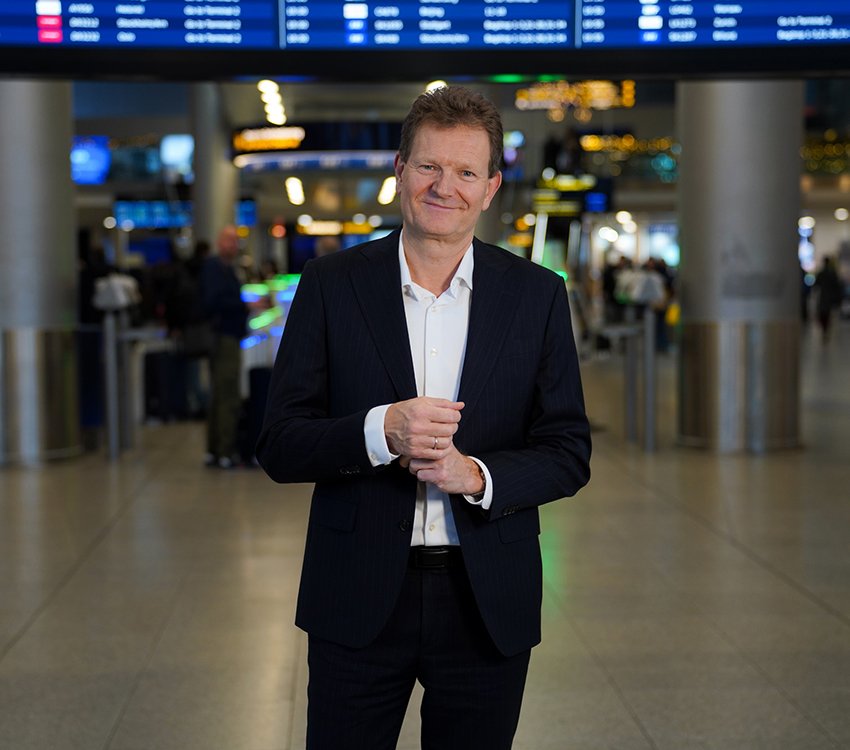
This, in turn, will also contribute positively to the Danish economy going forward.”
Is there a danger though that state ownership might make Copenhagen Airports less nimble to respond quickly and efficiently to different future scenarios as governments are traditionally more bureaucratic, and slow, at making big decisions?
Poulsen replies: “Not at all. We remain a publicly listed company with a board of directors and an executive management team at the helm of the airport. The state has held a 39.2% share of the stock for several years, and since the end of September, the state owns 99% of the shares.
“I see it as a clear advantage that, with the state, we have gained a stable owner who supports our strategy for responsible growth and our ambitions for the green transition of aviation.”
ONGOING EXPANSION OF TERMINAL 3
One big decision that the new owners won’t have to deliberate over is the ongoing expansion of Copenhagen Airport’s Terminal 3, which is progressing well and due for completion in 2027.
The project is significant as it will increase the size of the terminal by 60,000sqm, allowing for a host of new shops and restaurants, new baggage hall, improved baggage system and increased capacity for border control.
Does Poulsen expect the expanded terminal to enhance the airport experience for passengers?
He says: “It’s fantastic to see the construction progressing. We are getting an entirely new area with much more space, light and air for travellers, where there will also be a small garden to step out into.
“In the new terminal area, we will open a range of exciting new shops and dining options, and I expect the entire passenger experience at the airport to be further enhanced.”
SUSTAINABILITY LEADER
Like most Scandinavian airports, Copenhagen Airports is very much in tune with the Danish population’s desire to limit aviation’s impact on the environment and grow sustainably.
As a result, the airport set itself some ambitious sustainability targets that include achieving net zero emissions by 2030 – it currently holds Level 4+ status in ACI’s Airport Carbon Accreditation Programme – and upping its recycling and waste management efforts.
In terms of becoming carbon neutral, Copenhagen Airport notes:
“By 2030, we will reach net zero across our own operations, which encompasses the emissions from energy used in our buildings, vehicles and equipment.
“This means that we will reduce the emissions from our own operations by 90% compared to 2019. We will compensate for the remaining emissions by investing in carbon removal credits.”
Are there any sustainability projects at Copenhagen Airport that are unusual or that Poulsen is particularly proud of?
He says: “We are well on our way to achieving our goal of net zero airport operations by 2030. Our electricity consumption is covered entirely by renewable energy from offshore wind turbines, our equipment and vehicles are continuously being electrified, and we use HVO biodiesel, whichhas a lower climate impact than fossil diesel.
“The transformation of aviation is a shared responsibility across the entire industry, which is why international partnerships and cross-sector collaboration is absolutely crucial.
“We saw this with the EU project ALIGHT, which has just been completed. Here, we led a partnership consisting of 17 stakeholders from across the industry. The aim was to find solutions for the sustainable airport of the future by looking at how new types of fuel can be implemented in an airport, how stands should be designed, and what role renewable energy can play in daily airport operations.
“We demonstrated that an aircraft with a 34% SAF (Sustainable Aviation Fuel) blend emits up to 30% fewer particles when taxiing to and from the gate.
“We installed a large battery system for storing green electricity, and tested how to use the power more intelligently, through advanced management.
“We compiled concrete recommendations on how airports can prepare for future aircraft powered by electricity and hydrogen. And we developed a Replication Toolbox, a toolkit that enables other airports to replicate and implement solutions from ALIGHT.
“The ALIGHT project has created significant value, and we can clearly see the benefits of joining forces with other industry players.
“This is something we prioritise at Copenhagen Airport, and we have, among other things, entered into a close collaboration with Schiphol, where we exchange experiences and knowledge in our joint efforts toward a sustainable transition.”