

Strong traffic growth continues at Singapore Changi

Share

Traveller numbers at Singapore Changi Airport reached an all-time high in 2025, with 69.98 million passenger passing through its facilities.
The total marked a 3.4% increase on 2024, and it was equally good news for air traffic movements and cargo volumes, which rose by 2.2% and 4.5% respectively, the 2.08 million tonnes of freight handled at the gateway in 2025 making it one of the best cargo performances in Changi Airport’s history.
According to operator Changi Airport Group (CAG), the airport’s traffic growth in 2025 was broad-based, underpinned by steady travel demand and the air hub’s expanded connectivity.
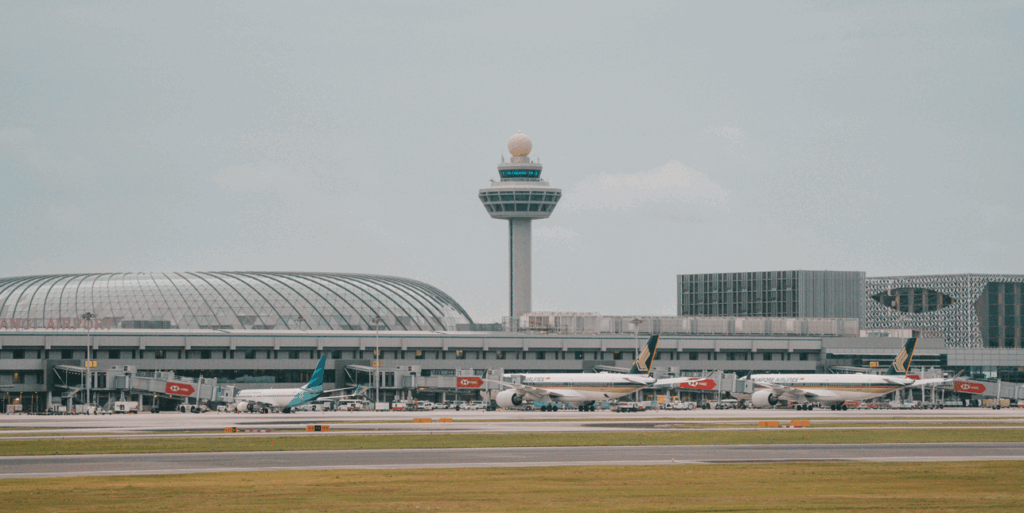
Changi Airport’s top five passenger markets for the year were China, Indonesia, Malaysia, Australia and India.
China remained Changi Airport’s largest traffic market and posted the strongest growth, with passenger movements increasing 12.2% versus 2024.
Vietnam and Japan were also among the fastest-growing markets, rising 9.8% and 7% year-on-year respectively. The busiest routes for the year were Kuala Lumpur, Bangkok, Jakarta, Denpasar (Bali) and Hong Kong.
On the cargo front, growth was seen across all cargo flows – exports, imports and transhipments. CAG notes that the upturn can be attributed to the front-loading of activities in the first three quarters of the year, and strong global semiconductors demand on the back of AI, electric vehicles and cleantech growth.
Changi’s top five air cargo markets were China, the US, Australia, Hong Kong and India, with the top three growth markets being China, US and Taiwan.
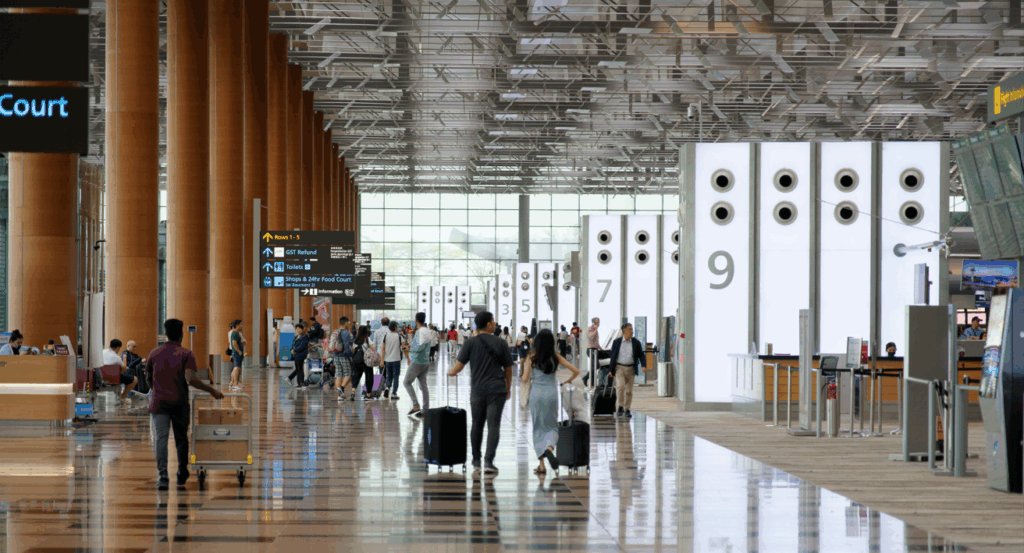
EXPANDING GLOBAL ACTIVITY
In 2025, Changi Airport achieved a record year for network growth with 13 city links added to its global footprint. The new destinations are Changchun, Harbin, Lanzhou, Yichang and Zhangjiajie in China, Labuan Bajo, Padang and Semarang in Indonesia, Vienna (Austria), Vijayawada (India), Kota Bharu (Malaysia), Ulaanbaatar (Mongolia) and Nha Trang (Vietnam).
Changi Airport also welcomed two new passenger airlines – MIAT Mongolian Airlines and Pelita Air.
A key addition was Ulaanbaatar, establishing Singapore’s first direct connection to Mongolia and further strengthening Changi’s position as a leading gateway in the region.
The new routes in China and Southeast Asia also represent Changi Airport’s ongoing efforts to diversify its network in Asia and enhance its competitiveness as a hub.
CAG CEO, Yam Kum Weng, said: “It was a strong year for Changi Airport as an air hub. We recorded our highest-ever passenger traffic, expanded our network with a record number of new city links and achieved a strong performance in air cargo amid a volatile global environment.

“This would not have been possible without the strong collaboration of our airline partners, which we are deeply grateful for.
“As travel demand in Asia grows, Changi is actively seeking to expand its network in the region, including emerging secondary cities which are witnessing rapid economic and promising tourism developments.
“As we enter 2026, we look forward to creating new opportunities for airlines and businesses. CAG will also continue to enhance the experience of travellers through greater innovation to deliver higher efficiencies and more seamless operations.
“Our goal is to ensure that Changi stays at the forefront of aviation, offering travellers exceptional airport experiences while serving as a key gateway to the region.”
As of January 2026, some 100 airlines operate more than 7,300 weekly scheduled flights at Changi Airport, connecting Singapore to over 170 cities in 50 countries and territories worldwide.