

Airport World editor, Joe Bates, takes a closer look at some of the latest airfield safety news and developments from across the globe.
INDUSTRY EFFORT TO REDUCE RUNWAY INCURSIONS
Airports Council International (ACI), the International Air Transport Association (IATA) and the Civil Air Navigation Services Organisation (CANSO) have launched a joint initiative to reduce the risk of runway incursions.
A runway incursion is, of course, defined as an aircraft, vehicle or person being incorrectly present on a runway or within its protected area.
Incursions are documented in IATA’s Annual Safety Reports, and several recent incursions have been fatal.
Preventing incursions requires close co-ordination between airlines, airports, air navigation service providers, regulators and frontline personnel.
The Joint Runway Safety Initiative focuses on three areas:
- Improving safety reporting and data capture, including incidents, near misses, precursor events and observations from frontline personnel.
- Strengthening Local Runway Safety Teams as the main forum for airlines, airports, air navigation service providers and other stakeholders to assess local risks and agree on co-ordinated action.
- Sharing progress and lessons learned so that effective practices can be adopted more widely by airports and organisations with similar operating environments.
“Airports sit at the centre of this challenge, where every part of the aviation system converges,” noted Darryl Dowd, ACI World’s vice president of safety, security and operations.
“Local knowledge and sustained collaboration are what turn safety guidance into real reductions in risk, and ACI is committed to supporting our members as they put these tools to work.”
IATA’s senior vice president for operations, safety and security, Nick Careen, said: “Flying is the safest form of long-distance travel.
“Maintaining that record requires a relentless focus on continuous improvement, supported by global standards, safety data and collaboration.
“This initiative brings airlines, airports and air navigation service providers together to identify runway risks earlier and take co-ordinated action.”
The initiative builds on existing efforts, including the Global Action Plan for the Prevention of Runway Incursions (GAPPRI) – a collaboration between ICAO, EUROCONTROL and the Flight Safety Foundation, endorsed by IATA, ACI and CANSO – as well as the ICAO Global Runway Safety Action Plan.
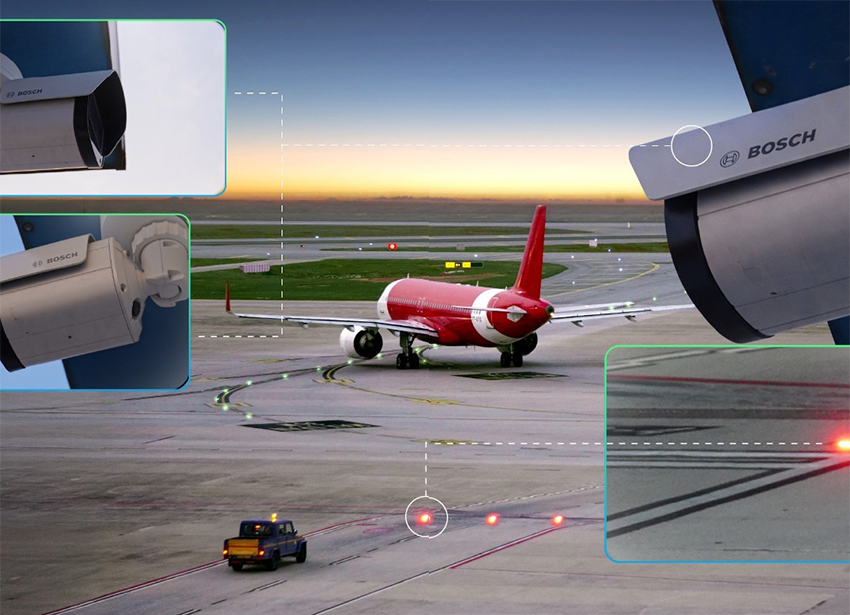
The Joint Runway Safety Initiative will further the goals of these global plans using tools and programmes developed by IATA, CANSO and ACI, including risk-assessment resources, runway safety checklists and support for Local Runway Safety Teams.
These include ACI’s Runway Safety Team Implementation Package, developed under its Airport Excellence (APEX) in Safety programme; the Runway Safety Checklist, co-developed by ACI and CANSO; IATA’s Runway Incursion Safety Risk Assessment; the GAPPRI gap analysis tool for airlines; and assessments of airline risk assessments and mitigations through the IATA Operational Safety Audit (IOSA) programme.
CANSO’s senior vice president for global operations, Andrea Sack, said: “Runway safety depends on clear communication and co-ordinated decisions across the airport environment.
“Strong Local Runway Safety Teams bring controllers, airports, airlines and other operational partners together to identify risks and agree on practical actions.”
SAFETY AWARD FOR KEMPEGOWDA
Bengaluru’s Kempegowda International Airport (BLR) has been recognised with the Diamond Award at the ACI Asia-Pacific & Middle East Safety Recognition Awards 2026, reinforcing its reputation for leadership in safe and resilient airport operations.
The ACI Safety Recognition Awards honour airport operators for advancing safety culture and strengthening safety management through effective, practical, and innovation-led solutions. The Diamond Award represents the highest level of distinction under the programme.
The award acknowledges BLR’s sustained focus on runway safety, anchored by its Runway Safety Team (RST) and a collaborative, data-led operating model across the airport ecosystem.
Key initiatives include an indigenous Runway Safety Maturity Matrix, hotspot mitigation measures, enhanced pilot awareness programmes, advanced Foreign Object Debris (FOD) management practices, and continuous interventions to strengthen airside safety and operational efficiency.
Commenting on the recognition, Girish Nair, BLR’s chief operating officer, noted: “As aviation ecosystems become increasingly complex and interconnected, safety can no longer be viewed as a standalone operational function.
“It must be embedded into the everyday functioning of the entire airport ecosystem. This recognition reflects the maturity of BLR Airport’s safety framework and our continued focus on building resilient, globally benchmarked, and future-ready operations.
“More importantly, it reinforces the importance of proactive collaboration across stakeholders in strengthening operational reliability, passenger confidence, and long-term aviation resilience.”
AI POWERED ROBOTICS FOR SAFER, SMARTER AIRSIDE OPERATIONS
Roboxi was among the 10 ACI World Business Partner (WBPs) to promote their breakthrough technologies during the Innovation Showcase sessions of last year’s Airports Innovate conference in Busan, South Korea.
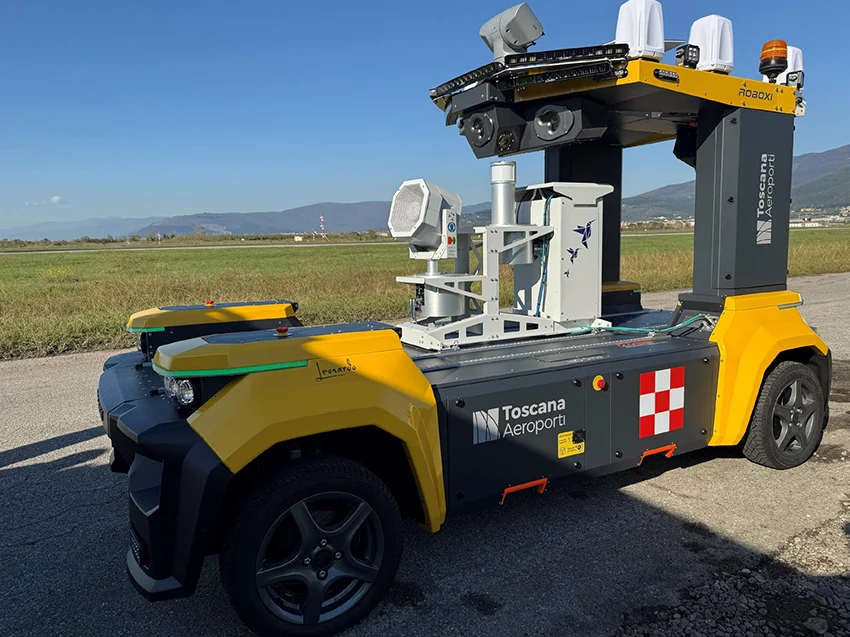
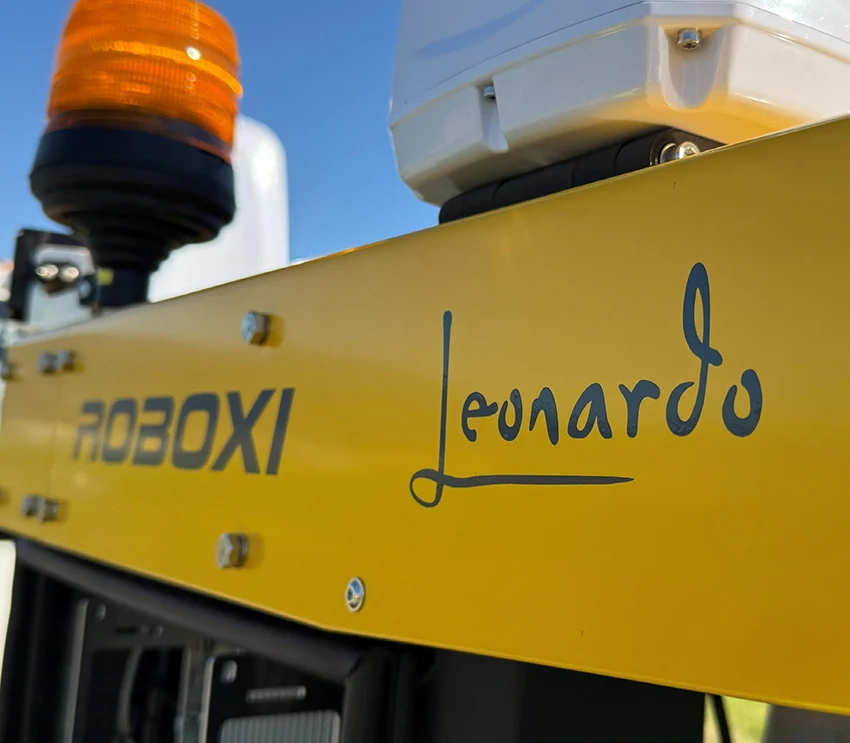
In the case of Roboxi, chief commercial officer, Dr José Luis Gil Yepes, used the opportunity to introduce delegates to a multi-functional autonomous robotics platform designed to transform airside inspections and maintenance.
Powered by artificial intelligence and machine learning, its robots automate critical tasks such as FOD detection and removal, surface and lighting inspections, bird deterrence, and perimeter control.
He revealed that Roboxi’s 180-degree thermal scanning system ensures that it has a detection and deterrence range of up to 500 metres, and that crucially for safety, each robot/vehicle uses a transponder to “co-exist with aircraft and ground crew” communicating via 4G, 5G and satellite.
And it can save airports money, according to Yepes, who stated that the traditional method of detecting FOD – driving across runways manually looking for debris – costs the industry an estimated $22 billion a year.
Similarly, runway inspections that rely on visual inspections from engineers cost $4 billion a year and employing dedicated personnel to scare birds away from the airfield (using lasers, guns, animals or sound) costs airports an estimated $1.2 billion per annum.
“Our solution represents a transformative step toward fully autonomous airside operations, positioning airports at the forefront of technological advancement,” said Yepes.
“In essence, Roboxi provides real-time data insights that ease the decision-making process and can also automatically perform immediate required tasks. This enables operational efficiency and safety.”
The technology is currently in use or has been trialled at several airports across Europe that include Amsterdam Schiphol in the Netherlands, Frankfurt in Germany and Toscana Aeroporti’s Florence and Pisa airports in Italy.
“In Amsterdam, we integrated the robot into a major orchestration system and it could communicate with other stakeholders and other airport vehicles and co-ordinate tasks via a central airport system,” noted Yepes.
In the future Roboxi believes that there will be fleets of autonomous vehicles working 24/7 across the airport campus, “communicating with each other and elevating airside operations to new heights”.
MILESTONE FOR FAA’S SURFACE AWARENESS INITIATIVE
US Transportation Secretary, Sean Duffy, has announced that the Federal Aviation Administration (FAA) has installed its Surface Awareness Initiative (SAI) tool at more than 100 US airports.
The aircraft and vehicle surveillance tool will improve runway efficiency and help air traffic controllers keep operations running safely.
Specifically, SAI allows controllers to track aircraft and vehicles in real time, including in poor weather conditions or when aircraft may be out of sight from the control tower.
SAI uses Automatic Dependent Surveillance-Broadcast (ADS-B) data from aircraft and vehicles, enabling controllers to see surface traffic.
“We are moving at the Speed of Trump to bring air traffic controllers the surface safety technology they need to continue improving our airspace,” said Duffy.
“We’re going to continue fast-tracking our deployment so that all 220 FAA towers that did not have surface surveillance capabilities can now have a new tool at their disposal for controllers.”FAA Administrator, Bryan Bedford, said: “SAI is vital for controllers. It gives them the big picture of the airport’s surface right at their fingertips.
“For our controllers to work at their best, they need the technology to match their expertise.”
SAI is currently operational at 100 air traffic control towers. They include the recent additions of Billings-Logan, Gulfport-Biloxi, Greenville-Spartanburg and Corpus Christi international airports.
The FAA plans to install the technology at a further 44 US gateways by the end of 2026.
NEW FUNDING TO BOOST AIRPORT SAFETY
Aurrigo International plc has been awarded £1.43 million in funding from the UK government to investigate how autonomous vehicles can be used to make airports safer.
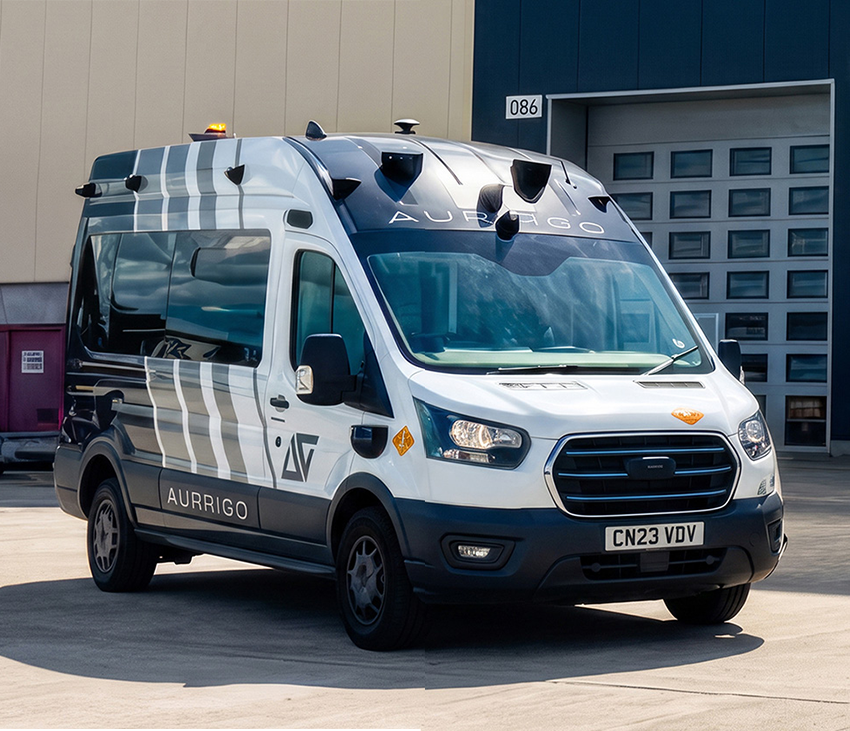
Best known for its Auto-DollyTug and Auto-Cargo vehicles in use at eight global airports, Aurrigo will use the grant to deploy its Auto-Shuttle vehicles to complete several routine tasks, including performing security patrols, routine perimeter inspections and counting birds and encouraging them to move somewhere safer.
They will also be used to inspect runway and taxiway surfaces for cracks, wear or spotting loose objects that can cause serious damage to an aircraft.
Named SENTRY, the project also taps into the expertise of Warwick Manufacturing Group at Warwick University, the guidance of the Civil Aviation Authority (CAA) and a specialist testbed facility located near Teesside International Airport.
“Airports are busier and more hazardous than most passengers ever realise,” explained Aurrigo’s chief technology officer, Simon Brewerton.
“Away from the terminal, staff spend their days walking and driving around parked aircraft, along taxiways and up and down runways, checking for loose debris, chasing away birds, patrolling for security, and inspecting the roadways for damage.
“Much of this work happens in the dark, in wind and rain, and always with aircraft moving nearby.”
He continued: “SENTRY will investigate whether some of that work could be done by small autonomous vehicles that will navigate on their own, following a set of rules agreed in advance with air traffic control.
“Working with our partners, we are developing the technology and building it into our Auto-Shuttle, which will firstly be deployed in controlled environments before operating in real airport conditions at Teesside International Airport and at Cincinnati in North America.”
This project has been designed to increase safety by detecting obstacles, birds, damage to runways and security issues, whilst also boosting efficiency through automated inspections and supporting aircraft to move smoothly around the airport.
Brewerton added: “Our team will measure the changes the autonomous vehicles make, including staff time savings, how quickly issues were spotted and the positive effect on reducing emissions.
“The findings will be written up in a public report that will be shared with airports, regulators and the wider sector, providing a best practice use case for adopting more autonomous vehicles.
“Aurrigo’s technology is not about replacing people, it is about taking the cold, repetitive, three-in-the-morning jobs off the roster.
“It will free-up experienced staff for the work that genuinely needs human judgement and gives airports a practical way to raise their safety standards.”
DRONE SIGHTINGS RAISE SAFETY CONCERNS
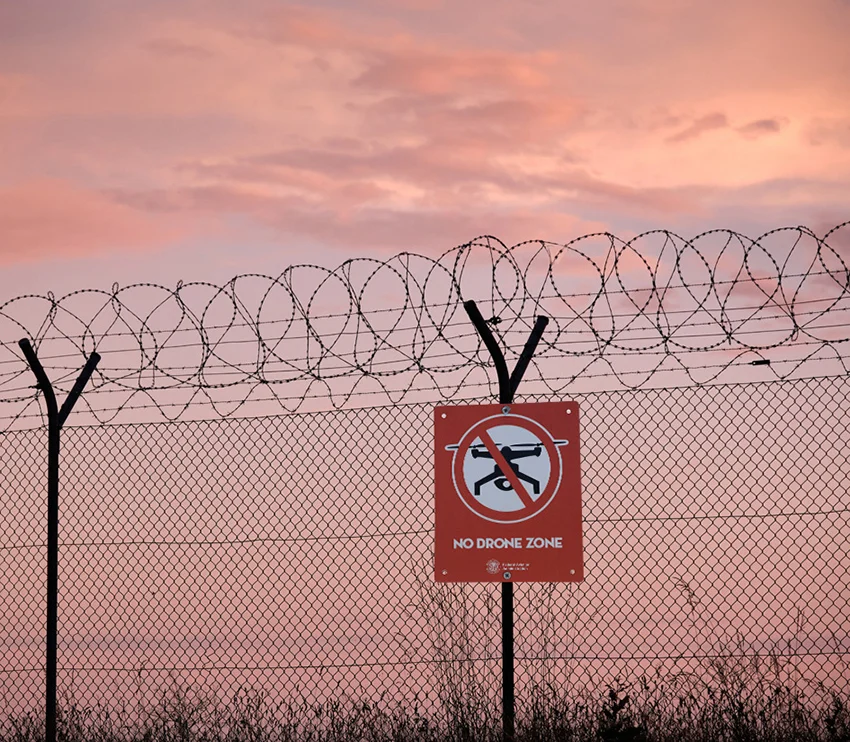
Concerns have been raised about the risk drones pose to flights at Tan Son Nhat International Airport in Vietnam after 227 illegal drones were detected near the Ho Chi Minh City gateway in just 13 days.
Speaking at a recent conference in the city, Lieutenant Colonel Nguyen Truong Long, deputy head of Tan Son Nhat International Airport’s Border Gate Police, noted that the UAVs were detected illegally flying in no-fly zones between August 27 and September 8, mostly below 80 metres, with many operators unaware of the restrictions
Southern Airports Authority director, Tran Doan Mau, added that in the first nine months of 2026 the airport recorded 32 aviation safety incidents, including 13 involving lasers, eight kites, four balloons and three UAVs.
And on August 11, two flight crews spotted UAVs at altitudes of 1,800-3,000 feet in the airport’s approach and departure paths. Kite flying near the airport also disrupted air traffic on August 13.
The Southern Airports Authority said it would report problems involving enforcement powers and penalties to the Civil Aviation Authority of Vietnam and seek tighter co-ordination between police and military forces to reduce the danger posed by UAVs.